
What to Do After Getting Windows Tinted: Care and Curing
A little haze or a few small water bubbles after tinting can be part of normal curing, not a sign that the film has failed. Knowing what to do after getting windows tinted starts with patience: keep the windows rolled up for at least 48 hours, and expect curing to take anywhere from a few days to a couple of weeks depending on the film and local climate. Small air bubbles may fade as the film cures.
It’s understandable to worry when fresh tint looks cloudy or imperfect, especially when you’ve invested in a cleaner, more comfortable drive. In many cases, moisture beneath the film clears as the adhesive cures, so avoid touching or cleaning the inside glass too soon.
This guide explains how to protect new tint from water, premature window use, unsafe cleaners, and scratches. You’ll also learn what curing changes can look normal, when to resume washing and cleaning, and which signs deserve closer attention.
Key Takeaways
- Give the film time to cure before washing the car; keep high-pressure spray away from the glass and film edges.
- Once the tint has cured, use a gentle ammonia-free cleaner and a soft microfiber cloth to clean the glass.
- Avoid paper towels, scouring pads, brushes, and sharp objects that can scratch or puncture the film.
- If air bubbles remain after 10 days, contact the installer for an assessment instead of trying to fix the film yourself.
- Learn which changes during curing are expected and how to protect the film from avoidable wear.
1. How Long Does Window Tint Take to Cure?
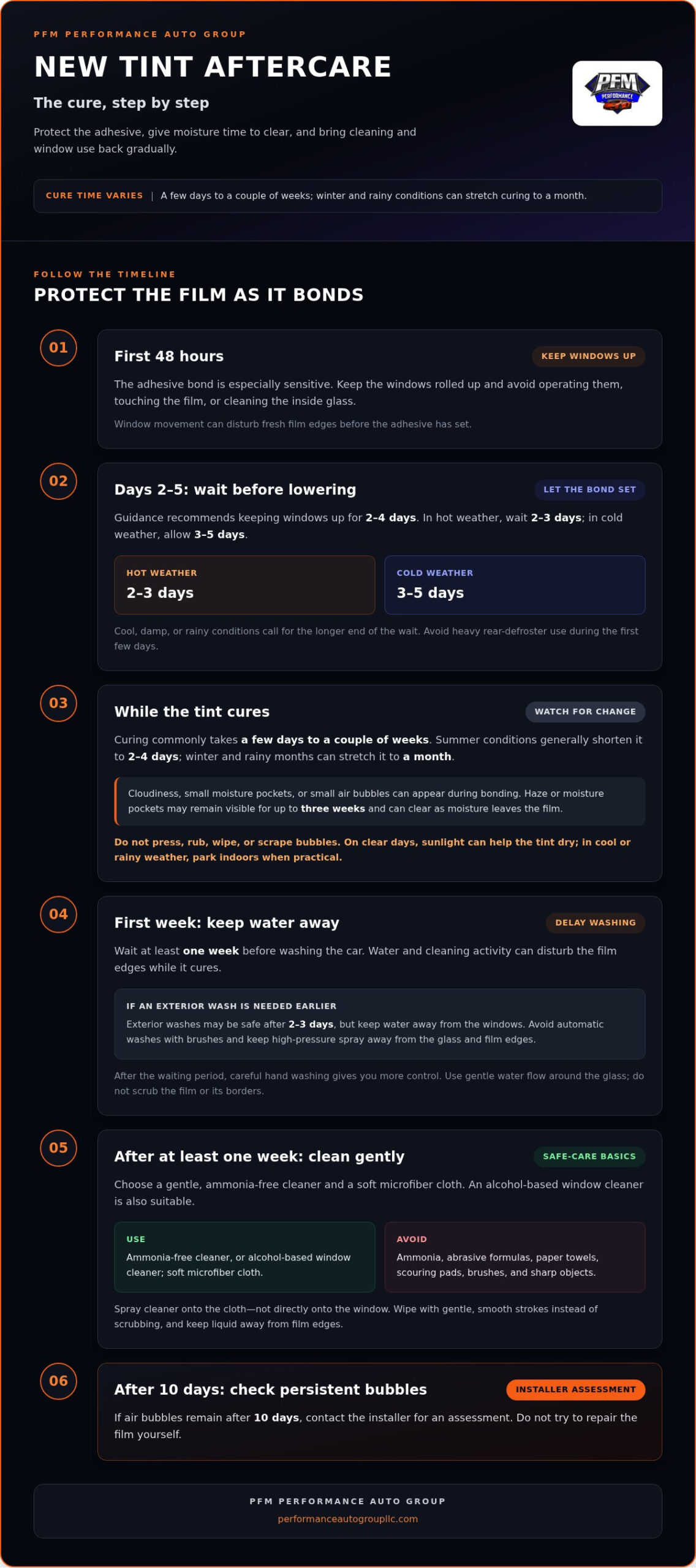
Automotive window tint usually takes a few days to a couple of weeks to cure. Summer conditions generally shorten the process to two to four days, while winter and rainy months can stretch it to a month. The adhesive needs time to bond with the glass as moisture beneath the film dries. Keep the vehicle’s windows rolled up for at least 48 hours, when that bond is especially sensitive.
Florida tint laws set limits on legal window tint, while curing guidance explains how the adhesive bonds to glass. These are separate considerations: the advice here covers aftercare, not whether a particular tint setup meets state requirements. To protect the film as it cures, avoid operating newly tinted windows, since movement can disturb the edges before the adhesive has set.
Give the windows extra time before lowering them. Guidance recommends keeping them up for two to four days to avoid scraping the film while the adhesive dries. In hot weather, avoid rolling them down for two to three days; in cold weather, allow three to five days. These ranges reflect how temperature and moisture affect drying. If your vehicle stays cool, damp, or rainy, the longer end is the more cautious choice.
Cloudiness and small moisture pockets can appear during bonding. Cloudiness and small moisture pockets may clear as curing progresses, and small air bubbles can sometimes disappear on their own. Haze or moisture pockets can remain visible for up to three weeks. Watch for change rather than pressing or rubbing the film. If air bubbles remain after 10 days, contact the installer for an assessment instead of attempting a repair yourself.
Protect the glass during the first week. Avoid touching or cleaning the inside windows, since pressure and wiping can disturb the film before the adhesive has finished settling. You can use the vehicle, but avoid lowering the windows or using the rear defroster heavily during the first few days. On clear days, sunlight can help the tint dry; during cool or rainy weather, park indoors when practical.
After the tint has cured, return to normal window use and regular interior-glass care. Curing can take longer in cool or wet weather, so follow the recommended waiting periods rather than judging readiness by appearance alone. If you’re deciding what to do after getting windows tinted, give the adhesive time to bond. Small appearance changes can continue as moisture leaves the film.
2. Avoiding car washes during the curing process
Wait at least one week before washing your car after tint installation. This gives the film time to cure and helps prevent water or cleaning activity from disturbing its edges. If you wash the vehicle sooner, keep water away from the windows. Once the waiting period has passed, wash carefully and keep high-pressure spray away from the glass.
An exterior wash and cleaning the glass are different tasks. Exterior car washes may be safe after two to three days, but that does not mean the tint is ready for window cleaning. Avoid automatic car washes with brushes, since brushes can catch film edges. Keep high-pressure sprayers away from the glass, especially along the top and side edges where water pressure can disturb fresh film.
If you need to wash the vehicle before the windows are ready, focus on areas away from the glass. Don’t direct a hose or pressure washer toward the windows or film edges. After the tint cures, hand washing gives you more control. Use gentle water flow around the glass, and don’t scrub the film or its borders.
Keep the windows rolled up during the initial curing period. Lowering a window can make the film rub against seals, while water from washing can collect near the same edges. The first 48 hours are especially sensitive as the adhesive bonds to the glass. Avoid operating tinted windows during this early stage, even for a quick ventilation stop.
Moisture pockets or a cloudy appearance can remain visible while the film cures. Small pockets should improve as moisture evaporates, so don’t press, wipe, or scrape them. Washing the glass too soon can slow drying and make it harder to tell whether the appearance is changing naturally. If air bubbles remain after 10 days, contact the installer for an assessment rather than trying to repair the film yourself.
Choose parking that suits the weather. On clear days, sunlight can help the tint dry. During cool or rainy weather, park indoors when practical to protect the film as it cures. Wait until the film has cured before using a windshield sunshade, since placing or removing one sooner can rub the fresh surface. Use the rear defroster sparingly during the first few days.
After the curing period, resume careful washing and regular window use. If you’re arranging window tinting, you can schedule a window tinting appointment and plan to keep the glass untouched during its initial cure.
3. What Cleaning Products Are Safe for Tinted Windows?
For automotive tinted windows, choose a gentle, ammonia-free cleaner and a soft microfiber cloth. An alcohol-based window cleaner is also suitable for cleaning the glass. Avoid ammonia products, abrasive formulas, and anything that could scratch or weaken the applied film. The safe approach is simple: check the cleaner’s ingredients, then use a clean, non-abrasive cloth.
Wait at least one week after installation before cleaning the interior glass. This gives the adhesive time to bond without pressure from wiping or moisture from cleaner. If you see haze or small bubbles before then, leave them alone. Don’t press on them, rub the film, or try to wipe them away. Let the tint cure before inspecting the surface closely.
Once the waiting period has passed, clean the glass carefully. Spray an ammonia-free cleaner onto the microfiber cloth, not directly onto the window, to keep liquid from running into the film edges. Wipe gently with smooth strokes instead of scrubbing. Turn the cloth to a clean side as it collects dust, then dry the glass with another soft microfiber towel.
A rubber squeegee can also work when used gently. Keep its edge clean, move it lightly across the glass, and avoid dragging grit beneath it. Don’t use paper towels, brushes, scouring pads, or rough household sponges, since they can scratch or abrade the film. Tint covers glass, so choose tools suited to a smooth, delicate surface.
How long should you wait before rolling down windows after tinting? Keep them rolled up for at least three to five days after installation, since movement can scrape the film while its adhesive dries. Wait at least a week before cleaning the interior glass, even if the windows can be lowered sooner.
What cleaning products and tools are safe for tinted windows? Use an ammonia-free or alcohol-based window cleaner, a soft microfiber cloth, and light pressure. Spray the cloth rather than the glass, and keep abrasive pads and paper towels away from the film.
For commercial or residential window film, a simple solution can use two drops of Dawn dish detergent in 16 ounces of water. Apply it with a soft sponge or cloth, then dry with microfiber. For car windows, stick with a cleaner intended for glass and avoid experimenting with concentrated household products. A careful routine protects clarity without disturbing film edges.
4. Keeping windows rolled up after installation
Keep newly tinted vehicle windows rolled up for at least 3 to 5 days after installation. The film’s adhesive needs time to bond against the glass, and lowering a window can make the film rub against its seal. That contact may disturb an edge before it has set. Treat the waiting period as part of the tinting process, not an optional precaution.
The first 48 hours are especially sensitive because the adhesive is still bonding. A practical routine helps: avoid the window switches, and remind passengers not to operate them. If someone else uses the vehicle, tell them the glass was just tinted. A simple note beside the window controls can prevent an accidental roll-down during those first few days.
Weather affects how long the film needs before normal window use. In hot weather, avoid lowering the windows for 2 to 3 days; in cold weather, wait 3 to 5 days. The general guidance is to keep them up for at least 3 to 5 days after installation. Cooler, damp conditions can slow drying, so allow the longer period when weather is unfavorable.
Why does movement matter? As a window slides, its edge passes through the weather seal. Fresh film can catch or shift at that contact point while the adhesive dries. A small disturbance at the edge can affect the film’s smooth finish. Keeping the glass stationary gives the adhesive a better chance to bond evenly, without friction from repeated opening and closing.
During the waiting period, plan around the vehicle’s usual use. If you rely on a drive-through, parking garage ticket machine, or window-based pickup, temporarily choose another option. Don’t lower the glass for a quick exchange. Use a door or another available window, and keep the freshly tinted pane closed until the waiting period has passed.
Once the recommended period is over, return to normal window operation gradually. Lower and raise each window carefully, then check that the film edges remain smooth. Don’t push at bubbles or lift an edge if you notice a change. Small moisture pockets can appear during curing, but the film should be left undisturbed rather than pressed against the glass.
Remember, appearance and readiness aren’t always the same. A window may look clear before the adhesive has finished bonding, while haze can remain as moisture evaporates. Keep the windows up for the full 3 to 5 days, and give them more time in cold or rainy weather. That measured approach helps protect the newly applied film as it cures.
5. Preventing scratches and abrasions
Scouring pads, sharp objects, and rough cleaning tools can scratch window film. Keep them away from tinted glass, especially when cleaning or washing. Before wiping a window, check the cloth for grit, crumbs, or debris. A soft microfiber cloth helps lift dust without dragging abrasive particles across the film.
Once the film has cured, use a gentle cleaning routine. Move the microfiber cloth lightly across the glass rather than scrubbing one spot repeatedly. If dirt remains, apply an ammonia-free cleaner to the cloth and wipe again with a clean section. Avoid spraying directly onto the glass, where liquid can run toward the film edges.
Keep brushes and abrasive pads out of your window-cleaning kit. A brush can leave scratches, while a scouring pad can scrape or puncture the film. Paper towels can also feel rough against the surface. Choose a clean, soft cloth or a rubber squeegee, and use light pressure. If the tool touches the floor or collects visible grit, replace or rinse it before continuing.
Check the area around each window before cleaning. Dust on the dashboard, door panel, or window seal can transfer to the cloth and scratch the glass during wiping. Remove loose debris from the interior first, then clean the window with a fresh microfiber towel. Don’t use a fingernail, blade, or sharp tool to lift a spot from the film.
Routine care matters after curing, too. Wipe tinted glass regularly with a soft cloth to clear surface dust before it builds up. During washing, keep keys, tools, jewelry, and other hard objects away from the glass. When carrying items beside a window, take care not to strike the film with a sharp corner or metal edge.
If you notice peeling or bubbles later, don’t pull at the film or attempt to remove it yourself. A bubble that remains after 10 days should be assessed by the installer. Pressing it with a card or cutting the surface can turn a small concern into a scratch or tear. Leave the film intact and arrange an assessment instead.
Protect your vehicle’s glass with a careful window tinting appointment.
PFM Performance Auto Group: Auto Window Tinting
PFM Performance Auto Group provides Auto Window Tinting for drivers seeking professionally applied film and a refined finish. Its Black Pearl Nano Ceramic Window Tint by Madico is another option for automotive windows. Discuss your vehicle, priorities, and preferred look, then follow the aftercare guidance to give the film time to cure properly.
Careful installation and patient aftercare work together: keep the windows up, wait before cleaning, and protect the film from abrasions. For Auto Window Tinting in Hillsborough County, contact PFM Performance Auto Group to discuss your vehicle and tint preferences.
Make Your Next Tint Decision With Confidence
Knowing what to do after getting windows tinted is part of caring for the finished work, but your next decision starts earlier: with choosing a tint and installation suited to your priorities. Consider how you use your vehicle, what appearance you prefer, and how window film fits your comfort goals. A clear conversation about those preferences can help shape an option that feels right for your everyday drive.
PFM Performance Auto Group offers Auto Window Tinting, Commercial Window Tinting, and Home Window Tinting in Hillsborough County. Whether you’re considering film for your vehicle or another glass setting, the team can help you explore the service that fits your goals. Planning ahead makes it easier to care for the result and enjoy the finished look.
Contact PFM Performance Auto Group to discuss your window tinting goals and plan the next step.
Frequently Asked Questions
Are Bubbles or Haze After Tinting Normal?
Small bubbles or a cloudy appearance can occur while moisture beneath fresh film evaporates. Small air bubbles may clear on their own within a week or two, while some haze or moisture pockets can remain visible for up to three weeks. Avoid pressing, rubbing, or trying to remove them. If air bubbles remain after 10 days, contact the installer for an assessment.
Can You Wash Your Car After Tinting?
Wait at least one week after tint installation before washing your car. This gives the film time to cure and helps prevent water or cleaning activity from disturbing the edges. If you need to clean the vehicle sooner, avoid directing water toward the windows. Once washing is appropriate, choose a gentle hand wash and keep high-pressure spray away from the glass.
How Long Does Window Tint Take to Cure?
Tint may take longer to cure in cool or rainy conditions. During curing, moisture can affect how the film looks, so allow the recommended waiting periods before cleaning or lowering windows. If a change in appearance remains after the film has had time to cure, contact the installer for an assessment.
What Cleaning Products Are Safe for Tinted Windows?
Use an ammonia-free window cleaner and a soft microfiber cloth after the film has cured. Avoid abrasive formulas, scouring pads, brushes, and rough paper towels, which can scratch the surface. Spray cleaner onto the cloth rather than directly onto the glass, and wipe gently. For commercial or residential film, a solution with two drops of Dawn dish detergent in 16 ounces of water is an option.
What If My Tint Starts Peeling or Bubbling Later?
Don’t pull at peeling film, puncture bubbles, or try to remove the tint yourself. Those actions can damage the film or glass and make the problem harder to assess. Note where the change appears and whether it is growing, then contact the installer for an assessment. If the issue appears after curing, an installer can evaluate the film and recommend the appropriate next step.
How to care for newly tinted windows during the curing period?
Keep the vehicle windows closed, avoid touching the interior film, and leave moisture pockets undisturbed. Park indoors during cool or rainy weather when practical; on clear days, sunlight can help the film dry. Avoid heavy use of the rear defroster during the first few days. These steps help the adhesive and film settle without unnecessary interference.
What should you do if new window tint looks hazy or has bubbles?
Leave the film untouched and observe whether the haze or small bubbles change as it cures. Moisture beneath the film can create a cloudy look, so don’t press the spots or wipe the interior glass prematurely. If air bubbles remain after 10 days, contact the installer for an assessment. Avoid using sharp tools or attempting a do-it-yourself repair.
When can you wash windows after getting them tinted?
Wait at least one week after installation before cleaning tinted glass. For Hillsborough County drivers, warm weather may help the film dry, but the recommended waiting period still protects it from early wiping and cleaner. When you resume cleaning, use an ammonia-free product and a soft microfiber cloth. Apply the cleaner to the cloth first, then wipe gently without scrubbing the film edges.