

Residential Window Tinting in Tampa: Comfort, Privacy, and Professional Installation
What if your brightest room could feel more comfortable without losing the daylight you enjoy? In Tampa Bay, strong sun and glare can make a room less inviting, while UV exposure may contribute to fading floors, furniture, and artwork. Residental window tinting can help address these concerns. The right film depends on how each room feels and functions.
It’s reasonable to want a cooler, more private home without making rooms feel too dark. This guide explains how residential window film can help manage heat, glare, privacy, and UV exposure, and what to consider before and after professional installation. You’ll learn how to compare film goals with your preferences for natural light and exterior views, and how PFM Performance Auto Group approaches residential tinting with experienced installers and meticulous care.
Keep a few important limits in mind: tint legality varies by state or country, and it is not legal everywhere. Film adds a layer that can hold shattered glass together but does not prevent breaking. Extremely dark tints might slightly reduce nighttime visibility. Make a considered choice for your home and the way you use each room.
Key Takeaways
- Match film priorities to each room by identifying its main discomfort, preferred daylight, and privacy needs.
- Compare the temporary flexibility of DIY film with the application work it requires and the care of professional installation.
- Before installation, note how each room is used, the concerns you want to address, and the results you prefer.
- For aftercare, wait at least one week before cleaning newly tinted home windows and use ammonia-free products. The 3-5-day window-roll-down wait applies to automotive tint.
- PFM provides residential window tinting in Tampa Bay, including Hillsborough County, with professional installation.
What Residential Window Tinting Can Change in a Tampa Bay Home
A room can be bright and still be uncomfortable to use. Tampa Bay homeowners may contend with sun-warmed spaces, glare across a television or computer screen, exposed views into the home, and sunlight falling on furnishings throughout the day. Residental window tinting offers a way to address selected effects of sunlight at the glass. The best starting point is to identify what you want to change, rather than assume one film will suit every window.
Residential window tinting is a thin film applied to glass to manage selected effects of sunlight while maintaining the window’s role in the home. Unlike curtains or blinds, film stays on the glass instead of covering the window with movable fabric or slats. Films are designed for different goals, so compare the features that matter in your rooms. The window film overview offers additional background on film types and uses.
Which home concerns can window film address?
Consider each benefit separately. A film selected to help manage solar heat may make a sun-exposed room feel more comfortable, but results depend on the film, glass, room, and conditions. Don’t assume a specific energy saving or temperature change. Glare control may make a bright room easier to use for screen time, reading, or relaxing, though the effect varies with sunlight direction and film selection.
- Comfort: Film can help manage some of the sun’s heat as it enters through glass.
- Glare: The appropriate film may soften harsh brightness on screens and work surfaces.
- UV exposure: UV-filtering film may reduce exposure that contributes to fading of furnishings, flooring, and artwork. It can help protect interiors, but fading has multiple causes.
- Privacy: Privacy depends on the film and viewing conditions, including the difference between indoor and outdoor light. It is not a guarantee of privacy in every situation.
What should homeowners expect from the results?
Start with the room’s purpose. A family room where glare disrupts television viewing may call for a different balance than a bedroom where privacy matters most, or a bright space where preserving daylight is the priority. Sun exposure and how often you use the window also shape what matters. Before choosing film, weigh your goals against the natural light, exterior views, and appearance you want to keep.
Film is not a substitute for window coverings when you want to block the view or darken a room completely. Extremely dark tints might slightly reduce nighttime visibility, so consider how you use the windows after dark. Tint legality varies by state or country, and it is not legal everywhere. Film adds a layer that can hold shattered glass together but does not prevent breaking.
PFM Performance Auto Group provides residential window tinting in Tampa Bay, including Hillsborough County. Professional installation and careful attention to your home’s needs can help you make a considered choice, balancing comfort, glare, privacy, and natural light room by room.
How to Match Residential Window Tint to Each Room
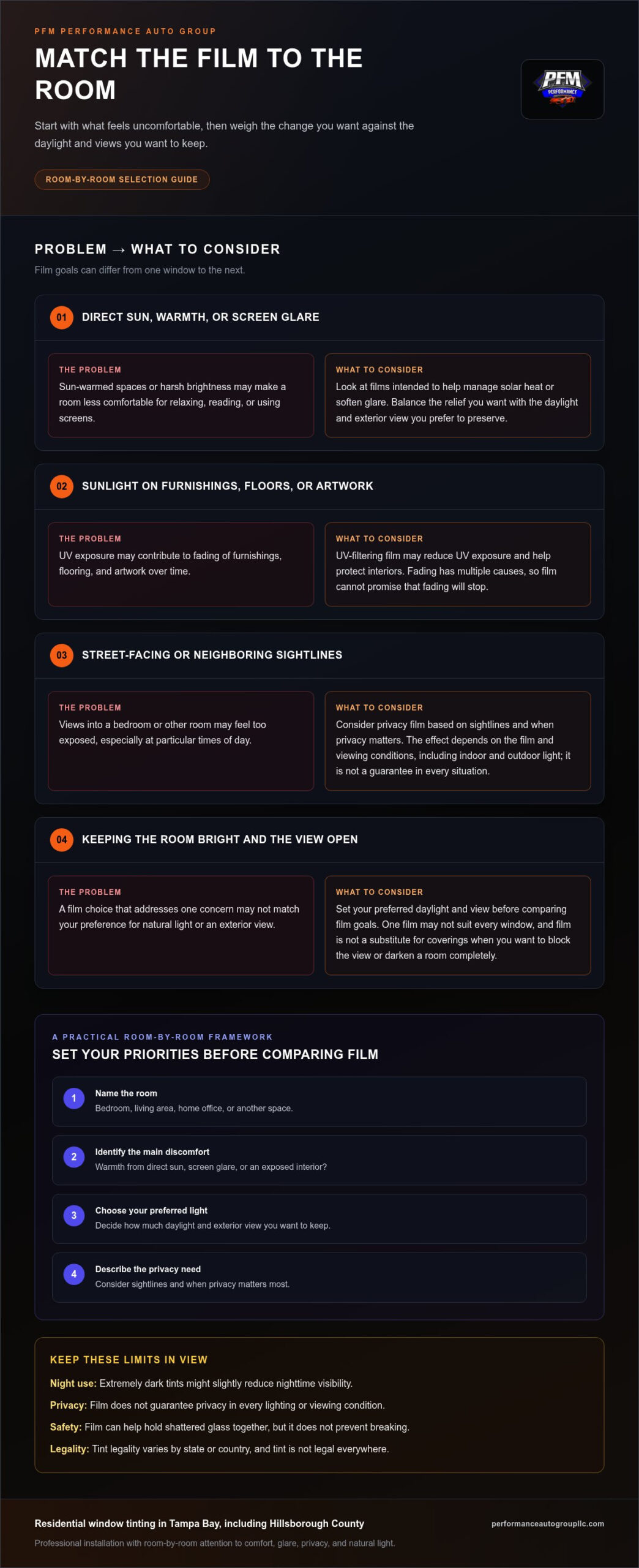
Choosing film is easier when you start with a room, not a product label. A west-facing family room may feel uncomfortable during afternoon sun, while a street-facing bedroom may call for more privacy. Ask what you want the window to do for the people who use the space, then compare film options against that goal.
Use this framework to clarify your priorities before comparing options:
- Name the room: Note whether it’s a bedroom, living area, home office, or another space.
- Identify the main discomfort: Is direct sun making the room feel warm, creating screen glare, or exposing the interior?
- Choose your preferred light: Decide how much daylight and exterior view you want to preserve.
- Describe the privacy need: Consider the window’s sightlines and when privacy matters most.
Sun exposure and how you use a window help determine which goals deserve priority. A window that gets direct light while you work or relax may call for a different balance than one used mainly to bring in daylight. Room-by-room planning is more useful than assuming every pane needs the same treatment. Let the way you use each room guide the balance of comfort, light, and privacy in your residential film selection.
Choose a priority for bright, sun-exposed rooms
For a bright room where direct sunlight interferes with comfort or daily tasks, consider prioritizing heat and glare management. If sunlight falls on furniture, flooring, or artwork, UV protection may help reduce exposure that contributes to fading, though it cannot promise that fading will stop. Keep the trade-offs in view: consider how the film may affect daylight and exterior views alongside the relief you want. A clear priority helps narrow the choice without expecting one film to solve every concern.
Balance privacy, light, and exterior appearance
Privacy film may suit rooms where sightlines from the street or a neighboring property are a concern. Think about the direction people look from, how the room is lit, and when you need privacy. The appearance and privacy effect can change with lighting and time of day, so don’t assume a film creates the same degree of privacy in every condition. If your home has community or HOA appearance guidelines, include them in your decision.
Film selection is a balance, not a simple scale where more privacy automatically means a better result. Extremely dark tints might slightly reduce nighttime visibility, so consider how you use the room after dark as well as during the day. Residental window tinting is most useful as a considered room-by-room choice shaped around your home’s light, use, and visual preferences.
Once you’ve identified the rooms and priorities you want to address, book a home tinting appointment to discuss your project with PFM.
DIY Film or Professional Residential Window Tinting?
Both do-it-yourself film and professional installation can be reasonable choices, depending on your home and goals. Removable film may appeal if you rent or need a temporary change, while professional residential window tinting is suited to homeowners seeking careful application and a professionally installed result. Neither approach is automatically right for every window. Consider how long you need the film, the result you want, and how much application work you’re prepared to take on.
| Consideration | DIY film | Professional installation |
|---|---|---|
| Temporary flexibility | Removable options may suit renters or short-term needs. | Better suited to homeowners seeking a professionally installed result. |
| Application effort | You handle preparation, positioning, and application; the outcome depends on careful work. | Experienced installers handle the application with professional equipment and attention to detail. |
| Service relationship | You select and apply the product yourself. | You can discuss your home, priorities, and film choice with the installer. |
When might a DIY film suit a homeowner?
For renters, removable film may offer a temporary way to address a particular window concern without treating the project as a permanent home upgrade. DIY can also appeal if you want to handle a small project yourself. Before purchasing, read the product directions and consider whether the film suits your glass. Application quality depends on careful preparation and placement, and a DIY result may not match the finish or durability of professional installation.
Be realistic about the work involved. A window may be difficult to reach or to apply film to neatly, and a visible flaw can affect the appearance of the glass. If you’re treating several windows or want a consistent result across a room, weigh the effort against having an installer handle the application.
What does professional installation add?
PFM Performance Auto Group provides professional residential window tinting in the Tampa Bay area, including Hillsborough County. Its approach emphasizes experienced installers, meticulous application, and modern equipment, with care focused on your home and the results you’re seeking. You can compare film choices against each room’s needs and your preferences for light, comfort, and privacy. A warranty is offered, and terms vary based on the chosen product.
Professional work doesn’t remove the need to consider trade-offs. Extremely dark tints might slightly reduce nighttime visibility. Keep these limitations in mind whether you choose DIY or professional installation.
For residental window tinting, choose DIY when temporary flexibility and hands-on application fit your project. Consider professional installation when meticulous application and experienced support matter more. The right decision starts with your windows, priorities, and preferred finish.
What to Expect During Residential Tint Installation and Aftercare
A well-planned residential tint project starts with a conversation, not a one-size-fits-all selection. Before installation, identify the rooms you want treated, the concerns you’re addressing, and how you want the finished windows to look. This gives the installer a clearer picture of your priorities and helps shape a plan around the specific windows involved.
How does a professional project typically proceed?
Discuss the rooms, the glass, your main concerns, and the results you hope to achieve. For example, you may want to address glare in one space while preserving a clear exterior view in another. Your visual preferences matter, too. PFM’s experienced installers use modern equipment and take a meticulous approach to residential window tinting in the Tampa Bay area. The installation plan should reflect the windows being treated and the goals you’ve discussed, rather than assume every room needs the same treatment.
Installation details depend on the project, so don’t apply automotive timing to home windows. The 2-4 hours timeframe applies to full-vehicle tint installation, not residential projects. Before work begins, understand which windows are included and keep your intended outcome in mind. Tint adds a layer that can hold shattered glass together but does not prevent breaking.
How should homeowners care for newly tinted windows?
Follow the care instructions provided for the film and installation. For newly tinted home windows, wait at least one week before cleaning, using ammonia-free products. This gives the film time to settle before you wipe the glass. The instruction to wait at least 3-5 days before rolling down windows applies to automotive tint, not house windows. Gentle care helps avoid disturbing the film while it settles and supports its appearance over time.
Film longevity can vary with exposure and maintenance, so attentive care is worthwhile. Avoid rushing to clean newly treated windows, and use ammonia-free products after the waiting period. A warranty is offered, and terms vary based on the chosen product.
Keep the practical trade-offs in mind after installation. Consider this when choosing and living with the film, especially if treated windows are important for evening views or everyday visibility.
With a clear discussion of your home’s rooms, glass, and preferences, professional installation can be tailored to the project rather than treated as a generic upgrade. Aftercare is part of the decision: observe the cleaning wait, use ammonia-free products, and give the film time to settle.
Book Residential Window Tinting with PFM in Tampa Bay
You’ve identified the rooms that need attention and considered what matters most: comfort, glare, UV protection, privacy, natural light, or the view outside. Next, turn those priorities into a film choice and installation plan. Residental window tinting works best when the decision reflects your home’s needs, rather than applying the same choice to every pane.
Why choose a local Tampa Bay residential tinting service?
PFM Performance Auto Group is a locally owned Tampa Bay automotive shop that also provides residential window tinting. Its service approach centers on professional installation, meticulous care, and customer trust, with experienced installers and modern equipment. For homeowners in Tampa Bay and Hillsborough County, PFM offers a local option for discussing the windows and concerns that matter in their homes.
PFM began in 2004 and has 20 years in operation. The home page references 219 customer reviews, giving homeowners an opportunity to read customer feedback. PFM also emphasizes competitive pricing. The focus is on matching the project to your priorities, rather than promising a specific result before considering the home and selected film.
Before scheduling, note which rooms you’re considering, what bothers you most about their windows, and how much light and privacy you want to maintain. You might be focused on glare in one room and privacy in another. Sharing that context makes the conversation about your home more specific and useful.
Book a residential tinting appointment
To move forward, schedule a residential tinting appointment with PFM. Discuss the rooms you want to address, your visual preferences, and the balance of comfort, light, and privacy you’re looking for.
If you’re still weighing your options, this residential window tinting in Tampa Bay guide offers more context on home comfort and film. Extremely dark tints might slightly reduce nighttime visibility, so keep that consideration in mind as you finalize your preferences.
Make Your Home’s Next Upgrade a Thoughtful One
Start with the room where sunlight causes the greatest daily frustration. Then consider the atmosphere you want to preserve, whether that means open views, natural light, or greater privacy. A focused first step makes residental window tinting less like a whole-home decision and more like a practical improvement shaped around your routines.
PFM Performance Auto Group provides professional residential tinting in Tampa Bay, including Hillsborough County. Share what you’d like to change in your home and discuss an approach that suits your priorities. A considered choice can help your space feel more comfortable while staying true to the way you want it to look.
Start with one room and choose a film approach based on how you use the space.
Frequently Asked Questions
Is residential window tinting worth it for a Tampa home?
It may be worth considering if direct sun regularly makes rooms uncomfortable, creates distracting glare, or exposes furnishings to sunlight. For a Tampa home in Hillsborough County, start by identifying which rooms affect your daily routines most. Residential film may help address selected concerns, but its value depends on your priorities, the chosen film, and the windows. Residental window tinting should not be treated as a promise of lower energy bills.
Can window tint reduce heat and glare inside a home?
Selected films may help reduce solar heat and harsh brightness entering through glass, depending on the film, glazing, and sun exposure. That can make a bright sitting area or home office more comfortable to use, especially when glare lands on screens. It does not guarantee a particular indoor temperature or cooling-bill change. Compare the film’s intended benefits with your preferences for daylight and outdoor views.
Does residential window tint make a room dark?
No, residential tint does not automatically make a room dark. The finished effect depends on the film selected and how you want to balance daylight and privacy. If preserving a bright feel or outdoor view matters, make that preference central to your choice instead of selecting by darkness alone. Extremely dark tints might slightly reduce nighttime visibility, so consider evening use too.
How long does residential window tint last?
High-quality tint is expected to last 5-10 years, depending on exposure and maintenance. A window receiving strong sun may experience different conditions from one that is more shaded, and regular care matters over time. Treat the range as an estimate rather than a fixed replacement date. Pay attention to changes in appearance and follow the installation guidance for care.
Can window tint stop glass from breaking?
No. Window tint does not stop glass from breaking. It adds a layer that can hold shattered glass together but does not prevent breaking. Think of film as helping keep fragments attached to a layer, not as making the window unbreakable. For home safety, don’t rely on tint as a substitute for appropriate glazing or other protective measures.
How should I clean windows after tint installation?
Wait at least one week before cleaning newly tinted home windows, using ammonia-free products. This gives the film time to settle before you wipe the glass. Once the waiting period has passed, clean gently according to the product or installer care guidance. If windows were treated on different dates, keep track so you don’t clean any pane too early.
Is window tint legal everywhere?
No. Don’t assume a film used in one home is permitted in another. For a property in Hillsborough County or elsewhere, review applicable current requirements for residential windows rather than relying on automotive tint rules. This helps you make a considered choice for your home and location.
Does residential window tint come with a warranty?
Consider the applicable terms alongside the room’s needs and desired appearance when comparing options. Keep the product information and warranty details with your home records so they’re easy to reference later. Don’t assume every film has identical coverage or conditions.