
Benefits of Upgrading Your Car Stereo to Match Your Listening Preferences
A new head unit can add useful features, but it may not fix what you hear. The benefits of upgrading your car stereo depend on how well the head unit, speakers, and other components work together. If factory speakers are the weak link, replacing the stereo alone may still leave the sound short of your preferences.
It makes sense to expect an upgrade to bring clearer music, stronger bass, or easier phone integration. The key is matching the change to what you want from your drive, whether that means improving sound or adding features such as Apple CarPlay or Android Auto. A well-matched setup can make listening more natural and enjoyable.
This guide explains how a head unit influences sound, why factory speakers can limit an otherwise capable system, and which upgrades may suit different listening preferences. You’ll also learn how tuning shapes the result, so you can identify what an upgrade can change and where to focus for a more satisfying in-car experience.
Key Takeaways
- A new head unit can add useful features, but sound quality depends on how it works with the speakers and the rest of the system.
- Factory-installed speakers may limit clarity or impact; learn when replacing speakers can make a more noticeable difference.
- Choose components around the sound you enjoy, from deeper bass to clearer vocals, rather than upgrading parts without a clear goal.
- Equalizers and digital sound processors can help tune audio to the vehicle’s acoustics and your listening preferences.
- Understand which parts of an upgrade shape the overall project cost, so you can prioritize the changes that matter most to you.
Does a Head Unit affect sound quality?
Yes. A head unit shapes sound through its audio processing and connections to the vehicle’s speakers and amplifier. It can also add practical features, such as Bluetooth streaming, that change how you use the sound system.
A replacement can affect the backup-camera display or steering-wheel controls if the new unit and required interfaces don’t support the vehicle’s original equipment. Vehicle warranty coverage depends on its terms, so review them before changing factory equipment.
Electrical problems can arise from mismatched wiring or poor connections. An incorrectly connected constant-power circuit can continue drawing power while the vehicle is parked, creating a risk of battery drain. Careful, vehicle-specific installation helps prevent these faults.
Improved Audio Quality and Sound Processing
Sound processing adjusts an audio signal before it reaches the speakers, helping tailor playback to the vehicle’s acoustics. A digital sound processor can tune output for the cabin, while equalization adjusts frequency balance. These tools can help when vocals sound recessed or music lacks clarity. A well-matched setup may reduce muddiness or distortion, but the head unit’s contribution depends on the speakers and other connected components.
Factory Audio System Limitations
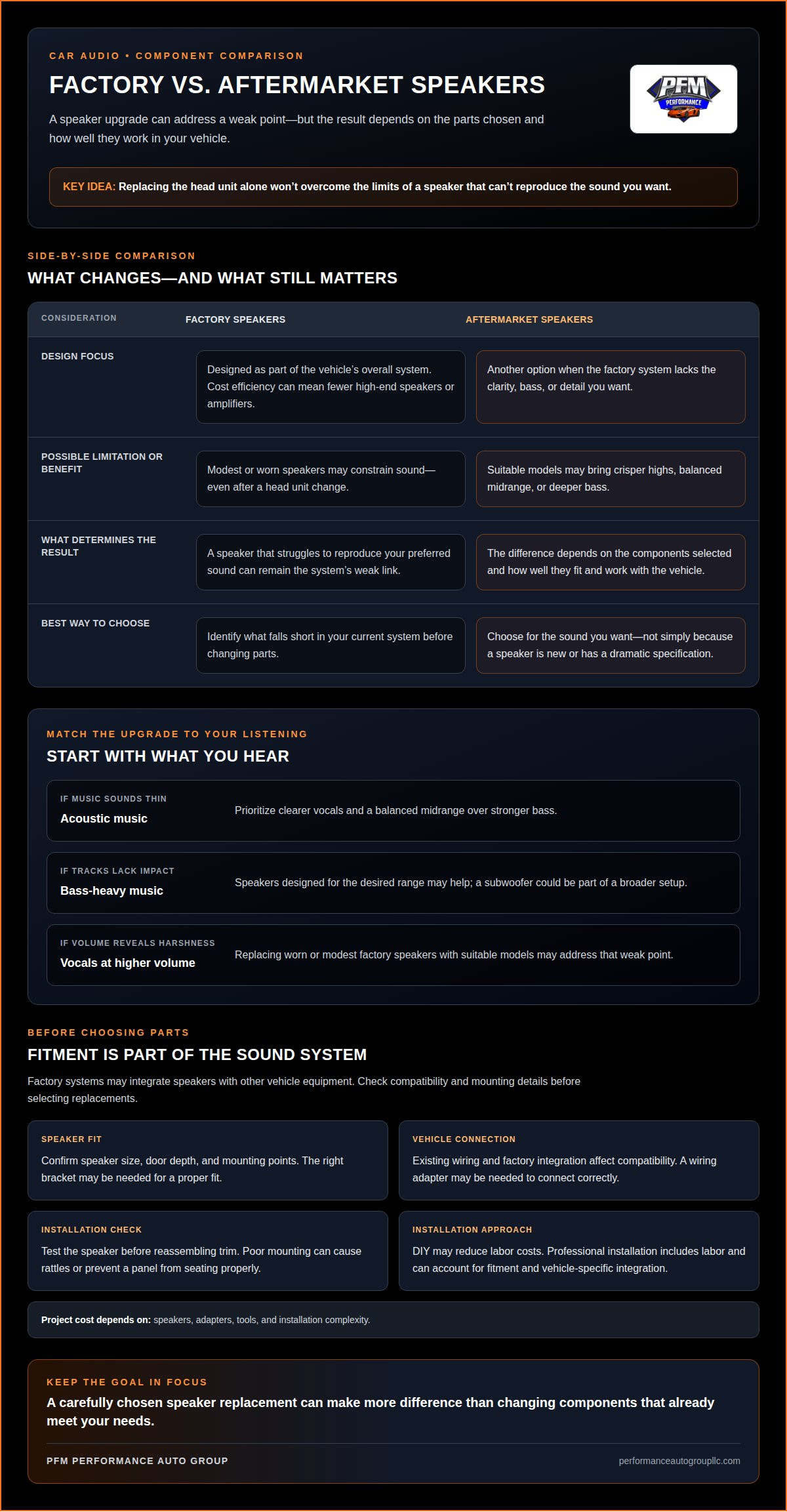
Factory sound systems are designed for the vehicle as a whole, and cost efficiency can mean they don’t include high-end speakers or amplifiers. A factory head unit may also offer fewer sound adjustments than an aftermarket system, limiting customization for listeners who want stronger bass or clearer detail. Replacing only the head unit won’t correct every weakness: modest or worn speakers can still constrain the sound.
Bluetooth is a practical upgrade for daily use. A compatible head unit can stream music wirelessly from a phone and support hands-free calling, reducing the need to handle the device for those tasks. Newer Bluetooth technologies can also support high-resolution audio streaming from an iPhone or Android device. During a commute, convenient access to playlists or calls can make the system easier to use; on a long drive, clearer playback can make listening more enjoyable.
Vehicle-specific engineered audio systems show why component matching matters. A manufacturer might advertise a premium setup with 19 speakers or a 600-watt amplifier, but those figures alone don’t describe how the system sounds to you. Cabin acoustics, speaker placement, processing, and listening preferences all shape the result. An aftermarket digital processor can tune sound to the vehicle’s acoustics, rather than relying only on headline specifications.
When the goal is better playback and useful connectivity, a compatible head unit can be a meaningful part of an upgrade. Professional car audio installation can help preserve vehicle functions while integrating the chosen equipment.
Aftermarket versus factory-installed speakers
Factory speakers are often designed with cost efficiency in mind, so a vehicle may not come with high-end speakers or amplifiers. Aftermarket speakers are another option when the factory system lacks the clarity, bass, or detail you want. The difference depends on the components selected and how well they fit the vehicle, not simply on whether a speaker is new.
Consider a familiar example: music sounds acceptable at low volume, but vocals become harsh when turned up. Replacing worn or modest factory speakers with suitable aftermarket models can address that weak point. A speaker upgrade may also deliver crisper highs, balanced midrange, or deeper bass, depending on the components and system. A new head unit alone won’t overcome the limits of a speaker that can’t reproduce the sound you want.
Match the upgrade to your listening habits. If acoustic music sounds thin, clearer vocals and a balanced midrange may matter more than stronger bass. If bass-heavy tracks lack impact, speakers designed for the desired range may help, though a subwoofer could be part of a broader setup. The goal is a coherent sound system, not the largest speaker or the most dramatic specification.
DIY installation may reduce labor costs, while professional installation includes labor and can account for fitment and vehicle-specific integration. The total depends on the speakers, adapters, tools, and installation complexity. Replacing speakers in a straightforward setup differs from working around integrated factory equipment or distinctive door trim.
A speaker upgrade typically involves identifying the factory speaker’s size and mounting arrangement, removing interior trim, disconnecting the old speaker, and fitting the replacement with an appropriate bracket and wiring adapter. Common tools include trim-removal tools, screwdrivers, and a socket set. Test the speaker before reassembling the trim. Wiring and mounting must suit the vehicle, since a poor fit can cause rattles or keep the panel from seating properly.
Factory systems can integrate speakers with other vehicle equipment, so check compatibility before choosing parts. A replacement may require a vehicle-specific bracket or wiring harness to connect correctly. Door depth, mounting points, and existing wiring affect which speakers fit. Professional installation can account for these details and keep the work focused on sound rather than avoidable fitment issues.
Start with the part of your current system that falls short. A carefully chosen speaker replacement can make more difference than changing components that already meet your needs. If you’re considering a tailored setup, explore professional speaker installation as a practical next step.
Choosing components to match listening preferences
Build a car audio system around what you want to hear, not a list of parts. A listener who values clear vocals may prioritize speakers and tuning, while someone who enjoys bass-heavy music may add a subwoofer and amplifier. Each component should support the same listening goal.
Start by identifying what sounds lacking in a familiar track. If guitar and vocals seem buried, clearer highs and balanced midrange may matter most. If low notes feel weak, a subwoofer can extend the bass. It handles low-frequency sound that smaller speakers may not reproduce with the same depth, so consider it when planning an upgrade.
Then consider how each part works with the rest. Speakers, subwoofer, amplifier, and head unit form a connected system, so changing one component can affect the overall balance. For example, adding an amplifier without matching the speakers and listening goals may not create the sound you want. A coherent setup prioritizes compatibility over simply adding equipment.
Compatibility starts with the vehicle. Check whether its existing stereo or touchscreen can be replaced before choosing a new head unit. The dashboard opening, mounting arrangement, wiring, and factory controls can affect which units fit and how they connect. A vehicle with an integrated touchscreen may need a different approach from one with a separate stereo opening.
Decide which daily features matter alongside sound. Apple CarPlay or Android Auto can make phone-based navigation and media easier to access through a compatible system. Some aftermarket head units also integrate with Siri or Google Assistant, while wireless versions of CarPlay and Android Auto reduce the need for a cable. Choose features that suit your habits.
- For clearer vocals: Prioritize balanced speakers and sound tuning.
- For deeper bass: Include a subwoofer in the system plan.
- For phone integration: Look for compatible CarPlay or Android Auto features.
- For factory touchscreen vehicles: Consider replacement compatibility before choosing a unit.
These priorities help narrow component choices without treating every upgrade as necessary. A system designed for podcasts and acoustic music may differ from one built around bass-heavy playlists. The right balance depends on your listening preferences and vehicle layout.
For a setup that brings the chosen components together, consider booking a car audio installation appointment.
Equalizers and digital sound processors for sound tuning
An equalizer changes the balance between frequency ranges, while a digital sound processor can shape how audio reaches the speakers. In a vehicle, reflections from glass, seats, and hard surfaces affect playback. Tuning helps address these cabin-specific differences so music sounds more balanced from the listening position.
Equalization is useful when one part of a mix dominates. If a singer sounds recessed, adjusting the relevant frequency range can bring vocals forward. If cymbals feel sharp, reducing excessive high-frequency energy may soften their edge. Make small, deliberate changes rather than raising every setting, which can create a harsh or unnatural sound.
A digital sound processor offers more control over how signals reach different speakers. It can help balance output between front and rear speakers or manage separate channels in a system with a subwoofer. The result depends on the speakers, their placement, and the vehicle’s acoustics. Processing can’t make a poorly matched component perform beyond its capabilities.
Digital time alignment addresses differences in how long sound takes to reach the listener from each speaker. From the driver’s seat, the left speaker is usually closer than the passenger-side speaker. Adjusting timing can help sounds arrive more cohesively and improve their placement across the dashboard. It tunes the listening experience for a particular position rather than changing the speaker itself.
High-pass and low-pass filters direct selected frequency ranges to suitable components. A high-pass filter can limit low-frequency signals sent to smaller speakers, while a low-pass filter can direct bass to a subwoofer. These settings help components handle the ranges they’re intended to reproduce. Poorly chosen filter settings can leave gaps or overlap in the sound.
A careful tuning process starts with a clear listening goal and familiar music. A track with vocals can reveal harshness or recessed voices; a bass-heavy track can expose weak low notes. Adjust equalization gradually, then listen again from the driver’s seat. Change time alignment and filter settings only to address a specific issue, rather than altering several controls at once.
Equalization, time alignment, and filtering work together, but each solves a different problem. A vehicle with uneven cabin response may benefit from frequency adjustments, while speaker timing or bass distribution may call for processor settings. Good tuning preserves the character of the recording while correcting identifiable imbalances, rather than making every track sound artificially boosted.
How much does a car stereo upgrade cost in the US?
There isn’t one price for every car stereo upgrade. For car audio work, pricing depends on the vehicle, selected components, installation scope, and any required integration or fabrication; the project price is provided after a quote request. A speaker replacement differs from a complete system with a head unit, amplifier, subwoofer, and sound tuning.
The first cost driver is the equipment plan. A focused speaker upgrade uses different components from a system designed for stronger bass, clearer vocals, or phone integration. Adding an amplifier or subwoofer affects both equipment selection and installation work. The design should match your listening goal rather than include parts that don’t serve it.
Vehicle compatibility also matters. A car with a straightforward stereo opening may need different fitting work from one with a factory touchscreen integrated into the dashboard. Existing wiring, mounting points, steering-wheel controls, and backup-camera connections can affect which parts are needed. These details shape the project scope before installation begins.
Labor depends on the work involved, not just the number of components. Replacing speakers may require removing door panels and fitting brackets, while a custom system can involve amplifier placement, wiring routes, and sound tuning. Custom fabrication adds a different kind of work from a direct component replacement.
To understand a project estimate, separate it into the relevant parts:
- Equipment: head unit, speakers, amplifier, subwoofer, or processor.
- Fitment: brackets, wiring adapters, and integration with existing vehicle functions.
- Installation: component mounting, wiring, and testing.
- Additional work: custom fabrication or system tuning when the design calls for it.
For example, a driver who wants clearer sound may prioritize speakers and installation. Someone seeking deeper bass and phone integration may need a broader component plan. The difference comes from the selected equipment and the labor needed to connect it properly, not from a single standard package.
Before settling on a scope, identify the sound changes and features that matter most. A precise goal helps keep the design focused, while vehicle-specific fitment and integration determine what the work entails. This makes it easier to understand which parts contribute to the estimate and why.
Estimates put basic aftermarket car speaker swaps at 200-500, complete matched car speaker systems at 600-1,200, full custom car audio installations at 2,000-5,000+; high-performance speakers cost 800-2,000, aftermarket amplifiers 500-1,500, and sound deadening materials 200-500.
PFM Performance Auto Group
PFM Performance Auto Group helps drivers consider vehicle upgrades beyond the sound system, including window tinting for added privacy and a refined appearance. If your plans also include managing sunlight through your vehicle’s windows, Auto Window Tinting and Black Pearl Nano Ceramic Window Tint by Madico are options to consider. The right choice depends on your priorities and preferred finish.
Considering more than one improvement? PFM Performance Auto Group also offers privacy and windshield window tinting, as well as tinting for homes and commercial properties. These services address different needs, so focus on the upgrade that fits your situation.
Contact PFM Performance Auto Group to discuss your vehicle upgrade needs.
Make Your Next Upgrade Count
The benefits of upgrading a car stereo are most meaningful when the system reflects what you enjoy hearing. Before taking the next step, decide which listening experience matters most, then use that priority to guide a conversation about your vehicle’s setup. A thoughtful plan can keep your choices focused on making time behind the wheel more enjoyable.
PFM Performance Auto Group offers car audio alongside Auto Window Tinting, Commercial Window Tinting, and Home Window Tinting. These services suit different needs, whether you’re considering an audio upgrade or another improvement for your vehicle or property.
Share what you’d like to improve and take the next step at your own pace.
A well-considered upgrade can make every drive feel more like your own.
Frequently Asked Questions
Is it worth it to upgrade the car’s stereo?
It can be worthwhile if your current system lacks a feature or listening experience you value. For example, a driver who regularly takes calls or streams music may appreciate Bluetooth connectivity, while someone satisfied with factory playback may have little reason to change it. Decide what you want to improve first, then consider whether a head unit alone addresses that need.
Why Do Aftermarket Car Stereos Sound Better?
Aftermarket stereos can offer more control over audio settings and broader component choices, but they don’t automatically sound better in every vehicle. The result depends on compatibility, connected speakers, and system tuning. A unit that suits your listening habits may make adjustments easier, while a poor match can leave the sound unchanged or unbalanced. Think of the stereo as one part of a complete audio chain.
What are the benefits of upgrading a car stereo?
An upgrade can bring more convenient phone connectivity, expanded listening options, and sound adjustments better suited to your preferences. A compatible system, for instance, may let you use Apple CarPlay or Android Auto for navigation and media. The most useful improvement depends on your routine: frequent calls, music streaming, or more control over playback can each point to a different upgrade.
How does an aftermarket stereo compare with a factory stereo?
A factory stereo is selected for a particular vehicle, while an aftermarket unit offers different choices in features and audio controls. That flexibility comes with a compatibility consideration: dashboard fit, wiring, and vehicle functions must work with the replacement. A car with an integrated touchscreen, for example, may need a different solution from one with a separate stereo opening. Compare the functions you rely on before changing units.
Can a new car stereo improve sound quality without replacing speakers?
Yes, it can improve playback through better audio adjustments or processing, especially if the existing speakers are in good condition. Equalization, for example, may help correct a tonal imbalance without changing hardware. However, a new stereo can’t overcome speakers that are worn or unable to reproduce the sound you want. If distortion remains at higher volume, the speakers may be limiting the result.
What features do modern car stereos offer, such as Apple CarPlay and Android Auto?
Depending on the unit, features can include Bluetooth music streaming, hands-free calling, Apple CarPlay, Android Auto, HD Radio, and voice-assistant integration. Some systems offer wireless CarPlay or Android Auto, while others connect by cable. If you want phone-based navigation on the stereo display, prioritize compatible smartphone integration. Feature availability varies by unit and vehicle compatibility.