
Windshield Tinting in Tampa: Heat Comfort, Clear Views, and a Careful Install
Can you reduce the bite of Tampa’s sun without compromising your view of the road? With windshield tinting Tampa drivers need to weigh comfort, clear visibility, and Florida’s rules together. Start by identifying where film can legally go, then compare product specifications and your own driving priorities.
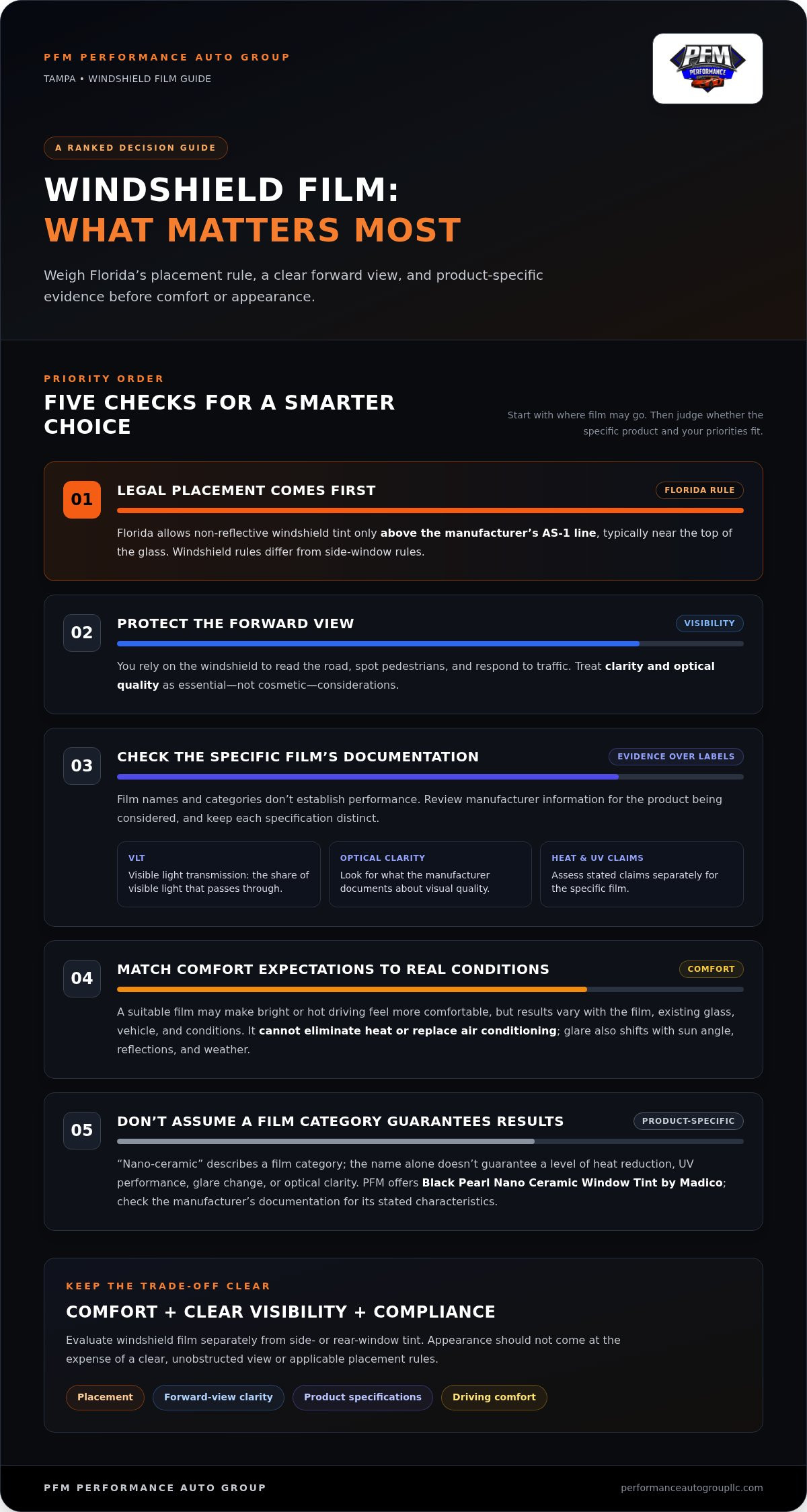
It’s reasonable to be cautious about adding anything to the glass you rely on to see clearly. Florida allows non-reflective tint on the windshield only above the manufacturer’s AS-1 line, typically near the top of the glass. That rule differs from the rules for side windows, so windshield film needs to be considered separately when planning your vehicle’s comfort and appearance.
This guide explains what windshield film may do, how to compare options, and which Florida compliance details deserve attention. It also covers nano-ceramic film, including Black Pearl Nano Ceramic Window Tint by Madico. PFM Performance Auto Group is a locally owned automotive customization shop in Tampa, offering professional windshield tinting to drivers in Hillsborough County.
Key Takeaways
- Windshield film may support everyday driving comfort in Tampa, but results depend on the specific film and its specifications.
- Windshield tint differs from side-window tint. Placement, optical clarity, and visibility all deserve careful consideration.
- When comparing windshield tinting Tampa options, weigh comfort and clear views alongside Florida’s placement rules.
- Compare product documentation when considering film types, including nano-ceramic options. A category name alone does not establish performance.
- PFM Performance Auto Group provides professional windshield tinting and Black Pearl Nano Ceramic Window Tint by Madico.
Why Tampa Drivers Consider Windshield Tinting for Everyday Comfort
On a bright Tampa drive, sunlight can enter directly through the windshield, warming the cabin and making the road ahead feel harsh. You may notice it most during a sunny commute, while sitting in traffic, or when returning to a car parked in an open lot. Windshield tinting Tampa drivers consider may help with these everyday discomforts, but choosing film is about more than selecting a darker appearance.
Windshield film is applied to automotive glass; it does not replace the windshield. Films differ in construction and specifications, so their effects on heat and light vary. A film may help limit some solar energy entering the cabin, but the result depends on the product, existing glass, vehicle, and conditions. Look at documentation for the specific film rather than assuming all tint performs alike.
What windshield film may help with on Tampa roads
Drivers commonly explore film to reduce the sensation of heat or make bright-light conditions more comfortable. A suitable option may make a sunlit commute feel more comfortable, though it cannot eliminate heat or replace air conditioning. Glare also changes with the sun’s angle, reflections, and weather. Tint should never be treated as a substitute for a clear, unobstructed view.
Interior protection also calls for product-specific information. Don’t assume a film blocks a particular amount of UV or infrared energy, or prevents fading, simply because it is marketed as advanced. Look for documentation supporting claims about the specific product. General background on window film can explain the category, while manufacturer information is the better source for a film’s stated performance.
How windshield tint differs from other vehicle windows
You depend on the windshield to read the road, spot pedestrians, and respond to changing traffic. That makes clarity and optical quality essential considerations, not cosmetic details. A film that seems suitable on a side or rear window is not automatically appropriate for the windshield. Placement, visibility, and applicable rules must be considered for that glass specifically.
Side- and rear-window tint often involves balancing cabin privacy and appearance with comfort. The windshield presents a different trade-off because it sits in the driver’s forward line of sight. Evaluate windshield film separately, even if you’re planning a coordinated tint treatment across the vehicle. For broader context on automotive tint across different windows, explore the Tampa car window tinting guide.
For windshield film, consider comfort, clear visibility, and compliance together. Appearance should not come at the expense of any of them. These priorities help frame the practical questions: which film is being considered, where it may be applied, and how its specifications fit your vehicle and Florida requirements.
How Windshield Tint Film Works and Which Options Tampa Drivers Can Consider
Windshield film is a thin layer applied to automotive glass. Its purpose and performance depend on its material and documented specifications. Visible-light transmission, heat-related performance, and optical qualities are separate considerations. A product that performs well in one area should not automatically be assumed to excel in another.
That distinction matters when comparing options. Tint names may describe a material or construction, but a label alone does not show how a particular film will perform in your vehicle. For windshield tinting Tampa drivers should compare manufacturer documentation for the specific product while keeping forward-view clarity and applicable rules in mind.
What nano-ceramic film means in practical terms
“Nano-ceramic” describes a film category associated with ceramic material at a very small scale. The term alone does not guarantee a particular level of heat reduction, UV performance, glare change, or optical clarity. Those claims need product-specific evidence. PFM offers Black Pearl Nano Ceramic Window Tint by Madico as a film option. Review the manufacturer’s documentation for its stated characteristics rather than relying on assumptions based on the category name.
There is no universal ranking that makes one film type right for every windshield. The practical question is whether the specific film’s documented features suit your priorities and vehicle. A general claim about ceramic films is not proof of a particular product’s performance.
How to assess a windshield film specification
Visible light transmission (VLT) is the share of visible light that passes through the film, making it an important measure when you want to preserve a clear windshield view. VLT is not the only specification to consider. Review optical clarity and any stated heat-rejection or UV claims separately. Product documentation can explain what is measured and which claims apply to the selected film.
Use these questions to compare options:
- Clarity: What does the manufacturer document about optical quality?
- Comfort: Which heat-related claims are supported for this specific film?
- Light transmission: What VLT is listed, and how does it fit the vehicle and applicable requirements?
At PFM, film choice is part of a considered windshield tinting decision, not simply a matter of choosing the darkest appearance. You can book a windshield tinting appointment.
Is Windshield Tinting Legal and Safe in Florida?
It can be, but legality depends on where the film is placed and whether it meets Florida’s requirements. A darker appearance alone does not establish that a windshield film is permitted or appropriate. For Tampa drivers, the decision has two parts: confirm legal placement, then consider whether the film preserves a clear view in the conditions you regularly drive.
Which Florida rules apply to windshield film?
Florida Statutes Sections 316.2951-316.2956 govern vehicle window sunscreening, including windshield film. Under these rules, non-reflective tint is permitted on the windshield only above the manufacturer’s AS-1 line, the marked reference near the top of the glass. The line’s position can vary by vehicle, so identify the marking on your own windshield rather than assuming a universal strip height.
This windshield-specific rule is narrower than a general discussion of tint on other vehicle windows. Don’t apply side- or rear-window standards to the windshield, and don’t assume a film is lawful simply because it is sold for automotive use. Placement and film characteristics both matter. If you’re researching a medical exemption for additional tint, review Florida’s window tint exemption guide for that separate topic.
Florida Statutes Sections 316.2951-316.2956 allow non-reflective windshield tint only above the manufacturer’s AS-1 line. This is the key placement rule for windshield film; it is not a general authorization to tint the full windshield. Identify the AS-1 line and resolve placement questions before installation.
How clarity and safe driving should guide the decision
Legal placement and driving suitability are related, but they are not the same test. Even film positioned within the permitted area should be assessed for clear, undistorted visibility. Your windshield supports constant visual tasks, from reading road signs to judging distance in changing light. A film’s dark appearance does not prove better comfort, clear optics, or suitability for your vehicle.
Consider your regular routes and driving conditions. Someone who often travels at dawn or dusk may have different visibility concerns from a driver whose regular trips happen in bright midday light. Reflections, rain, shadows, and nighttime lighting can also affect how the road appears through glass. Prioritize an unobstructed forward view and consider the film’s documented optical qualities alongside its intended placement.
For windshield tinting Tampa drivers can take a practical approach: identify the AS-1 marking, understand the Florida placement rule, and weigh visibility separately from appearance or comfort preferences. Professional installation applies the film carefully, but it does not replace the need to consider whether the film and placement are appropriate. The goal is a considered result that respects the law and the driver’s view.
How to Choose Windshield Tinting in Tampa for Your Vehicle
Start with your actual driving priorities, not a preference for the darkest appearance. Think about when you drive, what kind of light feels uncomfortable, how important forward-view clarity is, and what Florida’s rules allow for the windshield. When comparing windshield tinting Tampa options, consider the specific film’s documented features and placement rather than assuming one option suits every vehicle or commute.
Match film considerations to your driving priorities
Before comparing products, rank comfort, glare management, appearance, and visibility. If you drive frequently during the day, documented heat-related performance may matter most. If bright light is your main concern, consider the product’s stated features while keeping clear vision central. If interior care is a priority, look for product-specific evidence for relevant protection claims instead of relying on broad promises.
Use this comparison as a starting point, not a performance guarantee:
| Driving priority | What to consider | What to verify |
|---|---|---|
| Frequent daytime driving | Cabin comfort in strong sunlight | Documented heat-related specifications and permitted placement |
| Glare sensitivity | Bright conditions on regular routes | Optical clarity and any product-specific glare claims |
| Interior-care concerns | Exposure affecting the vehicle’s cabin surfaces | Manufacturer evidence for relevant protection claims |
Darkness alone is a poor way to select film. A darker look does not establish heat performance, optical quality, or legal suitability. Assess each consideration separately, and make sure the choice fits the vehicle and current requirements. Privacy is a different goal from windshield comfort and visibility. Automotive privacy window tint guidance can help distinguish those priorities for other vehicle windows.
Questions a professional windshield tint consultation should address
A useful discussion covers your vehicle’s windshield, the film under consideration, its documented specifications, intended placement, and your visibility expectations. These details make the decision specific to your car rather than relying on general claims about a film category. Compliance also belongs in the conversation: comfort preferences do not override windshield placement rules.
PFM offers Black Pearl Nano Ceramic Window Tint by Madico for automotive tinting. The product name does not replace a review of its specifications. PFM can discuss the option in practical terms, helping you consider how its documented features relate to your goals without promising a particular temperature change or performance outcome.
Before deciding, clarify what you want to improve, what you need to see clearly, and what the rules permit. That gives the film discussion a clear purpose and keeps the choice grounded in your vehicle’s needs.
Book Professional Windshield Tinting in Tampa with PFM
Choosing a film is only part of the decision. A good appointment brings your goals, vehicle, the selected film’s documented specifications, and Florida’s windshield requirements into focus. PFM Performance Auto Group is a locally owned automotive customization shop in Tampa that provides professional windshield tinting for drivers in Hillsborough County.
What to expect when arranging windshield tinting
Use the online booking page to select an appointment for windshield tinting. Before booking, identify what you hope to address, such as daytime cabin discomfort or bright light, and what matters most for your forward view. Having those priorities ready helps keep the discussion focused on a suitable, well-informed choice.
Vehicle details can also make the discussion more specific. Note your vehicle’s make, model, and year, and consider whether you have questions about its windshield, film placement, or product specifications. This gives you a useful starting point instead of relying on broad claims about tint categories.
Preparation, drop-off arrangements, installation timing, and aftercare can vary. Follow the appointment information and any instructions provided for your vehicle. Avoid applying your own cleaning products or handling the film after installation unless the care guidance you receive says it is appropriate. Product-specific instructions help you care for the finished work without guesswork.
PFM’s local automotive customization services include window tinting for vehicles, homes, and commercial properties, as well as car audio and electronics installation. For windshield tint, the focus is on your vehicle and priorities, with comfort, clear visibility, and compliance at the center.
Book a Tampa windshield tint appointment
Before settling on an option, review the essentials. Is the intended placement compliant with Florida requirements? Are your visibility expectations appropriate for your driving? Are the film’s specifications documented, and do its supported features align with your goals? A careful decision considers each point rather than treating a dark appearance as proof of suitability.
If your priorities are clear, arrange professional windshield tinting with PFM. Use the online booking page to select an appointment, then bring your vehicle details and questions into the conversation. This gives you a practical foundation for discussing the film and installation with care.
Make Your Next Drive More Comfortable
Connect your film choice to the way you use your vehicle. Think about when the windshield feels most uncomfortable, which conditions make visibility especially important, and what you want the installation to accomplish. Bringing those priorities to your appointment keeps the discussion practical and focused on your vehicle.
For windshield tinting Tampa drivers should treat the appointment as a chance to make a considered choice, not simply select a shade. PFM Performance Auto Group provides windshield tinting and offers Black Pearl Nano Ceramic Window Tint by Madico. The right decision depends on the product’s documented specifications, intended placement, and Florida requirements.
Move forward with a clear idea of your comfort goals and visibility needs. A thoughtful choice starts with understanding how the film and placement fit your driving.
Choose a film with your comfort goals, clear visibility, and Florida’s placement rules in mind.
Frequently Asked Questions
Is windshield tinting legal in Florida?
Yes, Florida allows limited windshield tinting, subject to placement and film requirements. Under Florida Statutes Sections 316.2951-316.2956, non-reflective film is allowed only above the manufacturer’s AS-1 line. A product’s availability does not by itself establish that a particular installation complies. Before arranging windshield tinting in Hillsborough County, identify the marking on your vehicle’s glass and make sure the planned application respects the state rule.
Can windshield tint reduce heat without making it hard to see?
It may be possible to prioritize cabin comfort while maintaining a clear view, but outcomes depend on the selected film and its specifications. Compare documented heat-related features with visible-light transmission and optical clarity rather than judging film by its shade. If you often drive through changing light, such as shaded roads opening into bright sun, keep clear forward visibility central to your decision.
How much of a windshield can be tinted in Florida?
For standard windshield tint, Florida permits non-reflective film only above the manufacturer’s AS-1 line. The line is marked on the windshield, and its position can vary by vehicle, so don’t rely on a generic measurement or assume the same strip fits every car. Check the glass marking before choosing placement. This rule concerns the windshield and should not be confused with limits for other windows.
Does windshield tint help with glare while driving in Tampa?
Some films may affect bright-light comfort, but the amount of glare reduction depends on the film, the sun’s angle, and driving conditions. Windshield film is not a fix for every glare source, including reflections from wet pavement or headlights after dark. If glare is your main concern, consider clear sightlines and nighttime visibility alongside any product-specific claims about light management.
What type of tint is best for a car windshield?
There isn’t one best film for every vehicle or driver. The right choice depends on permitted placement, your comfort priorities, and the film’s documented optical and heat-related specifications. PFM offers Black Pearl Nano Ceramic Window Tint by Madico as an option, but the category name alone does not establish performance. Compare product documentation with your needs, especially if you regularly drive at night or in changing weather.
How long does windshield tint installation take?
Installation time can vary with the vehicle, the glass, and the work involved, so a reliable duration should not be assumed for every appointment. If you’re planning around work, school pickup, or another commitment in Hillsborough County, use the booking details to arrange a suitable appointment instead of building your day around an estimated turnaround that hasn’t been provided. Timing should be understood for your specific booking.
How should I care for my car after windshield tinting?
Follow the care instructions provided for your specific installation, since cleaning products and timing recommendations can depend on the film and application. Don’t press, scratch, or attempt to adjust the newly treated area. Once care is permitted, use the recommended cleaning method and watch for changes that affect your view. If anything seems to obstruct visibility, avoid driving until you can have the concern addressed.