
Window Tinting for Riverview Storefronts: Glare and UV Protection
Storefront glass can welcome daylight and still create glare, heat, and UV exposure that affect shoppers, merchandise, and interiors. For retailers considering window tinting for storefronts in Riverview, professionally selected film can soften harsh glare, help reduce UV-related fading, and preserve natural light while adding a level of privacy.
Clear storefront windows can showcase your merchandise without letting intense sunlight disrupt the shopping experience. The right film balances visibility, comfort, and protection for your Riverview storefront, rather than simply making the glass darker.
This guide explains how commercial window film can help with glare and UV exposure, outlines privacy options, and describes what to expect from professional installation and warranty terms. With Riverview’s place in the Tampa Bay area in mind, you’ll have a practical basis for deciding what matters most for your storefront before moving ahead.
Key Takeaways
- Choose storefront film with your priorities in mind, balancing glare reduction, natural light, and indoor comfort.
- Match privacy film to the views you want to preserve or block, both from inside and outside the store.
- Learn how reducing UV exposure can help limit fading in merchandise, displays, furnishings, and interiors.
- Understand the professional installation process and what to review in the film warranty before moving forward.
- See how PFM Performance Auto Group’s commercial window tinting can support storefront needs in the Tampa Bay area.
Interior glare reduction and UV protection
Professional window tinting for storefronts in Riverview can reduce harsh glare while retaining natural light. Commercial solar-control film can also help limit solar heat and UV rays entering your space. For a shop with west-facing windows, the right film can make afternoon sunlight less disruptive without making the storefront opaque.
Film does not prevent glass from breaking. It adds a layer that can hold shattered glass together, but does not prevent breaking. Choose a film with the existing glazing and sun exposure in mind. A film that is too dark can also affect visibility of displays, customer sightlines, and interior lighting, so start with the storefront’s purpose.
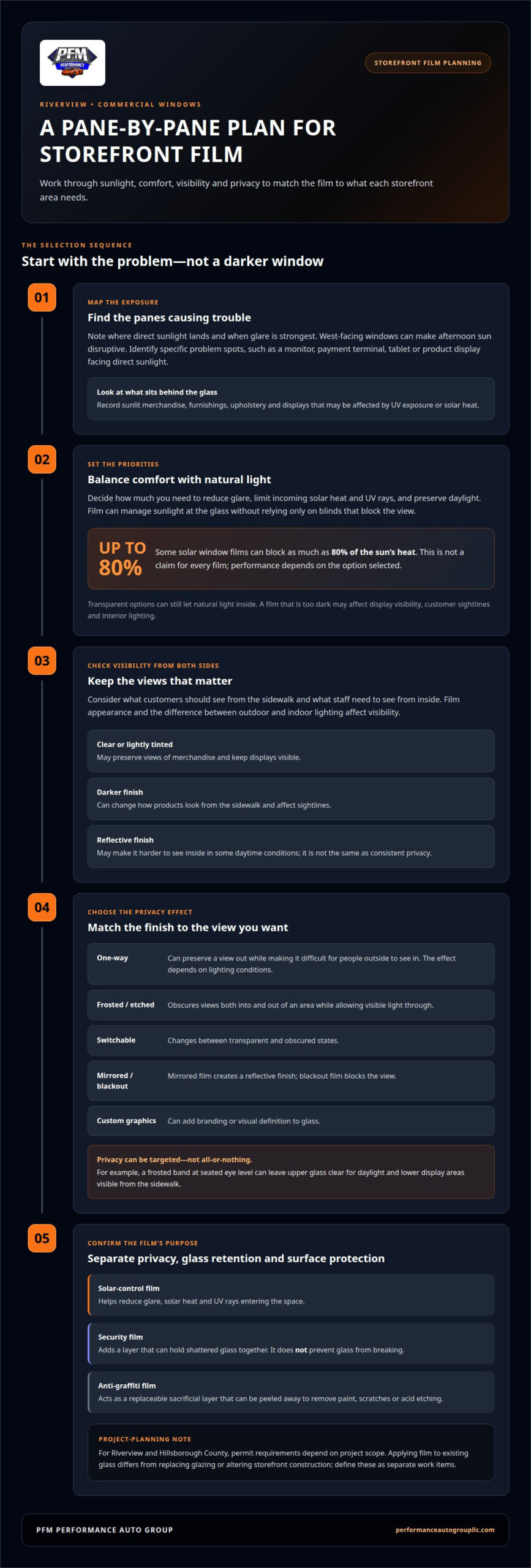
Glare can make a payment terminal, tablet, or product display harder to see. Solar-control film can reduce incoming glare, helping customers read screens and staff use point-of-sale equipment near windows. Identify the problem areas, such as a monitor facing direct afternoon sun, before selecting a film for that exposure.
Sun-control film manages sunlight at the glass, rather than relying only on blinds that block the view. Some solar window films can block as much as 80% of the sun’s heat. Transparent options can still allow natural light inside, helping a boutique or café keep its windows bright while reducing direct solar heat.
Visibility depends on the film’s appearance and the difference between outdoor and indoor lighting. A clear or lightly tinted option may preserve views of merchandise, while a darker finish can change how products look from the sidewalk. Consider the storefront from both sides: customers need to see displays, and staff need clear sightlines toward the entrance.
Glare control and privacy can overlap, but they are not the same goal. Reflective film may make it harder to see inside in some daytime conditions, while frosted film obscures views more consistently. For a Riverview shop displaying jewelry near a bright window, the priority might be reducing reflected sunlight without hiding the merchandise.
UV exposure can contribute to fading and discoloration of inventory, furnishings, upholstery, and displays. Consider which items sit in direct sunlight, when glare is strongest, and how much visibility the shop needs. These details help guide a film choice for the whole storefront, not just its brightest pane.
Think of film as a targeted interior upgrade, not a substitute for every lighting decision. Balancing glare reduction, daylight, UV protection, and clear views can make storefront windows work better for customers and daily operations.
Privacy film options
Privacy film changes what customers can see through storefront glass, and its finish also shapes the retail appearance. Choose based on whether you want to preserve an outside view, conceal specific areas, or add a decorative feature. A Riverview boutique might keep the main display clear and use frosted film across a fitting-room partition.
One-way privacy film can preserve a view out while making it difficult for people outside to see in. Its effect depends on lighting conditions, so it is not a permanent screen in every situation. Frosted or etched film works differently: it obscures views both into and out of a space while allowing visible light through. It can suit an office door or service counter where daylight is welcome but a direct view inside is not.
Retail window films also include switchable, mirrored, blackout, and custom graphic options. Switchable film changes between transparent and obscured states; mirrored film creates a reflective finish; blackout film blocks the view. Custom graphics can add branding or visual definition to glass. Each option affects visibility and appearance differently, so choose a design that suits the storefront’s purpose without obscuring useful displays.
Privacy can be targeted rather than applied across the entire storefront. For example, a shop could use a frosted band at seated eye level, leaving upper glass clear for daylight and lower display areas visible from the sidewalk. A salon might obscure treatment areas while keeping its entrance welcoming. Plan placement around customer sightlines, staff visibility, and the products behind the glass.
Privacy film differs from security window film. Security film adds a layer that can hold shattered glass together, but does not prevent breaking. Anti-graffiti film serves another purpose: it acts as a replaceable sacrificial layer that can be peeled away to remove paint, scratches, or acid etching. These options address different concerns, including privacy, glass retention, and vandalism.
For Riverview and Hillsborough County, permit requirements depend on the project scope. Applying film to existing glass differs from replacing glazing or altering storefront construction. Define film application, glass replacement, and façade changes as separate work items when planning the project.
Before choosing a finish, identify what must remain visible from the sidewalk and which interior areas need screening. A storefront plan can then match privacy and appearance to each pane, instead of applying one treatment everywhere. Plan your storefront privacy film around the views, displays, and customer areas that matter most.
UV protection for merchandise and interiors
Storefront film can address UV exposure and solar heat, while security film can help hold shattered glass together. The right choice depends on the window’s exposure and what sits behind it.
Protecting Merchandise and Furnishings
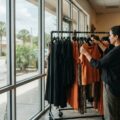
UV exposure can contribute to fading and discoloration in merchandise, furnishings, upholstery, and product displays. A clothing retailer, for example, can consider film for windows beside sunlit racks and displays. Look at where sunlight reaches during store hours, then prioritize those panes. This helps target protection without treating every window identically.
Solar Control and UV Films
Commercial window tinting can use solar-control film to reduce incoming UV rays, glare, and heat through storefront glass. Limiting solar heat entering the space may also reduce demand on air conditioning. Select film with the store’s daylight needs, display layout, and visibility from outside in mind. A bright showroom may need a different balance than a stockroom.
Security film serves a different purpose from solar-control film. It adds a layer that can hold shattered glass together, but does not prevent breaking. After impacts, cracked glass may remain in place rather than falling apart immediately. This can help limit flying glass shards during intense natural disasters, too.
A retailer with large entrance panes may consider security film where broken glass could affect customers or staff. It does not make the storefront impenetrable or replace damaged glass. Its role is to help hold fragments together, as one part of storefront security planning, separate from UV protection and privacy.
Anti-graffiti film protects storefront glass with a replaceable sacrificial layer. If paint, scratches, or acid etching mark the surface, the film can be peeled away and replaced, so the protective layer takes the damage rather than the glass. A business facing repeated vandalism can consider it for exposed ground-level panes.
Keep each film’s purpose clear when planning a window upgrade: solar-control film targets sunlight, security film helps hold shattered glass together, and anti-graffiti film protects the surface. One storefront may need different treatments on different panes. Sun-facing display glass may need solar control, while an exposed entry pane may call for security or sacrificial protection.
Record the selected film and its intended function with the storefront’s maintenance documents. Review any applicable warranty terms alongside the film’s stated use, such as solar control or glass protection. Clear records distinguish the film’s role from the original glazing, especially if a damaged pane later needs attention.
Commercial window film installation and warranty
Commercial window film installation starts by matching the film to the glass, the storefront’s exposure, and its purpose. Solar, privacy, and security films address different needs, so selection depends on the building and its daily use.
Solar-control film manages sunlight and heat; privacy film changes sightlines; security film adds a layer that can hold shattered glass together but does not prevent breaking. Film can upgrade existing glazing, while replacement windows may be more suitable when glass or frames are damaged.
Commercial Standards and Applications
Commercial safety and security film may relate to standards including ANSI Z97.1 and CPSC 16 CFR 1201 Cat I and II. Other listed requirements include General Services Administration (GSA), United Facilities Criteria (UFC), ASTM Large Missile Level C and Small Missile requirements, and Factory Mutual FM Approvals 4350 Small Missile. These references apply to specific applications, not automatically to every commercial window.
For a Riverview storefront entrance, the intended safety or security function helps guide film selection. Glass type, installation method, and project requirements matter too. Review product documentation and warranty terms together to ensure the film’s stated application suits the planned work.
Installation in Occupied Businesses
Installation in an operating shop can be organized around customer access and daily operations. The installer assesses the commercial window, prepares the glass, applies and trims the film, then inspects the finished surface. A business can identify priority areas, such as its entrance, checkout counter, or display windows, to help sequence the work.
Clear coordination helps protect merchandise and keep walkways usable during installation. Work can be organized by window area while other parts of the retail floor remain accessible. Identify areas that need temporary access restrictions and follow the film’s care instructions afterward.
Choosing Storefront Film Types
Solar-control film targets sunlight and heat; privacy film adjusts visibility; security film adds a layer that can hold shattered glass together but does not prevent breaking. A Riverview shop with sun-facing displays may prioritize solar control, while an office beside the sales floor may need privacy film. Choose security film for its separate glass-retention purpose.
For a Tampa Bay property, consider each window’s exposure, the existing glazing, and how the space operates. These details shape decisions about cooling, daylight, outward visibility, and the finished storefront’s appearance.
Film and replacement windows address different needs. Film is applied to existing glazing; it does not repair damaged glass or frames. The condition of the window system and the project’s goals help determine whether film or replacement is more suitable.
A warranty is offered, and terms vary based on the chosen product. Review the coverage and care requirements before installation, then keep product and installation documents with storefront maintenance records. These records provide a clear reference for the film selected and its intended use.
Tampa Bay service area
Riverview, Florida storefront owners can choose commercial window tinting from a local provider serving Hillsborough County and the Tampa Bay area. For a local project, focus on how the film will address the building’s exposure, operating needs, and preferred appearance.
Riverview’s retail spaces and offices have different storefront needs. A shop with sunlit display windows may prioritize film that helps manage glare and solar heat. An office with street-facing glass may care more about privacy or a consistent exterior appearance. Let the building’s purpose guide the film plan.
Start by identifying which windows have the greatest daily impact. Note whether glare affects the checkout area, customer seating, or merchandise displays. Then consider how much daylight and visibility each area needs. These practical details define the project more clearly than treating every pane as though it serves the same function.
Florida storefronts need a considered balance between interior comfort and outward visibility. A retailer may want customers to see products clearly from the sidewalk while staff work comfortably behind the glass. A film plan can address different priorities across separate window sections while maintaining a coherent appearance.
For a Tampa Bay property, project planning should account for the building’s glass, surroundings, and daily use. A street-facing retail entrance has different requirements from a private office partition or sun-exposed display window. These distinctions help determine the film type, placement, and installation sequence.
For a Riverview storefront project, organize the key details around the property: identify the areas needing treatment, describe the glare or privacy concern, and state what visibility should remain. Include examples such as a bright front display or an office conference room. Clear priorities make the project scope easier to define.
Commercial tinting is most useful when its purpose is specific. A retailer might prioritize customer comfort near the entrance; an office might seek a more consistent interior environment. Matching the treatment to the space keeps the project focused, preserves the building’s character, and avoids applying one solution to windows with different needs.
For a Riverview storefront, take the next step and schedule a commercial window tinting appointment.
PFM Performance Auto Group: Black Pearl Nano Ceramic Window Tint By Madico
PFM Performance Auto Group provides Commercial Window Tinting for Riverview storefronts, helping you plan film around glare, privacy, and your space’s needs. The shop also offers Home Window Tinting and Auto Window Tinting for residential and vehicle windows.
For a storefront project, bring practical priorities into the conversation: which windows receive direct sun, what customers should see, and where added privacy matters. These details give the installation plan a clear starting point. Black Pearl Nano Ceramic Window Tint By Madico is also among the available tinting offerings.
When you’re ready to discuss your storefront, contact PFM Performance Auto Group.
Plan a storefront film solution that fits
Start with a focused conversation about your property rather than a decision based only on film appearance. A useful project brief identifies the windows that matter most, the result you want, and any practical needs around the space. This gives the installation plan direction while keeping your storefront’s character in view.
For window tinting for storefronts in Riverview, bring your priorities together before choosing an approach. Consider how the glass supports your business, what you want customers to notice, and how the space should feel during daily operations. A focused discussion can turn those priorities into a considered storefront plan.
When you’re ready, contact PFM Performance Auto Group to discuss your storefront project and its window tinting needs.
A more comfortable, thoughtfully finished storefront starts with a clear plan.
Frequently Asked Questions
Why Invest in Window Film for Retail Storefronts?
Window film helps retailers manage sunlight without replacing existing glazing. For a Riverview shop, that can mean less glare at a checkout screen, reduced UV exposure on merchandise, or greater privacy in a customer area. Different films address different priorities, so consider how each pane supports daily operations. The goal is a more functional storefront, not simply darker glass.
What window tinting services are available for storefronts in Riverview?
PFM Performance Auto Group offers Commercial Window Tinting for storefronts in Hillsborough County. Options can address solar control, privacy, or other commercial glass needs, depending on the project. Businesses considering window tinting for storefronts in Riverview can define which windows need treatment and what they want to improve. PFM also offers Auto Window Tinting and Home Window Tinting, which serve separate property needs.
How much heat and UV can commercial window tint reduce?
Some solar window films can block as much as 80% of the sun’s heat, while most tints block up to 99% of harmful UV rays. These figures describe different performance measures, not a guaranteed result for every film or pane. For example, a display window exposed to strong sun may need a different balance of heat control and visible light than shaded glass.
Are there Florida building code or energy requirements for tinted storefront glass?
Requirements depend on the work and the building, so film application, glass replacement, and storefront alterations should not be treated as interchangeable. Tint legality varies by state or country, and it is not legal everywhere. For a Hillsborough County project, identify whether the work changes existing glazing or the storefront itself, then establish which applicable requirements govern that scope before selecting a film.
How long does commercial window tint installation take, and how should businesses prepare?
Commercial installation time depends on the number and size of panes, access, and storefront layout; a vehicle tinting time estimate does not apply to commercial glass. Prepare by coordinating window access and identifying customer routes, sensitive displays, and operating needs. For example, a shop can plan work around its entrance and checkout area so the installation can be organized with those spaces in mind.
How long does storefront window film last, and what warranties are offered?
High-quality tint can last 5-10 years or more, depending on exposure and maintenance. PFM Performance Auto Group offers a warranty on tint material and installation; terms vary based on the chosen product. Keep the product and installation documents with property records, and follow the film’s care guidance. A sun-exposed pane and a shaded interior window may experience different conditions over time.