
Car dashcam installation in Plant City: quotes and pricing
A dash cam can give you a recorded view of the road when you need to review what happened. Professional car dashcam installation in Plant City helps position the camera and route its wiring neatly, while matching the setup to your vehicle and how you plan to use it.
It’s sensible to look beyond the camera itself: a clean installation matters, and the quote depends on the equipment and work involved. The right setup should match your priorities without adding unnecessary complexity.
This guide explains why drivers choose dash cams, what affects an installation quote, and how front-only and multi-camera setups differ. You’ll also learn what to consider when comparing local installation services, including camera placement, cable routing, and power options. This will help you understand what an installation includes and make a more informed choice for your vehicle.
Key Takeaways
- Understand how hardwiring and discreet cable routing can shape a dash cam installation and its finished appearance.
- See which setup and vehicle details influence a quote, so you can assess what an estimate covers.
- Match camera coverage and placement to the demands of rideshare, delivery, or family driving.
- Use professional profiles and customer reviews to evaluate an installer’s experience and workmanship.
- Learn how PFM Performance Auto Group’s dash cam installation can help you choose a setup suited to your vehicle.
Hardwiring and hidden cable routing
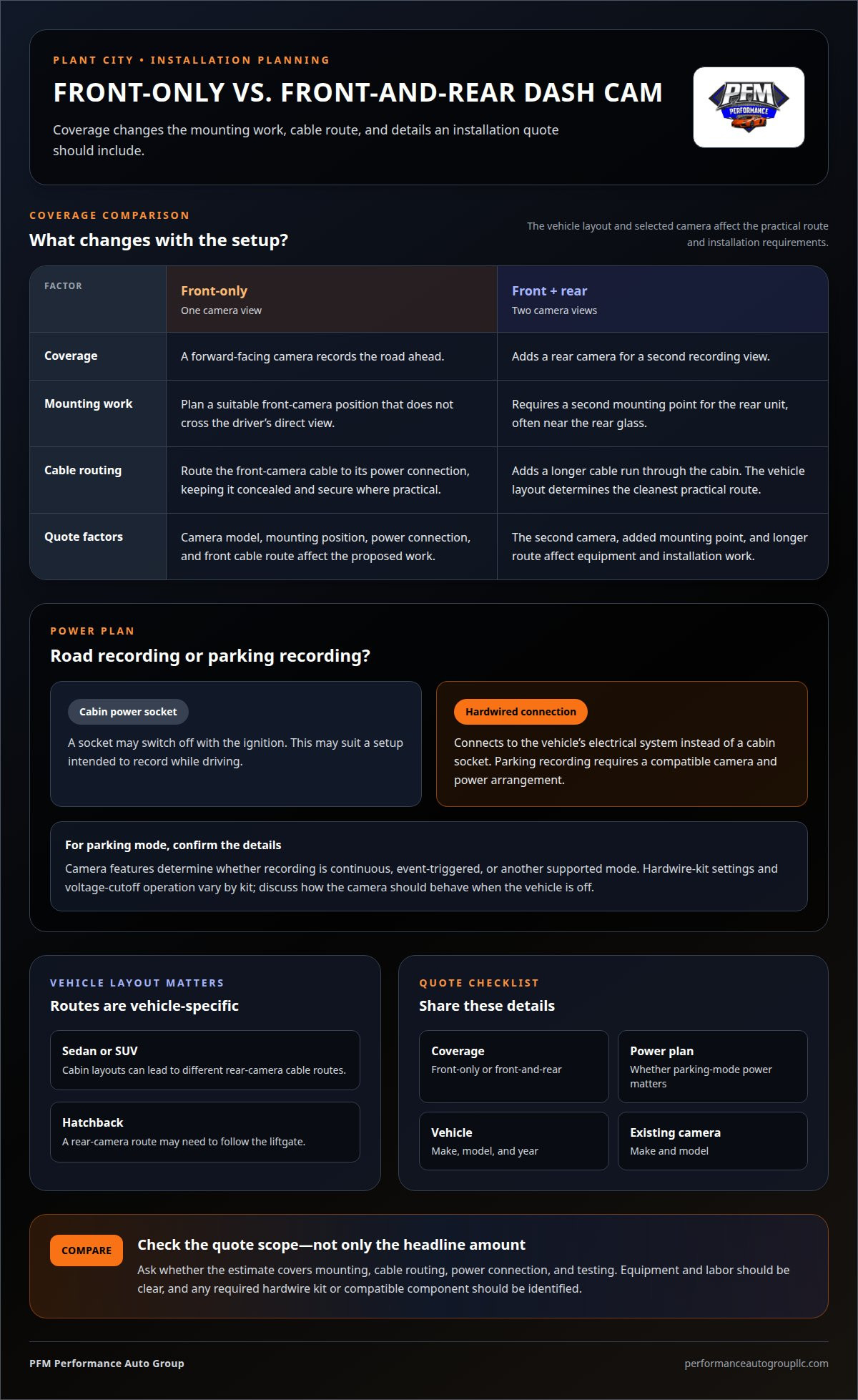
A hardwired connection can support parking recording without relying on a cabin power socket. Installation planning also determines camera placement and cable routing.
Hardwired Power for Parking Mode
Parking mode lets a compatible dash cam monitor your vehicle while it’s parked. A hardwire kit connects the camera to the vehicle’s electrical system instead of a power socket that may switch off with the ignition. The installer considers the camera’s power requirements, the vehicle’s wiring layout, and whether the selected setup supports parking recording.
Power protection matters. Some hardwire kits offer a voltage cutoff to help limit battery drain, but settings and operation vary by kit. The installer considers how the camera should behave when the vehicle is off, then configures compatible components accordingly. If you regularly park for long periods, discuss that use case before choosing a parking mode setup.
Keep your purpose in mind. A camera powered only while driving may suit you if you want road footage. Parking recording requires a compatible camera and power arrangement. The installation plan should identify whether the camera records continuously, responds to an event, or uses another supported mode. These functions depend on the camera’s features, not wiring alone.
Hidden Cable Routing
Hidden routing carries the camera cable from its mounting position to its power connection, minimizing visible wire across the cabin. The installer plans a route around the trim, headliner, and dashboard. The cable should be secure and clear of moving parts, controls, and airbag deployment areas.
Front-camera placement affects the cable route. For example, a camera mounted near the rearview mirror needs a path to the vehicle’s power source that doesn’t cross the driver’s direct view. A rear camera adds another cable run through the cabin, often toward the rear glass. The vehicle’s layout determines the cleanest practical route.
During installation, the professional removes and refits interior trim where needed, then checks that the cable is concealed and secure. The final inspection should cover the camera’s position, visible wiring, and access to vehicle controls. A neat finish matters, but the route must also preserve safe airbag areas and avoid pinched wires.
Before work begins, share the dash cam model and explain whether parking recording is a priority. Mention whether you want front-only or front-and-rear coverage, along with any preferred camera position. These details help the installer plan power connections and cable routes for your specific vehicle.
Dash cam installation quotes and pricing factors
A useful quote describes the equipment and installation work separately. For a vehicle in Plant City, the total depends on the camera, coverage, and wiring plan. A front-only setup involves different work from a front-and-rear system. Ask for a breakdown that makes those differences clear.
The camera model matters because mounting, power, and additional components vary. A basic front camera may need a different installation plan from a two-camera system with a rear unit. If you already own the dash cam, include its exact make and model in your quote request. This helps the installer identify compatible components and installation requirements.
Coverage also affects the work. A front camera needs a suitable mounting position and cable route. A rear camera adds a second mounting point and a longer route through the vehicle. For example, a sedan and an SUV may need different routes because their cabin layouts differ.
Power choices also shape the quote. Connecting through a cabin socket differs from hardwiring for parking mode, which may require a compatible hardwire kit and additional setup. Tell the installer whether you want recording while parked, as that affects the proposed equipment and labor.
- Camera coverage: Identify front-only or front-and-rear recording.
- Power plan: State whether parking-mode power is important.
- Vehicle details: Provide the make, model, and year.
- Existing equipment: Share the camera’s make and model.
Vehicle design can affect installation complexity. Interior trim, available power connections, and the distance between camera locations all influence the work. A rear camera in a hatchback, for instance, may need a route that follows the liftgate. A quote should reflect your vehicle rather than assume every cabin is alike.
Ask what the quoted installation includes. Does it cover mounting, cable routing, power connection, and testing? If a hardwire kit or another compatible component is needed, the estimate should say so. A written scope helps separate equipment from labor and makes proposed setups easier to compare.
For car dashcam installation in Plant City, the price depends on the vehicle, camera, coverage, power method, and routing. Request a quote with your camera and vehicle details, then compare each estimate’s scope rather than focusing on the headline amount alone.
Ready to outline your setup? Request a dash cam installation quote with your vehicle details and preferred camera coverage.
Dash cams for rideshare, delivery, and family vehicles
Choose coverage based on how you use your vehicle. A rideshare sedan, delivery van, and family SUV may have different recording needs. Start by deciding whether road footage is sufficient or whether you need a compatible camera’s cabin view. Then plan placement and operation around who uses the vehicle and when.
For rideshare driving, consider what you want the camera to capture during trips. A forward-facing unit records the road; a model with an interior-facing camera can also record the cabin. Decide which view suits your purpose, and discuss placement so the camera doesn’t obstruct the driver’s view.
Passenger awareness deserves consideration, too. If a camera records inside the cabin, establish a clear routine for explaining its presence to riders. Keep the device in a consistent position and make sure its lens covers the intended area. The installation plan should account for the driver’s seat, passenger space, and any existing equipment near the windshield.
Delivery work brings frequent stops and changing parking situations. If you want footage while driving, you may prioritize road coverage; if you’re concerned about parked periods, consider a compatible parking mode setup. That choice affects power planning, so tell the installer whether your van or car regularly sits unattended between deliveries.
For a family vehicle, consider how different people will use it. A parent may want a clear road view for a teen driver, while another household member may prefer a less visible installation. Agree on camera placement and recording preferences before installation. A front-and-rear setup may suit you if rear-road coverage matters, but it adds another camera location.
- Rideshare: Decide whether road-only or cabin coverage suits your use.
- Delivery: Explain how often the vehicle is parked between stops.
- Family use: Choose placement that works for regular drivers.
- Shared vehicles: Align on recording preferences before installation.
Vehicle type affects practical placement. A sedan’s rear window differs from an SUV’s liftgate glass, and a delivery van may have a different cabin layout. Share your vehicle details and intended coverage so the installer can plan camera positions for the actual interior.
Before booking, describe a typical driving day, such as rideshare trips with passengers, repeated delivery stops, or family school runs. Name the camera model if you’ve chosen one, and state whether you want front-only or front-and-rear coverage. These details help shape an installation around your vehicle’s real use, rather than a generic setup.
Local professional profiles and customer reviews
Installer profiles can help you understand the work a shop performs in Plant City. Look for clear descriptions of vehicle electronics, dashcam mounting, and wiring. A shop that focuses on audio or electronics is relevant because dashcam installation involves positioning cameras and connecting equipment. Specific service descriptions are more useful than a broad list of automotive work.
Car audio and electronics shops in Plant City install front-and-rear dashcams. The work involves camera placement, vehicle wiring, and testing, all of which relate to vehicle electronics installation.
Read reviews for details about the installation itself. A review describing front-camera placement, a rear camera’s view, or tidy cable routing gives you a clearer picture than a general compliment. Look for repeated comments about communication, careful handling, and whether the finished setup worked as expected. These specifics can help you assess customers’ experiences.
Consider the context behind each review. Someone describing a sedan installation may have different needs from a driver with an SUV or delivery vehicle. For example, a review about rear-camera placement on a hatchback may be especially relevant if your vehicle has similar rear glass. Match the reviewer’s setup to yours rather than relying on star ratings alone.
- Profile details: Look for dashcam and vehicle-electronics installation work.
- Review specifics: Notice comments about camera positioning and finished wiring.
- Vehicle match: Compare reviews from owners with similar vehicle layouts.
- Service clarity: Favor descriptions that explain the installation experience.
Photos on a profile, where available, can illustrate camera placement and visible wiring. Examine the installation area, not just the vehicle’s exterior. A clear view near the rearview mirror, for instance, can show whether the camera sits discreetly. Images don’t replace written details, but they can add useful context to a customer’s account.
Use the information to assess whether the shop’s work matches your needs. A front-and-rear system requires attention to both camera locations and the connection between them. Reviews that discuss only front-camera setups offer less insight into rear-camera work. Focus on examples that match your preferred coverage and vehicle type.
For a Plant City installation, bring your camera model, vehicle details, and intended coverage into the conversation. These details make it easier to discuss the proposed setup clearly. A professional profile shows the service focus, while specific customer accounts can help you understand how previous installations were experienced.
Dashcam installation near Plant City
For Plant City drivers, a suitable installation depends on the vehicle, camera setup, and intended use. Placement, warranty concerns, appointment planning, and the available installation options all deserve attention.
Placement and Audio Recording Considerations
Florida drivers should consider windshield placement and audio recording separately. Position the camera so it doesn’t interfere with the driver’s view, and consider how its microphone captures conversations. Audio recording can raise consent and privacy questions, so decide whether cabin audio is necessary before enabling it.
For example, a front camera mounted near the rearview mirror may capture the road while staying outside the driver’s direct sightline. The appropriate position depends on the windshield and vehicle layout. A professional can review the planned location and explain the camera’s recording settings, but this isn’t a substitute for legal advice about a specific recording situation.
Warranty and DIY Installation Risks
Installing a dash cam in a leased or new car doesn’t automatically determine whether a warranty claim will be affected. The relevant concern is whether installation work causes damage or contributes to a fault. Review the vehicle’s warranty and lease terms, especially before choosing a hardwired connection or altering interior trim.
DIY installation can result in loose wiring, pinched cables, poor camera placement, or interference with vehicle components. For example, routing a cable carelessly near an airbag area can create an avoidable concern. A professional installer plans the cable path, makes the selected connection, and tests the camera, helping reduce risks from rushed or unsuitable routing.
Installation Timing and Appointments
Installation time depends on the setup and vehicle. A front-only camera involves different work from a front-and-rear system, while hardwiring and parking-mode configuration add work beyond a simple power connection. Vehicle trim and the route between camera locations also affect the process. Share your camera model and vehicle details when arranging service.
Each shop sets its own appointment policies, so plan your visit directly rather than assuming walk-ins are accepted. Booking ahead gives the installer a chance to understand whether you need one camera, two cameras, or hardwired power. Ask how appointments are scheduled and what the installation includes, then allow time for setup and operational testing.
Nearby Installation Options
Near Plant City, car audio and vehicle-electronics shops are a relevant option because dashcam installation involves mounting, power connections, and camera testing. Compare the stated service scope with your planned setup. A shop that describes front-and-rear installations may be a closer fit than one focused only on basic camera mounting.
Prepare three details for the conversation: your vehicle’s make and model, your camera’s make and model, and whether you want front-only or front-and-rear coverage. Also say whether parking recording matters. These specifics help clarify the installation plan, including power needs and camera placement, before your vehicle arrives.
PFM Performance Auto Group: Car Dashcam installation
PFM Performance Auto Group provides car dashcam installation for drivers who want a professionally fitted setup. Turn to the service when you’ve chosen a camera and want its placement, wiring, and operation handled with care. Share your vehicle details, camera model, and whether you prefer front-only or front-and-rear coverage. If parking mode matters, include that in your installation plan.
A clear description of your priorities helps shape a setup for your vehicle and intended use. Whether your main concern is a discreet finish or suitable camera coverage, the next step is to discuss the installation details.
Contact PFM Performance Auto Group to discuss your dashcam installation.
Make your next step a confident one
Choose a setup that fits how you use your vehicle, then let that guide your next conversation. For car dashcam installation in Plant City, a clear description of your priorities can turn a general idea into a considered plan. Think about what you want the camera to capture and what matters most in the finished installation.
PFM Performance Auto Group also offers auto, commercial, and home window tinting. If you’re considering more than one improvement, discuss those needs alongside your dashcam plans while keeping your vehicle’s camera setup in focus.
When you’re ready, take the next step. A straightforward conversation can help you move from comparing options to planning an installation suited to your needs.
Your vehicle deserves a setup chosen with care. Start with the priorities that matter to you.
Frequently Asked Questions
Why Install a Dash Cam?
A dash cam records video you can review after a road incident or unexpected event. It may help you recall details such as traffic conditions, your route, or what happened around your vehicle. A compatible camera may also record while parked, depending on its features and power setup. It’s a recording tool, not a guarantee of evidence or protection, so choose coverage for your driving needs.
Where can I get a car dashcam installed in Plant City, Florida?
PFM Performance Auto Group provides car dashcam installation at its Tampa shop and serves Hillsborough County. For car dashcam installation in Plant City, consider whether you can travel to the shop and whether the service suits your camera setup. Share your vehicle and camera details when arranging a visit. This helps clarify the intended coverage and installation requirements before scheduling.
Which auto shops in Plant City install dashcams, and what are their hours and contact details?
PFM Performance Auto Group offers dashcam installation and car audio services for vehicle electronics. The available business details here don’t provide shop hours or a phone number, so use the booking page to arrange an installation. Before setting a visit, have your vehicle details and camera model ready. This helps describe the setup you want and gives the appointment request useful context.
How much does professional dashcam installation cost in Plant City?
Installation pricing depends on your vehicle, camera system, coverage, power connection, and routing work. A front camera and a front-and-rear system involve different equipment and installation scopes. Share your camera model and vehicle details to help define the estimate, then review what it includes, such as mounting, wiring, and operational testing.
How much does hardwiring a dashcam cost compared with a plug-in installation?
The difference depends on your vehicle and requested work, so the quote should compare both connection methods for your specific setup. A plug-in connection uses a cabin power socket, while hardwiring connects the camera to vehicle power and may support parking mode. Ask whether the estimate includes a compatible hardwire kit, configuration, and testing. This makes the scope easier to compare without relying on a generic price range.
What should I ask an installer about parking mode, battery protection, and fuse-tap wiring?
Ask which parking modes your camera supports, how the selected hardwire kit manages power, and whether it includes a low-voltage cutoff. For fuse-tap wiring, ask how the installer selects the circuit and protects the vehicle’s existing electrical connections. Also clarify how the camera behaves when the ignition is off. These details help you understand the planned installation and whether it suits your parking habits.
How do professional dashcam installers in Plant City compare on reviews and services?
Compare the work described in customer reviews, not just overall ratings. Look for firsthand comments about camera setup, communication, and follow-through if an issue arose. PFM Performance Auto Group’s home page references 219 customer reviews, but that count alone doesn’t establish dashcam-specific experience. Check whether review details relate to vehicle electronics and the kind of installation you need, such as front-and-rear coverage or hardwiring.