
How to Protect Car Interior from Sun Damage: The Complete 2026 Guide
Slathering conditioners onto a baking dashboard won’t solve your heat problem; it merely masks the symptoms while solar radiation quietly breaks down your cabin. If you are searching for how to protect car interior from sun damage, you already know the frustration of opening your car door to blistering heat, dry leather, and the creeping dread of irreversible dashboard cracks. Your vehicle is a major investment, and watching extreme heat degrade its finest surfaces feels like an unfair, slow-motion loss.
True preservation demands far more than temporary, greasy wipes that evaporate by noon. In this complete guide, you’ll learn proven, master-grade methods to stop dashboard cracking, halt leather fading, and slash cabin temperatures during the most brutal summer months. We break down the essential combination of disciplined daily habits and permanent glass defense systems, giving you a clear blueprint to keep your interior in pristine, showroom condition for years to come.
Key Takeaways
- Understand the distinct threats of UV radiation and infrared heat to prevent irreversible material breakdown before it starts.
- Implement daily parking habits and strategic vehicle positioning that dramatically cut peak thermal buildup inside the cabin.
- Select dedicated UV-blocking conditioners rather than greasy silicone sprays that dry out leather and accelerate cracking.
- Learn how to protect car interior from sun damage permanently by filtering heat and radiation at the glass with advanced ceramic window film.
- Establish a proactive seasonal maintenance schedule to preserve factory upholstery and protect your vehicle’s long-term resale value.
Understanding Sun Damage: How Solar Radiation Degrades Vehicle Cabins
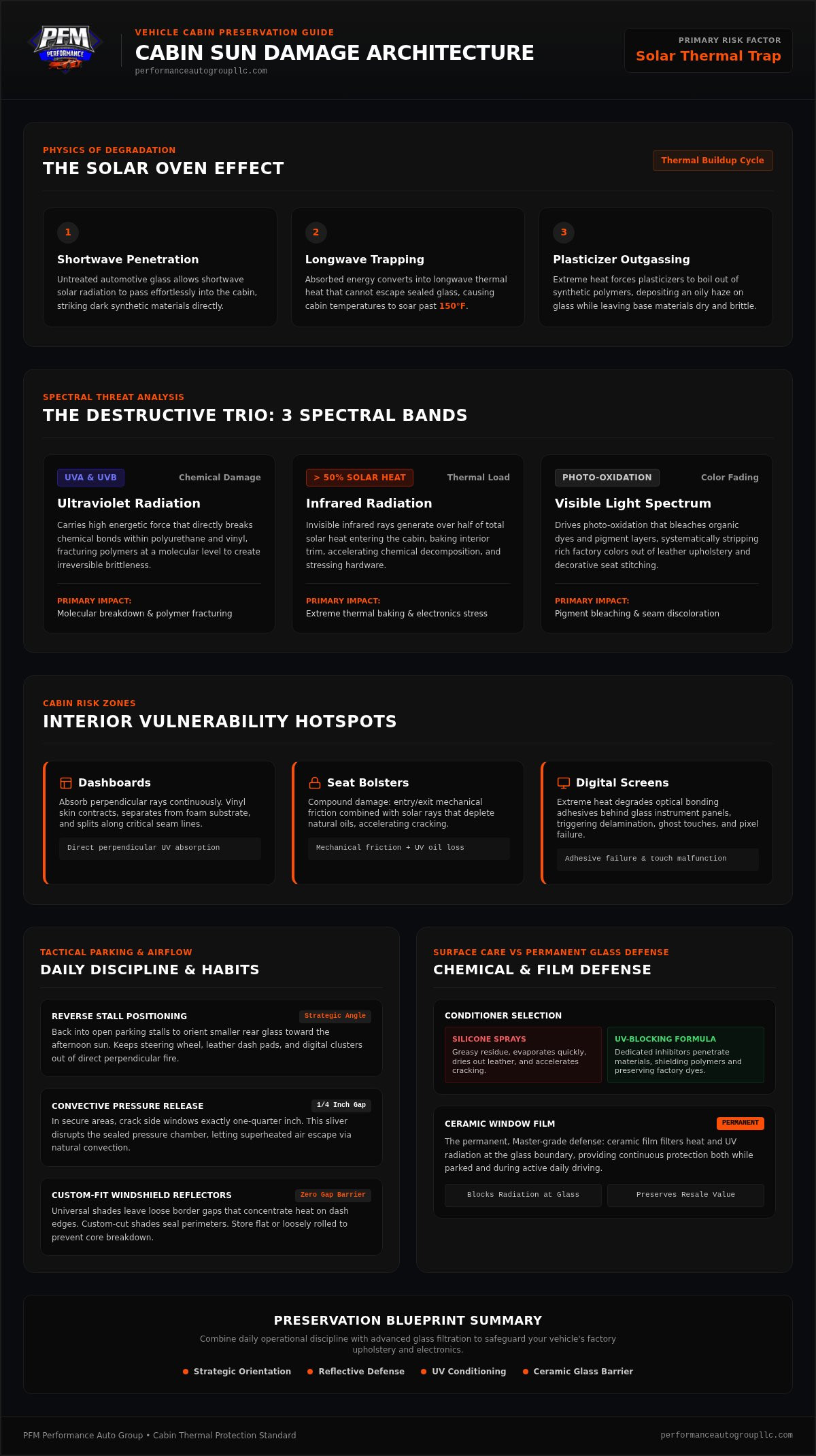
Most vehicle owners treat cabin deterioration as an inevitable consequence of aging. In reality, it is a chemical reaction triggered by distinct wavelengths of solar radiation. Untreated automotive glass transforms your car into a literal solar oven. Shortwave solar energy enters effortlessly through clear panes, strikes dark synthetic surfaces, and converts into longwave thermal energy that cannot escape. As temperatures soar past 150 degrees, plasticizers boil out of synthetic polymers, leaving an oily haze across your glass while the base materials turn brittle. Truly mastering how to protect car interior from sun damage requires understanding how these invisible wavelengths target your cabin.
The Destructive Trio: UV Radiation, Infrared Heat, and Visible Light
Solar degradation is not caused by heat alone; it is an assault across three separate spectral bands:
- Ultraviolet Radiation (UVA and UVB): Accounting for only a fraction of sunlight, UV rays carry immense energetic force. They break chemical bonds within polyurethane and vinyl, fracturing polymers at a molecular level and triggering irreversible brittleness.
- Infrared Radiation: Invisible infrared rays generate over half of the total solar heat entering your vehicle. This intense thermal load bakes interior trim, accelerates chemical breakdown, and stresses electronic hardware.
- Visible Light: Through photo-oxidation, harsh visible light bleaches organic dyes and pigment layers, stripping rich factory colors out of leather upholstery and seat stitching.
Vulnerability Hotspots: Dashboards, Seat Bolsters, and Digital Screens
Solar radiation does not strike cabin components equally. Horizontal surfaces bear the brunt of the assault. Dashboards absorb perpendicular solar rays all day, causing vinyl skins to contract, pull away from underlying foam, and split along seam lines. Exterior leather bolsters suffer friction wear during entry and exit, making them particularly vulnerable to drying out and cracking once UV rays deplete their natural oils.
Modern vehicles present another vulnerable target: digital cockpit displays and central touchscreens. High heat degrades the optical bonding adhesives behind glass instrument panels, causing screen delamination, ghost touches, or complete pixel failure. While deploying physical Windshield sun shades helps deflect immediate rays while parked, stopping continuous solar degradation during daily driving requires comprehensive, glass-level filtration.
Daily Preventative Habits: Practical Steps to Reduce Sun Exposure
Defending your vehicle begins with daily discipline. When evaluating how to protect car interior from sun damage on a routine basis, simple behavioral adjustments significantly cut down thermal exposure before heat builds up. Consistent habits keep your upholstery supple and stop delicate dash components from baking under intense afternoon rays.
Strategic Parking and Utilizing Ambient Shade
Pay attention to the arc of the sun across your usual parking spots. Parking beneath dense trees seems tempting, but falling sap, pollen, and acidic bird droppings bake into hot clear coats, trading interior fading for exterior paint etching. Seek multi-level parking decks or covered carports whenever possible.
When open asphalt is your only choice, back into the stall. Aiming the rear window toward the afternoon sun shields the front cockpit. Rear glass is often smaller and positioned farther away from sensitive electronics, keeping the steering wheel, digital instrument clusters, and leather dash pads out of direct, perpendicular solar fire.
Deploying Custom-Fit Windshield Reflectors Effectively
Universal folding sunshades bought off department store racks leave wide perimeter gaps. Solar rays slip right past those loose borders, focusing intense heat onto the exact dash edges most prone to lifting. Invest in custom-cut accordion or roll-up reflectors engineered for your exact windshield dimensions.
Ensure the reflective metallic barrier faces outward to bounce thermal energy back through the glass rather than absorbing it. Store your reflector flat or rolled loosely between uses. Crushing or folding the panels breaks down the internal insulating core, which ruins its thermal barrier over time.
Ventilation Tactics: Managing Trapped Cabin Air
Trapped air inside a sealed car functions like a thermal trap. If your vehicle is parked in a secure area, crack your side windows just a quarter of an inch. That sliver of space disrupts the sealed pressure chamber, letting rising superheated air escape through natural convection and lowering internal ambient temperatures by several critical degrees.
Pairing passive airflow with reflective physical barriers buys valuable protection during short stops. To elevate your defense beyond temporary shades and daily parking maneuvers, schedule an automotive protection consultation to explore permanent shielding options that work automatically wherever you drive.
Interior Surface Care: Cleaning, Conditioning, and Restoring Cabin Materials
Surface care is not about slathering shiny oils across your dashboard. When car owners look into how to protect car interior from sun damage, many reach for cheap, greasy sprays that promise instant gloss. That high-shine silicone film actually magnifies solar heat, acts like a dust magnet, and accelerates the drying of synthetic materials. Preserving your cabin requires a methodical, two-step process: lifting embedded contaminants first, then sealing each unique material with dedicated UV-inhibiting chemistry.
Preserving Automotive Leather and Modern Synthetic Vinyl
Never apply conditioners over dirty surfaces. Sweat, body oils, and abrasive dust combine into an invisible grime layer that blocks conditioning agents from penetrating. Begin with a dedicated pH-balanced cleaner, using a soft horsehair brush to agitate seams gently.
Once clean, apply a water-based conditioner that leaves a dry, OEM matte finish. Natural leather requires penetrating nourishment to retain its natural suppleness, while synthetic vinyl needs a water-based sealant to keep topcoat plasticizers flexible. Avoid petroleum distillates entirely; they degrade vinyl coatings, speed up cracking, and produce blinding dashboard glare on sunny roads.
Shielding Upholstery Fabrics and Carpet Fibers
Dry fabrics are fragile fabrics. Fine sand and grit settle deep into seat weaves, acting like microscopic saw blades that sever fibers under passenger weight. Vacuum your upholstery every other week to eliminate this abrasive friction. After vacuuming, treat high-exposure surfaces, especially the rear parcel shelf, with a fluoropolymer-based fabric guard. This barrier prevents liquid stains from setting and stops ambient UV rays from bleaching out yarn pigments.
Safeguarding Touchscreens, Head Units, and Electronics
Modern cockpits feature large infotainment displays that demand delicate handling. Keep harsh chemicals away from these sensitive interfaces:
- Clean with dry microfiber: Wipe displays gently with a clean, plush microfiber towel. If stubborn fingerprints persist, dampen the towel slightly with distilled water rather than using household glass cleaners containing ammonia or alcohol.
- Never spray directly: Avoid spraying any liquid detailing product directly onto dash panels. Overspray easily enters delicate speaker grilles, air vent actuators, or dashcam lenses, causing internal electrical faults.
- Protect your technology: If your factory display has already succumbed to heat delamination or failing digitizers, explore modern head units and dashboard upgrades at PFM Performance Auto Group to restore your cabin technology.
The Permanent Solution: Professional Ceramic Window Film Installation
Conditioners and folding sunshades are helpful secondary defenses, but they cannot stop solar energy from crossing through your glass while driving. When exploring how to protect car interior from sun damage permanently, professional ceramic window tinting serves as your vehicle’s foundational armor. Untreated glass offers virtually no barrier against infrared radiation. In contrast, advanced automotive window tinting forms an uninterrupted, microscopically engineered shield that blocks thermal energy before it ever enters the cabin.
Standard Dyed Film vs. Black Pearl Nano Ceramic Window Tint By Madico
Traditional dyed films rely purely on dark pigments to create shade. Instead of blocking thermal energy, dyed tint absorbs heat directly into the glass until that heat radiates straight into your cabin. Over time, UV bombardment breaks down cheap dye chemistries, turning them purple, hazy, and prone to blistering bubbles.
Advanced nano-ceramic technology operates differently. By embedding microscopic, non-metallic ceramic particles into microscopic film layers, solutions like Black Pearl Nano Ceramic Window Tint By Madico reject solar energy across the spectrum. Ceramic window film blocks over 99% of damaging UV rays and up to 98% of infrared heat, ensuring long-term cabin preservation without interfering with cellular or GPS signals. You can review detailed performance metrics in our best car window tinting guide.
Clear Windshield Film: Protecting the Largest Heat Entry Point
Your windshield accounts for the largest expanse of glass on your vehicle, angled perfectly to catch relentless downward solar radiation. Neglecting this glass surface leaves your dash, steering wheel, and front leather seats fully exposed to thermal destruction.
Specialized windshield window tinting applies optically clear ceramic film across the glass to reject intense infrared heat without compromising road visibility. By filtering thermal radiation while driving, you protect delicate digital instrument clusters, keep touchscreens responsive, and take substantial strain off your air conditioning system.
Balancing Sun Defense with Legal Compliance and Style
Ceramic performance does not require blackout aesthetics to keep your car cool. Because ceramic particles target invisible infrared wavelengths, you can enjoy exceptional heat rejection across virtually any shade, from nearly clear films to deep privacy finishes. Learn more about balancing shading performance with security in our automotive privacy window tint guide, ensuring your setup complies fully with regional visible light transmission (VLT) standards.
Reserve your precision ceramic tint installation today
Building a Comprehensive Sun Protection Plan for Your Vehicle
Preserving a modern vehicle demands a coordinated strategy. True mastery of how to protect car interior from sun damage means fusing permanent glass-level filtration with disciplined maintenance routines. When you treat your vehicle’s cabin as an integrated system, you eliminate the single points of failure that allow solar heat and radiation to degrade high-value materials over time.
Year-Round Interior Defense Maintenance Checklist
Consistency keeps materials resilient against thermal breakdown. Establish an easy maintenance rhythm across the seasons:
- Biannual seal inspections: Check all rubber door gaskets and window seals twice a year. High cabin heat dries out weatherstripping, causing air gaps that let ambient humidity and heat seep inside. Treat them with a silicone-free rubber conditioner to maintain an airtight seal.
- Bimonthly surface hydration: Reapply non-greasy, water-based UV protectants to synthetic dash pads, center consoles, and leather seating every 60 days. Regular application replenishes sacrificial UV absorbers before underlying materials get exposed.
- Safe glass cleaning: Clean ceramic-tinted windows exclusively with ammonia-free solutions and ultra-soft microfiber towels. Harsh household chemicals weaken the hard coat layer of automotive window film, causing premature hazing.
Tailoring Protection Strategies to Climate Severity
Regional sun intensity dictates your defense level. Drivers enduring intense solar bombardment across Hillsborough County cannot rely solely on off-the-shelf maintenance sprays. Vehicles parked outside during long work shifts face sustained thermal loading that overpowers basic surface conditioners within days.
Investing in commercial-grade ceramic barriers is the most cost-effective path to preserving interior value. A cracked leather seat or failing digital dashboard destroys resale appeal immediately, costing far more to repair than establishing proper protection upfront. Long-term vehicle care is about preventing that initial breakdown rather than trying to reverse permanent heat damage later.
Consulting Hillsborough County’s Trusted Tint Specialists
Every vehicle glass geometry presents unique shielding requirements. Choosing the ideal combination of Visible Light Transmission (VLT) across your side glass, rear windows, and windshield demands an experienced eye. As a locally owned and operated shop serving Hillsborough County since 2004, our team brings genuine craftsmanship to every vehicle bay.
Our master technicians ensure edge-to-edge film adherence without dust nibs, peeling borders, or unsightly air bubbles. Take total control over your cabin comfort by scheduling your appointment with PFM Performance Auto Group, and give your automotive investment the permanent shield it deserves.
Securing Lasting Protection for Your Automotive Investment
Preserving your vehicle against relentless solar heat requires a deliberate, dual-layer defense. While routine conditioning hydrates surface polymers, genuine longevity starts by filtering harmful radiation before it breaches your glass. When you master how to protect car interior from sun damage, you preserve your vehicle’s factory aesthetic, safeguard its resale value, and step into a dramatically cooler cabin every single day.
Since 2004, our master craftsmen have helped drivers across Hillsborough County protect their vehicles with uncompromised precision. By pairing disciplined maintenance with advanced Black Pearl Nano Ceramic Window Tint by Madico, you lock in permanent heat rejection tailored to survive the harshest summer conditions.
Your vehicle deserves protection built to endure. Give your cabin the meticulous craftsmanship and permanent defense it needs to stay flawless for years down the road.
Frequently Asked Questions
Can sun damage on a car dashboard be repaired once it cracks?
No, cracked dashboards cannot be fully restored to factory condition. Once intense heat causes the underlying plasticizers to dry out, synthetic vinyl contracts and fractures permanently. While cosmetic vinyl patches or filler compounds can temporarily disguise surface blemishes, the structural integrity of the pad is gone. Preventing that initial thermal breakdown through front glass filtration is far more effective than trying to patch brittle plastic later.
Does factory tinted glass protect against UV rays and heat?
Factory rear privacy glass offers minimal protection against heat. Most factory tint is merely an aesthetic dye embedded inside the glass during manufacturing. While it darkens the window, it lacks the specialized optical coatings needed to reflect solar energy. Understanding how to protect car interior from sun damage means recognizing that you need aftermarket nano-ceramic film to block destructive infrared wavelengths and high-energy ultraviolet radiation effectively.
How often should I condition leather seats to prevent sun cracking?
Condition your leather seats every 60 days if you live in high-heat climates like Hillsborough County. Daily exposure to solar rays bakes the natural moisture out of hides rapidly. Use a pH-balanced cleaner to lift body oils first, then massage in a water-based, non-greasy conditioner with UV inhibitors. This bi-monthly cadence keeps hide fibers supple, preventing seam separation and unsightly bolster creases during peak summer heat.
Is clear ceramic tint on the windshield legal?
Windshield tint legality depends strictly on your regional vehicle code. In Florida, regulations generally restrict window tint on the windshield to the area above the manufacturer’s AS-1 line, located near the top four to five inches of the glass. Drivers with verified medical conditions involving light sensitivity can apply for specific state exemptions. Always check current local statutes before applying aftermarket films to the front viewing area.
Do windshield sunshades really make a significant difference?
Yes, custom-fit reflective sunshades provide an immediate, measurable defense while parked outdoors. They bounce incoming visible and infrared radiation directly back through the front glass before those rays can penetrate deep into your dashboard. Generic, ill-fitting sunshades leave exposed gaps along the borders, so selecting a tailored shield engineered for your exact windshield shape ensures complete edge-to-edge thermal deflection during long daytime stops.
Will parking in the shade fully protect my car interior from heat?
No, parking in the shade only slows down cabin heating rather than stopping it. Ambient summer temperatures and scattered UV rays still penetrate untinted glass effortlessly. In addition, parking under trees exposes your clear coat to dripping sap, bird droppings, and falling seed pods that cause rapid paint damage. True cabin preservation requires combining strategic parking with physical heat barriers applied directly across your vehicle’s glass.
What is the difference between dyed and ceramic window tint for sun defense?
Dyed tint relies on dark pigments to absorb solar energy, which eventually radiates right into your vehicle cabin. Nano-ceramic tint, such as Black Pearl Nano Ceramic Window Tint by Madico, uses non-metallic ceramic particles to actively reject heat. It blocks over 99% of UV rays and up to 98% of infrared thermal energy, providing superior longevity and heat defense without relying on dark, vision-impairing shades.