

Residential Window Film in FishHawk for Privacy and Solar Control
A brighter room shouldn’t mean more glare, unwanted heat, or less privacy. Residential window film in FishHawk can help manage sunlight and views while preserving natural light, with the right choice depending on your home’s glass and priorities. Selected residential films can block up to 99% of UV rays.
It makes sense to want comfortable, private rooms without making your windows feel closed off. Residential window film in FishHawk can help with privacy and solar control, but the right choice depends on how each room is used. Reflective films may provide daytime privacy, but that effect can diminish at night when indoor lights are on.
This guide explains how privacy and solar-control films can help reduce glare and solar heat, what to consider when matching film to existing glass, and how professional installation supports a neat, carefully finished result.
Key Takeaways
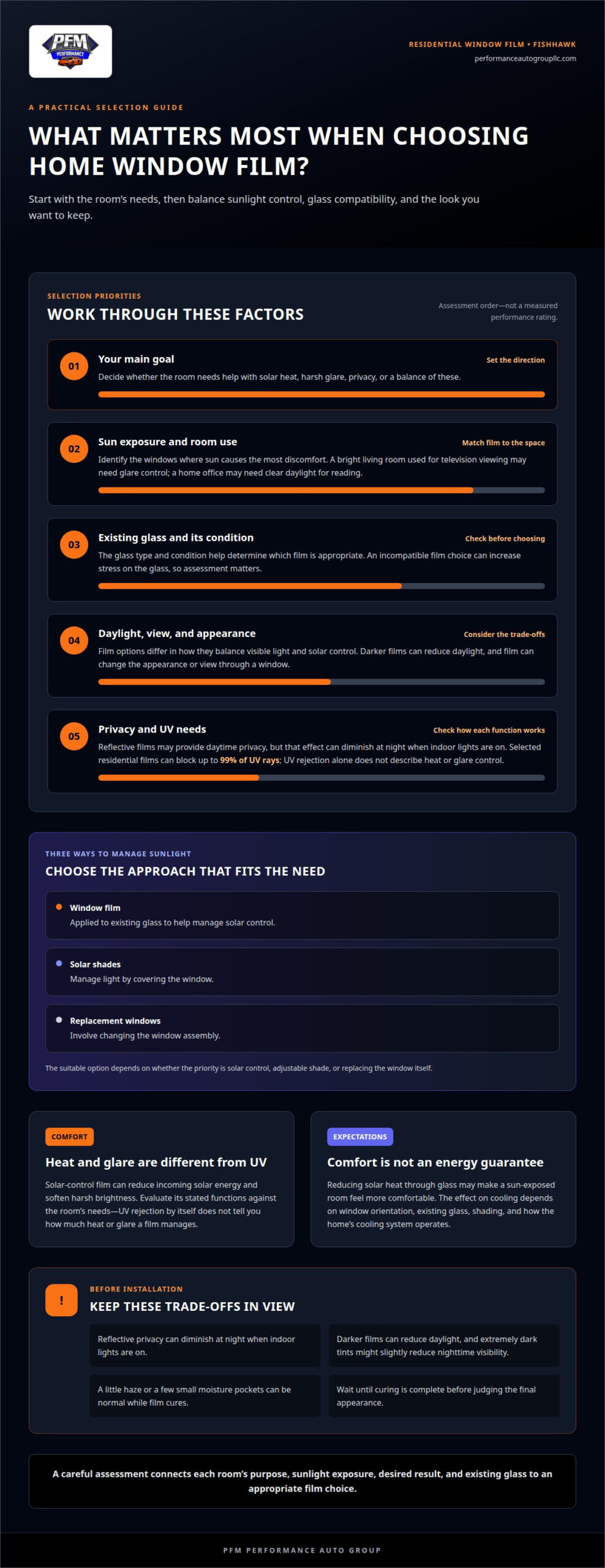
- Match film selection to your main goal, whether that’s managing solar heat, reducing glare, or adding privacy.
- Existing glass matters: its type and condition help determine which film is an appropriate fit.
- Professional installation includes assessing the glass and applying film with attention to a clean, precise finish.
- Understand how different film functions affect comfort and appearance before choosing a solution for each room.
- Learn how PFM Performance Auto Group’s home window tinting can support your FishHawk project.
Residential and commercial window film installation
Residential and commercial window tinting starts with the glass, the room’s purpose, and its exposure to sunlight. A careful assessment helps match the film’s placement and finish to each property.
Window Film Installation Process
A professional installation begins by assessing the glass, existing condition, and the result each room needs. Most residential window films go on the interior surface, although some glass types or projects require exterior film. The installer measures each pane, prepares the glass, cuts film to fit, then applies and smooths it. For example, a living room facing strong sunlight may need a different film choice than a shaded office.
Installation and Film Curing
After application, film needs time to cure as its moisture layer dries. A little haze or a few small moisture pockets can be normal during this period, so the glass may not look fully clear right away. The installer should explain what to expect and how to care for the tinted surface as it settles. Wait until curing is complete before judging the final appearance.
Choosing a FishHawk Installer
For FishHawk homes, look for reviews that describe residential window work, not only automotive tinting. Useful details include careful preparation, clean film edges, clear communication, and how questions were handled after installation. Choose an installer whose experience matches the project’s glass and goals. Commercial properties also benefit from a plan that accounts for each room’s use and window exposure.
Film Lifespan and Warranties
Residential film lifespan depends on the film, exposure to sunlight, glass condition, and installation quality. Warranty coverage and duration depend on the specific film and its written terms. Review what the warranty covers, how claims are handled, and whether it applies to the film, installation, or both. A clear written explanation makes it easier to understand what support is available over time.
Requirements for home window film in Florida or Hillsborough County shouldn’t be confused with rules for vehicle window tinting. Consider any applicable property-specific requirements before choosing film for a FishHawk residence.
Potential drawbacks include a changed view or appearance, reduced daylight with darker films, and less privacy at night when indoor lights are on behind reflective films. Extremely dark tints might slightly reduce nighttime visibility. Film may also be unsuitable for some glass combinations. Matching film to the existing glass matters because an incompatible choice can increase stress on the glass. A professional assessment can help identify that risk before installation.
During curing, a little haze or small moisture pockets can be normal, so allow the film time to settle before judging its appearance. The scope of a residential project can vary: a Cascade Township residence window-film project in 2025 covered 487 square feet, while a Southeast Grand Rapids residence window-film project in 2025 covered 204 square feet.
These projects show why an installer should assess the specific windows and property instead of assuming every home needs the same amount of film. Discuss the areas to be treated, the desired result, and any glass concerns before work begins. A clear plan helps set expectations for installation and appearance, while careful attention to the glass helps match the film to the project. Ask for an explanation of the curing process and care guidance for the finished windows.
Residential solar-control film for reducing solar heat
Solar-control film changes how sunlight passes through a home’s windows, helping manage heat and glare. In FishHawk, start by identifying the rooms and windows where afternoon sun causes the most discomfort.
Heat and Glare Control
Solar-control film can reduce incoming solar energy and soften harsh brightness without requiring you to keep curtains closed. The right choice depends on window exposure, room use, and how much visible light you want to retain.
For example, a bright living room may need glare control for comfortable television viewing, while a home office may need clear daylight for reading. Compare these priorities before selecting a film. A darker appearance isn’t the only way to address sunlight, and film options differ in how they balance light and solar control.
Solar Heat and Energy Comfort
Reducing solar heat through glass can make a sun-exposed room feel more comfortable, especially when sunlight creates uneven temperatures across the home. Film works at the window, limiting some solar heat before it spreads into the room.
That comfort benefit isn’t the same as a guaranteed reduction in energy use. The effect on cooling depends on factors such as window orientation, existing glass, shading, and how the home’s cooling system operates. A hot room beside west-facing glass, for instance, may need a different approach from a shaded bedroom.
Solar Heat and Ultraviolet Rejection
Solar heat and ultraviolet radiation are different parts of sunlight, so film performance should be considered by function. Select residential window films can block up to 99% of UV rays, helping limit UV exposure indoors.
UV rejection alone doesn’t describe how much solar heat or glare a film manages. Compare the product’s stated functions with the room’s needs, such as protecting furnishings from sunlight while keeping a bright view. A professional assessment can account for the existing glass and the desired balance of clarity and solar control.
For FishHawk homes, solar film, solar shades, and replacement windows address sunlight in different ways. Film is applied to existing glass; shades manage light by covering the window, while replacement windows involve changing the window assembly. The suitable option depends on whether your priority is solar control, adjustable shade, or replacing the window itself.
Consider each window’s exposure and use before choosing. A shaded bedroom may not need the same treatment as a sunlit family room, and a home with older or damaged windows may have different priorities from one with sound existing glass. These distinctions help narrow the choice without assuming every room needs the same solution.
For a room-by-room film discussion, schedule a window-film appointment and describe the sunlight and comfort concerns you want addressed.
Why tint your home windows?
Home window film can serve different purposes, so begin with the room’s main need. A sunlit living room may call for solar control, while a bathroom may benefit more from frosted film.
Solar and UV Protection
Solar-control window films are designed to manage sunlight entering through glass. They can help reduce glare and solar heat, while selected residential films can also block up to 99% of UV rays. For example, film on a bright window may help limit UV exposure to nearby furnishings, though fading can also depend on materials, sunlight, and time.
Separate your desired outcomes before choosing. If glare on a television is the main concern, visible-light control matters. If protecting interior furnishings is a priority, consider UV rejection alongside solar performance. No single label describes every benefit, so match the film’s stated functions to the room’s needs.
Security Film and Safety Considerations
Security film serves a different purpose from solar-control film. It adds a layer that can hold shattered glass together but does not prevent breaking, and it doesn’t replace locks or other security measures. For a ground-floor window near a patio door, consider whether the priority is fragment retention, privacy, or sunlight control before selecting a film.
Film type and glass compatibility matter. A film selected for solar performance shouldn’t automatically be treated as a security solution. Discuss the intended function and existing glass together, particularly if a window’s condition or construction could affect the right choice.
Decorative and Frosted Film
Decorative window film changes the appearance of glass while addressing sightlines. Frosted film, for example, can obscure a direct view through a bathroom window while allowing daylight into the room. Patterned finishes can add visual detail to interior glass, such as a door between a home office and hallway.
Think about what should remain visible from each side. A fully frosted panel offers a different balance of light and privacy than a narrow decorative band. On a front-entry sidelight, a patterned finish may soften views while preserving a brighter feel than a fully covered pane.
Match the film category to the job: solar films address sunlight, security films focus on holding glass fragments together, and decorative films alter appearance or privacy. A single window may have more than one priority, but the film’s stated purpose should guide the decision.
Choosing film compatible with existing glass
Film selection begins with the actual window, not a shade or color sample. Glass construction, condition, exposure, and existing coatings all affect compatibility. A professional assessment should identify these details before recommending a film. For example, two windows in one FishHawk home may receive different amounts of sunlight if one faces a covered porch. Assess each window before settling on residential window film in FishHawk.
Start by identifying whether each opening has single-pane or multi-pane glass, and note any visible damage. Existing low-emissivity coatings, tinted glass, or reflective surfaces can change how film interacts with the window. These details matter because film affects how solar energy is absorbed and transmitted. A choice suited to clear glass may not suit coated glass. An installer’s assessment should account for the specific glazing, not just the film’s shade.
Glass condition matters, too. A professional should inspect for cracks, chips, failed seals, and damaged frames before installation. Applying film over a window with an existing crack won’t repair the damage. Recording each pane’s condition gives the installer a clear basis for selecting film or identifying a window that needs attention first. This also helps distinguish a film decision from a glass repair concern.
Next, consider the window’s location and the room’s needs. Direct sunlight, a shaded exterior, nearby trees, and overhangs all shape solar exposure. A west-facing family room may need a different balance of light and heat control from a north-facing bedroom. Film selection should account for these differences rather than assume one choice suits every pane.
Existing glass also influences whether interior or exterior application is appropriate. Most residential films are installed on the interior surface, while some glass types or projects call for exterior film. Include that decision in the assessment alongside glass construction and the desired result. For residential window film in FishHawk, a professional can weigh each pane’s details against the room’s priorities before recommending an application.
Before work begins, the installer can organize windows by glass type, condition, and orientation. A room-by-room plan helps avoid treating unlike panes as identical. It also clarifies priorities: you might choose solar control in a sunny living area and a lighter option elsewhere. Clean glass supports a smooth application, but preparation doesn’t replace compatibility assessment. Even spotless glass can have coatings or construction that affect film suitability.
What residential window film installers serve FishHawk, Florida?
For a FishHawk home, choose an installer whose residential work matches your windows, goals, and desired finish. Look for clear explanations of glass compatibility, film selection, preparation, and installation. Because vehicle tinting and home window work involve different glass and project needs, make sure the service is specifically suited to residential windows.
Review examples of completed residential projects, not just general tinting claims. A useful example describes the type of home window treated and the intended result, such as privacy in a street-facing room or glare reduction in a bright living area. Look for details about edge finish, appearance, and how the installer addresses different glass types. These details help show whether the work relates to a home like yours.
Before installation, a professional should assess the glass and clarify the project scope. That means identifying panes with different exposure or construction, noting visible damage, and matching film goals to each room. For example, a FishHawk home may have a shaded entry window and a sun-exposed family room. A thoughtful plan treats them separately instead of assuming one film suits every pane.
Read customer reviews for specific descriptions of residential installation. Comments about clear communication, careful work around furnishings, clean edges, or an explanation of curing are more useful than an overall rating alone. A review that discusses only automotive work may tell you little about experience with house windows. Focus on feedback that reflects your project.
Ask how the installer explains film performance, glass compatibility, and warranty terms in writing. Clear documentation should identify the selected film and explain its relevant coverage without implying that every product has identical terms. For a room where indoor lights affect nighttime privacy, ask how the chosen finish behaves after dark. These specifics make the decision easier to assess.
Compare project proposals by scope, not just by the number of windows named. One may cover only selected panes, while another describes preparation and the intended film for each room. A FishHawk project involving different window styles benefits from a clear pane-by-pane plan, so the finished appearance and purpose are understood before work begins.
PFM Performance Auto Group
PFM Performance Auto Group provides home window tinting for homeowners seeking more privacy, solar control, or a refined finish. If you’re weighing film options for existing glass, discuss your goals and the windows involved with the team. This helps focus the selection on the rooms where sunlight, glare, or visibility matters most.
Its window tinting work also includes commercial properties, while Black Pearl Nano Ceramic Window Tint By Madico is another available offering. For a FishHawk home project, begin with the practical priorities: which rooms need attention, what you want the film to do, and how the existing glass should inform the choice.
Contact PFM Performance Auto Group to discuss home window tinting.
Make a considered next move for your home
Think of window film as a choice that shapes how each room feels throughout the day. Choosing residential window film in FishHawk starts with the balance you want between light, privacy, and comfort, then matches that vision to your home. A considered plan can help your windows complement the way you live, rather than making every room follow the same formula.
PFM Performance Auto Group offers home, commercial, and auto window tinting. For homeowners, the discussion can focus on your home’s glass and the outcome you have in mind. Contact PFM Performance Auto Group to discuss your project and plan the next step.
A more comfortable, thoughtfully finished home can begin with a clear plan for its windows.
Frequently Asked Questions
What types of residential window film are available in FishHawk?
Residential films include solar-control, privacy, decorative, and security-focused options. Solar-control film helps manage sunlight and glare, while privacy film changes visibility through the glass. Frosted or patterned films can obscure views while adding a decorative finish, such as on a bathroom window or entry sidelight. Security film adds a layer that can hold shattered glass together but does not prevent breaking.
Which window films work best for Florida heat and UV protection?
Solar-control film is the relevant category for reducing incoming solar heat, while UV-blocking performance addresses ultraviolet exposure. Selected residential films can block up to 99% of UV rays. For a west-facing living room, prioritize solar performance and glare control; for a room with sun-exposed furnishings, consider UV protection too. The best match depends on the existing glass and the balance of brightness and comfort you want.
How much can residential window film reduce heat, glare, and fading?
There isn’t one reduction percentage that applies to every home or film. Heat and glare performance depend on the selected film, glass, and window exposure; check the specific product’s stated performance rather than assuming all films work alike. Selected films can block up to 99% of UV rays, which can help limit one contributor to fading. Furnishing material, direct sunlight, and exposure time also affect fading.
Can window film be installed on double-pane or low-E windows safely?
Some films may suit double-pane or low-E windows, but compatibility depends on the exact glass construction and film. A professional should identify the glazing and any low-E coating, then match those details to the film’s application guidance. For example, two panes that look similar may have different coatings. This assessment helps avoid choosing film based on appearance alone and determines whether interior or exterior application is appropriate.
What is the residential window film installation process and how long does it take?
The installer assesses the glass, prepares the window, measures and cuts the film, then applies and smooths it onto the pane. Residential project time depends on the number and size of windows, access, glass preparation, and installation conditions, so it varies by home. After application, some haze or small moisture pockets can appear while the film cures. The installer can explain care expectations for the selected film.