
Protecting Leather Seats From Sun Damage With Shade and Care
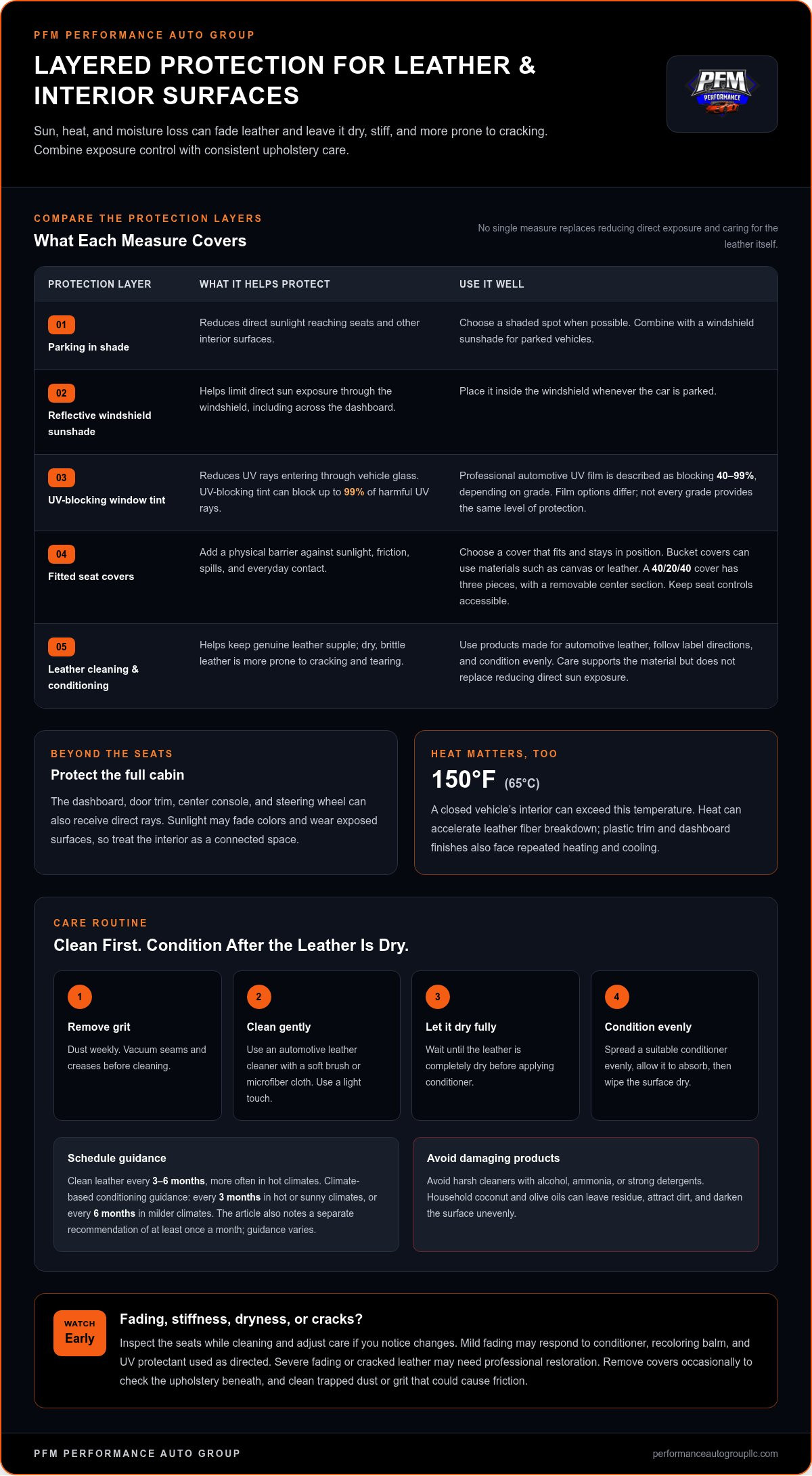
Protecting leather seats from sun damage starts with reducing direct sun exposure and caring for the leather itself. Park in the shade when possible, use a reflective windshield sunshade whenever the car is parked, and condition leather every 3 months in hot or sunny climates or every 6 months in milder climates. UV-blocking window tint can block up to 99% of harmful UV rays entering a vehicle.
Sun exposure does more than fade a seat’s color. Heat and moisture loss can leave leather dry, stiff, and more prone to cracking over time. It’s understandable to focus on the upholstery, but the dashboard and other interior surfaces are exposed to sunlight too. This guide explains how to clean and condition leather, use shade and a windshield sunshade, and understand the role window tint can play in protecting your car’s interior.
Key Takeaways
- Clean leather gently and let it dry fully before applying an automotive leather conditioner; avoid harsh cleaners that can strip its natural oils.
- Reduce direct sun exposure with a consistent combination of parking in shade, a windshield sunshade, and suitable window tint.
- Protect dashboards and other interior materials too, since cabin heat and sunlight can affect more than the seats.
- Recognize that leather types respond differently to sun, and adjust care to the material’s finish and condition.
- Address early signs of fading, dryness, or cracking promptly to help preserve the interior’s appearance and comfort.
1. Leather conditioner to help prevent cracking and tearing
Conditioning helps genuine leather stay supple as sunlight and daily use affect its surface. Dry, brittle leather is more prone to cracking and tearing. Conditioner supports the material, but it cannot replace reducing direct exposure. A practical routine for protecting leather seats from sun damage combines automotive leather conditioner with shade and a compatible UV protectant.
How often should leather seats be cleaned and conditioned? Clean them every 3–6 months, more often in hot climates, and dust them weekly. Conditioning guidance varies: one recommendation is at least once a month, while climate-based advice suggests every 3 months in hot or sunny climates and every 6 months in milder climates.
Prepare the upholstery first. Vacuum seams and creases to remove grit, then apply an automotive leather cleaner with a soft brush or microfiber cloth. A soft-bristled brush can loosen dirt in cracks and problem areas, but use a light touch to avoid abrasion. Let the leather dry completely before applying conditioner, since moisture can interfere with even coverage.
Spread leather conditioner evenly across the seat rather than applying a heavy amount to one dry patch. Use a clean cloth and follow the product directions. Give the conditioner time to absorb, then wipe the surface dry. Work methodically across the seat to avoid missed areas and uneven residue.
Choose a cleaner, conditioner, and UV protectant made for automotive leather. Household oils aren’t reliable substitutes: coconut and olive oils can leave residue, attract dirt, and darken the surface unevenly. Avoid harsh cleaners containing alcohol, ammonia, or strong detergents, which can strip natural oils and make leather more susceptible to sun damage. Read product labels to ensure they suit the upholstery finish.
Regular cleaning and conditioning can help prevent cracking and tearing associated with dry, sun-damaged leather. Mild fading may respond to conditioner, recoloring balm, and UV protectant used according to directions. Severe fading or cracked leather may need professional restoration, so address cracks or color loss promptly. Inspect the seats while cleaning and adjust your care routine if you notice stiffness, fading, or other surface changes.
2. How do you protect leather from sun damage?
Use several layers of protection rather than relying on one product. UV-blocking window tint can block up to 99% of harmful UV rays entering a vehicle, helping limit exposure that fades and dries leather. Seat protectors add a physical barrier against sunlight, friction, spills, and other everyday contact. Combine these measures with parking choices and care suited to your upholstery.
What is the best way to cover or shade leather seats when parked? Choose a shaded spot when available, then place a reflective windshield sunshade inside the windshield before leaving the car. For seats exposed to sunlight through side windows, fitted seat covers or protectors provide an additional barrier.
Seat covers can shield upholstery from direct rays, but fit and material matter. A loose cover may shift as passengers get in and out, exposing areas or letting grit rub against the leather. Choose a cover that fits the seat and stays in position during ordinary use. Some covers are waterproof, which can also help shield seats from liquid spills.
Match the cover style to the seat layout. Bucket seat covers are made from materials such as canvas or leather. A 40/20/40 cover has three pieces, allowing its center section to be removed. That design can preserve access to the center seat area while covering the remaining sections. Check that the cover doesn’t block seat controls or interfere with normal use.
Care for the cover as well as the leather underneath. Follow its cleaning instructions, remove dust and grit, and check the fit after washing or repositioning it. Dirt trapped between a cover and upholstery can cause friction during travel. Remove covers occasionally to inspect the leather for fading, dryness, or cracking, and address changes before they spread.
How can you prevent leather seats from cracking, fading, and drying out? Reduce direct sunlight with shade, a windshield sunshade, and a seat barrier, while keeping leather clean and conditioned. Sun-exposed leather can begin showing fading within a few months, so consistent habits matter more than waiting for visible damage.
How much does professional leather seat UV protection cost? Pricing depends on the vehicle, seat material, and treatment scope; the price is provided after a quote request. For a separate way to reduce sunlight entering through vehicle glass, book an appointment to discuss window tinting.
3. Sun damage to dashboards and other interior surfaces
Leather isn’t the only material exposed to sunlight through vehicle glass. The dashboard, door trim, center console, and steering wheel can all receive direct rays. Over time, sunlight can fade colors and wear down exposed surfaces, leaving some areas uneven in appearance. Treat the full interior as a connected space, not just the seats.
Cabin heat adds another strain. The interior of a closed vehicle can exceed 150°F (65°C), and that heat can accelerate the breakdown of leather fibers. Plastic trim and dashboard finishes also face repeated heating and cooling. A windshield sunshade can limit direct exposure across the dashboard, while parking in shade reduces the sunlight reaching other surfaces.
UV-blocking automotive film offers another layer of defense for interior materials. Professional automotive UV film is said to block 40–99% of UV, depending on grade. That range matters: film grades differ, so don’t assume every option offers the same level of UV protection. Film can help reduce rays entering through the glass, but it doesn’t make exposed surfaces immune to sunlight or heat.
Protect hard surfaces with regular, gentle care. Dust the dashboard and console with a clean microfiber cloth, especially around vents and seams where grit gathers. For a mark, use a cleaner made for that specific surface and follow its directions. Avoid abrasive pads, which can scratch or dull glossy trim and touchscreens.
Choose protectants carefully. A product intended for leather may not suit a dashboard, screen, or coated trim. Read the label and apply it only to the surfaces it names. Keep sprays away from glass and display screens unless the directions allow those uses. Before using a new product, test an inconspicuous area and check for residue or changes to the finish.
Build a simple routine around parking and inspection. Use a windshield shade whenever the vehicle sits in direct sun, and regularly check the dashboard, door panels, and console for fading or a dry-looking finish. If one section looks lighter than the surrounding surface, adjust where you park and add shade before the difference becomes more pronounced.
Reducing cabin heat helps limit stress on the interior, but air conditioning doesn’t directly prevent fading. It can lower cabin temperature while driving, which may slow moisture loss and leather drying. Pair it with UV-blocking film and a sunshade when parked for broader protection. These steps address different factors: sunlight affects exposed surfaces, while heat contributes to material wear.
4. Parking in shade and using a windshield sunshade
Choose a shaded parking space whenever one is available. Shade reduces direct sunlight on the cabin, but its coverage can shift as the sun moves. For a longer stop, consider whether branches, nearby buildings, or a covered parking structure will keep the windshield and side windows shaded. If full shade isn’t possible, use a windshield sunshade to cover the largest exposed glass area.
Fit the sunshade closely against the inside of the windshield, with its reflective side facing outward. A reflective, full-coverage windshield sunshade can reduce a car’s interior temperature by 20–40°F (10–22°C). It also blocks sunlight entering through the windshield, helping protect the dashboard and front seats while the vehicle is parked.
Use the sunshade whenever the car is parked, not only during long stops. Set it in place before leaving, then secure it so it covers the glass instead of sagging away from the edges. An uncovered gap can still let direct sunlight reach the dashboard or a seat. Remove the shade before driving, and store it where it won’t obstruct the driver’s view.
Keep the sunshade clean and in good condition. Remove dust and debris from its surface before folding it, since grit can scratch nearby trim or glass. If the shade becomes bent or damaged, check that it still sits flat across the windshield. Foldable designs can store in a compact 12-inch round shape, making it easier to keep one in the vehicle between uses.
When outdoor parking offers no shade, a breathable car cover can provide another layer of protection. Use one when practical, and make sure it fits securely rather than shifting against the finish. A windshield shade is useful for frequent short stops because it can be deployed quickly without covering the entire vehicle.
Build a simple parking routine: look for shade, place the windshield shade, and check that it covers the glass. If your vehicle is parked in direct sunlight at work, use the shade consistently. At home, covered parking or a breathable car cover can reduce exposure when the car sits outside for longer periods.
These methods work best as complementary habits. A windshield shade covers the front glass, while parking in shade limits exposure across more of the vehicle. A breathable cover can help when shade isn’t available. Together, these steps reduce direct sunlight and cabin heat, supporting care for leather seats and other interior surfaces.
5. How UV rays, heat, and moisture loss damage leather seats
Sun damage develops through connected processes, not sunlight alone. UV rays can fade the seat surface, while cabin heat contributes to moisture loss. As leather dries, it can feel stiff and become more vulnerable to cracking. These changes often appear gradually, so a seat may look sound before its texture begins to change.
Leather type affects the pattern of wear. Aniline leather is untreated and more porous, making it particularly vulnerable to fading after prolonged sun exposure. Pigmented or coated leather has a protective layer, so it resists UV damage better, but it can still fade over time. Check the material and finish before choosing a cleaner or protectant.
Synthetic leather responds differently from genuine leather. Sunlight can fade and degrade synthetic upholstery, causing peeling or a brittle texture rather than the drying associated with genuine leather. Inspect a sun-facing seat bolster, for example, and compare its color and feel with a less exposed area. Differences can signal that sunlight is affecting the material.
Heat compounds the effect. A closed vehicle’s interior can exceed 150°F (65°C), and high temperatures can accelerate the breakdown of leather fibers. Air conditioning doesn’t directly stop fading, but reducing cabin heat can slow moisture loss and leather drying. Use it to manage heat while driving, alongside shade and a windshield sunshade when parked.
Cleaning habits also affect how well a surface withstands exposure. Dirt and grit can cause wear as passengers slide across a seat, while harsh cleaners may strip natural oils. Clean with products designed for automotive leather, and avoid strong detergents, alcohol, and ammonia. Follow with a compatible conditioner and UV protectant, applying them as directed for the upholstery.
Can sun-damaged leather seats be repaired or restored? Mildly faded leather may improve with conditioner, recoloring balm, and UV protectant. Severe fading or cracked leather may need professional restoration. Address cracks or color loss promptly to help prevent further deterioration.
Think of prevention as a layered routine: reduce direct exposure, manage cabin heat, and clean and condition the material appropriately. The right steps depend on whether the upholstery is aniline, coated, or synthetic, and whether the damage involves fading, dryness, peeling, or cracking. Early inspection helps identify which issue needs attention.
PFM Performance Auto Group: Auto Window Tinting
PFM Performance Auto Group offers Auto Window Tinting for drivers looking to reduce sunlight and UV exposure through vehicle glass. UV-blocking window tint can block up to 99% of harmful UV rays entering a vehicle, helping limit exposure to leather seats and other interior surfaces. Tint complements regular conditioning, seat covers, and a windshield sunshade, but it doesn’t replace those care measures. If sun exposure is a concern, auto window tinting is a practical addition to your interior protection routine.
For details about auto window tinting, visit PFM Performance Auto Group online.
Make your next protection step count
Protecting leather seats from sun damage is an ongoing practice, and the right next step depends on where sunlight reaches your vehicle and how you use it. If exposed glass is a persistent concern, window tinting can complement your care routine. PFM Performance Auto Group offers auto window tinting, as well as commercial and home window tinting for other spaces affected by sun exposure.
Consider the protection you need most, then choose a practical way to address it. Window tinting can be part of the plan, alongside careful seat maintenance and shade when parked. PFM Performance Auto Group provides window tinting options for vehicles.
Consistent, considered care helps you look after the interior you value. Take the next step when you’re ready.
Frequently Asked Questions
How do you protect leather from sun damage?
Reduce direct exposure and care for the upholstery with products made for automotive leather. For example, combine covered parking with window protection, then inspect sun-facing seat bolsters for early changes in color or texture. Clean away grit before it rubs against the surface, and follow product labels when applying conditioner or UV protectant. These measures address both exposure and routine wear, which can compound over time.
Can using a leather cleaner too often contribute to fading?
It can, especially if the cleaner is harsh or unsuitable for automotive leather. Products containing alcohol, ammonia, or strong detergents can strip natural oils, leaving leather more vulnerable to drying and sun damage. Use a cleaner formulated for the material and follow its directions rather than repeatedly scrubbing a small mark. For a fresh spill, blot gently first, then clean the affected area without soaking the seat.
Does Leather Fade In The Sun?
Yes. Sunlight can fade leather over time, although the degree of change depends partly on its finish and exposure. Aniline leather is more vulnerable because it is untreated and porous; pigmented or coated leather has a protective layer but can still lose color. Compare a frequently exposed seat section with a covered area, such as beneath a cushion edge, to spot uneven fading.
How long does it take for leather seats to start fading from sun exposure?
Leather seats exposed to direct sunlight without protection can begin showing fading within a few months. The timing depends on how often the vehicle sits in direct sun and how much protection the upholstery receives. A car parked outside throughout the workday may show changes sooner than one usually kept in a garage. Watch for a lighter patch on the sun-facing seat bolster.
What causes sun damage to leather car seats?
UV exposure fades the surface, while cabin heat contributes to drying and can accelerate the breakdown of leather fibers. As moisture is lost, genuine leather may become stiff and more prone to cracking. The material matters too: aniline leather is more exposed to UV effects than coated leather. Synthetic upholstery can fade or degrade as well, sometimes peeling or developing a brittle texture.
How can I protect leather seats from UV rays and heat?
Use a combination of glass protection, shade when parked, and suitable upholstery care. UV-blocking window tint can reduce rays entering through vehicle glass, while covered parking limits direct exposure. During a long outdoor stop, a windshield sunshade helps protect the front cabin. Keep seats clean and use automotive products suited to their material, since harsh cleaners can leave leather more susceptible to damage.
Do windshield sunshades reduce leather seat sun damage?
Yes, a windshield sunshade can help by blocking sunlight entering through the front glass while the vehicle is parked. It protects the dashboard and can reduce direct exposure on front seats, especially during a sunny workday. A shade won’t block light coming through every window, so pair it with parking in shade when possible. Fit it closely against the windshield for broad coverage.
Which products provide UV protection for leather car seats?
Look for an automotive leather UV protectant designed for your upholstery, along with a compatible cleaner and conditioner. These products support surface care, but they don’t block sunlight from entering the car. Window tint can reduce UV exposure through glass, while a windshield sunshade adds protection when parked. Read labels carefully and avoid household oils, which can leave residue or darken leather unevenly.