

Solar Window Film for Tampa Homes: Costs and Benefits
Tampa sunshine should brighten a room, not leave it uncomfortably hot or wash out furnishings. The cost of solar window film for homes in Tampa depends on the glass area, film selection, and installation needs; pricing is provided after a quote request. Film can help reduce glare and UV-related fading, while the right choice depends on what you want each room to do.
It’s understandable to weigh comfort against clear views, daytime privacy, and storm concerns. This guide explains what affects a home window-film estimate, how solar film works, and what to consider when comparing privacy and hurricane-protection options.
You’ll also learn why film isn’t a substitute for impact glass or shutters, and how assessing your windows can help you choose an option that suits your home.
Key Takeaways
- Understand which project details shape a home window-film quote, including the glass area and film selection.
- Learn how solar film can help reduce UV-related fading and glare, and what affects the result in different rooms.
- Compare privacy options with the amount of natural light and visibility you want to preserve.
- See why safety and security film may add a layer of protection but doesn’t replace impact glass or shutters.
- Explore how professional home window tinting can help match a film choice to your comfort and property needs.
How much does window film cost in Tampa?
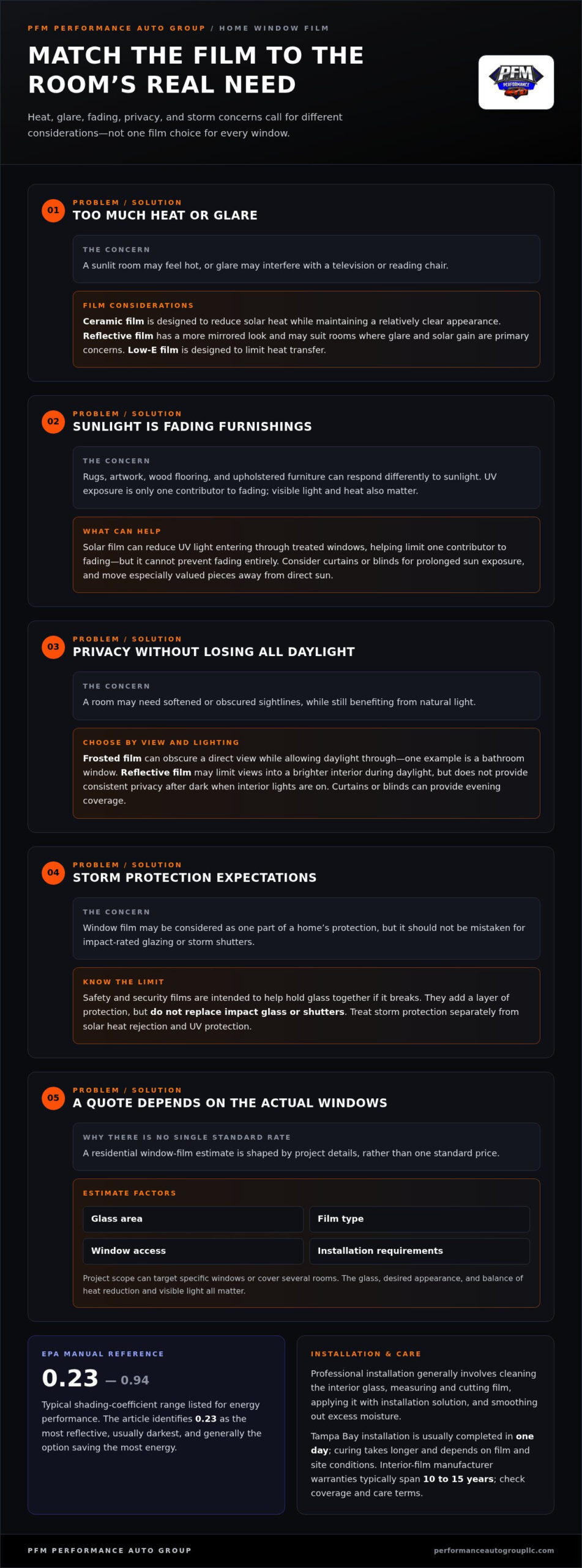
In Tampa, a residential window-film estimate depends on the glass area, film type, window access, and installation requirements. These project details shape the estimate rather than a single standard rate.
Ceramic films are designed to reduce solar heat while maintaining a relatively clear appearance. Reflective films have a more mirrored look, while low-E films are designed to limit heat transfer. The best fit for solar window film for homes in Tampa depends on each room’s heat, glare, and appearance priorities.
Home window-film projects in Tampa, Hillsborough County, and across Florida should account for applicable building and glazing requirements. A film’s appearance or solar performance alone doesn’t establish whether it meets requirements for a particular home.
Yes, solar film can contribute to thermal stress if its properties aren’t suited to the glass. Double-pane construction, glass type, existing shade, and frame condition all matter. The U.S. Environmental Protection Agency notes that proper installation helps avoid film-induced glass breakage.
Residential window-film installers serve Tampa Bay, but no specific installer names or review findings are available to compare here. When reading reviews, look for detailed examples of workmanship, communication, clean edges, and care around window frames.
Professional residential installation generally involves cleaning the interior glass, measuring and cutting the film, then applying it with installation solution and smoothing out excess moisture. Tampa Bay installation is usually completed in one day; curing takes longer and depends on film and site conditions.
Residential Film Installation Options
Residential solar window tinting in Tampa can target specific windows, such as a sunlit living-room pane, or cover several rooms. Before choosing a project scope, compare the glass area, window access, and the balance of heat reduction and visible light you want. These details help define the work and estimate.
Film Types and Home Considerations
Safety and security films are intended to help hold glass together if it breaks; they aren’t a substitute for impact glass or shutters. For energy performance, the U.S. Environmental Protection Agency manual lists typical shading coefficients from 0.23 to 0.94, with 0.23 being the most reflective, usually darkest, and generally saving the most energy. Match film choice to glazing and room needs.
UV protection and fading prevention
In Tampa, solar films can reduce ultraviolet light entering through treated windows, helping limit one contributor to fading. In a hot, humid climate, ceramic solar-control film is an option to consider; reflective film may suit rooms where glare and solar gain are primary concerns. Compare the glass, desired appearance, and comfort goals before choosing.
Fading isn’t caused by UV exposure alone. Visible light and heat also affect materials, so film can reduce fading without preventing it entirely. Rugs, framed artwork, wood flooring, and upholstered furniture may each respond differently to sunlight. Even after treating the glass, consider moving especially valued pieces away from direct sun.
UV protection also changes the light reaching people indoors, but window film shouldn’t be treated as complete protection from sunlight. Rooms with prolonged sun exposure still benefit from practical shade, such as curtains or blinds. Combining film with a shade can help protect a reading chair and nearby artwork while preserving daylight when the shade is open.
Solar heat rejection and UV protection are related, but they aren’t identical. Solar-control film can reduce incoming solar energy and glare, while UV protection addresses ultraviolet light passing through glass. In Tampa, compare the film’s stated performance for both purposes, then consider whether a lighter appearance or stronger glare control better suits each room.
Decorative film can change privacy and appearance, but its decorative effect doesn’t establish its UV performance. Check product information for its UV protection, and consider how the pattern affects views and daylight. Frosted film on a bathroom window, for example, serves a different purpose from solar-control film on a sunlit living-room window.
Manufacturer warranties for interior window films typically span 10 to 15 years. Read the warranty terms for coverage and care requirements, and keep the product documentation with home records. Installation quality matters too: a clean, precise application helps the film perform as intended and protects the glass from installation-related issues.
Hurricane-season protection has a clear limit. Safety and security film can provide an added layer, but it doesn’t replace impact glass or shutters. Treat it as a separate consideration from solar heat rejection and UV protection, and plan storm protection around the home’s existing glazing and protective measures.
To compare film choices for your Tampa home, schedule a window-film discussion and identify which rooms need UV reduction, glare control, or a different appearance.
Decorative film, privacy, and natural light
Decorative and privacy films can change how a room feels without replacing its windows. In a Tampa home, choose based on the room, daylight needs, and the view you want to soften or obscure.
Privacy and Glare Control
For a bathroom, frosted film obscures a direct view while allowing daylight through the glass. A living-room window may need solar film instead, especially if afternoon glare falls on a television or reading chair. Consider privacy and glare separately: decorative finishes address sightlines, while solar-control performance addresses incoming light and heat.
Privacy also changes with lighting. Reflective film may limit views into a brighter interior during daylight, but it doesn’t provide consistent privacy after dark when interior lights are on. For a street-facing room, pair film with curtains or blinds for evening coverage. For a front-door sidelight, choose frosted film to obscure the view at different times.
Visible Light Transmission and Reflectivity
Homeowners choose visible light transmission and reflectivity by balancing daylight, glare, privacy, and exterior appearance. Higher visible light transmission lets more visible light pass through; lower transmission reduces indoor brightness. Reflectivity describes the film’s mirrored appearance and how it looks from outside. Compare samples against the actual window and room, not just a product image.
Start with the room’s main use. A kitchen where you value natural light may suit a lighter-looking film, while a west-facing office with screen glare may benefit from stronger glare control. Check the view from both sides during daytime and after dark. This comparison shows how the glass, film, and changing light work together.
Decorative film offers another design option: clear patterns, textured effects, or a frosted finish can add privacy without making every window look the same. Use it on a bathroom pane or entry sidelight, and keep the main living-room glazing clearer if the outdoor view matters. The pattern affects the room’s appearance and how much detail is visible through the glass.
Commercial privacy and security films address different needs from decorative home film. In an office, a frosted meeting-room partition can screen conversations visually, while safety and security film adds a layer intended to help hold glass together if it breaks. Commercial window film should suit the space’s purpose, glazing, and desired appearance.
For a balanced choice, list each window’s priority: privacy, glare control, daylight, comfort, or energy savings. Then compare film samples in place and note how each changes the view. This room-by-room approach helps distinguish decorative film from solar control and avoids choosing one finish for every window by default.
Does window film help with hurricanes?
Window film can improve indoor comfort in Florida, but solar film and hurricane protection serve different purposes. Solar-control film reduces solar heat and glare; safety and security film adds a layer of protection but doesn’t replace impact glass or shutters.
Solar film can reduce temperature by up to 16 degrees. The effect depends on the film, the glazing, sun exposure, and room conditions. A west-facing room with strong afternoon sun may feel more comfortable after solar heat entering through its windows is reduced. Film doesn’t cool a room like air conditioning; it limits some heat gain through treated glass.
Lower heat gain may ease the cooling load, but it doesn’t promise a particular change in cooling costs. Air-conditioning settings, insulation, roof exposure, and other windows also affect a home’s energy use. To assess potential value, identify the rooms that overheat first, then compare their sun exposure and window area. A sunny living room may benefit more than a shaded interior room.
Glare control is another distinct benefit. Blocking some incoming solar energy can also reduce bright patches on floors and reflections on screens. Choose film based on the room’s use: a home office may need less monitor glare, while a family room may prioritize natural light and a clear view. Darker or more reflective appearances can change brightness and the view, so consider their effect at different times of day.
For hurricane season, treat solar heat rejection as a comfort measure, not storm protection. Solar film isn’t a substitute for shutters or impact-rated glazing. Security window film can add a layer that holds shattered glass together, but it doesn’t prevent breaking or make ordinary glass equivalent to impact glass. Plan storm protection separately from a solar-film decision.
Before choosing, separate the goals. List each window’s needs: less heat, reduced glare, glass retention, or hurricane protection. Then match each goal to the appropriate measure. For example, a Tampa home may use solar film to address afternoon heat in a west-facing room while relying on shutters for storm preparation.
Ask for film performance details for the intended glass and installation. Review solar heat reduction, visible light transmission, and the film’s intended role. An installer’s assessment should account for the existing windows, since glazing type and condition affect film suitability. Professional installation also matters: the U.S. Environmental Protection Agency notes that proper installation helps avoid film-induced glass breakage.
Keep the distinction clear: solar film addresses heat and glare; security film provides an added layer; shutters or impact glass remain separate hurricane-protection measures. This helps Tampa homeowners choose for comfort without mistaking window film for storm-hardening.
Free on-site assessments and written estimates
An on-site assessment connects your Tampa home’s window conditions with a practical film plan. Walk through each room and identify glass that receives direct summer sun, creates glare, or exposes furniture and artwork to UV rays. This room-by-room review clarifies your priorities before you select a film.
Start with the windows causing the greatest discomfort. Note whether a west-facing living room becomes hot late in the day or sunlight reflects across a home-office screen. Record each window’s location, the room’s use, and your main goal: heat reduction, UV protection, privacy, or glare control. These details help shape a suitable recommendation.
Look closely at the glass and frame, too. A useful assessment considers glazing type, existing condition, access, and visible damage. These details matter because film choice and installation suitability depend on the window itself. The U.S. Environmental Protection Agency notes that proper installation helps avoid film-induced glass breakage.
Samples can help you compare appearance before making a selection. View each against the actual window, from inside and outside. Notice how it changes natural light, reflectivity, and the view at different times of day. A frosted decorative sample, for instance, serves a different purpose from a clear solar-control sample.
A written estimate should make the project scope clear. Review which windows are included, the film type, the installation work, and any relevant preparation. Ask how the selected film addresses your priorities, such as UV protection or glare reduction. Manufacturer information can explain film performance and warranty terms, while the estimate clarifies the planned work.
The estimate depends on the project: glass area, film selection, window access, and installation requirements all shape it. Compare the written scope with your room-by-room notes. If the quote covers only a sunny living room, for example, don’t treat it as a whole-home estimate.
Set a clear goal for savings, but don’t assume film alone determines energy costs. Cooling equipment, shading, and other windows also affect household energy use. Instead, identify which rooms need improved comfort and which furnishings need added protection. This gives the assessment a specific purpose and makes options easier to compare.
Before approving the work, review the film choice, treated windows, installation scope, and warranty details together. A written record helps you understand what’s included and compare it with your home’s priorities.
PFM Performance Auto Group: Auto Window Tinting
PFM Performance Auto Group provides Home Window Tinting for Tampa homeowners looking to address indoor heat, glare, or UV exposure. If residential comfort is your priority, discuss which rooms and windows matter most, then consider a film suited to your home’s goals. The company also offers Commercial Window Tinting, Auto Window Tinting, and Black Pearl Nano Ceramic Window Tint By Madico.
For a home project, describe the windows you want treated and what you hope to improve. This keeps the conversation focused on the right application, whether you’re considering solar control or another window-film purpose.
Contact PFM Performance Auto Group or visit the website to discuss your home window-film needs.
Make a Confident Next Move for Your Home
Turn your priorities into a clear project plan. Decide which windows matter most to your everyday comfort, then consider how you want the finished rooms to look and feel. This gives solar window film for homes in Tampa a purpose beyond choosing a shade: it becomes a considered improvement to how you use your home.
PFM Performance Auto Group offers Home Window Tinting, Commercial Window Tinting, and Auto Window Tinting. For a residential project, discuss your home’s windows and the outcome you want to take the next step with a clear sense of direction.
A more comfortable, thoughtfully finished home starts with a choice that suits your space. Take the next step when you’re ready.
Frequently Asked Questions
Do you serve my area?
Yes. PFM Performance Auto Group serves Tampa and Hillsborough County, including homeowners seeking residential window tinting. Its local service area includes home projects in Hillsborough County. Before planning, identify the property location and the rooms you want treated. This helps focus the conversation on your home’s windows and priorities.
How long does window tint last?
High-quality tint can last 5-10 years or more, depending on exposure and maintenance. For home windows, direct sun, glass condition, cleaning habits, and installation quality all affect how film holds up. Keep product and installation records, and use care instructions suited to the film. A warranty period and the film’s actual service life are different measures, so consider both when assessing long-term value.
How much does residential solar window film cost per window or square foot in Tampa?
Residential film pricing depends on the project, so there isn’t one useful per-window or per-square-foot figure for every Tampa home. The estimate is shaped by the total glass area, film selection, window access, and installation requirements. A few accessible windows and a full home with varied glazing involve different scopes. A quote request provides pricing based on the project.
How much can solar window film reduce heat, glare, and air-conditioning costs?
Solar film can reduce indoor temperature by up to 16 degrees, and it can lessen glare by filtering incoming sunlight. Cooling-cost savings vary with the home’s air-conditioning use, shading, insulation, and sun exposure. A practical way to assess the potential benefit is to note which rooms feel hottest and when, then consider how those windows contribute to the cooling load.
Does solar window film block UV rays and protect furniture from fading?
Yes, window film can block UV rays, reducing one contributor to fading in furniture, flooring, and artwork. For example, film can reduce direct UV exposure on a sofa beside a bright window. Fading can also result from visible light and heat, so film doesn’t eliminate it entirely. Consider combining window film with shades to protect particularly valuable furnishings.
What warranties are offered for residential window film in Tampa?
A warranty is offered on tint material and installation, and terms vary based on the chosen product. Review the written warranty for the covered film, installation, and any care requirements before approving the work. Keep the document with your home records, along with the installation details. These specifics clarify the protection attached to your selected residential film.