
Solar Control Window Film for Lithia, FL Homes: 2026 Guide
Could the darkest window film be the wrong choice for a bright Lithia room? It might be, especially if preserving daylight and clear views matters as much as reducing glare. Choosing solar control window film for homes Lithia is less about selecting one tint for every window and more about matching the film to each room, its glass, and its sun exposure.
It’s understandable to want relief when afternoon sun makes a room feel hot or harsh, while still keeping your home bright and welcoming. The challenge is comparing film descriptions: darkness and reflectivity alone don’t tell you how a film will look from inside, how much daylight it will allow through, or how it will suit a particular window.
This guide explains practical differences among solar control film styles and what to consider when balancing comfort, glare management, daylight, and views. You’ll also find a room-by-room way to organize your priorities before arranging residential window tinting in Lithia. PFM Performance Auto Group provides home window tinting in the Tampa Bay area, including Hillsborough County, with careful attention to your property and the details of each project.
Key Takeaways
- Solar control window film for homes Lithia can be considered room by room, based on heat, glare, daylight, and the views you want to preserve.
- Compare film styles by appearance and reflectivity, but don’t assume the darkest or most reflective option is the best fit.
- Use each room’s purpose, privacy needs, window conditions, and preferred level of natural light to guide your choices.
- Before planning an installation, note which rooms and windows are affected and describe the appearance you’re hoping to achieve.
- PFM Performance Auto Group offers home window tinting in the Tampa Bay area, including Hillsborough County.
Why Lithia Homeowners Consider Solar Control Window Film
Solar control window film is a thin layer applied to glass to manage how sunlight enters a home, helping reduce heat, glare, and UV exposure while maintaining a selected level of natural light. The result depends on the film selected and the window it’s applied to, so film can support comfort without guaranteeing a particular room temperature or energy-bill reduction.
Unlike curtains or blinds, film stays on the glass and doesn’t need to be opened or closed to change the light or view. A useful overview of window insulation film explains how film can influence heat transfer and solar energy at the window. For Lithia homeowners, that distinction can matter in rooms where daylight is welcome but direct glare or heat feels intrusive.
What does solar control film do on a home window?
Depending on its construction, film can reflect or absorb some incoming solar energy, helping manage how much passes through the glass. The result varies with the film and window, so don’t treat a product description as a promise of a specific temperature change. Some options are designed to reduce glare while retaining natural light. The balance depends on the selected film’s properties and appearance.
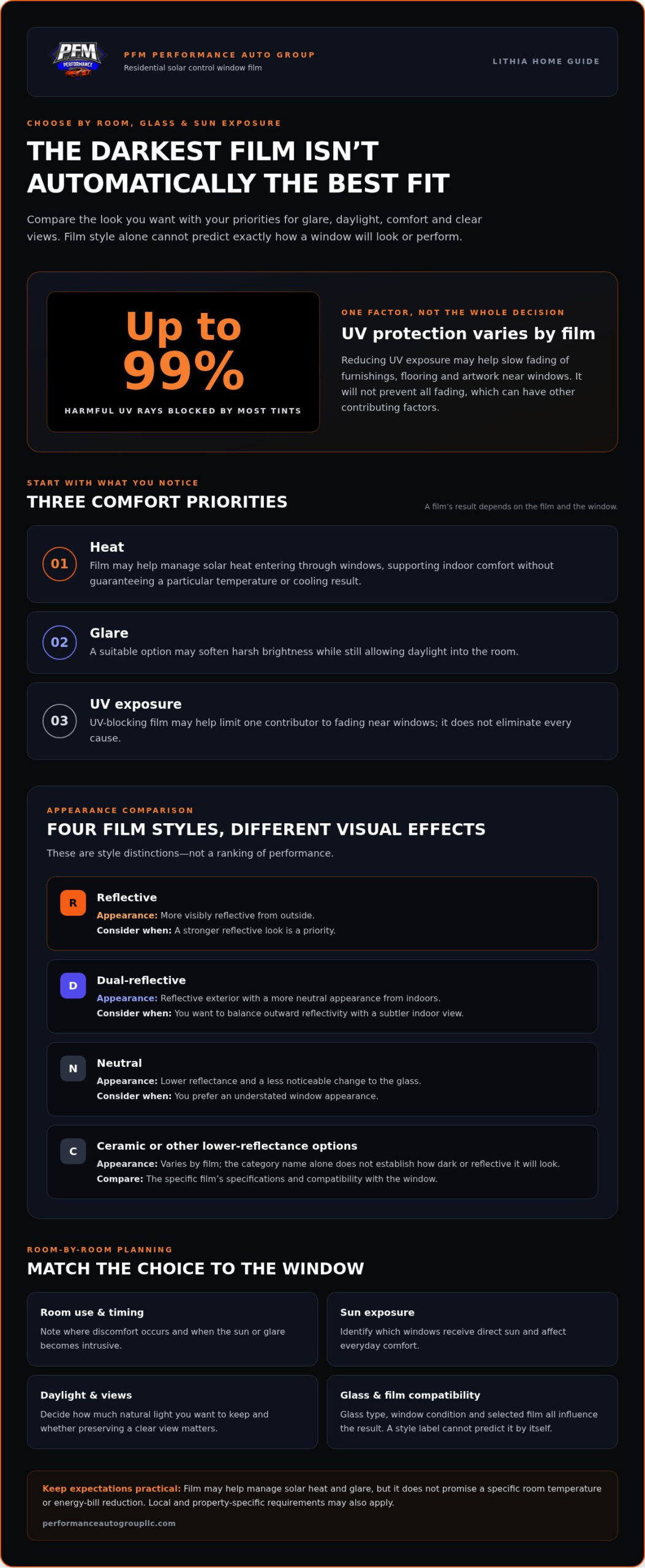
UV protection is another consideration. Most tints block up to 99% of harmful UV rays, but that doesn’t mean every film provides the same level. Reducing UV exposure may help slow fading of furnishings, flooring, and artwork near windows. It won’t prevent all fading, which can have other contributing factors.
Which home comfort concerns might film help address?
Start with the moments and spaces that are bothering you. A living room may be difficult to use when sun washes across the television, while a bright kitchen or sun-exposed bedroom may feel uncomfortable at certain times of day. Note when the problem occurs, which windows receive direct sun, and whether you want to preserve a clear view and abundant daylight. Those details are more useful than choosing film based on darkness alone.
- Heat: Film may help manage solar heat entering through windows, supporting a more comfortable interior without guaranteeing a particular cooling result.
- Glare: A suitable option may soften harsh brightness while still allowing daylight into the room.
- UV exposure: Film that blocks UV can help limit one contributor to fading near windows.
In Lithia and across Hillsborough County, pay particular attention to rooms with strong sun exposure and windows that affect everyday comfort. Solar control film may also support energy efficiency by reducing some solar heat entering the home, but actual savings depend on the property and its conditions. For a broader overview of residential tinting, see the Tampa home window-tinting guide.
Keep the goal practical: improve a room’s comfort while preserving the light and appearance you value. Tint legality varies by state or country, and it is not legal everywhere, so include applicable local and property-specific requirements in your project planning.
How Solar Control Window Film Works and How Film Styles Differ
Window film changes how sunlight passes through glass, but the film and the existing window work as a system. Glass type, condition, and selected film all influence the result, so a style label alone can’t predict exactly how a window will look or perform. When comparing solar control window film for homes Lithia, weigh the visual effect you want against your priorities for glare, daylight, and solar control.
Reflective film is designed to look more mirrored from the exterior, while neutral film is intended to keep the glass appearance more subtle. Dual-reflective and ceramic films offer other characteristics to compare, but the category name doesn’t replace the specific film’s appearance and window-compatibility information.
Reflective, dual-reflective, and neutral film: what changes?
Reflective film has a visibly reflective finish that can create a more pronounced change to a home’s exterior. Dual-reflective film is intended to balance that outward reflectivity with a more neutral appearance from indoors. Neutral film is a lower-reflectance choice for homeowners who prefer less visible change to the glass. These are general style distinctions, not a ranking of performance.
| Film style | Appearance to consider | May suit priorities such as |
|---|---|---|
| Reflective | More visibly reflective from outside | A stronger reflective look |
| Dual-reflective | Reflective exterior, more neutral interior | Balancing exterior appearance with a subtler indoor view |
| Neutral | Lower reflectance and a less noticeable change to glass | Keeping the home’s window appearance understated |
| Ceramic or other lower-reflectance options | Appearance varies by film | Comparing solar control options with a restrained look |
How do ceramic and other lower-reflectance options compare?
Ceramic describes a film category homeowners may compare for solar control and appearance. The label alone doesn’t establish how reflective or dark a particular option will look. Compare the specific film’s available specifications with the window it would cover. Don’t carry automotive-film figures over to residential glass, since those products and specifications aren’t interchangeable.
Use the table as a starting point, then consider how the film will look both inside and outside the home. A highly reflective appearance may suit one homeowner, while another may prefer a subtler exterior and a familiar view from indoors. Likewise, “ceramic” or “neutral” isn’t enough information to determine the daylight or solar control for a particular window. Existing glass conditions matter, and a suitable choice should account for both the window and your priorities.
For a more useful comparison, list the windows that matter most and rank appearance, glare management, and solar control in order of importance. You can discuss residential window film options with those priorities in hand.
Choosing Solar Control Film for Each Lithia Room Without Guesswork
A thoughtful choice starts with the room, not the darkest sample. For solar control window film for homes Lithia, consider how you use each space, which windows receive direct sun, and what you want to preserve: daylight, an open view, privacy, or a consistent appearance across the home. Glass type and condition matter too, because film and window work together.
Match the film decision to the room and its use
Think through a typical day in each room. In a bright living area, you may want to soften glare without making the space feel dim or changing the view more than you prefer. In a bedroom, privacy or reducing direct sunlight may take priority. A home office may call for a balance that makes screens more comfortable to use while keeping enough natural light for focused work.
Before comparing films, rank the concerns for each window. Is glare the main frustration, or are heat, UV exposure, privacy, or exterior appearance more important? Then consider how much daylight you want and how the glass looks from both inside and outside. A preference that works in one room may not suit another, so make a short note for each window rather than choosing one style for the entire home.
Balance reflectivity, privacy, and nighttime visibility
Reflectivity and privacy can appear different as indoor and outdoor lighting changes. A reflective surface may affect how visible the glass feels from outside under some conditions, but window film shouldn’t be treated as one-way privacy at all hours. Consider the view from both sides and the room’s use throughout the day. Extremely dark tints might slightly reduce nighttime visibility, so a darker appearance isn’t automatically the better choice.
Keep expectations clear about glass protection. Tint adds a layer that can hold shattered glass together but does not prevent breaking. It isn’t a substitute for security glass.
- For a room where daylight matters: Prioritize the desired view and brightness, then compare films for glare management.
- For a room where privacy matters: Consider sightlines and changing light, rather than assuming reflectivity provides privacy in every condition.
- For windows with existing concerns: Include the glass type and condition in the decision, since compatibility is part of choosing a suitable film.
This room-by-room approach helps avoid selecting film by appearance alone. If you’re weighing home window tinting options, keep your priorities specific: what you want to change, what you want to keep, and how the room should feel during the hours you use it most. Tint legality varies by state or country, and it is not legal everywhere; account for applicable local and property-specific requirements as you plan.
Planning a Residential Window Film Project in Lithia
A well-planned residential film project starts with the windows causing the most concern, then narrows the choice around the home’s glass and the appearance you want. For solar control window film for homes Lithia, a little preparation helps turn general goals such as “less glare” into a clear discussion about specific rooms, windows, and priorities. Suitability depends on the existing glass and selected film, so don’t assume one option will fit every window.
- Identify priorities by room. Note where glare, heat, UV exposure, privacy, or a noticeable change in appearance matters most.
- Locate the affected windows. Record the room and window position, including which direction it faces if you know it.
- Describe the desired result. Consider how much daylight you want to retain and whether you prefer a subtle or more visible change to the glass.
What should homeowners note before installation?
Make a simple room-by-room list rather than treating the whole home as one project. Include window orientation where known, the comfort concern, and your preferred appearance. If available, note visible glass features or labels that identify the window type. These details make the project discussion more specific without requiring you to diagnose the glass yourself.
- Rooms and windows: Name the spaces and identify the particular windows involved.
- Comfort concerns: Describe when glare, heat, or other discomfort is most noticeable.
- Appearance preferences: Note how important natural light, the view, privacy, and a consistent exterior look are to you.
- Glass details: Share any existing labels or features you can see, without removing or altering anything.
What should a Lithia homeowner expect from a professional project?
Expect the conversation to focus on your home, the condition and type of the windows, and what you want each room to feel and look like. Bring your notes and describe your priorities plainly. If one window matters more than the others, say so; a clear starting point keeps the discussion grounded in your needs rather than a one-size-fits-all recommendation.
The selected film should suit both your desired appearance and the existing glass. A sample’s color or reflectivity alone cannot establish whether it’s appropriate for a particular window, because the glass and film work together. A professional project discussion can account for those conditions and help align the film choice with your comfort and aesthetic goals. Leave film removal, cutting, and application to the installation process rather than attempting to prepare the glass yourself.
With the rooms, window locations, and preferred appearance in hand, you’ll be ready to plan the next step with greater clarity. Thoughtful preparation helps protect the character of your home while keeping attention on the specific improvements you want to make. After installation, wait at least 3-5 days before rolling down windows. For cleaning, wait at least one week before cleaning, using ammonia-free products.
Residential Solar Control Window Film in Lithia with PFM Performance Auto Group
Choosing residential film is a decision about how you want your home to feel and look, not simply how dark its windows should be. PFM Performance Auto Group is a locally owned automotive shop serving the Tampa Bay area, including Hillsborough County, and provides home window tinting. For Lithia homeowners considering solar control window film for homes Lithia, the aim is to account for the room, glass, comfort concerns, and preferred appearance.
A considered approach to residential window tinting
PFM Performance Auto Group began in 2004 and has 20 years in operation. The company approaches window film installation with care for the homeowner’s property and the details that matter in a residential setting. Competitive pricing is offered, along with a warranty on tint material and installation; terms vary based on the chosen product.
Each home presents its own combination of windows and priorities. A bright living room may call for a different balance of glare control and daylight than a bedroom where privacy or a more subdued feel matters more. Existing glass also plays a part in the decision. Rather than treating one film as the answer for every window, the project should reflect your goals and the conditions of the glass.
A useful starting point is to share what you want to improve and what you don’t want to change. You might want to manage glare while retaining the view, soften the appearance of direct sunlight, or choose a film that complements the home’s exterior. Clear priorities help shape a practical discussion about the film approach and its appearance. The aim is to make a considered selection, not promise a particular temperature change or a result that every window will experience in the same way.
Book a Lithia home window-tinting appointment
Before arranging a project, gather the room names and window locations, note any existing glass labels you can see, and identify whether daylight, reflectivity, privacy, or a subtle appearance matters most. Those details create a stronger foundation for choosing film that suits both the home and your expectations.
PFM Performance Auto Group provides residential window tinting with professional installation and attentive property care. If you’re ready to discuss a home project in Lithia, bring your priorities forward and take the next step with confidence.
Take the Next Step Toward a More Comfortable Home
You don’t have to solve every window at once. Start by identifying the one space where a change would matter most, then define what you’d like to preserve, whether that’s daylight, a familiar view, or the home’s current appearance. This gives your project a clear starting point and makes it easier to discuss your priorities for the windows.
Choosing solar control window film for homes Lithia is a personal decision shaped by your home and how you live in it. Bring your questions and preferences into the conversation, and make the next step a thoughtful evaluation rather than a guess based on a sample alone.
A considered choice can help your home feel more aligned with your everyday needs. Take the first step when you’re ready.
Frequently Asked Questions
Does solar control window film make a room darker?
It can, but the effect depends on the film and how much visible light it allows through. A film with a more noticeable tint or reflective finish may change the appearance of the glass more than a neutral style. Before choosing, consider tasks that need clear daylight, such as reading or cooking, and compare how each option looks in the room as well as from outdoors.
Can solar control film be installed on double-pane or Low-E windows?
It depends on the window’s construction and the film selected, so don’t assume a film suitable for one window will suit another. Double-pane and Low-E glass can have different features that affect film selection. Share visible window labels or documentation during a professional assessment, along with the rooms you want to address. That gives the discussion a useful starting point without relying on a blanket compatibility claim.
How much can solar control window film reduce energy bills?
There’s no fixed amount of savings to expect. The effect depends on your home, window conditions, cooling use, weather, and selected film, so a specific bill reduction can’t be promised. Consider energy use as one part of the decision, alongside comfort and glare. If a room feels uncomfortable only during sunny periods, note when that happens and which windows receive the sun before weighing potential benefits.
Is residential window tint legal everywhere in Florida?
No. Tint legality varies by state or country, and it is not legal everywhere. Requirements can depend on where the property is and the type of installation, so don’t assume rules for vehicle windows automatically apply to home windows. Review current requirements relevant to your property and any applicable community or building rules in Hillsborough County. Avoid relying on outdated guidance or assumptions.
Can window film stop a home window from breaking?
No. Window tint adds a layer that can hold shattered glass together but does not prevent breaking. That distinction matters if you’re considering film for a safety-related reason: it shouldn’t be treated as security glazing or a guarantee against breakage. Choose solar control film for its stated solar and comfort-related purposes, and keep any glass-retention benefit in perspective when deciding what the home needs.
Does reflective window film provide privacy at night?
Don’t count on reflective film for one-way privacy at night. Its appearance and privacy effect can shift with the lighting on either side of the glass; if the room is brighter than outdoors, people outside may be able to see in. If nighttime privacy is important, plan for window coverings or another privacy measure, and consider the film’s appearance from indoors and outdoors before selecting it.
How do I know which solar control film is right for my home?
Start with the room that causes the most concern, then decide whether heat, glare, UV exposure, privacy, or a subtle appearance is your priority. For solar control window film for homes Lithia, also note the window location, existing glass details, and how much daylight and view you want to retain. A residential tinting discussion can bring those details together and help avoid treating every window in the home alike.