Window Tint Percentages: The 2026 Guide to Choosing Your VLT
The darkest tint isn’t always the coolest choice. A lighter ceramic film can help block heat without making your windows so dark that night driving feels uncomfortable. That’s why window tint percentages matter: they affect visibility, privacy, and whether your vehicle’s tint complies with Florida law.
If you’re unsure what VLT means or concerned about choosing a shade that could lead to a ticket, you’re not alone. The right percentage depends on where the film goes and what you want from it. Factory glass also affects how much light passes through, so the tint rating alone doesn’t tell the whole story.
This guide explains VLT, outlines Florida’s current tint limits for sedans, SUVs, vans, and trucks, and helps you weigh legal compliance, privacy, and visibility after dark. You’ll also learn why film technology matters as much as darkness when managing Florida heat. PFM Performance Auto Group provides professional Black Pearl Nano Ceramic window tint by Madico at its Tampa workshop.
Key Takeaways
- Use the window tint percentages chart to compare shade levels and choose a look that suits your visibility and privacy preferences.
- Check Florida’s tint limits by window position and vehicle type before selecting a shade.
- Compare a film’s heat-rejection performance, not just its darkness. A lighter ceramic tint may help keep your vehicle cooler.
- Consider how darker tint may affect visibility, especially when driving at night.
- PFM Performance Auto Group’s Black Pearl Nano Ceramic tint and professional installation can help you match your priorities to a suitable shade.
Demystifying VLT: What Do Window Tint Percentages Actually Mean?
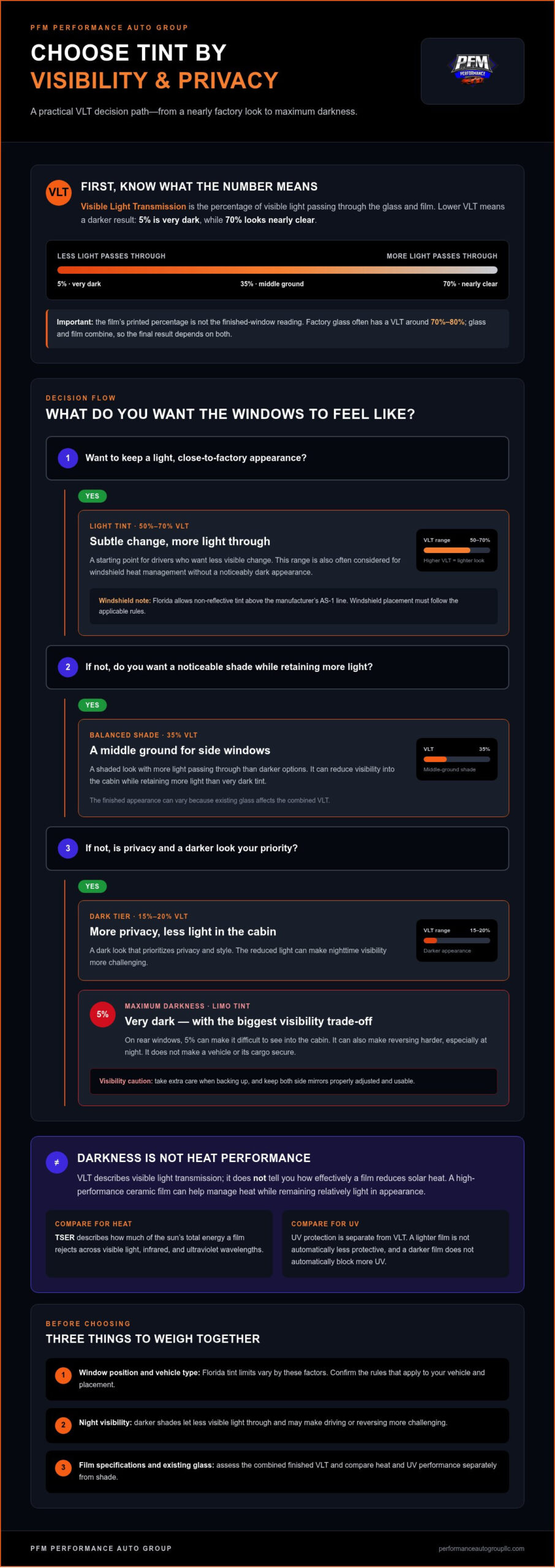
VLT, or Visible Light Transmission, measures the percentage of visible light that passes through the glass and tint. It’s a key measure for comparing automotive tint and assessing legal compliance. A lower number means a darker result: 5% is very dark, while 70% looks nearly clear. But the percentage on the film doesn’t tell the whole story, because your vehicle’s existing glass affects the finished appearance and measured VLT.
Many factory windows have a natural tint, with glass VLT often around 70% to 80% before film is added. Since film is applied over the glass, the final amount of light passing through is lower than either rating alone. For example, a 35% film on factory glass won’t necessarily produce a finished window that measures 35% VLT. The combined result depends on both the glass and the film, so don’t treat the film label as the final reading. For an overview of what window film is and how film types differ, see this foundational reference.
The Relationship Between VLT and Privacy
At 5% VLT, often called limo tint, the glass appears extremely dark and can create a near-blackout effect for rear passengers. Visibility through the window is also greatly reduced. A 35% shade is often viewed as a balanced choice, offering a noticeable reduction in visibility into the cabin while retaining more light than very dark tint. Higher VLT levels look clearer but can leave the cabin feeling exposed, a look many drivers call the “fishbowl” effect.
Privacy isn’t determined by a percentage alone. Lighting conditions matter, too. It may be easier to see into a vehicle during the day than at night when the interior is illuminated. Before choosing among window tint percentages, consider how you use the car and how much visibility you want both into and out of the cabin.
Visible Light vs. Infrared Heat
Darkness and heat rejection are different measures. VLT describes visible light transmission; it doesn’t show how effectively a film reduces solar heat. Film construction matters, so a high-performance ceramic film can help manage heat while remaining relatively light in appearance. That gives drivers options beyond simply choosing a darker shade.
UV protection is separate from VLT, too. A lighter film isn’t automatically less protective, and a darker film doesn’t automatically block more UV. Protection depends on the film itself, so compare its performance specifications rather than using darkness as a shortcut. PFM Performance Auto Group offers Black Pearl Nano Ceramic window tint by Madico, helping Tampa drivers consider shade and performance together while accounting for the vehicle’s existing glass.
The Car Tint Percentage Chart: Visualizing Your Options
Use this quick guide to compare the appearance and trade-offs of common VLT levels. The percentage describes how much visible light passes through the glass and film together, so factory glass can change the finished result. Treat these ranges as starting points, not a guarantee of an exact appearance.
- 50% to 70%: Light, close to a factory look, and suited to drivers who want less visible change. This range is often considered for windshields to manage heat without a noticeably dark appearance. Windshield placement must follow Florida’s rules, including the allowance for non-reflective tint above the manufacturer’s AS-1 line.
- 35%: A middle ground for side windows, with a shaded look while allowing more light through than darker options.
- 15% to 20%: A dark tier that prioritizes privacy and style, but reduces light entering the cabin and can make nighttime visibility more challenging.
- 5%: Very dark limo tint, offering substantial visual privacy with the greatest trade-off in visibility.
5% Tint (Limo Tint): Maximum Darkness
On rear windows, 5% tint can make it difficult to see into the cabin, which may help keep belongings out of view. It doesn’t make a vehicle or its cargo secure, though. The darkness can also make it harder to see when reversing, especially at night. If you choose this level, keep both side mirrors properly adjusted and usable, and take extra care when backing up.
20% To 35% Tint: The Professional Standard
A 20% shade is sometimes chosen to approximate the darker appearance of factory privacy glass, though factory glass varies and adding film changes the final look. At 35%, the cabin remains more visible from outside, while drivers get a noticeable reduction in brightness and glare. To explore privacy-focused choices, read our guide to automotive privacy window tint in Tampa.
50% To 70% Tint: Heat Rejection Without the Shade
For drivers who want an “invisible shield,” lighter tint can preserve a vehicle’s original appearance while adding film performance. VLT alone doesn’t show how a film handles heat or UV; the International Window Film Association offers consumer information on these performance differences. Carbon and ceramic films can be available at similar darkness levels, so compare film specifications rather than assuming the shade reveals the material. PFM Performance Auto Group can help you weigh those choices during an in-shop tint appointment.
Darkness vs. Performance: Does a Lower Percentage Mean Better Heat Rejection?
Darker tint reduces visible light, but that doesn’t automatically mean it will keep your vehicle cooler. VLT measures visible light transmission; Total Solar Energy Rejected (TSER) describes how much of the sun’s total energy the film rejects across visible light, infrared, and ultraviolet wavelengths. For more on how these specifications work together, see Understanding Window Film Performance Specs.
That distinction explains why a 70% ceramic film can outperform a 5% dyed film for heat rejection, depending on each film’s performance specifications. The 5% option looks much darker, but its low VLT alone doesn’t show how much solar energy it rejects. Carbon and ceramic films aren’t interchangeable simply because they have the same shade. Compare TSER and infrared-rejection information, not darkness alone.
Black Pearl Nano Ceramic window tint by Madico is designed to manage infrared heat while allowing drivers to consider lighter VLT options. Its performance comes from how the ceramic film interacts with solar energy. For Tampa drivers, that means considering cabin comfort without automatically choosing the darkest appearance. Performance specifications matter, and the result depends on the product and the vehicle’s glass.
The Ceramic Advantage in Tampa
In Florida’s heat and humidity, reducing solar energy entering the cabin can support a more comfortable drive and may reduce how hard the air conditioning has to work. Ceramic film can also help limit UV exposure, which contributes to fading and wear in interior materials such as leather. It adds a layer of care for the cabin, though no tint can prevent all heat or material aging.
PFM Performance Auto Group installs Black Pearl Nano Ceramic in Tampa. The focus is on matching film performance with the vehicle and the driver’s priorities, rather than assuming darker is always better.
Choosing Percentage Based on Glare Reduction
VLT affects how much visible light enters the vehicle, so shade can influence glare and brightness during sunrise or sunset commutes on I-275. A darker option may reduce incoming light, but it also means less light reaches the driver’s eyes, which can make night driving and backing up more difficult. Balance glare comfort with visibility.
Optical clarity matters, too. A quality film should maintain a clear view through the glass, not just deliver a preferred shade. Explore the differences in our guide to ceramic and regular window tint, then book an in-shop tint appointment to discuss a film and VLT suited to your vehicle.
Navigating Florida’s Legal Limits: Legal Percentages for Tampa Drivers
Florida’s tint limits depend on vehicle type and which window is being tinted. The rules apply to the finished glass-and-film combination, not just the VLT printed on a film sample. Choosing a percentage by appearance alone can lead to an unexpected result.
- Sedans: Front side windows must allow at least 28% of light through; rear side windows and the rear window must allow at least 15%.
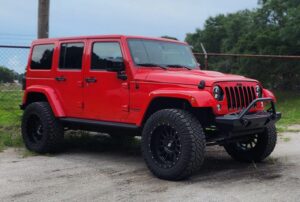
- SUVs, vans, and trucks: Front side windows must allow at least 28% of light through; rear side windows and the rear window must allow at least 6%.
- Windshields: Non-reflective tint is allowed above the manufacturer’s AS-1 line.
These limits matter whether your priority is privacy, reducing glare, or managing Tampa’s heat. A shade that complies on a sedan’s rear windows may not meet the relevant limit for an SUV, so identify your vehicle class before comparing window tint percentages. Florida also limits reflectivity: no more than 25% for front side windows and 35% for rear side windows.
Sedans vs. SUVs and Vans: Different Rules
SUVs, vans, and trucks have more flexibility for rear side and back windows than sedans under Florida’s rules. That distinction can allow darker rear glass, but it doesn’t change the 28% minimum light transmission for front side windows. If tint is below the applicable limit, law enforcement can measure it with a tint meter, and a violation may result in a fine or a fix-it ticket. PFM helps Tampa and Hillsborough County drivers consider tint options with legal compliance and safe visibility in mind.
Medical Exemptions and Legal Nuances
Florida allows medical exemptions for darker tint when a licensed physician certifies that a condition requires it for the driver’s safety. Exemption requirements and documentation matter, so review the current state process before relying on an exemption. Don’t assume that a medical need alone changes the permitted tint. The relevant reading is the combined, or “net,” VLT of the factory glass and applied film, which an officer can assess with a tint meter. A film labeled 28% may therefore produce a lower measured result when applied to already tinted glass.
PFM’s shop-based tint installation takes the actual glass being treated into account for a precise application.
The PFM Approach: Matching Your Lifestyle to the Perfect Shade
The right tint should suit more than your style preference. It should work with your vehicle’s glass, comfort priorities, night-driving needs, and Florida’s legal limits. PFM Performance Auto Group helps Tampa drivers compare window tint percentages and understand how each choice may look and feel before moving forward.
Compare a film sample against your vehicle’s glass rather than choosing by a number alone. Factory glass can affect the finished appearance, so consider the shade in context. If you want heat management without a noticeably dark look, Black Pearl Nano Ceramic window tint by Madico offers a performance-focused option at lighter percentages.
Meticulous Craftsmanship in Tampa
Every vehicle presents different details, from window edges to the curves of the windshield and rear glass. Our shop-based installation emphasizes careful fit and a clean, high-clarity finish. Gaps, creases, or bubbles can detract from a film’s appearance and performance, while complex glass calls for experienced attention.
PFM Performance Auto Group has been serving drivers since 2004 and installs Black Pearl Nano Ceramic. We focus on matching the film and shade to the vehicle and driver without promising a specific lifespan or exact heat-rejection result.
Ready to Transform Your Drive?
Comparing different shades can help clarify the trade-offs between privacy, visibility, and your vehicle’s original appearance. At our Tampa shop, we’ll help you consider those priorities alongside the glass and legal limits, including for windshield tinting. The aim is an informed choice, not simply the darkest option.
Improving your drive starts with the right percentage and a professional installation. Explore booking your tint installation at PFM Performance Auto Group and take the next step toward a shade that fits your vehicle and daily routine.
Choose a Tint That Fits Your Drive
The best shade balances privacy, clear visibility, Florida compliance, and the comfort you want behind the wheel. Remember that VLT describes visible light, not heat rejection, and your vehicle’s factory glass affects the final reading. Compare window tint percentages alongside the film’s performance instead of choosing by darkness alone.
Florida’s limits vary by vehicle type and window location, so a shade that works for one window may not be appropriate for another. PFM Performance Auto Group helps Tampa and Hillsborough County drivers make an informed choice with professional installation and Black Pearl Nano Ceramic window tint by Madico, featuring heat-rejection technology.
Ready to select a shade with confidence? Book an in-shop tint appointment and take the next step toward a more comfortable, considered drive.
Your ideal tint doesn’t have to mean choosing between appearance, comfort, and visibility. Choose a shade that feels right for you and your vehicle.
Frequently Asked Questions
What is the most popular window tint percentage in Florida?
There isn’t a verified statewide figure identifying one most popular tint percentage in Florida. A 35% VLT is often discussed as a middle-ground shade, but the right choice depends on your vehicle, priorities, and Florida’s limits for each window. Consider the finished VLT of the glass and film together, along with how the shade may affect visibility, especially at night.
Can I tint my windshield legally in Tampa?
Yes. Florida allows non-reflective tint on the windshield above the manufacturer’s AS-1 line. This doesn’t mean any darkness or reflective finish is permitted across the entire windshield. Placement and reflectivity matter, and clear sightlines are essential for safe driving. For windshield tinting in Tampa and Hillsborough County, understand the applicable limits before selecting film rather than judging legality by appearance alone.
Does window tint percentage affect the price of the service?
The VLT percentage alone doesn’t determine the price of a tinting service. The film selected, the number and size of the windows, and the vehicle’s glass and installation requirements can all affect the work involved. A darker shade isn’t automatically more expensive, nor does a lighter shade necessarily cost less. An accurate estimate depends on the specific vehicle and tinting scope.
Is 5% tint too dark for driving at night?
For many drivers, 5% tint can make nighttime visibility more difficult, particularly through rear windows when reversing or checking surroundings. Its very dark appearance limits visible light, so consider your night-driving habits and vehicle setup before choosing it. Keep side mirrors properly adjusted and usable, and consider a lighter shade if clear sightlines in low light are a priority.
How do I know what percentage my current factory tint is?
A tint meter measures how much visible light passes through the window. Factory glass may already have a tint, and its VLT can vary, so the glass marking or appearance alone may not tell you the finished reading. If aftermarket film is installed, the meter measures the combined glass-and-film result. A professional reading is the practical way to assess the current net VLT.
What happens if I get a ticket for illegal window tint in Florida?
Florida law enforcement can use a tint meter to check the windows, and a violation may lead to a fine or a fix-it ticket. The reported fine is approximately $116, though the outcome depends on the situation. Read the ticket carefully for the required next steps. To avoid repeat issues, verify the rules for your vehicle type and window location before changing the tint.
Does ceramic tint look different than regular tint at the same percentage?
Ceramic and other film types with the same VLT can have a similar level of visible darkness, but appearance may vary by product and vehicle glass. VLT describes visible light transmission, not the film’s material or heat-rejection performance. Ceramic film can offer heat-rejection benefits without requiring a very dark shade. Compare the film’s specifications and view it on the glass when possible.
Can I mix different tint percentages on the front and back windows?
Yes, you can choose different tint percentages for different windows, provided each window meets Florida’s applicable limits for your vehicle type. For example, front side windows must allow at least 28% of light through, while rear-window limits differ for sedans and SUVs, vans, and trucks. Factory glass affects the combined VLT, so the finished result matters, not only the film rating.