
Window Tint Aftercare Instructions: Protecting Your Investment in 2026
Could rolling down your window just one inch too early cost you hundreds of dollars and void your lifetime warranty? It’s a valid fear for any car owner who values precision. You’ve just invested in premium Black Pearl Nano Ceramic window tinting to combat the relentless Tampa sun, and now you’re staring at a slightly cloudy finish or tiny moisture pockets with a sense of dread. Don’t panic. These initial imperfections are a natural part of the curing process; however, following the right window tint aftercare instructions is the only way to ensure that “new car” clarity becomes permanent.
We understand that your vehicle is more than just transportation; it’s a significant investment that deserves meticulous care. We’ve developed this guide to help you transition from the initial installation to years of crystal-clear protection and maximum heat rejection. You’ll learn exactly how long to keep those windows up, which cleaning agents to avoid at all costs, and how to maintain your film so it never peels or bubbles. Let’s walk through the professional steps required to protect your glass and keep your warranty fully intact for 2026 and beyond.
Key Takeaways
- Learn why temporary haziness and water pockets are actually signs of a healthy curing process as moisture evaporates through the film.
- Follow essential window tint aftercare instructions by keeping windows rolled up for 3 to 5 days to ensure the edges bond perfectly.
- Protect your film’s scratch-resistant coating by strictly avoiding ammonia-based cleaners that can cause chemical degradation.
- Discover how to use Tampa’s direct sunlight to your advantage to speed up the drying process despite Florida’s high humidity.
- Maintain the integrity of your Black Pearl Nano Ceramic lifetime warranty through meticulous, professional-grade maintenance habits.
The Science of Curing: Why Your Tint Looks Hazy at First
Curing is the technical term for the period when the mounting solution used during installation evaporates, allowing the adhesive to bond permanently to your glass. It isn’t an instantaneous dry; it’s a physical transformation. When we apply Black Pearl Nano Ceramic film, we use a specialized liquid solution to position the tint with surgical precision. Because polyester window film is inherently porous, acting as a microscopic sieve that allows mounting solution to escape while the adhesive establishes a permanent, structural bond with the glass, this moisture must travel through the film to exit. During this phase, your windows might look less than perfect. This is a sign of a healthy, active installation rather than a defect.
You may notice “water pockets” or a slight haze, especially within the first 48 hours. This occurs because the high-performance nano ceramic particles in the Black Pearl film are incredibly dense. While this density is what provides elite heat rejection, it can also make the initial moisture more visible to the naked eye. A “milky” or cloudy appearance is completely normal for the premium films installed at PFM. These visual shifts are simply the result of light refracting through the remaining moisture as it works its way out of the film’s pores. Following your window tint aftercare instructions carefully during this window ensures these temporary artifacts vanish to reveal the crystal-clear finish you expect.
The Evaporation Timeline
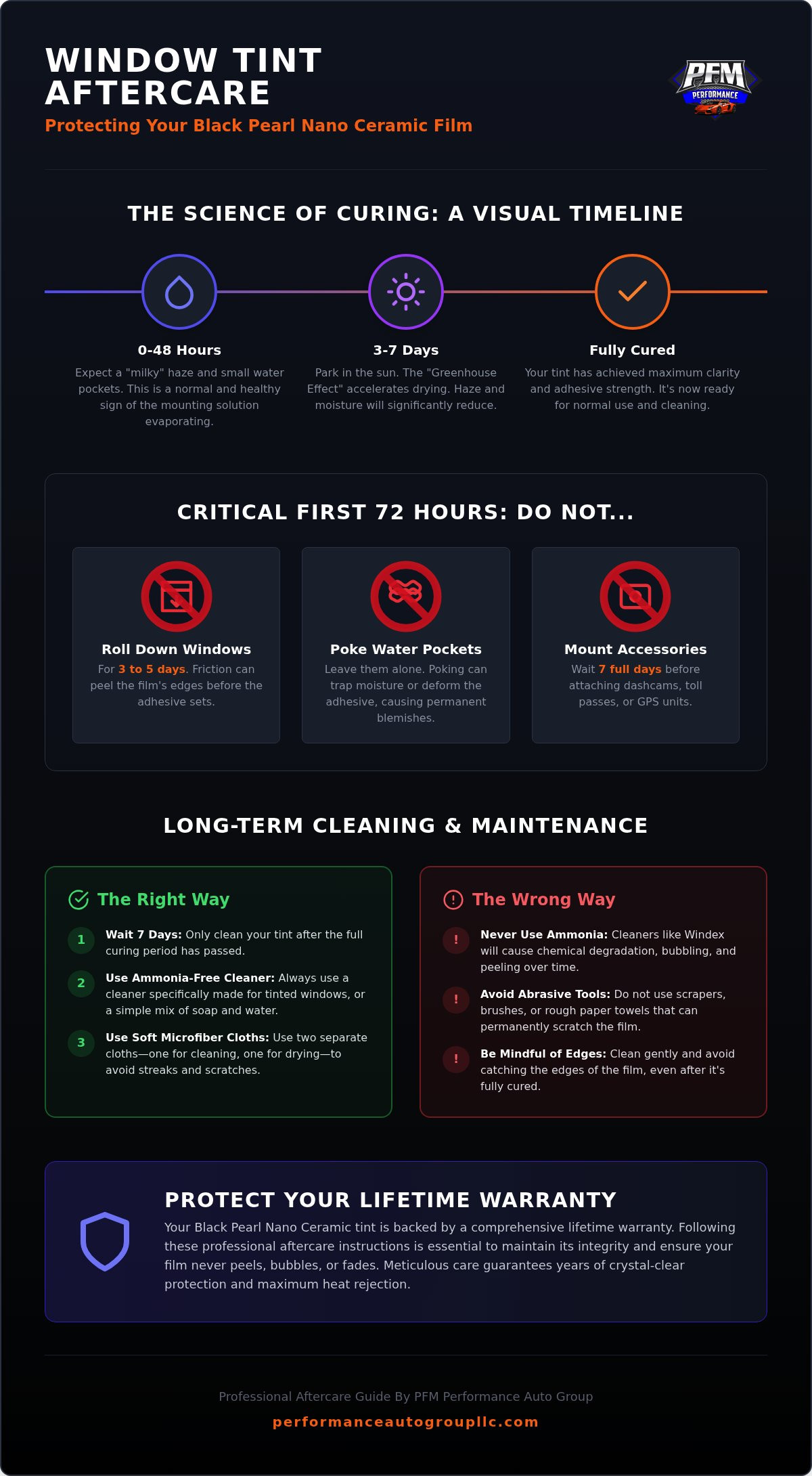
The first 24 hours are the most volatile. This is when the majority of the surface moisture begins its exit. By the end of the first 7 days, the deeper moisture pockets should be significantly reduced. In Tampa, we have a unique advantage: the “Greenhouse Effect.” When you park your car in the sun, the internal cabin temperature rises, which actually accelerates the evaporation process. However, you must observe the “don’t touch” rule. Never poke, prod, or press on these water bubbles. Doing so can trap the moisture or deform the adhesive, leading to permanent blemishes that even the best window tint aftercare instructions can’t fix.
Visual Imperfections vs. Installation Errors
It’s vital to distinguish between normal curing moisture and actual installation errors. Curing moisture looks like small, slightly raised “blisters” or a uniform haziness that shifts in appearance as the sun hits it. These will always flatten out. In contrast, trapped dust or lint appears as a sharp, jagged point that doesn’t change over time. Because we operate as master craftsmen in a controlled environment, we minimize these risks. You’ll find that clarity improves dramatically after the first 72 hours in the Florida sun as the bond strengthens and the last remnants of the mounting solution dissipate into the atmosphere.
The Critical First 72 Hours: Immediate Restrictions
The first three to five days following your appointment are the most vulnerable period for your new film. While the science of curing happens at a microscopic level, physical forces are the primary threat to the longevity of your investment. The absolute first rule in our window tint aftercare instructions is simple: do not roll down your windows. Depending on the current humidity and season in Tampa, this restriction may extend toward five days to ensure the adhesive has reached a sufficient “tack” to resist mechanical pressure.
When you roll a window down, the glass slides past a rubber gasket or weather stripping. This seal is designed to be tight to keep out moisture and noise. On fresh film, that friction can catch the top edge, causing it to peel or “finger” away from the glass. We also take great care to tuck the film beneath the bottom door panel seals for a seamless look. Moving the window too early can disrupt this tuck, leading to permanent lifting. To help you fight muscle memory, we utilize a “button-over-switch” technique where we place a temporary reminder over your window controls. It’s a small detail, but it’s part of our commitment as guardians of your vehicle.
Electronics and Accessory Mounting
Wait at least seven full days before re-attaching any dashcams, GPS units, or toll passes that use suction cups or adhesive pads. Modern mounting technology is incredibly strong; if applied to film that hasn’t fully cured, the mounting adhesive can actually bond more strongly to the tint than the tint has bonded to the glass. This creates a risk of pulling the film right off the window when you try to adjust the device. For those who need help with professional dashcam re-installation after their tint has fully settled, our team is ready to ensure your tech is integrated safely without compromising the film.
Ignition and Seatbelt Precautions
Be mindful of the “seatbelt click” when exiting your vehicle. It’s a common cause of damage; a flying metal buckle can easily chip or gouge fresh film before it has fully hardened. While you should avoid cleaning the interior side of the glass during this phase, you are free to wash the exterior of your car as usual. In fact, unlike fresh paint or wax, we recommend parking your car in direct sunlight during the first week. The heat helps drive out residual moisture and speeds up the bonding process. If you have questions about your specific installation, you can always schedule a follow-up consultation to have one of our master craftsmen inspect the curing progress.
Cleaning Your Tinted Windows: Materials and Chemicals
Once your film has fully cured, your focus shifts from protection to preservation. The most critical directive in our window tint aftercare instructions is the “Ammonia-Free” Commandment. Ammonia is a harsh, alkaline solvent that is chemically incompatible with the top layers of high-quality window film. When ammonia comes into contact with the scratch-resistant coating of your Black Pearl Nano Ceramic tint, it initiates a chemical reaction that breaks down the structural integrity of the polyester. This degradation is what eventually causes cheap films to turn purple, become brittle, or lose their adhesive bond. To maintain the elite clarity of your glass, you must treat the interior surface with the same level of care we used during installation.
The tools you use are just as important as the chemicals. We recommend a “Two-Cloth” Method using specific types of microfiber towels. Begin with a waffle-weave microfiber towel. Its unique texture is designed to trap moisture and lift light debris without dragging it across the film surface. Follow this with a high-GSM plush microfiber towel for the final buff. This sequence ensures a streak-free finish and prevents the hazy residue often left by inferior cloths. Never use paper towels or old newspapers. These materials are made from wood fibers and recycled pulp which act as tiny abrasives, creating microscopic scratches that dull the film’s finish over time.
The Best Cleaning Solutions
You don’t need expensive, specialized chemicals to achieve a professional result. In fact, our “PFM Approved” DIY recipe is often the safest choice for your vehicle. Mix distilled water with just a single drop of pH-neutral baby shampoo in a clean spray bottle. Distilled water is essential because it lacks the minerals found in tap water that cause spotting. If you prefer a commercial product, look for labels specifically marked “Tint Safe” or “Ammonia-Free” at local Tampa retailers. Always spray the solution onto your towel rather than directly onto the glass to prevent liquid from seeping into the door panels or electronics.
Long-Term Maintenance Habits
Consistency is the secret to longevity. Dust and fine Florida sand are natural abrasives that accumulate along the window gaskets and film edges. If left uncleaned, this grit can create vertical scratches every time you roll the window down. We suggest a light cleaning every two weeks to keep the surface slick and debris-free. Pay special attention to the top edge of the film where it meets the glass border. By following these meticulous habits, you ensure your vehicle remains a testament to the best car window tinting Tampa has to offer, preserving both the aesthetic appeal and the high-performance heat rejection for the life of your car.
The Florida Factor: Curing in Tampa’s Heat and Humidity
Tampa’s unique climate requires a specialized approach to window tint aftercare instructions. Unlike “dry heat” environments where moisture evaporates rapidly, our local humidity levels in Florida can extend the evaporation window by up to 40%. This atmospheric moisture creates a barrier that slows down the exit of the mounting solution from the film’s pores. Because of this, we recommend a “Sun-Baking” Strategy for every client. Aim for two to three hours of direct sunlight exposure per day during the first week. This solar energy provides the necessary heat to drive residual moisture through the ceramic layers, ensuring a crisp, final bond.
Managing internal temperatures is equally vital. While it’s tempting to blast the air conditioning to combat the Florida heat, avoid pointing cold air vents directly at the fresh tint. Drastic temperature drops can cause the film to contract prematurely; this slows the curing process and may lead to uneven drying. If you find yourself caught in a typical afternoon thunderstorm, don’t worry about the exterior glass. Rain on the outside will not affect the interior adhesive, but you should manage any internal condensation by keeping the cabin dry and well-ventilated.
The Humidity Adjustment Scale
In Hillsborough County, your curing timeline shifts with the seasons. During the sweltering humidity of July, a slightly “cloudy” or hazy look might persist for up to 14 days as the water molecules struggle to escape. Conversely, the drier air of January might see that same haze vanish in just four days. We ask our clients to remain patient during the summer months. The moisture will leave; it simply takes more time in our tropical environment. This is a normal physical reaction and not a reflection of the installation quality.
Protecting the Interior from UV During Curing
One of the greatest benefits of the Black Pearl Nano Ceramic film we install is that its protection begins the moment it touches the glass. Even while the film is still in its hazy curing phase, the nano ceramic particles are already working to reject infrared heat and block 99% of harmful UV rays. You’ll likely notice a significant change in the “feel” of the glass and a cooler cabin temperature within the first hour of driving. As you enjoy this newfound comfort, remember to verify that your chosen shade remains in full compliance with the Florida window tint law to avoid unnecessary legal complications down the road.
The PFM Promise: Warranty and Professional Support
Your journey with PFM Performance Auto Group doesn’t end when you drive off our lot. We view every installation as a long-term partnership in property protection. Because we use Black Pearl Nano Ceramic Window Tint By Madico, your investment is backed by a comprehensive lifetime warranty. This guarantee covers specific defects like bubbling, peeling, and fading, provided that the professional window tint aftercare instructions were followed during the initial curing phase. It’s our way of providing the “premium reassurance” you deserve as a discerning vehicle owner.
To ensure your coverage remains ironclad, we provide a physical care card and receipt at the time of service. Keep these documents in your glovebox. They are your proof of professional installation and are required for any future warranty claims. If you suspect a legitimate installation issue after the 30-day curing window has passed, don’t hesitate to contact us. While the science of curing handles most visual artifacts, our master craftsmen are always available to inspect the bond and ensure it meets our perfectionist standards.
Earning Your Business Every Day
At PFM, we treat every vehicle as if it were our own property. This meticulous approach is what has allowed us to serve the Tampa community since 2004. We aren’t just looking for a one-time transaction; we want to be your trusted advisor for all your automotive needs. Whether you’re looking for elite heat rejection or integrated car electronics, we’re here to exceed your expectations. If you’re ready for your next upgrade, you can Book Now for car audio, LED lighting, or dashcam installations.
Final Inspection Checklist
To keep your film in showroom condition, remember this summary of restrictions:
- Do not roll down windows for 3 to 5 days.
- Avoid all ammonia-based cleaning products.
- Do not press on water pockets during the first 14 days.
- Use only clean microfiber towels for maintenance.
We encourage a “30-Day Check-In” where you take a moment to perform a final inspection of the film clarity once it has fully settled. If anything looks less than perfect, Visit PFM Performance Auto Group for a complimentary consultation. We’re committed to your satisfaction long after the tint is dry.
Securing Your View for the Road Ahead
Mastering the nuances of window tint aftercare instructions is the final step in transforming your vehicle into a sanctuary of cool, UV-protected comfort. Respect the initial curing period. Choose the right maintenance tools. By doing so, you ensure that the high-performance bond of your Black Pearl Nano Ceramic film remains flawless for the life of your car. We’ve spent over 20 years in Tampa refining our “Master Craftsman” approach. We ensure every edge is tucked and every seal is respected. As an authorized dealer, we don’t just install film; we provide the premium reassurance that your investment is guarded by elite technology and local accountability.
Whether you’re facing peak humidity or the bright Florida sun, these habits will keep your glass crystal clear. We take immense pride in our work and treat every car as a personal project. You’ve invested in the best, and now you have the knowledge to keep it that way.
Trust the process, follow the steps, and enjoy the elite protection you’ve earned for years to come.
Frequently Asked Questions
How long do I have to wait to roll down my windows after tinting in Florida?
You should wait at least 3 to 5 days before rolling down your windows. In Hillsborough County, the high humidity can soften the adhesive for longer than in drier climates. This period allows the film to bond securely to the glass without being disturbed by the mechanical friction of the window gaskets. Following these window tint aftercare instructions ensures the edges remain tucked and prevents any premature peeling or lifting.
What happens if I accidentally roll down my window too soon?
Rolling them down too early often results in the window seal catching the top edge of the film. This friction can cause the tint to “finger” or peel away from the glass surface. If this happens, don’t attempt to press it back down yourself with your fingers. Contact us immediately so a master craftsman can assess if the edge can be heat-shrunk back into place before the adhesive dries.
Can I wash my car immediately after getting the windows tinted?
You can wash the exterior of your vehicle immediately after your appointment. Since we apply the film to the interior surface of the glass, a standard car wash won’t affect the bond. However, avoid any high-pressure spray near the window seals if you are cleaning the car yourself. Keep the interior side of the glass completely dry for the first week to prevent moisture from interfering with the curing adhesive.
Why does my new window tint look blurry or bubbly?
Visual artifacts like a “milky” haze or small water pockets are a natural part of the curing process. As the mounting solution evaporates through the microscopic pores of the polyester, light refracts differently through the trapped moisture. This is especially common with dense films like Black Pearl Nano Ceramic. These imperfections will vanish completely once the moisture has fully dissipated, typically within the first two weeks in the Florida sun.
What is the best cleaner for ceramic window tint?
The absolute best cleaner is a simple, pH-neutral mixture of distilled water and a single drop of baby shampoo. Avoid any product containing ammonia, as it chemically attacks the scratch-resistant coating of your film. If you prefer commercial options, ensure the label explicitly states it is safe for tinted windows. Always use a clean microfiber towel to prevent fine scratches from dust or debris during your window tint aftercare instructions routine.
Can I use a defroster on my tinted rear window?
You can safely use your rear defroster after the initial three to five-day waiting period has passed. In fact, the gentle heat from the defroster lines can actually assist in the final stages of moisture evaporation. Just ensure you don’t use any sharp objects or abrasive cleaners on those lines during your routine maintenance, as damaging the defroster grid can compromise both the heating function and the film bond.
How long does it take for window tint to fully dry in Tampa?
While you can use your windows within a few days, a full cure in Tampa’s humidity can take up to 30 days. During the summer months, the atmospheric moisture slows the evaporation rate significantly. We recommend parking your car in direct sunlight for a few hours each day during the first week. This “sun-baking” helps drive out residual moisture and ensures your film reaches its maximum durability and clarity.
Will my dashcam damage my new window tint?
A dashcam won’t damage the film if you wait at least 7 days before installation. Mounting a device with strong adhesive or suction cups too early can pull the film away from the glass. Since PFM specializes in car dashcam installation, we recommend having a professional handle the re-mounting to ensure the device is positioned correctly without stressing the fresh film. This protects both your technology and your window tint.