
Upgrade Factory Car Speakers in Brandon, FL
A successful factory-audio upgrade starts with fit, not volume. To upgrade factory car speakers in Brandon, FL, match replacement speakers and any stereo changes to your vehicle’s setup. Coaxial speakers combine multiple speaker elements in one design, while an in-dash receiver can add features such as navigation, wireless Android Auto, Apple CarPlay, and entertainment options.
If your factory system sounds thin or lacks the features you want, a straightforward replacement may seem like the answer. The right combination depends on what you want to improve and how the new equipment works with your vehicle. Choosing by appearance or power alone can overlook important compatibility details.
This guide explains how coaxial speakers compare with other upgrade options, what a stereo receiver can add, and which vehicle-fit considerations affect installation. It also covers how amplifiers and subwoofers can contribute to a fuller system, so you can weigh the options against your driving and listening needs.
Key Takeaways
- Decide what you want to improve first, such as clearer vocals, stronger bass, or added stereo features, so each component serves a purpose.
- Compare speaker designs by how they combine components and fit your preferred sound, not by appearance alone.
- Consider how an amplifier or subwoofer could complement the speakers when shaping a fuller audio system.
- Check vehicle compatibility across the speakers, receiver, and factory system before settling on an upgrade plan.
- Choose stereo features around how you listen and connect, including navigation, Android Auto, Apple CarPlay, and entertainment options.
Car audio equipment and systems
When comparing car speaker installation in Brandon, FL, look for a plan that accounts for speaker fit, wiring, and system integration. Reviews are most useful when they describe specific installation work and its results. Read warranty terms carefully, since product coverage and installation coverage can address different issues.
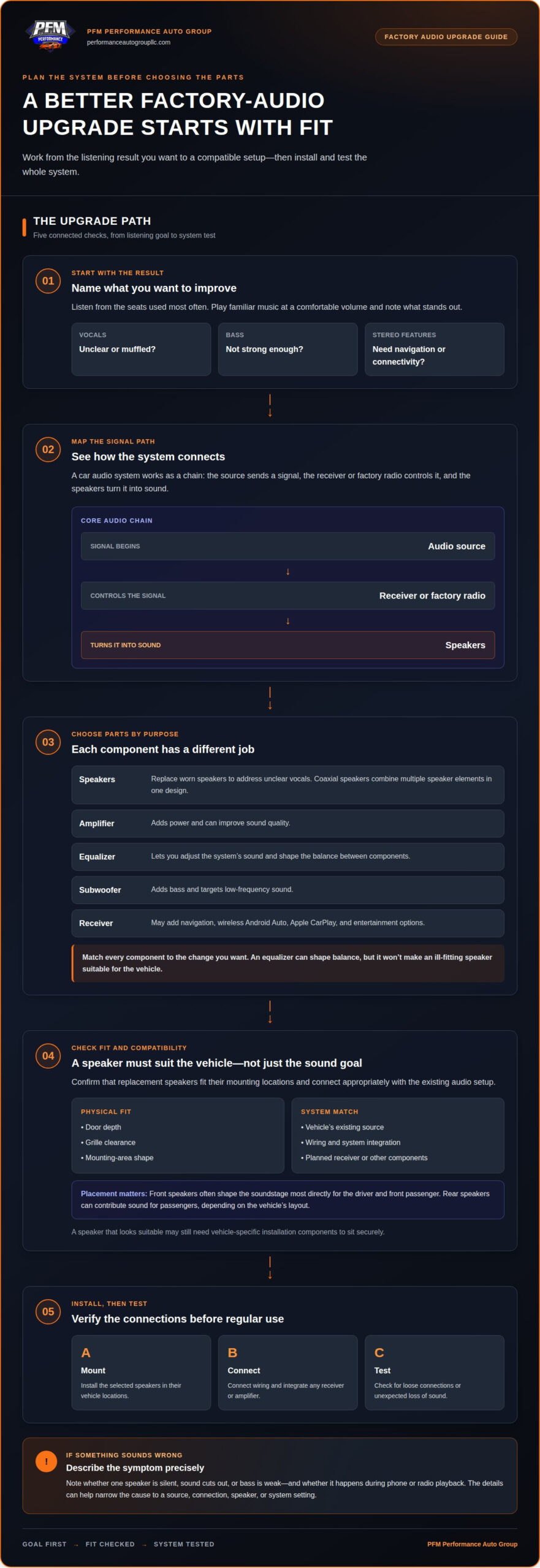
A car audio system works as a chain: the source sends a signal, the receiver or factory radio controls it, and the speakers turn it into sound. An amplifier adds power and can improve sound quality, an equalizer lets you adjust the system’s sound, and a subwoofer adds bass. Each component serves a different purpose, so identify the change you want before combining equipment.
Replacing worn speakers may improve unclear vocals, while adding a subwoofer targets low-frequency sound. An equalizer can shape the balance between components, but it won’t make an ill-fitting speaker suitable for the vehicle. Start with the listening result you want, then choose components that directly contribute to it.
Installation and Troubleshooting
Car audio installation connects the chosen equipment with the vehicle’s existing system. The work can involve mounting speakers, connecting wiring, and integrating a receiver or amplifier. A careful installation identifies each component and connection, then tests the system to catch loose connections or unexpected loss of sound before you resume regular use.
When troubleshooting, describe the symptom precisely: one speaker may be silent, sound may cut out, or bass may be weak. Note when it happens, such as during phone or radio playback. These details help narrow the cause to a source, connection, speaker, or system setting instead of treating every audio problem as a failed speaker.
Audio and Video Systems
Car audio and video systems can combine a receiver, speakers, and a display to manage sound and visual entertainment. Consider how the screen, audio source, and vehicle controls work together. A receiver may offer navigation, wireless Android Auto, Apple CarPlay, and entertainment features. Choose functions that suit how you use the vehicle rather than adding features that won’t support your routine.
Custom integration means choosing components that function as one system, rather than treating each device as an isolated upgrade. A receiver change, for instance, may affect how audio sources reach the speakers, while an amplifier adds another component to configure. Map the signal path from source to speakers before installation. This keeps the plan focused and makes later troubleshooting more direct.
Reviews are most useful when they describe a specific job, such as speaker replacement or receiver installation, rather than offering only a general rating. Look for details about communication, fit, and system performance afterward. Read warranty terms as written: product coverage and installation coverage may address different issues. Keep receipts and equipment details together so you can refer to them later.
Car speakers
Factory speakers are designed to fit a vehicle’s original audio system, but their sound may not suit every listener. Before choosing replacements, identify what you want to hear more clearly. A driver who listens mainly to spoken podcasts, for example, may prioritize clear voices, while someone who enjoys live recordings may value detail across vocals and instruments.
If you plan to upgrade factory car speakers in Brandon, FL, start by listening from the seats used most often. A driver and front passenger may notice a different balance from someone seated in the rear. Play familiar music at a comfortable volume and note whether vocals sound muffled, instruments blend together, or certain sounds seem harsh. These observations give you a practical starting point for comparing options.
Physical fit matters as much as sound. A replacement speaker must suit the vehicle’s mounting location and connect appropriately with its existing audio setup. Door depth, grille clearance, and the shape of the mounting area can affect which designs fit. A speaker that looks suitable on its own may still need vehicle-specific installation components to sit securely.
Compare speaker choices by their role and intended placement:
- Front speakers: Often shape the soundstage most directly for the driver and front passenger.
- Rear speakers: Can contribute additional sound for passengers, depending on the vehicle’s layout.
- Speaker design: Different designs combine or separate sound-producing elements, affecting how components are arranged.
- System match: The replacement should work with the vehicle’s existing source and any planned audio components.
Keep your goal specific. Replacing one pair may address a localized weakness, while changing speakers throughout the vehicle creates a broader system change. A mismatch between front and rear speakers can make music feel uneven, so consider how each seating area contributes to the listening experience. Your plan to upgrade factory car speakers in Brandon, FL should reflect the sound you want, not just a feature list.
Consider how you listen each day. Radio, streaming audio, and spoken navigation place different demands on clarity and balance. If bass feels weak, replacing speakers alone may not address the whole system: a subwoofer is designed to add bass. If vocals are hard to distinguish, evaluate speaker placement and source material before assuming every speaker needs replacement.
For a vehicle-specific speaker plan, book a speaker installation appointment. Bring the vehicle’s year, make, and model, along with a brief description of what you want to improve. Those details help focus the discussion on fit, placement, and the listening experience you’re seeking.
Coaxial speakers for factory-system upgrades
Coaxial speakers combine multiple sound-producing elements in one assembly. Their integrated design can make them a practical option for replacing factory speakers while keeping a straightforward speaker layout.
Coaxial Speaker Replacement
In a coaxial design, a smaller high-frequency driver sits with a larger speaker driver. This arrangement allows one assembly to reproduce different parts of the sound range. For a factory-system upgrade, compare coaxial speakers with your vehicle’s mounting location and your listening goals. The design may suit a direct replacement, but fit and system compatibility still matter.
First, identify which speakers you plan to replace, such as the front or rear pair. Then consider how the factory system sounds from each seat. If voices are hard to distinguish, focus on clarity; if instruments blend together, listen for separation. These observations help you judge whether coaxial replacements address the issue you actually notice.
Before choosing speakers, account for the vehicle’s openings, mounting depth, grille clearance, and existing connections. A replacement that cannot sit securely or align with the opening may need additional installation components. Keep the factory grilles and removed parts organized during installation. This makes it easier to compare the original arrangement and retain parts if they’re needed later.
Coaxial speakers also have limits within a larger system. They replace speakers, but they don’t automatically resolve source, tuning, or bass concerns. A listener seeking stronger low frequencies, for example, should consider the system as a whole rather than expect a speaker swap alone to deliver that result. Choose each component for its intended role.
Factory Warranty Considerations
Replacing factory speakers can involve risks such as installation damage, altered wiring, or later questions about whether an audio fault relates to the work. Replacing speakers alone doesn’t determine how a vehicle’s warranty applies. Read the relevant warranty terms and keep installation records, receipts, and notes about any changes to factory connections.
Preserve the removed factory speakers and their mounting hardware together. Photographing the original connections before work begins can also provide a useful record of the setup. Avoid forcing a speaker into an opening or stretching a connection to make it fit. A vehicle-specific speaker installation appointment can help keep the replacement focused on fit and careful integration.
Factory car stereo upgrades
You don’t always need to replace the factory stereo when upgrading speakers. An amplifier isn’t automatically necessary either: it adds power and can improve sound quality, so whether it makes sense depends on the system’s goals and components.
Start by naming the limitation you want to address. If speakers are the main concern, changing the stereo may add expense and complexity without solving that specific issue. If you want new listening or connectivity features, an in-dash receiver may be relevant. Available features can include navigation, wireless Android Auto, Apple CarPlay, and entertainment options.
Consider how you use the vehicle before choosing a receiver. A driver who relies on phone navigation may prioritize navigation access and wireless connections. Someone who mostly listens to broadcast radio may value straightforward source selection. List the functions you’ll use, then compare them with the receiver’s stated features.
A stereo upgrade also affects how the rest of the system connects. Map the path from the chosen source to the speakers before installation. If you add an amplifier, include it in the system plan. An equalizer can adjust an amplifier and shape the system’s sound, while a subwoofer adds bass. Give each component a clear purpose.
- Keep the factory stereo: Consider this when the main goal is speaker replacement and existing sources meet your needs.
- Replace the receiver: Consider this when navigation, wireless Android Auto, Apple CarPlay, or other entertainment features matter.
- Add an amplifier: Consider its role when the system needs additional power or sound-quality improvement.
- Plan for bass: A subwoofer adds bass, so assess it separately from the receiver decision.
Before selecting a receiver, identify the vehicle’s current setup and the features you want to retain. The dash opening, factory controls, and connections affect how the new stereo integrates. Choose a receiver that supports your intended sources and works as part of the complete system, rather than focusing on one feature alone.
After installation, test each source and function separately. Play audio from the radio and any connected phone, then check speaker output and receiver controls. If a feature works with one source but not another, note the difference. This simple troubleshooting step can distinguish a source or setting issue from a speaker or connection problem.
Plan the upgrade in stages when your goals differ. A receiver can address feature needs, speakers affect sound reproduction, an amplifier adds power, and a subwoofer adds bass. Matching each component to a clear purpose keeps the stereo upgrade coherent and avoids replacing equipment that already serves the vehicle well.
Product selection and compatibility
Choose speakers based on your vehicle’s mounting points, existing connections, and factory features. Compatibility means more than fitting the opening: the complete setup must work together.
Choosing Compatible Products
Start with the vehicle’s year, make, and model, then identify the speaker locations you plan to replace. Compare replacement dimensions with the available mounting space, including depth and grille clearance. These details help determine whether a speaker will fit securely without interfering with nearby parts.
Next, consider how the speakers connect to the factory system. A replacement should suit the existing audio setup, and any planned receiver or amplifier change should be considered as part of the same system. Replacing only the front speakers, for example, creates a different plan from replacing the front and rear speakers alongside a new receiver.
Separate essential requirements from preferred features. Note which speakers you’re changing, which factory components you want to retain, and what sound issues you’re addressing. This gives the installation plan a clear scope and helps you avoid choosing products based only on a feature label or appearance.
Preserving Factory Features
Replacing speakers alone generally doesn’t require changing the factory infotainment system, backup camera, or steering-wheel controls. These features are associated with the vehicle’s receiver and related interfaces, so replacing the receiver can involve different integration considerations from changing speakers alone.
Before installation, list the functions you rely on, such as the camera display, steering-wheel audio controls, and factory infotainment menus. Test each feature separately afterward. For example, verify that the camera image appears when selected and that steering-wheel buttons still perform their intended actions.
Keep the original setup in mind throughout the process. A speaker upgrade and a stereo replacement are separate decisions, even when both contribute to an audio system plan. If you want to retain the factory receiver, make that a selection priority. If you also want navigation, wireless Android Auto, or Apple CarPlay, consider those receiver features separately.
Document the vehicle’s existing functions before installation. Note which audio sources work, how the steering-wheel controls respond, and whether the backup camera displays properly. These observations provide a useful baseline for testing afterward. If a function behaves differently, the comparison helps identify what changed during installation.
Finally, match the installation plan to the selected equipment. A speaker that fits the opening still needs secure mounting and suitable connections. Changing the receiver may affect additional vehicle interfaces, while replacing speakers alone keeps the project focused. Clear priorities, vehicle details, and a post-installation function test help preserve the experience you expect from your car.
PFM Performance Auto Group: Auto Window Tinting
PFM Performance Auto Group also offers Auto Window Tinting for drivers considering another vehicle enhancement alongside an audio upgrade. Tinting is a separate service, but it may be a natural next step if you want to change your vehicle’s glass appearance or explore tint options.
Options include Black Pearl Nano Ceramic Window Tint By Madico. If you’re considering both audio improvements and tinting, evaluate each service according to its purpose and the results you want for your vehicle. PFM Performance Auto Group also offers Commercial Window Tinting and Home Window Tinting for projects beyond your car.
Contact PFM Performance Auto Group to discuss Auto Window Tinting and options for your vehicle.
Make Your Next Audio Upgrade a Clear Decision
If you’re ready to upgrade factory car speakers in Brandon, FL, turn your preferences into a concise plan before scheduling. Note what you want to improve, which factory features matter to you, and how you use audio during a typical drive. A clear brief helps keep the conversation focused on your vehicle and the listening experience you want.
Bring your vehicle’s year, make, and model, along with any questions about fit or integration. Describe the sounds or situations that prompted the upgrade. These details provide a practical starting point for discussing the next step, without committing to equipment that doesn’t match your priorities.
Choose an approach that suits your vehicle and everyday listening. Thoughtful planning makes it easier to move forward with confidence.
Here’s to making every drive sound more like yours.
Frequently Asked Questions
What is the labor cost to install aftermarket car speakers in Brandon, FL?
Labor costs depend on the vehicle and installation scope. Key factors include how many speakers are being replaced, access to each mounting location, and whether factory trim or wiring needs additional work. A straightforward speaker swap differs from an installation involving several locations or more complex integration. Share your vehicle details and planned changes when requesting a quote.
What are the best car speakers for a factory system upgrade?
The right speakers fit your vehicle and suit your listening priorities. A driver who mainly listens to spoken audio, for example, may prioritize clear voices, while someone seeking a broader system change may compare speakers alongside other components. Start with the sound you want to improve, then choose speakers compatible with the factory setup. Speaker installation can be planned around those priorities.
How do I choose speakers that fit a car factory stereo?
Use your vehicle’s year, make, and model as a starting point, then identify the factory stereo and the speaker locations involved. Replacing door speakers, for example, may involve different mounting considerations from replacing speakers elsewhere in the cabin. Compare the available space and connection requirements with the replacement speaker details. Bringing these vehicle and system details to the installation discussion helps narrow options suited to the existing setup.
What is the car speaker installation process, and how long does an appointment take?
The process typically starts by identifying the vehicle, speakers, and installation scope, then fitting the selected speakers and testing their output. Appointment duration depends on the number of speakers, access to their locations, and the integration work involved. After installation, play familiar audio from the sources you use and listen for consistent output. Mention any sound concerns when scheduling so the work can be planned accordingly.