
How Much Does Ceramic Tint Reduce Heat? The 2026 TSER Performance Guide
You might assume that reaching for the darkest “limo tint” on the shelf is the only way to survive a Florida summer, but the truth is that darkness is often a poor substitute for genuine material science. It’s a common misconception that forces many drivers to choose between visibility and comfort. If you’ve ever braced yourself before touching a scorching steering wheel or felt the 140-degree heat radiating from your leather seats, you know the desperation for a real solution. This guide explores the technical reality of how much does ceramic tint reduce heat by diving into Total Solar Energy Rejection (TSER) percentages.
We understand that your vehicle is a significant investment that deserves meticulous care and elite protection. You’ll discover how premium nano-ceramic films can lower your cabin temperature by 20 to 30 degrees while remaining fully compliant with 2026 Florida light transmission laws. We’re going to move past the marketing jargon to look at the precise IR and UV rejection data that transforms a car into a cool sanctuary. By the end of this performance guide, you’ll have the clarity needed to choose a high-performance film that guards your upholstery against fading and keeps your commute effortless.
Key Takeaways
- Understand why darker films don’t always mean better cooling and how Visible Light Transmission (VLT) differs from thermal performance.
- Discover exactly how much does ceramic tint reduce heat by mastering the Total Solar Energy Rejection (TSER) metric for your vehicle.
- Learn how Black Pearl Nano Ceramic technology utilizes non-conductive particles to block infrared rays without interfering with your GPS or mobile signals.
- See how the right ceramic film can lower your cabin temperature by 20 to 30 degrees, providing an essential shield against the intense Florida sun.
- Identify why professional craftsmanship is the deciding factor in ensuring your high-performance tint provides lasting clarity and protection.
Darkness vs. Heat: Why Tint Percentage Isn’t Everything
Many drivers believe that a darker window shade automatically translates to a cooler interior. This is a common misconception that often leads to disappointment during a sweltering Florida summer. Visible Light Transmission, or VLT, is a specific measurement of the percentage of light that passes through glass, which is distinct from heat rejection. While a dark film provides privacy, it does not inherently possess the technology required to block the thermal energy that makes your cabin unbearable. Without the right material science, you are simply changing the color of the light entering your vehicle rather than stopping the heat itself.
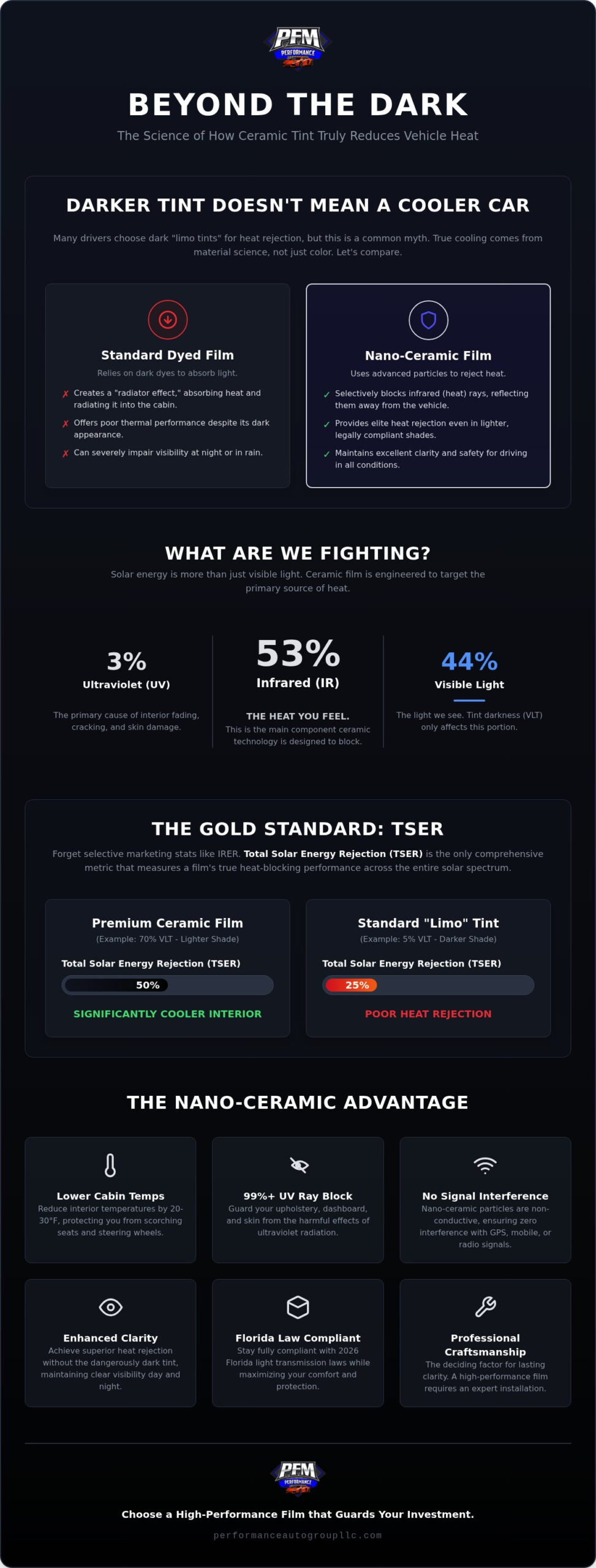
Unprotected windows create what experts call the “glass house” effect. Solar energy in the form of ultraviolet rays, visible light, and infrared heat penetrates the glass and becomes trapped inside. This energy is absorbed by your dashboard, steering wheel, and upholstery, which then radiate that heat back into the air. When considering how much does ceramic tint reduce heat, it is vital to realize that a high-quality, relatively clear ceramic film can significantly outperform a dark, non-ceramic film. This is because ceramic particles are engineered to target the infrared spectrum, which is responsible for the majority of the heat you feel on your skin.
The Myth of the Limo Tint Cooler
Cheap, dyed window films are often the first choice for those seeking a “blacked out” look, but these products rely on carbon or soot-like pigments to block light. These materials are highly absorptive. Instead of reflecting energy away from the vehicle, a dark dyed thin laminate film acts like a sponge. It pulls heat into the glass, creating a “radiator effect” where the window itself becomes a heat source. In high-UV areas like Tampa, this can lead to glass temperatures that are painful to the touch and a cabin that remains hot despite the dark appearance of the windows. Choosing darkness over technology is a tactical error for any discerning vehicle owner.
Visual Clarity and Thermal Comfort
Safety and comfort must go hand in hand. Extreme darkness can severely impair your visibility during night driving or heavy rain, which are frequent challenges for Florida residents. Ceramic technology solves this by offering elite heat rejection in lighter, legal shades. This allows for a safer driving experience without sacrificing the cooling benefits. Windshield tinting is frequently the missing link in a total cabin cooling strategy, as the front glass is the largest entry point for solar energy. For those who require darker shades for medical reasons, it is helpful to review the Florida Window Tint Exemption guidelines to ensure your vehicle remains both comfortable and compliant with state regulations.
Decoding TSER: The True Metric of Heat Reduction
When you’re evaluating how much does ceramic tint reduce heat, you’ll likely encounter a barrage of percentages that seem designed to confuse rather than clarify. As your trusted advisor, we believe in technical transparency. The most important number you can look for is Total Solar Energy Rejection (TSER). While many manufacturers highlight Infrared Energy Rejection (IRER) because the numbers often exceed 95%, this is frequently a selective marketing tactic. IRER only measures a specific portion of the solar spectrum. TSER, however, provides a comprehensive view of how a film performs against the entire range of solar energy, making it the only gold standard for thermal comfort.
Reading a manufacturer’s spec sheet like a professional requires looking past the boldest numbers. You should always look for the TSER rating specifically at the VLT (Visible Light Transmission) level you desire for your vehicle. A high-end 70% VLT ceramic film with a 50% TSER is significantly more effective at cooling your cabin than a 5% dyed “limo” film that only offers a 25% TSER. This is the science of heat rejection in action. We take pride in helping our partners navigate these technical details, ensuring they receive a product that meets our meticulous standards for longevity and elite performance.
What Actually Makes Up TSER?
To understand TSER, you have to look at what the sun is actually throwing at your vehicle. Solar energy is composed of three primary parts: ultraviolet (UV) rays, visible light, and infrared (IR) energy. While UV rays are responsible for fading your interior and damaging your skin, they only account for about 3% of the sun’s heat. Visible light makes up roughly 44%, and infrared energy contributes the remaining 53%. A film that only targets IR is ignoring nearly half of the potential heat gain. A master craftsman looks for a film that balances all three categories. If you’re ready to see these specifications in action, you can schedule a professional consultation to find the perfect match for your vehicle.
Performance Benchmarks for 2026
In our two decades of local experience, we’ve seen how different technologies hold up under the relentless Florida sun. For 2026, the performance benchmarks for heat rejection are clearly defined by material quality:
- Standard Dyed Films: These typically offer a TSER of 20-30%. This is often insufficient for the 10+ UV index days we face in Tampa.
- High-Performance Carbon Films: These mid-tier options reach the 35-45% range, providing better durability than dyed products.
- Premium Nano-Ceramic Films: These are the elite choice, regularly achieving TSER ratings of 50% to over 70%.
This drastic difference in performance is why discerning clients choose nano-ceramic technology. It’s not just about a temporary fix; it’s about a long-term investment in the protection and comfort of your property.
Nano-Ceramic Technology: How High-Performance Films Block Heat
Nano-ceramic technology represents the pinnacle of automotive glass protection. At the molecular level, these films are embedded with microscopic, non-conductive ceramic particles. These particles are engineered to be invisible to the naked eye, ensuring that your view remains crystal clear while the film acts as a formidable barrier against thermal energy. When evaluating how much does ceramic tint reduce heat, the answer lies in this molecular engineering. Unlike older metallic films that relied on reflecting heat through conductive materials, ceramic particles absorb and dissipate energy across the surface of the glass.
One of the most significant advantages for modern drivers is electronic signal clarity. Because ceramic is non-metallic and non-conductive, it offers zero interference with your GPS, mobile phone signals, or radio frequencies. It’s a seamless integration of protection and technology. Furthermore, these films provide exceptional color stability. You have likely seen vehicles with purple, bubbling tint on the road; this is the hallmark of cheap dyes breaking down under intense UV exposure. High-performance ceramic films are inherently stable, meaning they will never turn purple or lose their aesthetic appeal over time. They are designed to be a permanent upgrade to your vehicle’s comfort and style.
The Black Pearl Advantage
We specialize in Black Pearl Nano Ceramic by Madico because it is a leader in the 2026 market for a specific reason: its meticulous multi-layering process. Madico’s engineers have perfected a way to target specific heat-carrying wavelengths without blocking the visible light you need for safe driving. This precision allows for a deep, rich charcoal tone that enhances your vehicle’s appearance without the dated, mirrored look of traditional metallic films. It is an aesthetic of refinement and elite protection that complements any high-end property.
Durability in the Tampa Climate
Living in Hillsborough County presents unique challenges for any automotive service. Our coastal proximity means your vehicle is constantly exposed to salt air and high humidity, conditions that can cause inferior films to peel or fail prematurely. We take a Master Craftsman approach to every installation, utilizing edge-to-edge filing and precision fitting to ensure a bond that withstands the elements. This level of care is why we are recognized for providing the Best Car Window Tinting in Tampa. We view ourselves as guardians of your investment, earning your business through technical transparency and a commitment to longevity that “good enough” shops simply cannot match.
Maximizing Comfort in the Florida Sun: What Percentages Actually Work?
Florida’s sunlight is relentless. With a UV index often peaking above 10 in Tampa, your vehicle’s glass acts as a magnifying glass for solar radiation. Standard factory glass provides almost no protection against the infrared spectrum, which is why your interior feels like a furnace after just thirty minutes in a parking lot. When clients ask how much does ceramic tint reduce heat, they are usually looking for relief from this “sauna effect.” By installing high-performance nano-ceramic film, you can expect a real-world cabin temperature reduction of 20 to 30 degrees. This isn’t just a marginal improvement; it is the difference between a painful commute and a controlled, comfortable environment.
The windshield is your biggest vulnerability. As the largest piece of glass on the vehicle, it allows massive amounts of solar energy to flood the dashboard and front seats. Addressing the side windows while leaving the windshield bare is like locking your front door but leaving the garage wide open. A specialized ceramic windshield application completes the thermal envelope. This ensures that every angle of your vehicle is shielded from the sun’s intensity, providing a comprehensive barrier that keeps the heat out and the cool air in.
The Ideal Tampa Configuration
Building the ultimate local setup requires balancing Florida’s strict light transmission laws with elite thermal performance. For sedans, the front side windows must allow at least 28% of light to pass through. By selecting a 30% VLT ceramic film with a high TSER, you stay legal while maximizing cooling. In the rear cabin, you have more flexibility. Many families opt for a darker 15% or even 5% VLT ceramic shade to provide privacy and absolute comfort for children or pets. The secret to a truly cool interior is adding a nearly clear 70% or 80% ceramic film on the windshield. These films are virtually invisible, yet they offer massive infrared rejection, blocking the heat without compromising your night vision.
Long-Term Interior Protection
The benefits of ceramic technology extend far beyond immediate comfort. 99% UV rejection is the primary defense against interior aging. Without this protection, the intense Florida sun will inevitably lead to dashboard cracking, leather hardening, and upholstery fading. By blocking these harmful rays, you are preserving the financial and aesthetic value of your property. There is also a practical efficiency gain. A cooler cabin puts significantly less strain on your air conditioning system. This leads to improved fuel efficiency for traditional engines and can noticeably extend the battery range for electric vehicles. Choosing ceramic is a meticulous decision that pays dividends in both longevity and daily performance.
The Professional Edge: Selecting Your Ideal Heat-Rejection Solution
Choosing the right film is only half the battle. While a retail box might promise impressive specs, the technical reality of how much does ceramic tint reduce heat is heavily dependent on the quality of the installation itself. A DIY kit or a rushed job at a general detailing shop often results in microscopic gaps or trapped debris that compromise the thermal seal. We believe that your vehicle is a significant investment that deserves more than a “good enough” application. Investing in professional craftsmanship ensures that the material science of the Black Pearl Nano Ceramic film performs as intended, protecting your property and your peace of mind from the first day of summer to the last.
Protect your investment. Demand precision. When you consider the long-term impact of solar exposure on your leather and the daily discomfort of an overheated cabin, the value of a professional consultation becomes clear. We take pride in our role as guardians of your vehicle’s longevity, earning your business through technical transparency and a commitment to elite service standards that have defined PFM Performance Auto Group for two decades.
The Meticulous Installation Process
The PFM Performance Auto Group “Premium Reassurance” process begins with a climate-controlled, clean-room environment. Dust and contaminants are the enemies of clarity and longevity; even a single speck can create a bubble that eventually leads to film failure. We utilize precision computer-cutting technology to ensure every piece of film matches your vehicle’s glass with a factory-perfect fit. This eliminates the need for hand-trimming near delicate gaskets and ensures a seamless bond. This meticulous approach is backed by the 20-year legacy of PFM Performance Auto Group in the Hillsborough County community, where we’ve built a reputation for treating every car with the care of a master craftsman.
Your Next Steps to a Cooler Drive
When you consult with a specialist, focus on the comprehensive data. Ask about the specific TSER for the VLT you’ve chosen and verify how much does ceramic tint reduce heat across the entire solar spectrum, not just the infrared range. A true advisor will explain these technical nuances to help you find the perfect balance of shade and specification. Always ensure your choice includes a lifetime warranty on premium Nano-Ceramic films, as this is the ultimate mark of a manufacturer’s confidence in their product’s durability. We’re here to guide you through this process, ensuring your vehicle becomes the cool sanctuary you deserve.
Secure Your Sanctuary Against the Florida Sun
Transforming your vehicle into a cool sanctuary requires moving beyond the myth of dark shades. You’ve learned that Total Solar Energy Rejection (TSER) is the only metric that truly captures how much does ceramic tint reduce heat. By choosing nano-ceramic technology, you’re selecting a solution that blocks up to 99% of UV rays and significantly lowers cabin temperatures without compromising visibility or electronic signals. It’s a technical upgrade that provides immediate relief and long-term protection for your property.
As an Authorized Madico Black Pearl Dealer with expert installation experience since 2004, we provide the highest TSER films available in Tampa. We treat every vehicle with the meticulous care of a master craftsman, ensuring your investment is protected for years to come. It’s time to reclaim your comfort and enjoy a drive that feels as premium as your vehicle looks. We take pride in our history of excellence and remain dedicated to exceeding your expectations with every window we tint.
We look forward to earning your business and helping you stay cool on every journey through the Sunshine State. Safe travels and stay comfortable.
Frequently Asked Questions
What is a good heat reduction percentage for window tint?
A high-quality heat reduction percentage typically falls between 50% and 70% when measured by Total Solar Energy Rejection (TSER). While standard dyed films might only reach 20% or 30%, premium nano-ceramic solutions provide the elite protection needed for the Hillsborough County climate. We recommend looking for films that target the infrared spectrum specifically. This ensures your vehicle remains a cool sanctuary even during the most intense summer afternoons in Tampa.
Does 5% tint block more heat than 35%?
Darkness does not equate to cooling performance. A 5% dyed film often blocks less heat than a 35% nano-ceramic film because the latter uses advanced particles to absorb and dissipate infrared radiation. When evaluating how much does ceramic tint reduce heat, the material science is far more critical than the shade. You can enjoy superior thermal comfort with a lighter, legal film that outperforms the darkest non-ceramic options on the market.
What is TSER in window tinting and why does it matter?
Total Solar Energy Rejection is the most accurate way to measure a film’s performance. It accounts for the entire solar spectrum, including ultraviolet rays, visible light, and infrared heat. Many brands only advertise infrared rejection because those numbers look higher, but TSER provides the full picture of cabin comfort. Understanding this metric helps you choose a product that offers genuine protection rather than just a dark aesthetic for your property.
Is ceramic tint worth it for heat reduction in Florida?
Ceramic tint is an essential investment for any driver in the Tampa area. With a local UV index that frequently exceeds 10, standard glass simply isn’t enough to protect your dashboard and leather. The specialized particles in nano-ceramic films provide a durable barrier that lasts for years. It’s a meticulous choice that pays for itself through increased comfort, reduced air conditioning strain, and the long-term preservation of your vehicle’s financial value.
Can clear window tint block heat effectively?
High-performance clear films can block significant heat if they utilize nano-ceramic technology. These products are engineered to target the infrared spectrum while remaining virtually invisible to the naked eye. This makes them ideal for windshield applications where maintaining perfect visibility is a safety requirement. You don’t have to sacrifice your view to enjoy a major drop in cabin temperature during your daily commute through Hillsborough County.
How much does ceramic tint reduce car interior temperature?
Professional installation of nano-ceramic film can reduce your car’s interior temperature by 20 to 30 degrees. This reduction significantly improves the efficiency of your climate control system and makes surfaces like steering wheels and leather seats safe to touch. By understanding how much does ceramic tint reduce heat, you can transform your driving experience from a sweltering struggle into a controlled environment that guards your health and your upholstery.
Will ceramic window tint interfere with my car’s electronics or GPS?
Ceramic films are entirely non-conductive and non-metallic. This means they will never interfere with your GPS, mobile phone signals, or radio frequencies. Older metallic films often caused connectivity issues, but modern nano-ceramic technology ensures your electronics function perfectly. As specialists in car audio and dashcam installation since 2004, we prioritize signal clarity and meticulous integration for every vehicle we service in our dedicated Tampa workshop.
What is the legal tint percentage in Florida for 2026?
For 2026, Florida law requires sedans to have at least 28% VLT on front side windows and 15% VLT on the rear. Multipurpose vehicles like SUVs and trucks must also maintain 28% on the front but can go as dark as 6% on rear windows. Our team ensures your installation remains compliant with these regulations while maximizing heat rejection. We provide the technical transparency needed to keep your vehicle both legal and comfortable.