
Heat-Rejection Window Film for Carrollwood Restaurants
What if the film that blocks the most sunlight isn’t the best fit for your dining room? If you’re researching “heat rejection window film for restaurants Carrollwood,” start by identifying which windows cause discomfort, what type of glass you have, and how your restaurant operates. A one-size-fits-all product may not suit every area.
Bright windows can make tables uncomfortable, cause glare on screens or displays, and leave staff managing hot spots throughout the day. You may want relief without making the space too dark or disrupting service. The right commercial film depends on the balance you need between heat control, glare reduction, natural light, privacy, and compatibility with your glazing.
This guide explains which performance details to compare and what to ask before choosing a solution, including how to plan installation around restaurant operations. PFM Performance Auto Group offers commercial window tinting and serves Hillsborough County. Confirm Carrollwood availability, suitable film options, and scheduling arrangements directly with the business. With a few practical details in hand, you can make a considered choice for your windows and dining space.
Key Takeaways
- For heat rejection window film for restaurants Carrollwood, identify which windows cause discomfort or glare and when the problem is most noticeable.
- Visible light transmission, solar heat performance, and UV rejection describe different aspects of film performance. Compare them separately.
- Assess film options for heat control, daylight, privacy, appearance, and compatibility with your restaurant’s glass. Darker film isn’t automatically more effective at reducing heat.
- For a useful property discussion, record affected windows, sun exposure times, glare concerns, and business hours.
- Before choosing a commercial tinting partner, ask for film specifications, confirmation of glass compatibility, a clear project scope, and scheduling details.
Why Carrollwood Restaurants Consider Heat-Rejection Window Film
A table beside a bright front window may feel pleasant in the morning and uncomfortably sunny later in the day. In a Carrollwood restaurant, sun exposure can affect the dining room, host stand, waiting area, and displays in different ways. Start by noting where and when the problem occurs rather than assuming every window needs the same treatment.
Heat-rejection window film is a thin material applied to glass that changes how sunlight passes through, helping manage solar heat while also influencing light, glare, or ultraviolet exposure. It doesn’t eliminate heat. Results depend on the film, the existing glass, the window’s exposure, and conditions inside the restaurant. A suitable choice starts with the property, not a blanket promise of lower bills or perfect comfort.
Where sun exposure affects a Carrollwood restaurant
Note which windows receive direct sun and when it reaches each part of the restaurant. A sunny dining section may need a different balance of daylight and heat control than a waiting area or a customer-facing display. Tampa Bay’s bright conditions make these observations useful, but the direction and timing of sunlight at your property matter more than general assumptions about the area.
Keep a simple record of affected windows, times of day, and what guests or staff experience in those areas. For example, note whether a particular table becomes uncomfortable during lunch or whether glare makes a screen difficult to read in the afternoon. These specifics give a tinting professional practical context for discussing your glass and possible film options.
What restaurant operators may want film to improve
Separate your goals before comparing products. Solar heat can contribute to discomfort near glass. Glare can make it harder to see a menu, screen, or display. UV exposure is a distinct consideration for furnishings and merchandise. Privacy and appearance may also matter, particularly at street-facing windows. These goals can involve trade-offs: a film selected to change brightness or visibility may not offer the same balance as one chosen primarily for heat control.
A property review can help establish which concerns matter most and whether a candidate film is suitable for the restaurant’s glazing. Ask for relevant specifications instead of judging by darkness or relying on a broad performance claim. For a general overview of what window film is and common applications, see the reference from Wikipedia.
For operators considering heat rejection window film for restaurants Carrollwood, the goal is a well-matched solution, not simply the darkest glass. PFM Performance Auto Group offers commercial window tinting in Hillsborough County. Confirm Carrollwood availability, film options, and glass compatibility directly with the business.
How Heat-Rejection Window Film Works on Restaurant Glass
Window film changes how sunlight passes through glass. Depending on the film, some solar energy may be reflected, absorbed, or transmitted. Film can also affect visible light and ultraviolet radiation. It may help manage heat entering through a window, but it won’t eliminate heat or guarantee a particular room temperature. Results depend on the film, glass, sun exposure, and conditions inside the restaurant.
UV protection and solar heat rejection are different: UV rejection describes how much ultraviolet radiation a film blocks, while solar heat performance describes how the film affects heat from sunlight. A strong result in one category doesn’t automatically mean the film performs equally well in the other.
Which film specifications help compare options?
Ask to see product documentation for the exact film under consideration. Visible light transmission, or VLT, indicates how much visible light passes through the treated glass. A higher VLT generally means more visible light comes through. Solar heat gain information helps compare how options affect solar energy passing into a space, but it doesn’t promise a specific indoor temperature or energy-bill result. Ask for documented figures rather than descriptions such as “high performance.”
Review UV performance separately, and clarify which measurements apply to the film and glazing combination being proposed. Comparing these details helps you weigh heat control against daylight and other priorities.
Why existing glass matters before installation
Film suitability depends partly on the existing glazing. Ask the installer to identify the glass type and check the film manufacturer’s compatibility guidance before recommending a product. Insulated glass and low-emissivity, or low-E, glass deserve particular review because a film must suit the specific glass assembly. Don’t assume one option works on every commercial window.
Ask for confirmation that the proposed film is compatible with your restaurant’s glazing, along with documentation of its relevant specifications. This makes it easier to compare the product’s stated performance with the windows in your property.
If you’re considering heat rejection window film for restaurants Carrollwood, bring your window details and priorities into the discussion. You can use the appointment booking page to start a conversation about commercial window tinting and what information to review for your property.
How to Compare Restaurant Window Films in Carrollwood
Compare films against the conditions and priorities of each window, not just a product label. A film suited to a sunny dining area may not be the right visual choice for a storefront or customer-facing display. Review the manufacturer’s documentation for each option, and confirm that its stated performance applies to your glass.
| Comparison point | What to check |
|---|---|
| Heat-control goal | Review documented solar heat performance and ask how it relates to the specific glass. Treat it as a comparison measure, not a guaranteed room-temperature result. |
| Visible light | Check visible light transmission to understand how much daylight may pass through and whether the room could feel dimmer. |
| Privacy | Clarify the privacy effect you want and how visibility may differ between inside and outside. Don’t assume every film provides the same result. |
| Appearance | Consider the view from both inside and outside, including how the film may look across the storefront and dining room. |
| Glass compatibility | Have the glazing identified and compare it with the film manufacturer’s compatibility guidance before selection. |
Does darker film reject more heat?
No. Darkness alone doesn’t establish heat-rejection performance. Compare documented values for the specific film options and glass rather than judging by appearance or shade. Daylight, views, privacy, and storefront presentation matter, too. The best fit is a considered balance, not automatically the darkest option.
Match film priorities to the space
Think window by window. In dining areas, weigh comfort alongside daylight, views, and glare. For customer-facing glass, consider how easily people should be able to see into the restaurant, the storefront’s appearance, and whether added privacy is a priority. Confirm compatibility with each window’s glass, then decide what visual result suits the space. You may not need the same film approach throughout the property.
For a practical comparison, list each affected area and its main goal. Then ask for the relevant film specifications and compatibility information. This gives you a clearer basis for evaluating heat rejection window film for restaurants Carrollwood without relying on broad claims or assuming one option fits every window.
Once you’ve identified your priorities, you can discuss your restaurant windows and the details to review for your property.
Plan Commercial Window Film Installation Around Restaurant Operations
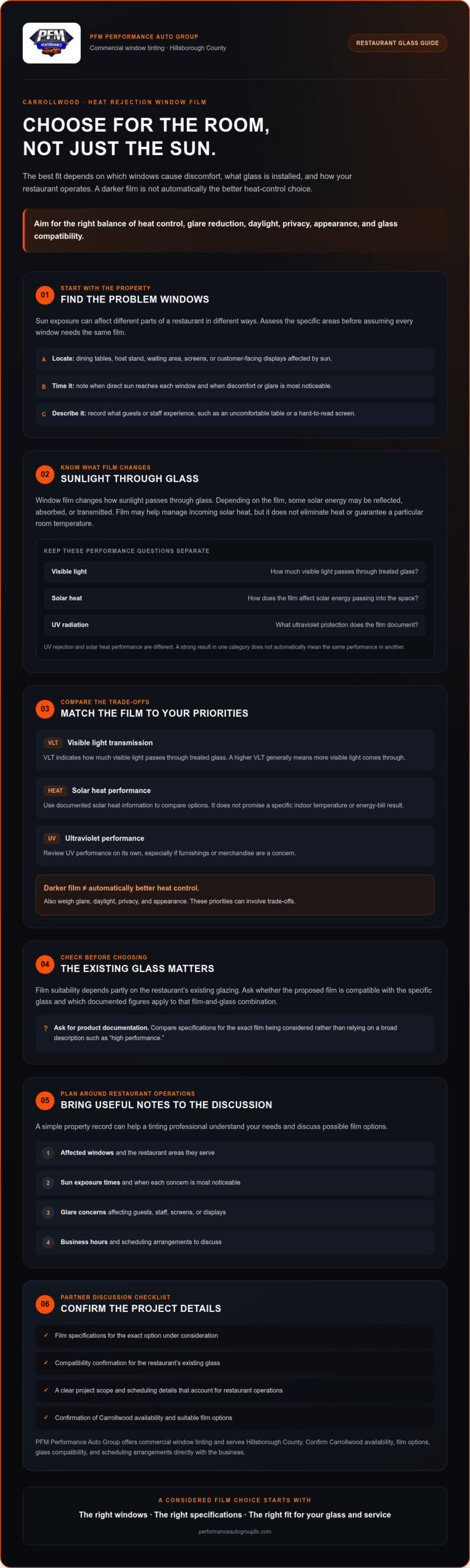
A thoughtful installation plan starts before work begins. Document the problem, assess the glass, compare suitable films, and discuss access and timing. Then review the completed work against the goals you agreed on. This sequence keeps the decision grounded in your restaurant’s needs and makes operational details part of the conversation from the start.
What to prepare for a Carrollwood site assessment
Make a window-by-window record. Note where direct sun falls, when discomfort or glare becomes noticeable, and how it affects guests, staff, or displays. Include your business hours and any areas that need to remain accessible during normal operations.
If available, gather glazing records, details about existing film, and information about building restrictions that could affect access or the work. List your priorities as well. Guest comfort may matter most in a dining section, while daylight, privacy, or storefront appearance may be more important elsewhere. These details give an installer context for reviewing the property and discussing film options.
Questions to ask before booking installation
Ask which options are suitable for the identified glass, and request product documentation for the proposed specifications. Confirm the project scope, including which windows are included and which areas need to be cleared or kept accessible. Discuss access requirements, proposed timing, and possible effects on seating, entrances, staff movement, or service. Don’t assume scheduling arrangements; agree on them directly with the installer.
PFM Performance Auto Group offers commercial window tinting services and serves Hillsborough County. Confirm Carrollwood availability, which film options may suit your glazing, and scheduling arrangements before proceeding.
After installation, review the result against your original priorities, such as glare in the affected area, the amount of daylight, and the appearance of the glass. Agree in advance on how to assess the work and who to contact with questions. This helps you evaluate heat rejection window film for restaurants Carrollwood based on its fit for your space, not on unsupported savings promises.
Choose a Carrollwood Commercial Tinting Partner and Take the Next Step
A useful proposal should explain why a particular film may suit your restaurant, rather than relying on broad promises. Review each recommendation against the issues you’ve identified, whether that means managing heat near certain tables, reducing glare, preserving daylight, or maintaining a particular storefront appearance.
How to assess a commercial tinting proposal
- Film details: Does the proposal identify the recommended film and provide relevant product specifications?
- Glass and coverage: Has the existing glazing been reviewed, and does the scope clearly identify which windows are included?
- Restaurant priorities: Does the recommendation explain how it addresses your comfort, glare, daylight, privacy, or appearance goals?
- Project arrangements: Are access needs, work areas, timing, and possible effects on normal operations clearly discussed?
Compare proposals on those points, not on savings estimates that aren’t supported by the film documentation and details of your property. If a claim is unclear, ask what information it’s based on and whether it applies to your glazing. A clear explanation gives you a better basis for deciding than a confident-sounding promise.
What to expect from a local consultation
Be ready to describe the areas of concern, when sunlight or glare is most disruptive, and what you want the finished glass to look like. Bring any available glazing records or details about existing film, along with questions about options and installation arrangements. The conversation should clarify what needs review before you choose a solution. You don’t have to assume the same approach is right for every window.
PFM Performance Auto Group offers commercial window tinting and serves Hillsborough County. Confirm Carrollwood availability, suitable film options, compatibility with your glass, and scheduling arrangements directly. For heat rejection window film for restaurants Carrollwood, look for a recommendation that connects documented specifications and glass compatibility to your priorities, with a clear scope for the work.
Take the next step and schedule a window film consultation.
Choose a Film Solution That Fits Your Restaurant
The right choice starts with your restaurant’s windows and priorities. Compare documented film specifications, confirm compatibility with the existing glass, and weigh heat control alongside daylight, glare, privacy, and appearance. Darker glass isn’t automatically better at rejecting heat, and performance claims shouldn’t replace a review of your property.
For heat rejection window film for restaurants Carrollwood, plan for access, work areas, and normal operations, too. A considered review can connect your concerns to suitable options without relying on unsupported savings promises.
Confirm Carrollwood availability, suitable film options, and scheduling details directly with the business.
With clear goals and the right questions, you can make a considered choice for a more comfortable space for guests and staff.
Frequently Asked Questions
Does heat-rejection window film make a restaurant cooler?
It can help reduce solar heat entering through treated windows, which may improve comfort near sun-exposed glass, but it won’t eliminate heat or guarantee a particular room temperature. Results depend on the film, glazing, sun exposure, and conditions inside the restaurant. For heat rejection window film for restaurants Carrollwood, identify affected areas and compare documented film performance with your goals rather than expecting a fixed cooling or energy-saving outcome.
Does darker window film reject more heat?
No. A film’s darkness alone doesn’t tell you how effectively it manages solar heat. Compare documented performance information for the specific films and glass under consideration. Also consider how much daylight you want to retain, whether guests should be able to see through the windows, and how the storefront will look. Ask the installer to explain the trade-offs so appearance doesn’t stand in for documented specifications.
Can commercial window film reduce glare in a restaurant dining area?
Some commercial window films can help reduce glare, but the effect depends on the selected film and window conditions. Note where glare is most disruptive, such as at a table, host stand, or screen, and when it occurs. Then discuss glare alongside daylight, views, and heat control. Ask for the film’s documented specifications and a recommendation suited to the restaurant’s glass and desired appearance.
How do I compare heat-rejection window film specifications?
Request product documentation for each specific film option. Compare visible light transmission, which indicates how much visible light passes through, with documented solar heat performance and UV rejection. These measures describe different aspects of performance; none guarantees a particular room temperature. Check that the information applies to the proposed film and glazing combination, and ask how the specifications relate to the windows you want treated.
Is heat-rejection window film compatible with insulated or low-E glass?
Compatibility must be checked for the particular film and glass assembly. Insulated and low-emissivity, or low-E, glass deserve careful review before a film is selected. Ask the installer to identify the glazing and consult the film manufacturer’s compatibility guidance. Don’t assume one film suits every commercial window. If you have glazing records or details about existing film, share them so the recommendation can be assessed against the actual glass.
Can window film be installed without disrupting restaurant service?
That depends on the property, project scope, access, and agreed schedule, so confirm arrangements directly with the installer rather than assuming service will be unaffected. Ask which windows and work areas are involved, what access is needed, and whether seating, entrances, or staff movement may be affected. Share your business hours and operational priorities early, then agree on timing and practical arrangements before booking installation.
How do I arrange a commercial window film assessment in Carrollwood?
Prepare a list of affected windows, the times sun or glare causes problems, your priorities, business hours, and any available glazing records. PFM Performance Auto Group offers commercial window tinting and serves Hillsborough County, but confirm Carrollwood availability and suitable film options directly. Ask how the glass will be reviewed, what specifications can be provided, and how scheduling and restaurant operations will be addressed.