

Commercial UV Tinting in Lithia: A Practical Guide
What if you could reduce UV exposure in your commercial space without giving up the daylight that makes it welcoming? For Lithia businesses considering commercial tinting for UV protection Lithia properties need, the key is not choosing the darkest film. It is matching the film to the glass, sun exposure, and way the space is used.
Sunlight reaching the same areas day after day can contribute to fading in furnishings, displays, and interior finishes. The right window film can help manage UV exposure, while a carefully selected option can also support goals for glare, privacy, and natural light. Performance and compatibility depend on the existing glazing, so film selection should account for the property and its needs.
This guide explains how commercial window film relates to UV exposure, what to weigh when selecting film for your Lithia building, and how to plan installation around business operations. PFM Performance Auto Group provides professional tinting in Hillsborough County. Use the steps below to set priorities for your glass and interior, then plan an installation suited to the building and its day-to-day needs.
Key Takeaways
- Identify which people, furnishings, displays, or finishes receive the most sunlight before setting priorities for your building.
- Compare UV performance, visible daylight, glare control, and heat reduction as separate considerations when reviewing commercial films.
- For commercial tinting for UV protection Lithia properties need, prioritize the space’s purpose and existing glazing instead of choosing by darkness alone.
- Plan the project step by step: outline concerns, assess the glass, define goals, select a suitable film, and schedule installation around business needs.
- PFM provides commercial window tinting and film options for businesses in Lithia and across Hillsborough County.
Why Commercial UV Protection Tinting Matters for Lithia Businesses
Sunlight can brighten a storefront or office, but prolonged exposure may also contribute to faded merchandise, worn furnishings, and changes to interior finishes. For business owners, the question is not simply how much light enters. It is how to care for the space and the people who use it without making the windows unnecessarily dark. Commercial window film is one option: a thin layer applied to glazing and selected to support particular goals.
Those goals can include reducing ultraviolet (UV) transmission, managing visible light, limiting glare, or addressing solar heat. These properties are related, but they are not interchangeable. A film’s UV performance does not tell you by itself how bright a room will feel or how much heat it will reject. Window film is a broad category of glazing treatments with different materials and functions, so the intended performance matters more than the general label.
What UV exposure can mean for commercial interiors
UV exposure can contribute to fading and material deterioration, but it is only one factor. The result can vary with the amount and duration of sunlight, the glazing already in place, the materials themselves, and the film selected. A display beside a sunlit window may need a different approach from furnishings deeper inside the building.
Consider each part of the space separately. Merchandise and displays may need help retaining their appearance, while furnishings and finishes may be vulnerable to gradual color change or wear. In occupied work areas, UV reduction may be one consideration alongside daylight, glare, and comfort. Window film can help manage exposure, but it cannot promise to stop fading or deterioration completely. Base product-specific expectations on the film’s documented specifications.
Why Lithia building conditions deserve a property-specific view
Light conditions can vary from room to room within the same building. Window orientation, direct sun, exterior shade, nearby structures, and the purpose of each space all affect what matters most. A customer-facing storefront may need to stay bright and welcoming, while an office with screen glare may place more emphasis on visual comfort.
That is why commercial tinting for UV protection Lithia businesses consider should start with the property, not a generic darkness level. In Lithia and across Hillsborough County, priorities depend on the actual glazing and how each area is used. Assessing those factors helps align film selection with UV goals while accounting for daylight, glare, and heat.
How Commercial Window Film Reduces UV Transmission
Commercial window film is applied to the glass as a thin layer that changes selected properties of the glazing. Depending on the film, it can be designed to manage ultraviolet (UV) transmission, visible light, glare, or solar heat. These goals relate to how a window performs, but they describe different measures. Choosing a film for UV control alone does not determine how bright or cool a room will feel.
UV transmission through glazing is the portion of ultraviolet radiation that passes through the window and into the space. The Skin Cancer Foundation discusses UV exposure through windows and the role of window film in sun protection. For a particular commercial film, use current manufacturer documentation to understand its UV performance rather than assuming every film provides the same result.
UV protection, visible light, and heat are different measures
Keep the terms distinct. UV transmission describes how much ultraviolet radiation passes through the glazing. Visible light transmission describes how much light people can see comes through. Glare is uncomfortable or distracting brightness, while solar heat refers to heat from sunlight entering through the window.
A film can be selected to balance these properties, so a lighter appearance does not rule out meaningful UV performance. Check that performance against the specifications for the film being considered. Likewise, darker glass is not proof of stronger UV protection. Match the documented performance to the building’s priorities, including daylight and visual comfort.
Why existing commercial glass affects film selection
Film and glass work as a system. Before selecting a solution for commercial tinting for UV protection Lithia properties, assess the glazing type, pane configuration, age, and condition. The same film may not suit every window, and the interaction between film and glass can affect heat absorption and thermal stress.
Compatibility matters as much as the film’s intended benefit. Recommendations should account for the actual glazing and current manufacturer guidance. Do not assume technical performance or suitability from appearance alone. Assessing the glass helps match the film to the building’s goals and the glazing already in place.
For a commercial window tinting project, you can schedule an appointment to discuss the property and its priorities.
Choosing Commercial Tint for UV Protection Without Over-Darkening
The right film does not have to make a business feel dim. Start by deciding what each window needs to do, then compare documented film properties instead of judging by shade alone. The priorities for a customer-facing storefront may differ from those for an office or work area.
| Priority | What to compare | Practical question |
|---|---|---|
| UV performance | Manufacturer-stated UV transmission or UV reduction | What documented UV performance does the selected film provide? |
| Daylight | Visible-light transmission | How much natural light should remain in the space? |
| Glare | Glare-control information and visible-light transmission | Will the film help address distracting brightness without making views feel too dark? |
| Heat | Verified solar heat performance | Is managing heat through the glass a project priority? |
| Privacy | How the film changes visibility through the glass | Does the space need more separation, and at what times? |
Which film priorities fit different business spaces?
A storefront may need to preserve display visibility and a welcoming level of daylight while addressing sun exposure. In an office, screen glare and comfort may matter alongside usable natural light. Interior work areas can have different needs, depending on tasks, equipment, and how the rooms are occupied.
Privacy is a separate objective from UV protection. Privacy film changes visibility, while UV performance concerns ultraviolet transmission. Do not assume one goal delivers the other. PFM offers privacy films and Black Pearl Nano Ceramic window tint by Madico. The appropriate film depends on the property, glazing, and project goals. For an overview of commercial window tinting services, see PFM’s service information.
How to compare film specifications responsibly
Review the manufacturer’s documentation for the specific film under consideration. Compare its stated UV and visible-light performance separately, and review heat-related specifications if heat management is also a goal. The International Window Film Association offers industry information about window film and its applications.
Appearance alone is not a dependable measure of UV performance. Two films that look similar may have different documented properties, while a lighter-looking option may still meet a project’s UV goals if its specifications support that choice. For commercial tinting for UV protection Lithia properties need, final selection should account for the existing glass and the intended balance of protection, daylight, glare, heat, and privacy.
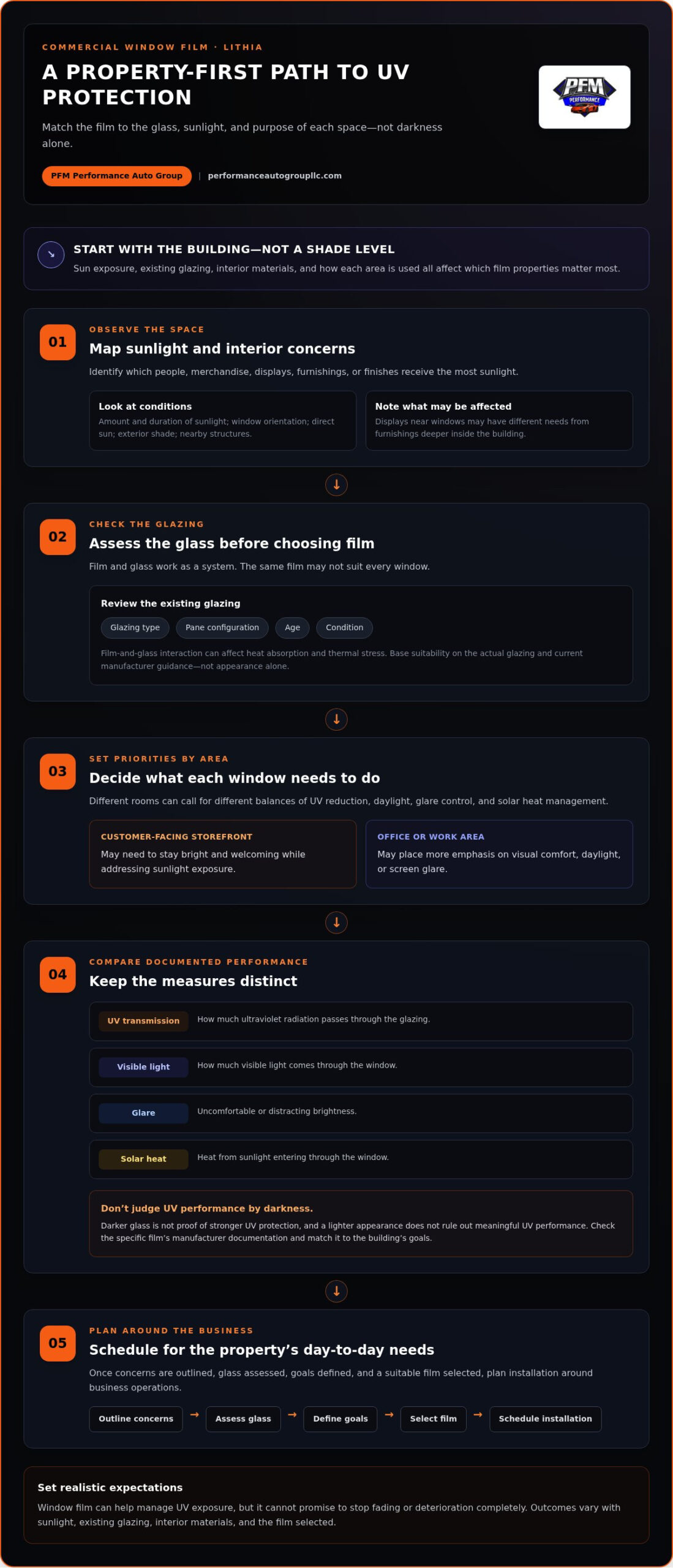
Planning a Commercial Tinting Project in Lithia
A well-planned tinting project starts with the building, not a film catalogue. For commercial tinting for UV protection Lithia businesses can use effectively, connect the areas receiving sunlight with how each space is used and what the glazing can support. PFM provides commercial window tinting, with film selection based on the property and project goals and installation suited to the building.
What a commercial window assessment should account for
Begin by mapping which windows receive direct sun, which are shaded, and how each area is used. A storefront display, an occupied office, and a room where privacy matters may have different priorities. Separate the essential UV objective from secondary goals such as managing glare or heat, so one concern does not obscure another.
The assessment should also account for the glazing itself. Pane configuration, glass condition, and existing glazing characteristics can affect film compatibility. A practical planning sequence is:
- Identify concerns: Note exposed interiors, fading-sensitive items, glare, and privacy needs.
- Assess the glazing: Review the glass type, configuration, and condition.
- Set priorities: Rank UV management alongside daylight, glare, heat, and privacy goals.
- Choose film: Match documented film properties to the glass and intended use.
- Plan installation: Coordinate access and work areas with the business’s operating needs.
This sequence keeps the decision grounded in the property instead of relying on a one-film-fits-all assumption.
How Lithia businesses can prepare for installation
Before planning begins, identify the windows and work areas that need access, along with occupied spaces, business hours, and sensitive displays or furnishings. A retailer may want to plan around merchandise near the glass, while an office may need to consider staff working near windows. Sharing these practical details helps shape a project plan around day-to-day operations without assuming a fixed installation duration.
PFM provides commercial window tinting for businesses in Lithia and across Hillsborough County. Use online appointment booking to take the next step in planning.
Commercial UV Protection Tinting in Lithia with PFM
Commercial window tinting is a property-care decision, and PFM Performance Auto Group provides this service to businesses in Lithia and across Hillsborough County. Locally owned and operated, PFM approaches each project by considering the building’s glass and exposure, then professionally applying the selected film.
There is no single right film for every storefront or office. PFM offers Black Pearl Nano Ceramic window tint by Madico and privacy films. The right choice for a commercial property depends on the glazing and project priorities, not a product name or shade alone. UV protection, daylight, glare, heat, and privacy goals can each influence selection. The product documentation and the property’s glass should inform expectations about performance and suitability.
What to expect from a property-focused PFM conversation
Bring the building into the discussion. The type of space, the glass, the windows most exposed to sunlight, and occupants’ needs all help shape a considered recommendation. A storefront may prioritize a clear view of displays and a welcoming level of daylight, while an office may place more weight on reducing distracting glare or supporting privacy in selected areas.
PFM tailors film selection to the property and its goals. That means weighing the desired balance of UV protection, natural light, glare, and privacy while accounting for the glazing. Manufacturer documentation describes a film’s stated performance, while assessing the glass helps inform its suitability for the building.
Take the next step for a Lithia commercial property
To prepare, note your building type, the windows or interior areas of greatest concern, and what you would like to preserve or improve. It can help to identify whether your main priority is UV exposure, display visibility, usable daylight, glare, privacy, or a combination. These details provide a practical starting point and keep decisions focused on how the property is used.
If you are considering commercial tinting for UV protection Lithia businesses can tailor to their buildings, PFM provides commercial window tinting in Hillsborough County. Start with the areas that matter most and the goals you want the film to support.
Protect Your Lithia Property with a Thoughtful Film Plan
Effective commercial tinting starts with the building, not with choosing the darkest glass. Match film selection to the existing glazing and the space’s priorities, then compare documented UV performance separately from daylight, glare, heat, and privacy. This approach can help manage exposure for interior finishes and displays while preserving the natural light your business needs.
For commercial tinting for UV protection Lithia businesses can tailor to their property, PFM Performance Auto Group provides commercial window tinting in Hillsborough County. The locally owned and operated company brings professional application to film projects for commercial properties.
Plan around your glass, your business, and the balance of protection and natural light you want. PFM can help you shape the project around those priorities.
A well-considered project starts with clear priorities for the space. Book an appointment with PFM to discuss commercial tinting for your Lithia property.
Frequently Asked Questions
Does commercial window tint block UV rays?
Commercial window film can reduce UV transmission, but performance depends on the specific film and glazing. Review the manufacturer’s documentation for the film’s stated UV specifications rather than assuming all products perform alike. Film selection should also account for the building’s existing glass, since compatibility is part of choosing a suitable solution for a commercial property.
Can commercial window tint help protect furniture and merchandise from fading?
Yes. Film selected to reduce UV transmission can help limit one contributor to fading in furnishings, merchandise, displays, and interior finishes. It cannot promise to prevent fading entirely. The outcome also depends on the amount and duration of exposure, the existing glazing, the materials in the space, and the film selected. Consider which items receive direct sunlight when setting project priorities.
Will UV-protection window film make my commercial windows too dark?
Not necessarily. UV performance and visible-light transmission describe different properties, so a film’s UV specifications do not indicate on their own how much daylight will remain. Compare manufacturer data for both and consider how the space is used. A storefront may need clear display visibility, while an office may prioritize glare management. Do not use darkness or appearance alone as a measure of UV protection.
How do I choose commercial window tint for a Lithia business?
Start by identifying the windows with the greatest sun exposure and the needs of each area, such as display visibility, comfortable daylight, glare management, or privacy. Then assess the existing glass and compare film specifications for UV performance and visible-light transmission. For commercial tinting for UV protection Lithia properties need, PFM tailors film selection to the building, glazing, and project priorities in Hillsborough County.
How much does commercial tinting for UV protection cost in Lithia?
Commercial tinting costs depend on the project rather than a single standard rate. Factors can include the number and size of windows, the existing glazing, the film selected, glass condition, and the areas involved. A property-specific assessment helps align film choice with the building’s goals and glazing. PFM tailors commercial window tinting to the property and project scope.
Can window film be installed on existing commercial glass?
Yes, commercial window film is applied to glazing already in place, but assess the glass before selecting film. Glazing type, pane configuration, age, and condition can affect compatibility and thermal stress considerations. A professional assessment helps match the film to the existing glass and the building’s goals, rather than assuming one option suits every window.
Is commercial window tint worth considering if my main concern is UV protection?
It can be worth considering if sunlight exposure is a concern for occupants, merchandise, furnishings, or interior finishes. Start with the film’s documented UV performance, then account for visible daylight, glare, and the existing glass. Commercial tinting can be planned around UV goals without treating a darker appearance as proof of stronger protection. The right choice depends on the property and its priorities.