
Ceramic vs Regular Tint for Florida Heat: 2026 Guide
You open your car door after a few hours in the Tampa sun and the blast of trapped heat feels like stepping into an oven. It’s a familiar Florida ritual where the steering wheel is too hot to touch and the AC takes fifteen minutes to provide any real relief. Choosing the right protection is essential, but the debate over ceramic tint vs regular tint for Florida heat often leaves drivers confused about what actually works. We’ve seen many vehicles with bubbling, purple film that fails just when the humidity peaks, proving that standard options often can’t handle our local environment.
We understand that your vehicle is a significant investment that deserves more than just a darker window shade. You want a cabin that stays noticeably cooler and an interior that won’t succumb to UV damage or fading over time. In this 2026 guide, we’ll explain why nano ceramic technology is the only real defense against our climate. We will compare heat rejection stats, clarify the technical differences between film types, and show you why a premium installation is the ultimate upgrade for your daily commute.
Key Takeaways
- Understand the science of solar energy and why traditional dark films often fail to block the stinging infrared heat common in the Tampa climate.
- Compare the technical specs of ceramic tint vs regular tint for Florida heat to see how non-metallic particles provide superior insulation without blocking your GPS or cell signals.
- Learn how ceramic technology preserves your vehicle’s interior upholstery and reduces the constant demand on your AC during peak summer months.
- Evaluate the long-term financial benefits of investing in a film that offers a lifetime guarantee instead of settling for dyed products that bubble or turn purple within a few years.
- Discover the PFM standard of precision and why our Black Pearl Nano Ceramic solutions represent the pinnacle of automotive protection for discerning owners.
Understanding the Science of Florida Heat and Window Film
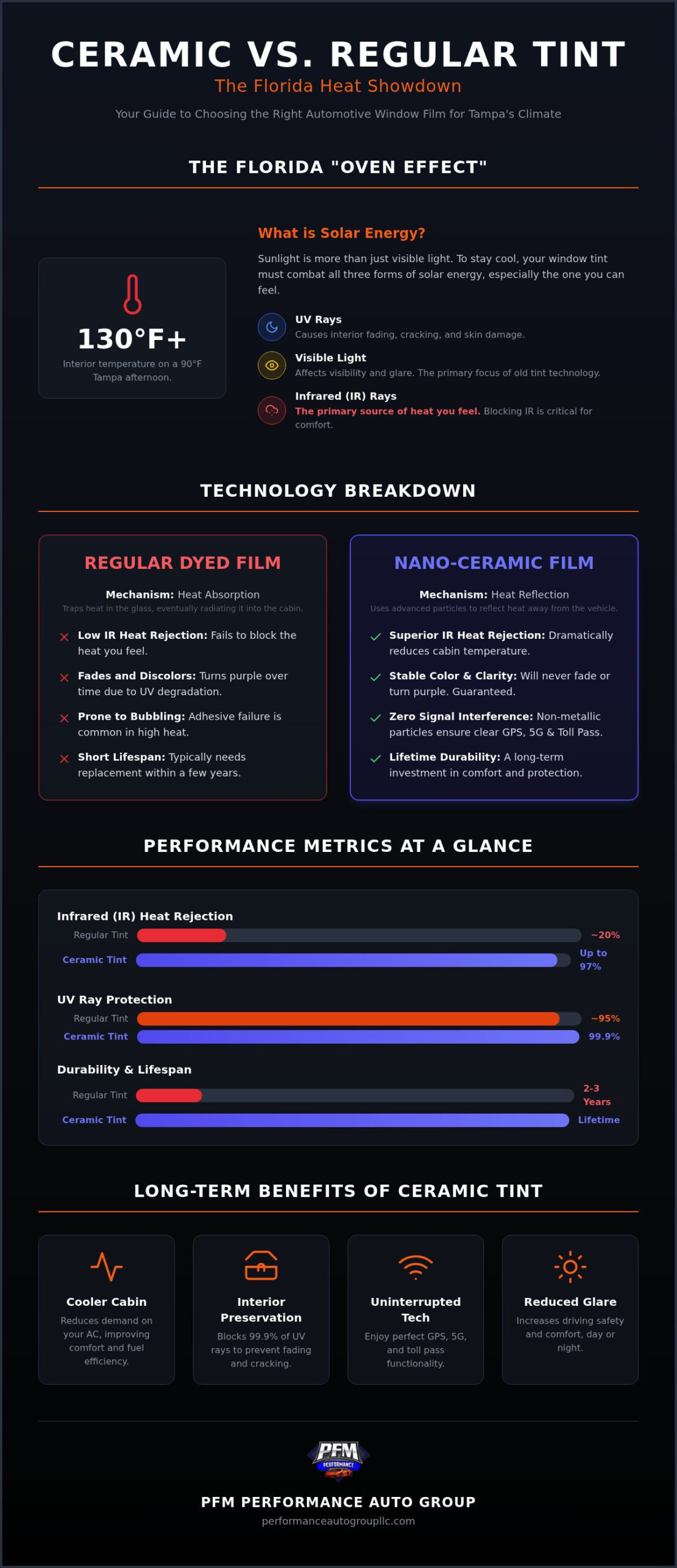
To protect your vehicle’s interior and your own comfort, you must first understand the invisible forces at work. Solar energy reaches your car in three distinct components: visible light, ultraviolet (UV) rays, and infrared (IR) rays. While visible light allows us to see and UV rays are the silent culprits behind cracked leather, it’s the infrared rays that cause that immediate, stinging sensation on your skin. Traditional window film technology was originally engineered for privacy and aesthetics. These older, dyed films act like a pair of cheap sunglasses; they make the cabin darker, but they don’t stop the thermal energy from vibrating through the glass.
Florida drivers often feel a burning heat even behind dark windows because regular tint primarily filters visible light. In a humid climate like Tampa, the air itself holds onto heat. Without a specialized barrier against infrared radiation, your car’s interior becomes a thermal trap. When evaluating the performance of ceramic tint vs regular tint for Florida heat, it’s clear that darkness does not equate to protection. High-quality films must manage thermal energy, not just shade the eyes.
UV Rays vs. Infrared Heat: The Florida Battle
UV rays are the primary cause of long-term interior degradation and skin damage, but infrared rays are the engine of cabin heat. Regular dyed tint blocks visible light while letting the majority of IR rays pass right through the glass. This is why a car with dark, cheap tint can still feel like a furnace. When comparing ceramic tint vs regular tint for Florida heat, the distinction lies in how they handle the spectrum. Infrared rejection is the single most critical metric for maintaining driver comfort in the relentless Florida sun.
The “Oven Effect” in Tampa Parking Lots
On a standard 90-degree Tampa afternoon, your car’s interior can reach temperatures exceeding 130 degrees in less than an hour. Glass acts as a thermal bridge. It allows energy to pour in while the insulated body of the car prevents it from escaping. Standard factory glass provides almost zero heat protection, leaving your dashboard and seats vulnerable to extreme thermal stress. This “oven effect” forces your AC to work at maximum capacity for the first fifteen minutes of every drive, increasing wear on your vehicle. Breaking this thermal bridge requires a film that reflects heat rather than simply absorbing it.
Ceramic vs. Regular Tint: The Technical Breakdown
Choosing the right protection for your vehicle requires looking beneath the surface of the film. Regular dyed films are essentially layers of polyester treated with colorants. They work through a process of absorption; the dye particles trap solar energy within the glass itself. Eventually, the glass becomes saturated and begins radiating that heat directly into your cabin. In contrast, nano-ceramic technology uses microscopic, non-conductive particles engineered to reflect energy away from the vehicle. When evaluating ceramic tint vs regular tint for Florida heat, this distinction between absorption and reflection is everything.
The gold standard for comparing these technologies is Total Solar Energy Rejection (TSER). While some shops only discuss Infrared (IR) rejection, TSER is a more comprehensive metric. It measures the film’s ability to block the entire solar spectrum, including visible light and UV rays. High-performance ceramic films achieve impressive TSER ratings without needing to be “limo dark.” You can maintain a clear, legal view of the Tampa roads while enjoying a cabin that remains significantly cooler than one with standard film.
The Composition of Regular Dyed Film
Standard dyed films are often the first choice for drivers seeking a quick cosmetic change. However, these films are prone to rapid degradation under the intense UV index found in Florida. Because the dye particles are organic, they break down over time. This chemical failure leads to the common “purple” hue and unsightly bubbling seen on many local vehicles. They are a short-term cosmetic fix. These films don’t just lose their color; they lose their limited ability to manage heat as the material fails under the sun’s pressure.
The Nano-Ceramic Advantage
Nano-ceramic films represent a significant leap in material science. As Forbes explains ceramic window tint, these films contain ceramic particles that are invisible to the naked eye but highly effective at managing thermal energy. Because they are non-metallic, they won’t interfere with your car’s modern technology. Your GPS, 5G cellular connection, and RFID toll passes will function without interruption. Our flagship Black Pearl Nano Ceramic by Madico is specifically designed for this level of performance. It offers the refined aesthetic you want with the technical precision your vehicle deserves. If you’re ready to protect your investment, you can schedule an appointment with our master installers to experience the difference firsthand.
Performance in the Sunshine State: Real-World Benefits
Driving through Tampa isn’t just a commute; it’s an endurance test against the elements. Whether you’re navigating the Selmon Expressway during rush hour or heading down I-4 toward Orlando, the sun is a constant companion that demands respect. When comparing ceramic tint vs regular tint for Florida heat, the real-world benefits extend far beyond a cooler dashboard. It’s about protecting your health, your vehicle’s longevity, and your peace of mind.
Reduced AC strain is one of the most immediate advantages. Because ceramic film blocks a massive percentage of infrared heat, your climate control system doesn’t have to fight an uphill battle. This efficiency translates into better fuel economy for gas vehicles and preserved range for electric cars. Over years of ownership, this reduction in mechanical stress can prevent premature failure of expensive cooling components. It’s a proactive approach to vehicle maintenance that pays dividends every time the temperature climbs above ninety degrees.
Interior preservation is equally vital for those who view their vehicle as a significant investment. Florida’s UV index is notoriously high, leading to cracked dashboards and brittle leather seats that lose their supple feel. By blocking 99% of harmful UV rays, ceramic film acts as a permanent sunscreen for your upholstery, maintaining the resale value and aesthetic refinement of your car. It ensures that the premium materials you paid for remain in showroom condition for years to come.
Cooling Your Cabin Faster
The “time to comfort” is a metric every Tampa driver understands. We’ve all experienced that agonizing wait for the vents to blow cold air after a car has been sitting in a sunny parking lot. Ceramic technology changes this dynamic by preventing the initial heat buildup. Research indicates that ceramic tint can reduce interior temperatures by up to 25 degrees compared to vehicles with standard glass. This means your cabin reaches a pleasant temperature in minutes, maintaining a consistent climate even during the longest, sun-drenched drives across the state.
Optical Clarity and Safety
Safety on the road often comes down to what you can see. Cheap dyed tints are notorious for a hazy or milky appearance that worsens over time, especially when driving directly toward the sun. High-quality ceramic film provides superior optical clarity, significantly reducing glare from the Florida sun and the blinding intensity of modern LED headlights at night. Additionally, the film provides a layer of protection by helping to contain shattered glass in the event of an accident, acting as a final guardian for you and your passengers.
Making the Investment: Cost, Longevity, and Value
When you compare ceramic tint vs regular tint for Florida heat, the initial price tag is often the first thing people notice. It’s true that ceramic film requires a higher upfront commitment. However, viewing this as a simple expense is a mistake. It’s an investment in the longevity of your vehicle. Regular dyed films typically have a functional lifespan of only two to four years before they begin to fail. In our intense climate, that failure happens fast. Owners who choose the budget option often fall into the “Double Cost” trap. They pay for the cheap tint today, then pay again in two years for professional removal and a second installation.
A premium ceramic installation is designed to last the lifetime of your vehicle. It’s about more than just avoiding a trip back to the shop. High-quality tint adds tangible market appeal. When it’s time to sell or trade in your car, a perfectly preserved interior and a lifetime-guaranteed window film are significant selling points. Discerning buyers in the Tampa market know the difference between a boutique installation and a rushed, budget job. We treat every vehicle with the meticulous care it deserves, ensuring the film remains a permanent asset rather than a temporary fix.
Longevity Under Constant UV Stress
Hillsborough County presents a unique challenge for automotive films. The combination of high humidity and extreme UV intensity causes the adhesives in regular dyed tint to break down rapidly. This is why you see so many cars with bubbling, peeling, or hazy windows. Ceramic particles are chemically stable. They don’t react to the heat or moisture in the air. To ensure you’re getting a quality installation that stands the test of time, look for these markers:
- Precise micro-edge gaps at the top of the glass.
- Zero debris or “specs” trapped under the film.
- Uniform clarity without distortion when looking through the rear window.
- A manufacturer-backed lifetime warranty.
Calculating Your ROI
The return on investment for ceramic film is measurable. By significantly reducing the load on your air conditioning, you save money on fuel. For electric vehicle owners, this efficiency is even more critical as it helps preserve battery range during the hottest parts of the day. You also avoid the high cost of corrective work. Professional removal of old, failed tint can cost $500 or more because the adhesive must be meticulously scraped away without damaging the glass or defroster lines. Understanding How Much to Tint a Car in Tampa helps you see that the premium choice is actually the more economical one over time.
The PFM Standard: Black Pearl Nano Ceramic Solutions
Experience is the ultimate teacher in the humid, high-stakes environment of Tampa. PFM Performance Auto Group has spent over 20 years in business in Tampa, evolving alongside the very technology we install. We don’t view window film as a mere accessory. It is a critical layer of protection for your property. Our history in the community has taught us that “good enough” never survives a Florida summer. We have built our reputation on a foundation of premium reassurance, treating every vehicle that enters our shop as if it were our own. When you weigh the benefits of ceramic tint vs regular tint for Florida heat, the expertise of the craftsman is just as vital as the quality of the film.
We earn your business through a meticulous approach to every curve of the glass. Our spacious, modern workshop in Tampa is designed to provide a controlled environment where precision flourishes. Dust and debris are the enemies of a perfect tint job. By maintaining a high-end boutique atmosphere, we ensure that your installation is free from the imperfections that plague high-volume, rushed shops. We take pride in the details, from the seamless micro-edges to the flawless heat-shrink techniques that guarantee long-term durability.
Why We Choose Black Pearl Nano Ceramic
We specialize in Black Pearl Nano Ceramic Window Tint by Madico because it represents the pinnacle of heat-rejection technology. Madico is a manufacturer with deep roots in the Tampa Bay area, and their flagship film is specifically engineered for our relentless UV index. This film offers a sophisticated, deep-charcoal aesthetic that complements any vehicle while providing maximum infrared rejection. It strikes the perfect balance between style and substance. To achieve total cabin security, we often recommend our Windshield Window Tinting services. Protecting the largest piece of glass in your car is the final step in creating a true thermal barrier against the sun.
Your Local Tampa Tint Experts
The PFM promise is rooted in a perfectionist streak that defines our brand. We are not just service providers; we are trusted advisors who help you navigate the technical differences between film types to find the perfect fit for your lifestyle. Our facility on N 38th St is equipped with the latest tools to ensure your car receives the elite service it deserves. We invite you to experience a level of craftsmanship that exceeds the most demanding standards of excellence. Don’t settle for temporary solutions that fail when the heat peaks.
Book Your Ceramic Tint Installation at PFM Performance
Secure Your Investment Against the Florida Sun
Choosing the right window film is a decision that impacts your daily comfort and the long-term value of your vehicle. While the debate over ceramic tint vs regular tint for Florida heat often centers on the initial cost, the true difference lies in thermal performance and material durability. You deserve a cabin that remains a sanctuary of cool air even in July. By opting for nano-ceramic technology, you are choosing a permanent barrier against infrared heat and UV damage that standard dyed films simply cannot match.
At PFM Performance Auto Group, we have spent 20 years serving Tampa drivers with a commitment to meticulous craftsmanship and premium reassurance. As a 5-star reviewed automotive shop, our team specializes in the expert installation of Black Pearl Nano Ceramic by Madico. We treat your vehicle as a significant investment, ensuring every micro-edge is perfect and every installation meets our highest standards. We don’t just tint windows; we provide the care and precision your car deserves.
We look forward to earning your business and helping you enjoy a noticeably cooler, more protected drive through the Sunshine State.
Frequently Asked Questions
Is ceramic tint really better for Florida heat?
Yes, ceramic tint is significantly more effective because it blocks up to 99% of infrared rays, which are the primary source of thermal energy. Unlike regular dyed films that merely absorb heat into the glass, ceramic particles reflect energy away. This technology can keep your car interior up to 25 degrees cooler. It’s the only real defense against the intense solar radiation we face daily in Hillsborough County.
Does ceramic window tint look darker than regular tint?
No, ceramic tint doesn’t have to be darker to perform better. In the debate of ceramic tint vs regular tint for Florida heat, ceramic wins because it offers superior heat rejection even in lighter shades. You can choose a film that looks nearly clear while still blocking more thermal energy than a “limo dark” dyed tint. This allows you to maintain excellent visibility without compromising on cabin comfort.
Can I tint my windshield with ceramic film in Florida?
Yes, but you must follow specific regulations. Florida law allows non-reflective tint on the windshield only above the manufacturer’s AS-1 line. However, many Tampa drivers choose a nearly clear ceramic film for the entire windshield to block infrared heat and UV rays without reducing visibility. This provides essential protection for your dashboard and reduces the stinging heat felt on your hands and face while driving on I-4.
Will ceramic tint interfere with my car’s GPS or cell phone signal?
No, ceramic film is completely signal-friendly. Unlike older metallic tints that act as a shield against radio waves, ceramic particles are non-conductive and non-metallic. Your GPS, 5G cellular connection, and RFID toll passes will work perfectly. This makes it the ideal choice for modern vehicles equipped with advanced navigation and communication systems. You get the benefit of elite heat rejection without any technical compromises.
How long does ceramic window tint last in the Florida sun?
Premium ceramic film is designed to last the lifetime of your vehicle. While cheap dyed tints often bubble, peel, or turn purple within two to four years, ceramic particles are chemically stable under extreme UV stress. At PFM Performance, we install Black Pearl Nano Ceramic by Madico, which comes with a manufacturer-backed lifetime warranty. It is a permanent solution that withstands the humidity and heat of the Tampa climate without degrading.
Is ceramic tint worth the extra money for an older car?
Yes, investing in ceramic tint can breathe new life into an older vehicle. It protects the aging interior from further cracking or fading and makes the cabin significantly more comfortable. Since the AC systems in older cars often work harder to keep up with the Florida sun, reducing the thermal load can prevent mechanical strain. It’s an effective way to preserve your investment and improve your daily driving experience.
What is the legal tint percentage in Florida for 2026?
For sedans, the front side windows must allow more than 28% of light in, while the back side and rear windows must allow more than 15%. For SUVs and vans, the rear windows can be as dark as 6% VLT. Our team ensures every installation complies with Florida Statutes 316.2953. We provide the precise shade you desire while keeping your vehicle legal and safe for the roads in Tampa.
How do I clean and maintain my new ceramic window tint?
Maintenance is simple but requires the right materials. Always use a soft microfiber cloth and a dedicated ammonia-free glass cleaner to avoid damaging the film’s protective hard coat. Avoid using paper towels or abrasive pads that could cause fine scratches over time. We recommend waiting at least three to five days after installation before rolling down your windows. This allows the adhesive to cure properly for a flawless, long-term bond.