
Car Heat Rejection Tint in Tampa: The 2026 Guide to Maximum Thermal Protection
Have you ever stepped into your car after just an hour under the Tampa sun and felt like you were walking into a preheated oven? We’ve all experienced that sharp sting of scorching leather against skin and the long, sweltering wait for the A/C to finally kick in. It’s a frustrating reality for Florida drivers. The sun doesn’t just warm your vehicle; it actively degrades your dashboard and compromises your comfort. You shouldn’t have to choose between a clear view and a cool cabin. By investing in the right car heat rejection tint Tampa experts recommend, you can block up to 80% of infrared heat and transform your vehicle into a cool sanctuary.
This 2026 guide explores how Black Pearl Nano Ceramic technology by Madico provides the ultimate shield for your investment. We’ll examine the meticulous science of heat rejection, clarify the latest Florida window tint regulations, and explain why a master craftsman’s approach to installation is the only way to ensure lifelong clarity and protection. We understand that your vehicle is a significant asset that deserves superior UV protection and aesthetic refinement. Your journey toward a cooler, safer, and more refined driving experience starts here.
Key Takeaways
- Understand how solar radiation transforms into trapped heat and why standard factory glass fails to protect your interior from Florida’s extreme UV index.
- Master the critical differences between TSER and IR metrics to identify the most effective car heat rejection tint Tampa experts use for maximum thermal defense.
- Discover the technical advantages of Black Pearl Nano Ceramic technology, which provides elite heat blocking while maintaining crystal-clear 5G, GPS, and satellite signal reception.
- Navigate the specific 2026 Florida legal limits for sedans and SUVs to ensure your vehicle stays cool and compliant without risking costly citations.
- Learn why a meticulous, climate-controlled installation by a master craftsman is essential for preventing the bubbles and peeling that plague lower-quality applications.
The Science of the Tampa Heat Wave: Why Your Car Feels Like a Furnace
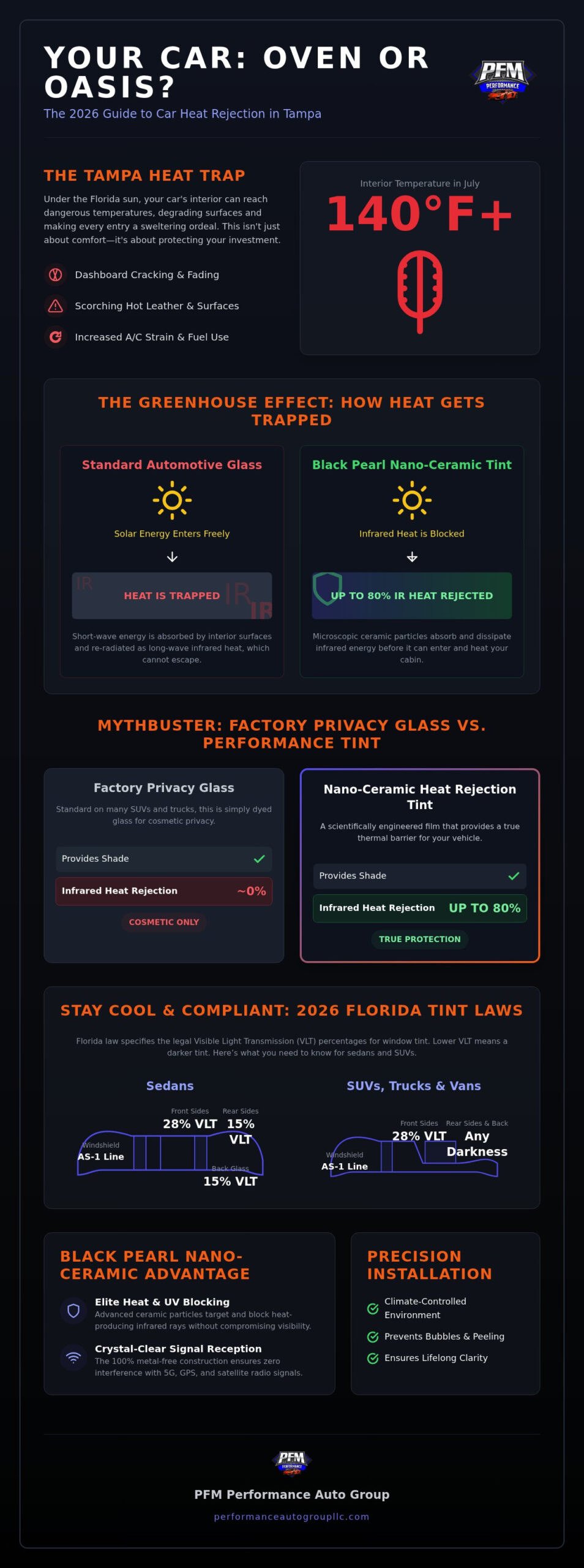
Tampa’s climate is relentless. The combination of intense humidity and a high UV index creates a unique atmospheric pressure on your vehicle’s surfaces. When solar radiation strikes your windows, it enters the cabin as short-wave light energy. Once inside, this energy is absorbed by your dashboard, steering wheel, and upholstery, which then re-radiate it as long-wave infrared heat. Standard automotive glass is designed for visibility, not insulation. It acts as a one-way valve, letting energy in but trapping the resulting heat inside. This is the greenhouse effect in its most aggressive form. In Hillsborough County, interior temperatures can easily climb past 140°F during a standard July afternoon.
Relying on your air conditioning to solve this problem is a reactive, expensive habit. Maxing out the A/C immediately upon entry increases fuel consumption and accelerates engine wear. It forces your vehicle’s cooling system to work at its absolute limit just to make the cabin bearable. High-quality car heat rejection tint Tampa professionals install acts as a proactive barrier. It stops the energy before it ever penetrates the glass, preserving your mechanical components and your comfort. Understanding The Science of Window Film helps clarify why a physical barrier is vastly superior to mechanical cooling alone.
Thermal Load and Your Vehicle’s Interior
Thermal load is the total heat energy absorbed by a vehicle’s interior surfaces. This energy slowly destroys your investment. Modern 2026 vehicles feature expansive digital displays, delicate touchscreens, and complex sensors that aren’t designed to withstand furnace-like conditions indefinitely. Over time, this heat causes leather to shrink and plastics to emit gasses that create a film on your windshield. Beyond the hardware, there’s a psychological toll. High thermal load leads to driver fatigue and increased irritability. A cool cabin isn’t just about luxury; it’s about maintaining a calm, focused driving environment for you and your family.
The Limitations of Factory Privacy Glass
Don’t let dark windows fool you. Most SUVs and trucks come with factory privacy glass on the rear windows, but this is almost always just pigment-dyed glass. It provides shade and aesthetic appeal, but it offers nearly zero infrared heat rejection. It’s a cosmetic feature, not a protective one. A major 2026 trend among discerning owners is the application of a specialized car heat rejection tint Tampa service over this factory glass. This provides the best of both worlds: the privacy you already have and the thermal protection your interior actually needs to survive the Florida sun.
TSER vs. IR: Understanding the Metrics of Car Heat Rejection Tint
Choosing the right car heat rejection tint Tampa drivers rely on requires looking past the darkness of the film. Many people assume a blacked-out window automatically means a cooler car, but that’s a dangerous misconception. In reality, technical metrics like TSER and IR rejection tell the true story of how a film performs under the punishing Florida sun. We believe in educating our clients so they can make an informed investment in their property’s longevity. It’s not just about shade; it’s about the sophisticated science of energy filtration.
TSER, or Total Solar Energy Rejection, is the most comprehensive measurement available. It’s the gold standard for comparing performance across different brands. While some shops only highlight one specific aspect of their film, a discerning owner knows to look at the TSER value to understand the overall protection level. Modern nano-ceramic particles are the secret to this performance. These microscopic layers are engineered to absorb and dissipate heat without the need for metallic components. This is crucial because metallic films, while effective at heat rejection, often block the 5G, GPS, and satellite signals that your 2026 vehicle depends on for navigation and safety.
Why IR Rejection is the Secret to ‘Cool to the Touch’ Seats
Infrared radiation is responsible for nearly 50% of the solar heat entering your cabin. It’s the culprit behind that immediate ‘burning’ sensation when the sun hits your arm through the side glass. By blocking this specific spectrum, our Black Pearl Nano Ceramic films ensure your leather seats and steering wheel stay significantly cooler to the touch. PFM’s selection of high-IR rejection films is specifically curated for the maximum comfort required in Tampa’s high-thermal-load environment. You don’t have to settle for the sting of a hot interior when precision technology can stop it at the glass.
Decoding the TSER Percentage
TSER is the only metric that accounts for all three components of solar energy: ultraviolet light, visible light, and infrared radiation. A ‘good’ TSER rating for a premium ceramic film in Florida typically ranges between 50% and 60%, depending on the darkness of the shade. Even a nearly clear film with a 70% Visible Light Transmission (VLT) can outperform a 5% dyed ‘limo’ tint if its ceramic technology is superior. When selecting your film, it’s vital to stay within Florida’s official window tint law to ensure your vehicle remains legal while maximizing protection. If you’re ready to see how these metrics translate to real-world comfort, you can schedule a precision consultation with our master craftsmen to find the perfect shield for your vehicle.
Black Pearl Nano Ceramic: Elite Performance for Hillsborough County Drivers
Hillsborough County drivers face a specific set of environmental challenges that demand more than just standard window film. For those seeking the pinnacle of protection, Black Pearl Nano Ceramic Window Tint By Madico stands as the definitive choice. This film doesn’t just block light; it manages energy with surgical precision. Unlike traditional metallic films that can interfere with your vehicle’s electronic nervous system, this advanced ceramic technology provides total signal clarity. It ensures your 5G connectivity, GPS navigation, and satellite radio function without a hint of degradation. In an era where your car is essentially a mobile computer, this non-conductive property is indispensable.
We also address the common fear of “purple” windows. Lower-quality dyed films rely on organic pigments that break down under Florida’s intense UV radiation, leading to fading and bubbling within a few short years. Black Pearl utilizes inorganic ceramic particles that are inherently color-stable. This means the deep, factory-black aesthetic we install today will look exactly the same a decade from now. Every meticulous installation comes with the PFM guarantee, providing the premium reassurance that your investment is guarded by master craftsmen who treat your property with the respect it deserves.
Nano-Particle Engineering Explained
The secret lies in the microscopic scale of the ceramic particles. These nano-materials are engineered to absorb massive amounts of solar energy while remaining completely invisible to the naked eye. This allows for high-performance car heat rejection tint Tampa owners need without sacrificing clear outward vision. This technology is especially critical for modern electric vehicles (EVs). By significantly reducing the cabin’s thermal load, the air conditioning system doesn’t have to work as hard, which can help preserve your battery range during those long summer commutes across the Howard Frankland Bridge. It’s a functional upgrade that pays dividends in both comfort and efficiency.
Aesthetic Refinement Without Compromise
Aesthetics should never come at the cost of safety. While many desire a sleek, custom look, maintaining crystal-clear visibility at night is paramount. The Black Pearl finish is specifically designed to match the factory privacy glass found on luxury SUVs, creating a seamless, uniform appearance across the entire vehicle. It provides that sophisticated, elite look while adhering to Florida’s official window tinting laws regarding reflectivity and light transmission. To truly elevate your driving experience, you can also Explore our car audio upgrades to complete your cabin transformation. When your car looks this good and stays this cool, it deserves a sound system that matches that level of refinement.
Choosing Your Shield: Balancing Heat Rejection and Florida Legal Limits
Selecting the right film is a balancing act between style, thermal performance, and strict compliance. We recommend a methodical approach to choosing your shield. First, determine your primary goal. If you prioritize maximum cooling over darkness, a high-performance ceramic film is your best ally. Second, identify your vehicle type. Florida’s 2026 statutes differentiate between sedans and multi-purpose vehicles like SUVs or vans. Third, select your VLT for front side windows. By law, these must allow at least 28% of light through. Fourth, choose your rear darkness. While sedans are restricted to 15% VLT, SUVs and trucks can utilize a 6% VLT for significantly more privacy. Finally, consult with our team about specialized windshield options. This often overlooked glass is the primary source of cabin heat.
Finding the perfect car heat rejection tint Tampa drivers need requires more than just picking a shade from a box. It involves understanding how different films interact with your specific glass. We use precision VLT meters during every installation to ensure your vehicle remains within legal limits while pushing thermal protection to its absolute peak. You don’t have to guess if your tint is legal; we provide the data to prove it. This meticulous approach is how we earn your trust and protect your investment.
The Windshield: The Unprotected Gateway
The windshield is the single largest piece of glass on your vehicle. It’s responsible for the vast majority of cabin heat gain, yet most drivers leave it completely untreated. In Florida, you can legally apply non-reflective tint above the manufacturer’s AS-1 line. However, a major 2026 trend for premium vehicles is the application of a virtually clear ceramic film across the entire windshield. These advanced films block 99% of harmful UV rays and a massive portion of infrared heat without changing the appearance of the glass or affecting nighttime vision. It’s the ultimate stealth upgrade for driver comfort and interior longevity.
Navigating Hillsborough County Tint Regulations
Staying compliant with Florida’s 2026 window tinting statutes is essential to avoid unnecessary citations. Law enforcement in Hillsborough County uses VLT meters during routine stops to verify light transmission. Professional testing during your installation is the only way to guarantee your film meets the 28% front side and 15% or 6% rear requirements. If you have specific medical needs for darker glass, Read our definitive guide to FL tint laws to learn about the exemption process. We ensure your vehicle remains a legal, cool sanctuary.
Precision Installation: Securing Your Investment at PFM Performance
The most advanced car heat rejection tint Tampa drivers can select is only as effective as the hands that apply it. We view every vehicle as a unique project requiring a master craftsman’s eye. A rushed installation is a guaranteed path to long-term failure. At PFM Performance Auto Group, we reject the “express” model in favor of a methodical, shop-based approach that ensures every square inch of film bonds perfectly to your glass. We don’t just stick film to windows; we integrate a high-performance thermal barrier into your vehicle’s architecture.
Our climate-controlled workshop is the cornerstone of our precision. Tampa’s outdoor environment is filled with salt air, pollen, and fine dust, all of which are the enemies of a clean tint application. By performing every job in a sealed, filtered environment, we eliminate the contaminants that cause unsightly bubbles and peeling. We utilize computer-aided cutting technology to ensure a factory-perfect fit for every make and model, from vintage classics to the latest 2026 electric vehicles. This eliminates the need for hand-cutting on the glass, protecting your delicate gaskets and trim from accidental blade damage. Every job concludes with a multi-point quality check for clarity and adhesion, ensuring your vehicle leaves our shop in pristine condition.
The Hidden Cost of ‘Cheap’ Tint
Opting for a “budget” tint shop often results in more than just poor aesthetics. Rushed installations frequently lead to hazy edges, purple discoloration, and premature peeling that obscures your view. More importantly, inexperienced installers may inadvertently damage sensitive door electronics by using excessive water during the application. We’ve seen countless vehicles where a “cheap” job required expensive repairs to window motors or speaker systems. Our meticulous process is designed to protect your investment, not just change its appearance. We believe in earning your business through transparency and a perfectionist streak that leaves no room for “good enough.”
Ready to Cool Your Drive?
Transforming your driving experience is a seamless process. From your initial consultation to the final inspection, we act as your trusted advisors. We’ll walk you through the TSER and IR metrics to ensure your chosen film matches your specific thermal goals. Once the job is complete, you’ll drive away with the premium reassurance that only a master craftsman can provide. Your vehicle will stay significantly cooler, your interior will be shielded from UV damage, and you’ll enjoy crystal-clear visibility for years to come. We’re ready to help you reclaim your cabin from the Florida sun.
Reclaim Your Cabin and Protect Your Investment
Navigating the intense Florida sun requires more than just a dark window. By prioritizing the high TSER and IR rejection found in Black Pearl Nano Ceramic by Madico, you’re choosing a precision-engineered shield that guards both your skin and your vehicle’s interior electronics. We’ve seen how the right car heat rejection tint Tampa experts provide can transform a sweltering furnace into a serene, cool sanctuary.
Since 2004, our master craftsmen have treated every vehicle with meticulous care, providing the premium reassurance that comes with over 20 years of local experience. We don’t just apply film; we guard your investment with a perfectionist’s touch and a lifetime warranty on every premium installation. It’s about earning your trust through quality that lasts for the life of your vehicle.
You deserve a driving experience that is as comfortable as it is refined. We look forward to welcoming you into our workshop and helping you discover the difference that true craftsmanship makes for your daily commute.
Frequently Asked Questions
Does heat rejection tint really work if the film isn’t dark?
Yes, heat rejection performance is driven by the film’s technology rather than its darkness. Advanced nano-ceramic particles are engineered to filter out infrared heat while remaining virtually transparent. This means you can enjoy maximum thermal protection even with a clear film. It’s a perfect solution for drivers who want a cool cabin without changing their vehicle’s factory appearance or compromising nighttime visibility.
How much cooler will my car be with ceramic heat rejection tint?
Your vehicle’s interior will feel significantly cooler, as ceramic films can block 50% to 80% of infrared heat. While no tint can stop a car from eventually warming up in a parking lot, ceramic technology slows the process significantly. It also allows your A/C to cool the interior much faster once you start driving. This reduces the immediate “oven” feel that plagues untreated vehicles in Hillsborough County.
Will ceramic tint interfere with my car’s GPS or my cell phone signal?
No, ceramic tint will not interfere with your GPS, cell phone, or satellite radio signals. Unlike older metallic films that acted as a shield against electronic waves, ceramic materials are non-conductive and non-metallic. This ensures that your 5G connectivity and navigation systems remain perfectly clear. It’s the ideal choice for modern 2026 vehicles that rely heavily on integrated electronic sensors and wireless communication.
Is it legal to put heat rejection film on my windshield in Florida?
Yes, Florida law allows for non-reflective tint to be applied above the manufacturer’s AS-1 line on your windshield. For those seeking full-windshield protection, virtually clear ceramic films are a popular choice. These films block 99% of UV rays without significantly altering the glass’s light transmission. Always verify that your installation meets the latest car heat rejection tint Tampa legal standards to ensure total compliance.
How long does the heat rejection performance of ceramic tint last?
Ceramic heat rejection performance lasts for the entire life of the film installation. Because ceramic particles are inorganic, they don’t break down or fade like the organic dyes found in cheaper films. This ensures your thermal protection remains consistent from the first day to the last. Most premium installations in Tampa even come with a lifetime warranty against bubbling, peeling, or color change.
What is the difference between IR rejection and TSER?
IR rejection specifically measures how well a film blocks the infrared spectrum, which accounts for about half of solar heat. TSER stands for Total Solar Energy Rejection and is a more comprehensive metric. It combines the rejection of ultraviolet light, visible light, and infrared radiation into one number. When comparing films, TSER provides the most accurate picture of how much total heat is being kept out of your car.
Can I install heat rejection tint over my factory-tinted SUV windows?
Yes, you can absolutely install car heat rejection tint Tampa professionals provide over factory-tinted windows. Most factory glass on SUVs and vans is simply pigment-dyed for privacy and offers very little thermal protection. Adding a layer of nano-ceramic film provides the heat rejection and UV blocking that the factory glass lacks. It’s a common upgrade for owners who want to keep the “limo” look while adding real performance.
How do I clean my windows after a ceramic tint installation?
Clean your windows using a soft microfiber cloth and a dedicated ammonia-free glass cleaner. Avoid using paper towels or abrasive sponges, as these can create microscopic scratches over time. It’s also vital to wait at least 3 to 5 days after installation before cleaning the interior surface to allow the adhesive to fully cure. Using the right materials ensures your film remains crystal clear for years.