
Car Tinting Warranty Information: Who Covers Your Film
The film and installation may have separate warranties. For useful car tinting warranty information, identify who issued each promise: manufacturers generally cover eligible film defects, while installers may cover workmanship issues such as peeling or bubbling caused by installation errors. A lifetime film warranty does not necessarily cover installation.
It is reasonable to expect a warranty to protect your investment, but coverage depends on the written terms, the type of failure, and whether the problem points to the film or the installation. Bubbles, for example, may indicate a defect, a workmanship issue, or temporary moisture while the film cures.
This guide explains who may handle a claim, which records and care practices may matter, and how coverage can differ by film tier. A film’s price tier alone does not tell the whole story: the warranty period, covered failures, exclusions, and claim conditions determine what protection actually means.
Key Takeaways
- Identify whether the film manufacturer or installer covers the issue: film defects and installation workmanship are often handled under separate warranties.
- Bubbles can have different causes. Small moisture bubbles or haze may clear as film cures, while bubbling that remains after the initial 30-to-60-day cure period may warrant inspection.
- Keep warranty paperwork with your vehicle records and document the problem before any shop removes or alters the film.
- Protect coverage with careful film care: use ammonia-free cleaner and a soft cloth, and avoid abrasive tools, harsh chemicals, and adhesive accessories on the tint.
- Compare the written terms, not just the film tier: warranty duration, covered failures, exclusions, and replacement conditions can vary from one product to another.
How Do You File a Tint Warranty Claim?
In the United States, consumer-protection rules vary by state, so no single state rule applies to every car tint warranty. The written warranty and applicable state law shape the claim, including its coverage and available remedies.
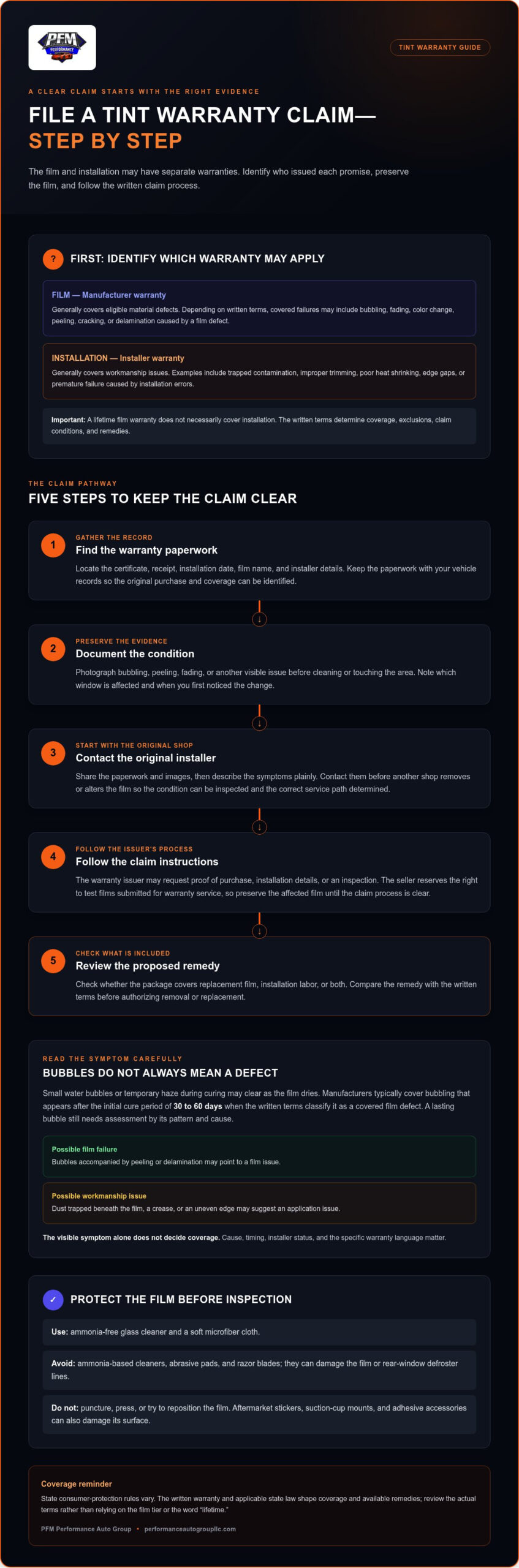
Start with the warranty paperwork, not the appearance of the damage alone. A manufacturer may cover eligible film defects, while an installer may cover workmanship. A lifetime warranty can still have exclusions, claim procedures, or limits on who can perform a replacement. A film defect and bubbling linked to improper installation, for example, may require different claim paths.
Use this sequence to keep the claim clear and protect the film before inspection:
- Find the warranty record. Locate the certificate, receipt, installation date, film name, and installer details. Keep the paperwork with your vehicle records so the original purchase and coverage can be identified.
- Document the condition. Photograph bubbling, peeling, fading, or another visible issue before cleaning or touching the area. Note which window is affected and when you first noticed the change.
- Contact the original installer. Share the paperwork and images, then describe the symptoms plainly. Contact them before another shop removes or alters the film, so the condition can be inspected and the correct service path determined.
- Follow the claim instructions. The warranty issuer may request proof of purchase, installation details, or an inspection. The seller reserves the right to test films submitted for warranty service, so preserve the affected film until the claim process is clear.
- Review the proposed remedy. Check whether the package covers film only, installation labor, or both. Compare the remedy with the written terms before authorizing removal or replacement.
Proper maintenance helps keep the film in good condition for inspection. Use ammonia-free glass cleaner and a soft microfiber cloth. Avoid ammonia-based cleaners, abrasive pads, and razor blades, which can damage the film or rear-window defroster lines. Small water bubbles or haze during curing may clear as the film dries. Do not puncture, press, or try to reposition the film. Aftermarket stickers, suction-cup mounts, and adhesive accessories can also damage its surface.
Warranty coverage does not establish a universal tint price. The cost of a non-covered replacement depends on the case; the film tier, affected windows, and written coverage determine the work involved. A package may include replacement film, labor, or both, so review those terms before assuming a lifetime warranty covers installation.
The protections that apply depend on the state, and the written warranty operates alongside applicable state law in determining coverage and remedies.
Are bubbles always covered by a manufacturer’s warranty?
No. Coverage depends on whether bubbling results from a film defect, an installation issue, or moisture during curing. The cause, timing, and written warranty terms help distinguish these situations.
Installation Conditions for Coverage
Installation conditions include the environment and preparation that affect how tint adheres to glass. Dust or humidity during installation can interfere with adhesion and affect warranty eligibility. Some manufacturers require installation by an authorized dealer or certified installer for coverage to apply. When a claim concerns bubbling, peeling, or another failure, the installer’s status and installation record may therefore matter.
Manufacturer and Installer Coverage
A manufacturer warranty generally covers material defects, while an installer warranty generally covers workmanship. Manufacturer terms may cover bubbling, fading, color change, peeling, cracking, or delamination caused by a film defect. Installer coverage may address trapped contamination, improper trimming, poor heat shrinking, edge gaps, or premature failure caused by installation errors. These are separate responsibilities, so one warranty does not automatically cover both.
Timing helps identify the likely cause. Small water bubbles or temporary haze during the curing period can clear as the film dries, and aren’t automatically defects. Manufacturers typically cover bubbling that appears after the initial cure period of 30 to 60 days following installation, when the written terms classify it as a covered film defect. A lasting bubble still needs assessment by its pattern and cause.
Consider two examples. Bubbles accompanied by peeling or delamination may point to film failure, while dust trapped beneath the film points to installation workmanship. A crease or uneven edge may also suggest an application issue rather than a material defect. The visible symptom alone does not establish which warranty applies; the cause and specific coverage language matter.
When choosing an installer, look for clear, written warranty terms explaining who handles material defects and who handles workmanship concerns. Check whether the manufacturer requires authorized installation, and make sure the paperwork identifies the film and installer. Careful installation matters because contamination, poor preparation, or improper trimming can affect the result and complicate a later claim.
Before installation, compare the warranty’s covered failures, exclusions, and claim process. Ask for the terms in writing and keep them with the receipt. For a new installation, you can schedule a tint installation appointment.
Warranty documentation and claims
Good records connect a vehicle’s window tint, installation, and warranty terms. Keep the warranty paperwork with the vehicle records, along with the receipt and installation details. Clear car tinting warranty information makes it easier to track what was installed, when a condition appeared, and which written terms may apply.
Build a compact record for each tint installation. Include the warranty document, purchase receipt, film name or tier, installation date, and installer information shown on your paperwork. Keep digital copies as well as paper originals. Clear photographs can help you compare the film’s condition over time. Store the file where another vehicle owner can find it if ownership changes.
For a claim, document the condition without altering the film. Photograph the entire affected window, then take close-up images of peeling, bubbling, fading, or cracking. Note the window’s location, such as “rear passenger-side glass,” and record when you first noticed the change. Describe what you see rather than stating a diagnosis as fact.
- Warranty paperwork: Keep the complete document, including coverage terms, exclusions, and claim instructions.
- Purchase record: Save the receipt or invoice that identifies the transaction and tint installation.
- Installation details: Preserve the date, film description, and installer information shown on your records.
- Condition evidence: Keep dated photographs and brief notes describing visible changes to the film.
- Claim correspondence: Save messages, inspection notes, and any written decision with the original documents.
Separate film damage from unrelated vehicle issues in your notes. A manufacturer’s film warranty covers eligible film defects under its terms, not defects in the vehicle’s glass or paint. For example, document a peeling tint layer separately from a scratch in the glass. That distinction keeps the claim focused on the condition the warranty addresses.
Keep the timeline simple and factual. For example: “Fading first noticed on the driver-side window,” followed by the date and a photograph. Add later observations only when something changes, such as new peeling along an edge. A concise timeline is easier to follow than scattered descriptions written long after the damage appeared.
When reviewing car tinting warranty information, follow the issuer’s claim instructions and submit copies of supporting documents when requested. Retain the originals. The seller may test films submitted for warranty service, so avoid removing or discarding affected material before the claim is evaluated. Keeping vehicle paperwork and condition evidence together makes it easier to explain the issue and follow the written requirements.
Warranty exclusions and care requirements
Warranty exclusions define damage or care that falls outside coverage. Read those terms alongside the covered failures, because a lifetime warranty does not mean every film problem qualifies. A manufacturing failure and a scratch from a sharp object have different causes. The first may fit a film-defect provision; physical damage from a scratch, tear, or impact is typically excluded.
Cleaning choices can affect the film’s surface and adhesive. Ammonia-based glass cleaners can degrade tint layers and adhesive over time, and may void coverage under the warranty terms. Use ammonia-free glass cleaner and a soft microfiber cloth instead. Avoid paper towels, abrasive pads, and razor blades, which can scratch the film or damage rear-window defroster lines.
Some exclusions concern items attached to the glass, not just cleaning. Aftermarket stickers, suction-cup mounts, and adhesive accessories applied directly to tint can damage the film, and that damage is typically not covered. Place a mount on untinted glass rather than pressing its suction cup onto the film. An accessory can leave a mark that looks like film failure but resulted from contact.
During the curing period, small water bubbles or haziness can appear as moisture leaves the film. Temporary haze is not automatically a defect, and owners should not tamper with it. Do not puncture bubbles, lift an edge, or try to smooth the film with a hard tool. These actions can create scratches or tears and make it harder to distinguish an existing film issue from later physical damage.
- Clean gently: Use ammonia-free cleaner and a soft microfiber cloth; avoid paper towels and abrasive materials.
- Keep adhesives off the film: Stickers, suction mounts, and adhesive accessories can damage tinted glass.
- Leave curing film alone: Don’t press, puncture, remove, or reposition the film during curing.
- Review the exclusions: Match the observed damage to the warranty’s stated covered failures and limits.
Removing or repositioning tint yourself can void manufacturer and installer warranties. If a film edge lifts or a mark appears, preserve the condition rather than attempting a repair. A requirement for authorized installation can also affect eligibility, so keep the installation record with the warranty. These details help distinguish physical damage and care-related exclusions from a film failure addressed by the written terms.
Before cleaning a newly tinted window, follow the care instructions provided with its warranty paperwork. For established film, keep the cleaning method consistent and gentle. A clear record of care does not change an exclusion, but it can help explain the film’s condition when damage is assessed.
Automotive window film warranty terms by film tier
Car tint warranties can last from one year to a lifetime, depending on the brand and product. The film tier alone does not establish the period or coverage; the written conditions determine eligible failures and remedies.
For an Economy Automotive Window Film, the stated remedy for a covered defect is comparable-quality replacement film and reapplication labor at no charge during the warranty period. This specifies both the replacement material and the work. Compare it with the written terms for any other tier rather than assuming every package includes the same remedy.
A tier comparison should distinguish film coverage from installation coverage. A manufacturer may cover an eligible film defect, while workmanship may fall under a separate installer warranty. For example, replacement film might be covered without labor unless the written terms include reapplication. Before choosing, check the warranty issuer, qualifying defects, and remedy for each film tier.
“Lifetime” needs careful reading. Some warranties define the film’s useful life as as few as five years, while another may cover the film for the vehicle’s lifetime, subject to its terms. A lifetime label alone does not explain the exact coverage period. Read the definition, start date, exclusions, and conditions for the specific window film.
Also compare full replacement coverage with prorated coverage. A prorated tint warranty may cover only 30 percent of replacement costs for a claim made in year seven. That differs substantially from replacement film and labor at no charge during the warranty period. Look for how the remedy changes over time, not just the headline duration.
Covered failure types are another useful comparison point. A lifetime warranty may cover bubbling, fading, purpling, peeling, delamination, and cracking, according to its stated terms. Confirm whether the listed failures apply to the film itself and whether installation labor is included. A film warranty does not automatically mean every window-tinting issue qualifies for the same remedy.
Before selecting a tier, compare the coverage period, covered failures, labor provisions, exclusions, and claim requirements side by side. Check whether authorized installation is required, and keep the written terms with the purchase record. The practical takeaway: choose based on the remedy you value, not the tier name or “lifetime” label alone.
PFM Performance Auto Group: Auto Window Tinting
PFM Performance Auto Group provides auto window tinting for drivers considering new film or planning an installation in Hillsborough County. Once you understand who may cover film defects and workmanship, the next step is to choose a film and review its written warranty terms before installation.
PFM Performance Auto Group offers Black Pearl Nano Ceramic Window Tint by Madico. Review the product’s warranty paperwork for covered defects, exclusions, claim requirements, and whether installation labor is included. These details matter more than assuming every film tier has identical coverage.
If you’re considering window tint for your vehicle, contact PFM Performance Auto Group or visit performanceautogroupllc.com.
Make Your Next Tint Decision With Confidence
Let the warranty guide your next decision, not just the film’s appearance or tier name. Clear car tinting warranty information helps you compare written coverage with the care and installation process that matter to your vehicle. Keep the terms accessible and use them as a practical reference when planning new tint or reviewing a concern.
PFM Performance Auto Group offers auto window tinting, commercial window tinting, and home window tinting in Hillsborough County. If you’re considering tint for your vehicle, contact the shop to discuss your options and next steps.
Choose carefully, keep your records accessible, and move forward with confidence.
Frequently Asked Questions
Who makes the warranty?
The film manufacturer or installer may issue a warranty, and each covers different responsibilities. A manufacturer’s terms generally address eligible film defects, while an installer’s terms may address workmanship. For example, a defect in the film material and a gap caused during installation may involve separate coverage. Read the document to identify the issuer, covered problem types, claim process, and whether replacement labor is included.
Does the warranty transfer when the vehicle is sold?
Not automatically; transferability depends on the written warranty terms. Some terms may tie coverage to the original purchaser, while others may describe coverage for the vehicle or a later owner. Before a sale, keep the warranty paperwork and installation receipt with the vehicle records. The buyer can then identify the issuer and review any stated ownership or claim conditions rather than assuming coverage continues.
How do manufacturer and no-fault tint warranties differ?
A manufacturer warranty generally addresses covered defects in the film, while “no-fault” describes a warranty label whose actual scope depends on its written terms. Do not assume that label includes every cause of damage or installation labor. Compare the named issuer, covered failures, exclusions, and remedy. For instance, check whether the document covers replacement film only or also the labor needed to install it.
How should vehicle owners prepare for a warranty claim?
Gather the warranty document, purchase record, and installation details before describing the problem. Photograph the affected window from more than one angle, and note the first date you observed the change. Keep the vehicle available for inspection and preserve the film’s condition. Do not peel back a lifted edge for a closer picture, as altering it may complicate assessment.
Who is covered?
The written warranty identifies who may make a claim, such as the original purchaser or an eligible vehicle owner. It may also require proof of purchase or installation by an authorized dealer. For vehicle owners in Hillsborough County, the county itself does not determine warranty eligibility; the document’s stated owner, product, and installation conditions do. Keep the receipt and warranty record together if ownership changes.
What can void or limit tint warranty coverage?
Improper care, physical damage, or failure to meet stated installation conditions can limit coverage. Examples include using prohibited harsh cleaners, scratching the film, or attempting to remove or reposition it. An authorized-installer requirement can also affect eligibility. Read the exclusions alongside the covered failures: a warranty may address a film defect but exclude damage caused by an accessory attached directly to tinted glass.
What does a car window tint warranty typically cover?
Coverage may include eligible film problems such as fading, bubbling, peeling, cracking, or delamination, depending on the written terms. Installation workmanship may be covered separately. For Hillsborough County drivers, PFM Performance Auto Group offers a warranty on tint material and installation; the warranty is offered, and terms vary based on the chosen product. Review the specific paperwork to understand the applicable remedy and claim conditions.
What issues are excluded from window tint warranties?
Physical damage from scratches, tears, or impacts is typically excluded, as are failures caused by improper cleaning or prohibited chemicals. A film warranty also does not cover defects in the vehicle’s glass or paint. For example, a scratch in the glass beneath the tint is distinct from a film defect. Describe each condition separately so the claim focuses on damage the warranty addresses.