Automotive Electronics Installation in Tampa: A Practical Guide
What if the best vehicle upgrade isn’t the biggest screen or loudest sound, but the one that fits your car and your daily drive? Choosing automotive electronics installation Tampa drivers can rely on means weighing compatibility, careful workmanship, and upgrades that work with the features you already use. Modern vehicles bring audio, connectivity, and convenience together in increasingly integrated systems, so the details of your car matter.
PFM Performance Auto Group serves Hillsborough County drivers with installation for car audio, speakers, head units, CarPlay and Android Auto, dashcams, and HID and LED lighting. The right starting point is your routine: hands-free connectivity may matter most on a commute, while clearer sound or a dashcam may better suit your priorities.
This guide explains how to compare common upgrades, why vehicle compatibility matters, and how to prepare for an installation appointment. You’ll be able to describe your goals and vehicle clearly, which makes it easier to discuss a practical plan for your car.
Key Takeaways
- Start with the everyday need you want to address, such as clearer calls, a different audio setup, recording, or a lighting update.
- For automotive electronics installation Tampa, share your vehicle’s year, make, model, trim, and existing equipment to help shape a compatible upgrade plan.
- Compare audio, connectivity, dashcam, and lighting options by the function you need, not just by their features.
- Before your appointment, note existing electronics or previous modifications and describe the result you’re hoping to achieve.
- PFM Performance Auto Group serves Hillsborough County drivers with audio, speaker and head-unit installation, dashcams, CarPlay and Android Auto integration, and HID and LED lighting installation.
Automotive Electronics Installation in Tampa: Which Upgrades Solve Your Everyday Needs?
Clearer calls during a commute, more satisfying music on the drive home, a camera to record your journeys, or a different lighting setup: Tampa drivers can have very different goals for an electronics upgrade. Start with the experience you want to change, not a list of features. The most useful choice is the one that suits your driving routine and your particular vehicle.
Automotive electronics installation involves fitting and integrating vehicle technology for its intended use. Systems can include in-car entertainment and connectivity as well as other electronic functions. The automotive electronics overview provides a broader look at how varied the field is. For a driver choosing an upgrade, the practical question is more specific: which category addresses a real need and fits the vehicle?
Which car electronics upgrades are available?
PFM Performance Auto Group installs car audio, speakers and head units, CarPlay and Android Auto, dashcams, and HID and LED lighting. Each category serves a different purpose. The right setup depends on your priorities and the equipment already in your vehicle.
- Audio: Speaker or head-unit installation can change your in-car listening setup. The head unit is also a central part of the dashboard’s entertainment and control system.
- Connectivity: CarPlay and Android Auto integration can support phone-connected features such as calls and navigation, depending on vehicle and equipment compatibility.
- Recording: A dashcam is an option if you want a camera to record your journeys. Consider what you want recorded when deciding whether this category suits your needs.
- Lighting: HID and LED installations update the vehicle’s lighting setup. The vehicle’s current configuration and the intended application help shape the plan.
Start with the driving experience you want to improve
Make your goal specific. If calls and navigation are central to your routine, consider connectivity and how it might work with your existing dashboard controls. If music is the priority, note whether you’re interested in speakers, the head unit, or both. This gives the installer a useful starting point before you settle on components.
For a dashcam, identify what you want recorded and where you need the camera to serve its purpose. For lighting, describe when you drive and what you want to change instead of assuming a particular bulb type is right for every car.
Vehicle fit and intended use should shape every upgrade plan: choose technology around what your car can support and how you drive. To plan automotive electronics installation in Tampa, name the everyday task you want to make easier, then identify the category that best matches it. Next, consider how your vehicle’s details affect compatibility and installation planning.
How Tampa Automotive Electronics Installation Depends on Vehicle Compatibility
A feature shown on a device’s box doesn’t automatically mean it will work with every vehicle. Year, make, model, trim, factory equipment, and previous modifications can all affect an installation plan. Automotive electronics installation in Tampa should start with the vehicle itself, not assumptions based on a product category.
Modern vehicles combine electronic systems in ways that can affect how an upgrade is fitted and used. An overview of modern automotive electronics helps illustrate how broad these systems are. For a specific installation, the key question is how the desired equipment relates to the vehicle’s existing hardware and controls.
What vehicle details matter before choosing electronics?
Before planning an upgrade, write down your vehicle’s year, make, model, and trim. Note any aftermarket stereo, speakers, camera, lighting, or other electronics already installed. These details give the installer a clearer picture of what is in place and what the new equipment needs to work alongside.
The factory head unit and dashboard controls can affect integration options. A vehicle may have steering-wheel controls or other features connected to its original system, while a previous modification may have changed the setup. Those differences matter when planning a head-unit or connectivity upgrade. Compatibility is vehicle-specific, so don’t assume a product will fit based on its category alone. The actual vehicle and equipment should guide the plan.
Fitment means matching the equipment and installation requirements to the vehicle’s existing design and electronics. This keeps the discussion grounded in what the car has, what the upgrade is meant to do, and how the two can work together.
How do CarPlay and Android Auto fit into an upgrade?
CarPlay and Android Auto provide phone-connected features, but the phone’s capability is only part of the picture. The vehicle needs compatible hardware and an installation approach that works with its dashboard and connections. A head unit may provide the intended connectivity, but the surrounding vehicle setup still affects how it can be fitted and integrated.
PFM Performance Auto Group installs head units with CarPlay or Android Auto connectivity. Vehicle details guide the plan rather than a one-size-fits-all assumption. Bring your vehicle information and note which phone-connected functions you want to use, such as calls or navigation. This makes it easier to discuss the intended result alongside the equipment already in your dashboard.
For a closer look at the platform and upgrade considerations, explore this Tampa CarPlay installation guide. To discuss an installation based on your vehicle and priorities, you can book an appointment and bring those details to the conversation.
Compare Automotive Electronics Upgrades by Function, Not Just Features
A feature list can make every upgrade sound compelling. A better comparison starts with what you want the equipment to do, then considers whether it fits your vehicle and how it relates to existing electronics. For automotive electronics installation in Tampa, choose one primary goal first. If you’re considering several changes, mention them together so the plan can account for how they may interact.
| Upgrade category | Driver need | Vehicle-fit question | Relevant PFM service |
|---|---|---|---|
| Audio | Change the in-car listening setup | What speakers and head unit are currently installed? | Car audio, speaker, and head-unit installation |
| Connectivity | Use phone-connected features in the vehicle | What factory equipment and dashboard controls are present? | CarPlay and Android Auto integration |
| Dashcam | Add an in-vehicle camera for recording journeys | Where can the camera be placed in this vehicle? | Dashcam installation |
| Lighting | Update the vehicle’s lighting setup | What lighting configuration does the vehicle use? | HID and LED lighting installation |
Car audio or connectivity: which upgrade should come first?
Choose audio if your priority is the listening experience; choose connectivity if you want phone features integrated into your drive. They’re separate goals, even if both involve dashboard electronics. A speaker change doesn’t automatically mean the head unit needs replacing. PFM installs car audio, speakers, and head units, with the plan shaped by your priorities and the vehicle’s current setup. For more focused audio guidance, explore car audio installation.
Dashcam or lighting: match the installation to your use
A dashcam is a distinct option for drivers considering an in-vehicle camera. Think about what you want recorded and how the camera should fit into your vehicle. HID and LED lighting are another category, focused on the type of lighting installation you want. The vehicle’s existing configuration helps inform the plan, so describe what is already installed rather than assuming every option fits every car.
Some goals can be planned together. If you’re considering a head-unit upgrade alongside connectivity, discuss both needs at once. That doesn’t mean every component must be replaced. Likewise, if you’re weighing an audio change and a dashcam, explain both so the vehicle fit and installation requirements can be considered as one project. Prioritize first, then mention related upgrades.
Keep the decision practical: name the task you want to improve, identify the relevant category, and note what equipment is already in the vehicle. That gives the installation discussion a clear starting point without relying on feature claims that may not apply to your car.
Prepare for an Automotive Electronics Installation Appointment in Tampa
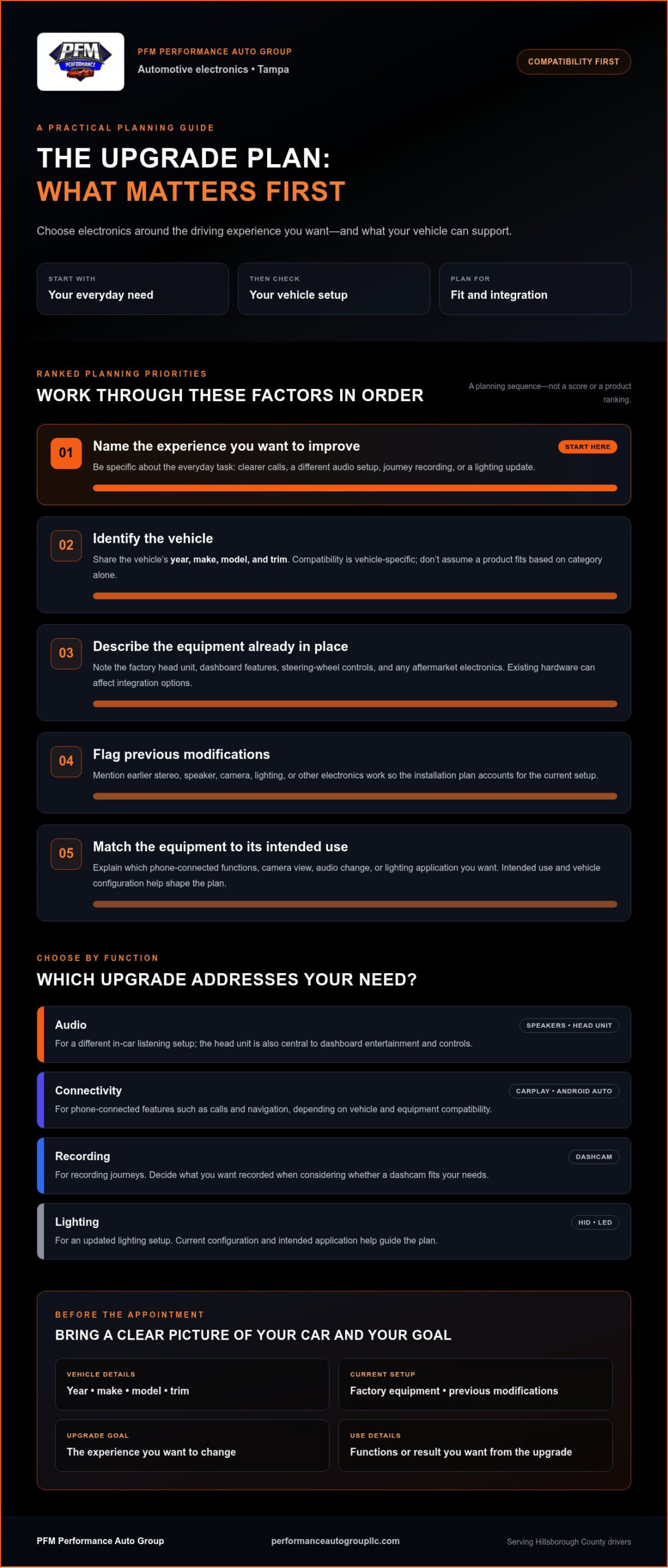
A well-prepared appointment starts with clear information, not technical expertise. To plan automotive electronics installation in Tampa, bring your vehicle details, identify what is already installed, and explain the change you want. These details help frame a practical discussion around your car and the upgrade you have in mind.
What information should you have ready?
Before your visit, gather the basics and describe your goal in everyday terms. “I want better phone integration for calls and navigation” gives the installation discussion a clearer direction than naming a feature without explaining how you’ll use it.
- Record your vehicle details. Note the year, make, model, and trim.
- Describe the upgrade you’re considering. Specify whether your priority is audio, phone integration, recording, or lighting.
- List current equipment. Include the factory audio or connectivity setup and any aftermarket electronics you know are installed.
- Mention previous modifications. A replaced head unit, added speakers, or earlier wiring changes could affect how a new installation is planned.
Bring those notes, and point out anything you’re unsure about rather than trying to identify components by guesswork. Vehicle fit and installation scope depend on the car’s existing equipment and the upgrade selected. Sharing several goals is useful, too: if you’re considering connectivity and audio, discussing both keeps the overall plan in view.
What happens when the upgrade involves car audio?
For an audio project, start by describing what you listen to and what you’d like to change about your current setup. Also note which speakers and head unit are in the vehicle, if you know. That context helps shape the conversation around your preferences and existing system, with recommendations grounded in the installation details.
A speaker upgrade and a head-unit replacement aren’t automatically the same project. Your existing equipment and the result you want help determine what belongs in the discussion. PFM Performance Auto Group provides car audio, speaker, and head-unit installation. Its car audio installation services offer a closer look at audio options.
Once your goal and vehicle details are ready, use the booking process to plan your visit. You don’t need to arrive with a complete technical specification. Clear priorities and an accurate picture of the current setup are a strong starting point.
Book Automotive Electronics Installation with PFM Performance Auto Group in Tampa
A useful upgrade plan begins with two things: the vehicle you drive and the change you want to make. PFM Performance Auto Group is a locally owned automotive enhancement shop serving Hillsborough County, including Tampa. The shop has operated since 2004 and provides vehicle enhancement services, with electronics installation planned around each customer’s priorities and vehicle details.
A local shop for coordinated vehicle technology upgrades
PFM installs car audio, speakers and head units, dashcams, CarPlay and Android Auto integration, and HID and LED lighting. These categories address different needs, but they can also be considered together when you’re planning more than one update. Sharing the full picture helps keep the discussion focused on the vehicle’s existing setup and the purpose of each requested upgrade.
Planning matters because an electronics installation becomes part of a vehicle you depend on every day. Whether you’re considering a head unit for phone connectivity, speakers for your listening experience, a dashcam, or a lighting update, start with what you drive and how you intend to use the equipment. You don’t need to arrive with every technical decision settled. Clear priorities make the conversation more useful.
Take the next step toward a more useful drive
Before booking, choose your first priority. Is it easier access to phone-connected features, an audio change, an in-vehicle camera, or a lighting installation? Then gather your vehicle’s year, make, model, and trim, along with any existing aftermarket electronics you know about. If you have more than one goal, mention each so the plan can account for the broader project.
This preparation gives the appointment a practical starting point without asking you to guess which equipment will fit. PFM can discuss the relevant installation in light of your vehicle and intended result, helping you move from a general idea to a clearer project plan. Bring your priorities and vehicle details to the next step. Book an automotive electronics appointment with PFM Performance Auto Group.
Make Your Next Drive Feel More Like Yours
A rewarding upgrade can start with a small moment you’d like to improve: a familiar routine that could feel more comfortable, connected, or convenient. Use that need as your guide. A thoughtful plan isn’t about adding the most technology; it’s about choosing an installation that fits how you use your vehicle.
For automotive electronics installation in Tampa, start with a simple conversation about what matters most in your daily drive. Share what you hope to change and the equipment already in your vehicle, then plan an upgrade around those priorities.
Choose your priority and book an appointment with PFM Performance Auto Group to discuss your vehicle’s electronics installation.
Frequently Asked Questions
Is automotive electronics installation compatible with every car?
No, compatibility depends on both the vehicle and the equipment selected. A head-unit upgrade, for example, may interact with factory dashboard controls differently from an audio component that works with the existing system. Year, make, model, trim, factory features, and previous modifications all provide useful context. Share those details and your goal when arranging an appointment so the installation plan can be tailored to your vehicle.
Can I add Apple CarPlay or Android Auto to an older vehicle?
It may be possible, depending on the car’s existing head unit, dashboard layout, and available integration options. In some vehicles, a compatible replacement head unit may be part of the approach; another configuration may call for a different plan. Built-in dashboard controls, for instance, can affect how an upgrade is integrated. Age alone doesn’t determine compatibility; the vehicle’s actual setup matters.
Do I need to replace my factory speakers to install a new head unit?
No, a new head unit doesn’t automatically require new speakers. These are separate upgrade decisions: you might want phone-connected features while keeping your current speakers, or focus on audio components instead. Consider what you want to change and what you’re already satisfied with. Sharing those preferences helps keep the plan centered on your goals rather than replacing parts that aren’t part of the project.
Can a dashcam be installed in a vehicle with existing aftermarket electronics?
Existing aftermarket equipment doesn’t automatically rule out a dashcam installation, but it can affect how the overall setup is planned. An added head unit or previous wiring changes, for example, may be relevant to placement and routing decisions. Make a note of accessories and modifications you know about, even if you don’t have their technical details. This lets the installer consider the vehicle’s complete electronics setup rather than treating the camera as an isolated addition.
Are HID and LED headlights the same type of upgrade?
No, HID and LED refer to different lighting technologies, so the terms aren’t interchangeable. The appropriate installation depends on the vehicle’s existing lighting configuration and the upgrade being considered. If you’re comparing the two, focus on vehicle fit and intended application rather than assuming one is suitable for every car. Specific technical or Florida legal guidance should be based on verified details for the vehicle and current requirements.
What should I bring to an automotive electronics installation appointment?
Bring your vehicle information and a clear description of the change you want. For example: “I’d like phone integration for calls, but I want to keep the current audio setup if possible.” Note any aftermarket head unit, speakers, camera, or lighting, plus modifications made by a previous owner if you know about them. These details give the installation discussion a practical starting point.
How do I book automotive electronics installation in Tampa?
Choose the upgrade you’re interested in, gather your vehicle details, then use PFM Performance Auto Group’s booking page to request an appointment. Include your year, make, model, trim, and any existing electronics you know about. This gives the team useful context for discussing the project. PFM serves drivers throughout Hillsborough County, including Tampa. Book your appointment.