

Commercial Tinting Cost Estimator for Florida: Plan Your 2026 Project
If you’re searching for a commercial tinting cost estimator Florida businesses can use to plan a 2026 project, start with the building rather than a generic price. Window count and size, access to each pane, film goals, and installation conditions all help define the project scope. Gathering these details gives you a more useful starting point for budgeting.
Estimates can be difficult to compare when buildings, glazing, and project priorities differ. Before requesting one, record approximate glass dimensions, floor locations, existing film if known, and what you want the film to address. That information helps make the scope clearer and makes it easier to compare estimates based on the same work.
PFM Performance Auto Group offers commercial window tinting in Hillsborough County. This guide explains which property details can shape an estimate and how to prepare for a project discussion for your Tampa-area building.
Key Takeaways
- Use a commercial tinting cost estimator Florida project plan as an early budgeting aid, not a final quote. Building details and installation scope shape the estimate.
- Record window dimensions, glazing details, existing film, and access conditions to clarify the work involved.
- Compare solar-control, privacy, and safety-oriented film goals against your building’s needs, glazing, and visibility requirements.
- Separate measured details from rough estimates in your worksheet so the project scope is easier to review and refine.
- Use your completed notes to discuss commercial tinting for your Tampa-area property with PFM Performance Auto Group.
What a Commercial Tinting Cost Estimator Can Tell You About a Florida Project
A commercial tinting estimate is an early planning guide that uses available building details to outline a potential project scope, not a final quote. A commercial tinting cost estimator Florida property owners use can help organize budget questions, but a calculator cannot assess every detail of the glass or installation environment.
The number of panes is only one factor. Glazing type and condition, film goals, window dimensions, access, and preparation needs can all affect planning. For background on window film and its uses, see this Window film overview. Treat an early result as an estimate based on assumptions, not a promise of a specific price or outcome.
What information does a commercial tinting estimator need?
Start with the property type, location, and reason for considering tinting. For example, note whether the project is for a storefront, office, or another commercial space, and identify priorities such as managing glare, increasing privacy, or changing the appearance of the glass.
Next, record the approximate window count and dimensions, and list the areas you want included. Note upper-floor panes, obstacles, and windows that may be difficult to reach. Also identify occupied areas and scheduling considerations that could affect installation planning. Label each measurement as confirmed or approximate, so rough figures are not mistaken for precise measurements.
Why a calculator cannot replace a project-specific estimate
Glass that looks similar may differ in type, condition, or configuration. Those differences can affect film selection and installation planning. Existing film or residue may also affect preparation. Reviewing the building and its glass helps clarify these conditions, refine assumptions, and identify access or installation constraints that a basic calculator cannot evaluate.
Keep early budgeting separate from confirmed scope. An online tool can help organize approximate quantities and priorities, while a project discussion can account for the glazing and installation environment. Have your building details and goals ready to make that conversation more focused. A clearly described scope makes an estimate more useful.
Commercial Tinting Cost Factors for Tampa and Hillsborough County Buildings
Commercial tinting estimates vary because buildings differ in glazing, film goals, window quantities, access, and installation conditions. The number and size of panes help define how much glass is included and the work involved. A wide storefront, for example, presents a different scope from smaller panes spread across several rooms.
Glass type and condition matter as well. Existing film may affect preparation, and the building’s glazing can influence which film options are suitable. The project goal also guides the discussion. A business focused on sunlight and glare may have different priorities from one seeking more privacy. A commercial tinting cost estimator Florida businesses use is more useful when it accounts for these details instead of relying on window count alone.
Installation logistics help shape the plan. Upper-floor glass, limited exterior access, furnishings near windows, and occupied work areas may affect how the work is approached. Share these details early to make the project scope more realistic and support planning around the property.
How Tampa-area sun exposure shapes project priorities
Note which façades receive the strongest direct sunlight and when glare or warmth is most noticeable inside. This information helps connect your priorities, such as glare management, interior comfort, or UV concerns, to a film-selection discussion. The International Window Film Association (IWFA) offers consumer information about window film and its uses. Performance and suitability depend on the film and the building’s glazing, so avoid assuming a specific energy reduction before the project details are reviewed.
Which building and access details should businesses record?
Gather a concise site profile before planning:
- Property: Building type and location in Tampa or Hillsborough County.
- Glazing: Approximate window dimensions, count, and areas to be treated.
- Conditions: Glass type or known existing film, if available.
- Access: High windows, exterior access restrictions, or furnishings near the glass.
- Operations: Occupied areas and scheduling considerations that may affect installation planning.
Mark uncertain measurements as estimates and identify the areas that matter most. This keeps preliminary planning separate from confirmed scope. For a local conversation about commercial tinting for your Hillsborough County property, schedule a project discussion.
Compare Commercial Window Film Options Without Guessing at the Budget
Choose film by starting with what you want the glass to do. Solar-control, privacy, and safety-oriented films address different project goals. Compare options against your building’s needs and the work involved, rather than assuming a price difference based on the film category alone. Glazing, visibility requirements, and the areas receiving film all help define the project scope.
| Project goal | Film consideration | Estimate question |
|---|---|---|
| Manage sunlight or glare | Consider how the film choice relates to daylight, views, and the glazing in the affected areas. | Which windows cause the most glare, and should treatment cover those panes or a broader façade? |
| Increase privacy | Clarify where visibility needs to change, such as interior partitions or street-facing glass, while considering the appearance from both sides. | Which sightlines should be limited, and when does the space need privacy? |
| Address a safety concern | Describe the concern and intended use of the space. Discuss a safety-oriented film goal in relation to the specific glazing and application, without assuming a particular protection outcome. | Which glass areas are involved, and what is the project trying to address? |
Match film priorities to the business space
A storefront may need to balance customer visibility, daylight, glare, and exterior appearance. In an office, screen glare, privacy between work areas, and installation planning for occupied rooms may matter more. For shared or sensitive spaces, identify where privacy is needed and how the glass is used. Describe privacy goals clearly, without treating film as a guarantee of security.
How film selection changes an estimate
The film category and the area receiving treatment help define the project specification. Treating selected panes to address a specific concern is a different scope from covering multiple façades or interior glass partitions. The commercial tinting cost estimator Florida businesses use is most helpful when it compares these project details rather than presenting a universal figure based only on a film label.
Keep verified product characteristics separate from general descriptions of film categories. Record your desired result, the specific windows involved, and any known glazing details. Do not assume that every film in a category performs identically. For more information, explore commercial window tinting services from PFM Performance Auto Group. A clear description of the space and its priorities helps define the project discussion.
How to Use a Commercial Tinting Cost Estimator Before Requesting an Estimate
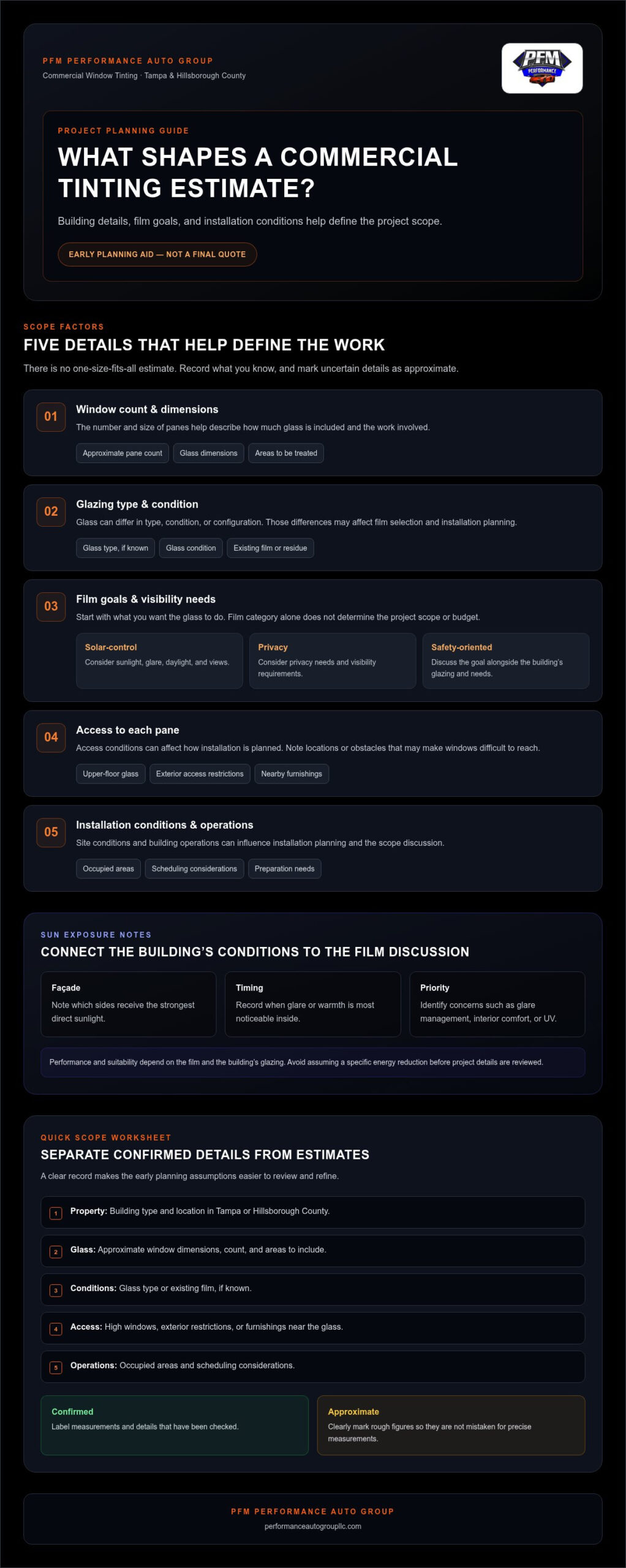
A commercial tinting cost estimator Florida businesses use becomes more helpful when the information entered reflects the building and the installation scope. Use it to organize project details and compare assumptions, not as a substitute for reviewing the property. This worksheet can take you from basic building information to a clearer estimate discussion.
A practical five-step estimate-preparation checklist
- 1. Describe the property. Record its location, how the space is used, and the approximate number of windows. Identify the areas you’re considering, such as a storefront, office rooms, or interior glass.
- 2. Measure what you can. Note accessible pane dimensions and label each measurement as confirmed or approximate. Flag windows that are difficult to reach, unusually shaped, or likely to need closer assessment.
- 3. Set your priorities. List your main goals, such as glare management, privacy, or solar control. If priorities differ across the property, note them by area instead of using one general objective for the whole building.
- 4. Record installation conditions. Note floor levels, access restrictions, furnishings near the glass, occupied areas, operating hours, and scheduling constraints. These details help explain how the work may need to be planned.
- 5. Check assumptions and requirements. Identify known glazing details and any existing film. Before settling on a film specification, check applicable current building-code and glazing requirements for the property. Keep verified requirements separate from questions that still need review.
What to compare when reviewing project estimates
Compare the scope, not just the headline total. Check whether each estimate describes the same windows and treated areas, film category, surface preparation, access conditions, and installation work. If one includes additional panes or accounts for access challenges that another leaves out, the totals do not represent the same project.
Look for consistent assumptions. Are measurements confirmed or approximate? Does the estimate include the same rooms and glazing? Are occupied areas and access restrictions reflected in the plan? Note unanswered items so you can see how each estimate defines the work before deciding. Clear boundaries make comparisons more meaningful and help prevent an early planning figure from being mistaken for a complete project scope.
Once you’ve gathered the property details, priorities, and access notes, use them to start a focused project conversation.
Plan Commercial Window Tinting in Tampa with PFM Performance Auto Group
Commercial window tinting for a Tampa-area business should be planned around the actual building, not a one-size-fits-all assumption. PFM Performance Auto Group offers commercial window tinting in Hillsborough County. The shop is locally owned and operated, with a focus on automotive enhancement, window tinting, and electronics installation.
Use your budget notes to make the project discussion specific. Window dimensions and glazing, the areas you want treated, access conditions, and your business priorities all help define the work. A commercial tinting cost estimator Florida property owners use can organize early questions, while a focused discussion puts those assumptions in the context of your building.
What to prepare for a PFM project discussion
Bring the information you have, even if some measurements are approximate. Photos can help show the layout or highlight access concerns. A concise set of notes is useful:
- Property location: Include the Tampa-area address or Hillsborough County location.
- Window details: Share approximate dimensions, window counts, and the areas you want considered. Mark rough measurements clearly.
- Business priorities: Identify goals such as glare management, privacy, or solar control, and note which spaces matter most.
- Installation context: Describe operating hours, occupied areas, access limitations, and other conditions that may influence planning.
These details give the conversation a practical starting point. For example, identifying a particular façade or room where glare is a concern is more useful than simply noting that the building has many windows. If you do not have every measurement, share what you know and indicate which areas may need closer assessment.
Move from budget planning to a tailored project conversation
A prepared scope makes it easier to discuss the same project boundaries: which glass is included, what you want the film to address, and which installation conditions could affect the work. This turns preliminary notes into a more specific conversation without treating an early estimate as a final quote. For broader information about the company’s tinting services, visit PFM’s window tinting services.
Bring your questions and project notes to discuss commercial window tinting for your Tampa-area property.
Turn Your 2026 Tinting Plans into a Clear Project Scope
A useful commercial tinting cost estimator Florida businesses can rely on begins with the building, not a one-size-fits-all figure. Window dimensions, glazing, access, film goals, and the areas you want treated all help shape the project scope. Gathering those details and separating confirmed measurements from rough estimates can make the estimate discussion more focused.
Compare film options against the needs of each space, whether your priorities are glare management, privacy, or solar control. Then review estimates against the same treated areas and installation assumptions so you understand what each scope includes.
PFM Performance Auto Group is locally owned and operated and offers commercial window tinting in Hillsborough County. Share your building details and priorities to start a focused, project-specific conversation.
With a clear scope and local guidance, you’re ready to plan your project.
Frequently Asked Questions
What is a commercial tinting cost estimator?
A commercial tinting cost estimator Florida property owners use is a planning tool, not a final quote. It organizes details such as approximate window area, film goals, glazing, and installation access to help frame a project’s scope. Its usefulness depends on the information entered, so treat the result as an early budgeting reference. A project-specific review can refine assumptions and account for conditions a calculator cannot assess.
How much does commercial window tinting cost in Florida?
There isn’t one figure that applies to every Florida commercial building, and this guide doesn’t assign a price. The estimate depends on the treated glass area, film category, glazing, access, preparation, and installation scope. To make a useful budget comparison, describe the same windows and requested work in each estimate. That way, you’re comparing similar project boundaries rather than headline totals that may cover different work.
What details do I need for a commercial window tinting estimate?
Prepare the property location, approximate window count and dimensions, the areas you want treated, and your main goals. Include known glazing details, any existing film, access restrictions, and whether the space will remain occupied during the work. Photos can help illustrate the layout, but label measurements as confirmed or approximate. For a Hillsborough County property, include its location to give the project discussion local context.
Does Florida’s climate affect commercial tinting estimates?
Florida sun exposure can shape your window film priorities, including glare management, solar control, and privacy. Note which windows receive strong direct sunlight and where you notice glare or discomfort, then relate those concerns to how each space is used and its glazing. These details can guide film selection and project scope, but they do not create a standard price. The specific conditions of a Tampa-area building still matter.
Can a commercial tinting estimator give me a final quote?
An estimator is best used as an early budgeting aid, not as a final quote. It may rely on approximate measurements and assumptions about film choice, preparation, glazing, and access. A project-specific review can clarify those details and define the work included. When comparing estimates, check that they cover the same windows, treated areas, and installation scope so you can understand meaningful differences.
What affects the cost of commercial window tinting the most?
The main scope factors include treated glass area, film category, glazing characteristics, access, and preparation needs. For example, a large, easily reached storefront may involve a different installation plan from smaller windows in occupied rooms or areas with access restrictions. Look for estimates that clearly describe the treated areas and work included. Reviewing those details provides more useful context than comparing totals alone.
Is commercial window tinting worth considering for a Tampa business?
It may be worth considering if your business wants to address glare, privacy, or sun exposure. Start by identifying which rooms or façades are affected and how those spaces are used, then compare film goals with the building’s glazing and visibility needs. Discuss your priorities and building details to define the scope for your Tampa-area property.