
Underglow Installation Service in Riverview for Cars and Trucks
LED underglow can give a car or truck a distinctive look, but the finish depends on more than choosing a color. A professional underglow installation service in Riverview should plan the lighting around the vehicle’s underside and protect its wiring from road exposure, heat, and moving parts. The result is a custom look supported by careful installation.
It’s easy to see the appeal of underglow installation service Riverview drivers may consider: underbody lighting can use a single color or multicolor effects, with separate zones creating a coordinated look. The key is choosing a setup that suits both the vehicle and your style. This guide covers common LED underglow options, considerations for cars and trucks, and how professional installation accounts for cable protection, tire clearance, and suspension movement. You’ll also learn what shapes the installation and when a professional approach can help achieve a clean result.
Key Takeaways
- Compare single-color, RGB, and RGBW lighting options to find an underglow look that suits your car or truck.
- Plan lighting zones and placement for a cohesive appearance, including how underbody strips relate to wheel or rock lights.
- Understand why wiring protection, suitable fuse sizing, and waterproof connections matter in a careful installation.
- See how tire clearance, suspension movement, and nearby hot or moving parts shape safe light placement and cable routing.
- Learn what to consider when choosing an installation approach for your vehicle and desired finish.
Why Choose LED Underglow Lighting?
LED underglow gives cars and trucks a distinctive appearance by placing lights beneath the body. A well-planned layout considers color, coverage, and the vehicle’s shape to create the intended effect.
Start by choosing a color approach. Single-color lighting creates a consistent look, while RGB systems offer multiple colors. RGBW adds a white-light option. Your choice depends on whether you prefer one defined appearance or flexibility between different looks. Separate lighting zones can also distinguish areas such as the sides and front, making the design feel intentional rather than like one bright outline.
Placement changes the result. Continuous lighting along the frame rails can create a more even appearance with fewer shadows. Gaps between strips or uneven spacing may leave dark areas beneath the vehicle. Rock lights or wheel lights can extend the visual theme beyond the central underside. Since these require separate placement decisions, plan how each area should relate to the others before choosing a setup.
- Single color: A consistent look across the selected underbody areas.
- RGB: Multicolor customization for a changing visual effect.
- RGBW: RGB color options with a white-light choice.
- Multiple zones: Separate control areas for a more tailored layout.
Plan the lighting around the vehicle rather than relying on a preset package label. A low car and a truck have different underbody shapes, clearances, and visible edges. Map the areas you want to illuminate, then decide whether the design needs side coverage, front and rear sections, or coordinated wheel lighting. Aim for a balanced appearance that suits the vehicle’s proportions.
Evaluate an installer by the planning process, not customer volume alone. A useful design discussion covers strip placement, zone arrangement, cable routing, and how the layout fits the specific vehicle. Customer volume by itself does not show whether these details are addressed. A clear plan helps you understand how the finished look will be achieved.
For Florida road use, keep decorative lighting distinct from required vehicle lights and emergency signals, and follow applicable state requirements. Riverview-area shop names and contact details aren’t provided here; shop contact information and appointment policies vary by business. Installation time depends on the vehicle, lighting layout, and wiring route, so those factors determine the work involved.
Multiple lighting zones provide another way to organize underglow coverage. Before settling on a layout, decide which parts of the vehicle should read together and which should have their own visual emphasis. This keeps the design connected to the vehicle’s shape rather than an option name alone, and gives you a clear basis for discussing placement and the intended appearance with an installer.
When comparing layouts, consider color, coverage, and placement together. A zone plan should support the overall look you want, whether that is a unified outline or a more segmented effect. Confirm that the proposed arrangement covers the areas you intend to illuminate, and discuss how the finished design will appear around the vehicle’s visible edges.
Professional installation safety considerations
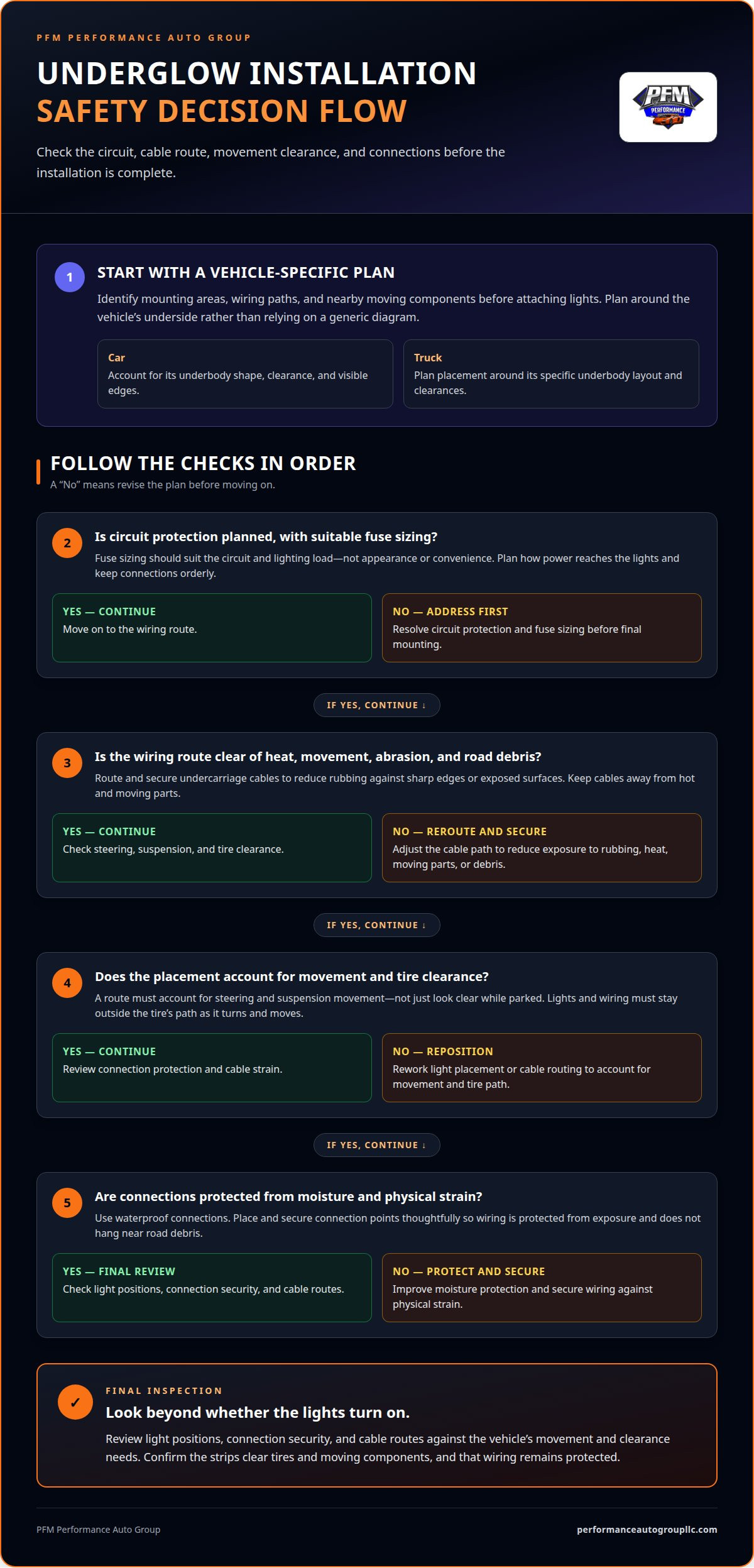
A safe underglow installation starts with a plan tailored to the vehicle. The installer identifies suitable mounting areas, wiring paths, and moving components before attaching lights. This preparation helps ensure a visual upgrade does not interfere with normal vehicle operation.
Protect the electrical circuit. Circuit protection and fuse sizing belong in the installation plan. The fuse should suit the circuit and lighting load, not be selected for appearance or convenience. The installer also plans how power reaches the lights and keeps connections orderly. Poor circuit planning can cause avoidable electrical problems, so address it before final mounting.
Route wiring away from hazards. Undercarriage cables face road debris and abrasion. Route and secure them to reduce rubbing against sharp edges, exposed surfaces, or other components. Keep wiring away from hot and moving parts, too. For example, a cable near a moving suspension component could be strained as the vehicle travels over uneven pavement.
Account for movement and clearance. Steering and suspension components move during vehicle operation. A safe route must account for that movement, not just appear clear while the vehicle is parked. Tire clearance matters as well: lighting and wiring must stay outside the tire’s path as it turns and moves. On trucks, plan placement around the specific underbody layout rather than relying on a generic diagram.
Seal electrical connections. Waterproof connections help protect lighting wiring from moisture beneath the vehicle. Place and secure connection points thoughtfully, protecting wiring from exposure and physical strain. A tidy installation is more than an aesthetic choice: it makes wiring easier to inspect and reduces the chance of loose cables hanging near road debris.
- Plan circuit protection and suitable fuse sizing.
- Keep cables clear of heat, movement, abrasion, and road debris.
- Account for steering, suspension travel, and tire clearance.
- Use waterproof connections and secure wiring against strain.
Before completing the installation, the installer can review light positions, connection security, and cable routes against the vehicle’s movement and clearance needs. A practical final inspection looks beyond whether the lights turn on. It checks that wiring remains protected and each strip clears the tires and moving components.
For a vehicle-specific appointment, use the installation booking page to take the next step.
For a vehicle-specific installation, the final review should confirm that the electrical plan, cable routes, and connection choices work together. Consider circuit protection and fuse sizing before connecting the lighting, and plan routes around steering and suspension movement during vehicle operation. This aligns the installation with the vehicle’s actual clearances, not just its appearance while stationary.
Waterproof connections are recommended for professional vehicle-lighting installations, and cables should be protected from abrasion and road debris. The installer should also check that wiring is secured and connection points are not exposed to strain. Reviewing these details helps keep the installation orderly beneath the vehicle and reduces exposure to common underbody hazards.
Car and truck LED underglow installation
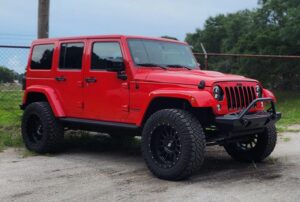
Cars and trucks need different underbody layouts, so installation planning starts with the vehicle itself. The installer maps each lighting strip against the chassis, body edges, and intended coverage. A car’s lower profile may leave less room beneath the body, while a truck may have different mounting surfaces and clearances. The layout should follow the vehicle’s contours, not a generic template.
Next, the installer identifies where strips can sit without entering the tire path or contacting moving components. Tire clearance matters as the wheels turn and the suspension moves. A position that looks clear while parked may not remain suitable during normal movement. Plan the wiring route with these changes in mind before securing the strips.
Cars often suit a layout that follows the visible lower body line. For example, side strips can create a continuous outline, with front and rear sections completing the look. Trucks require a closer look at underbody structure and exposed edges. Chassis shape can affect where strips fit and how evenly their light reaches the ground. Let the vehicle determine practical placement.
A professional installation typically follows a deliberate sequence:
- Assess the vehicle: Identify body contours, suitable mounting areas, tire paths, and moving parts.
- Plan the layout: Match strip locations to the car or truck’s shape and the chosen coverage.
- Route the wiring: Keep cable paths clear of heat, movement, abrasion, and road debris.
- Secure and test: Confirm the strips are firmly positioned and operating as intended.
Warranty coverage for parts and installation varies with the chosen product. Parts coverage and installation coverage are separate details, so the scope depends on the warranty terms provided. Do not assume a component warranty also covers installation.
Mobile underglow installation is a separate service format, where the work takes place at the vehicle’s location rather than in a shop. Riverview availability depends on each shop’s service model, and a mobile setup still needs suitable working conditions and access to the vehicle’s underside.
For cars and trucks alike, the finished installation should be assessed with the vehicle’s shape and movement in mind. A strip that fits a sedan may not suit a truck’s mounting points; a truck layout must also preserve tire clearance. That careful fit is what makes the lighting look deliberate instead of improvised. If you’re planning vehicle electronics work, you can schedule an installation appointment.
Underbody LED strip installation
Underbody strips need accurate placement to follow the vehicle’s shape and create an even finish. Installation begins by mapping the intended coverage beneath the body. The installer considers visible side edges, front and rear sections, and gaps between mounting areas. This helps the strips look coordinated rather than scattered across the underside.
Before mounting, assess each strip’s position against the vehicle’s actual surfaces. A sedan may have a low, clean body line, while a truck can have a more exposed undercarriage. These differences affect where strips can sit and how their light appears from outside. Planning for the vehicle prevents a one-size layout from dictating the result.
A careful fitting process follows a clear sequence:
- Map the coverage: Identify which sides and underbody areas should receive light.
- Check each mounting area: Consider the surface shape and nearby vehicle components.
- Align the strips: Position corresponding sections consistently from side to side.
- Review the layout: Look for visible gaps or uneven placement before securing everything.
Alignment matters. For example, a side strip placed too far inward may be less visible from the vehicle’s profile. A strip mounted at an inconsistent angle can also create an uneven appearance across the body. An installer reviews placement from several viewing positions, then adjusts the layout to suit the car or truck.
Connections between strip sections also affect the finished installation. Wiring should follow a planned route between lighting areas, rather than crossing open spaces or hanging beneath the vehicle. The installer considers where each connection belongs and how to keep it orderly alongside the strips. This creates a more finished look and makes the layout easier to inspect.
Mounting should account for the vehicle’s contours and normal movement. Strips must stay clear of tire paths and nearby moving components, including during steering and suspension movement. The installer should also consider road exposure when positioning wiring beneath the body. These checks are especially important near a wheel or exposed edge.
Before completion, test the lighting across the planned sections. The installer checks that each area illuminates as intended and reviews strip alignment from the vehicle’s sides and ends. If a section looks out of line or leaves an obvious dark gap, refine the placement before considering the installation complete. The result should suit the vehicle’s proportions, not simply fill every available surface.
Who installs automotive underglow lighting in Riverview, Florida?
Professionals who work with vehicle lighting and electrical systems install automotive underglow lighting. In Riverview, the work requires planning for the specific car or truck, not simply attaching strips beneath the body. A sedan’s low profile and a truck’s exposed undercarriage create different placement considerations. The installation process should address both the visual layout and the vehicle’s components.
A complete installation involves more than positioning LED strips. It includes selecting mounting locations, planning wiring routes, connecting the system, and checking its operation. Cables, for example, must avoid tire paths and moving suspension parts. Connections also need protection from underbody exposure. These details make the process more considered than a layout focused only on appearance.
For Riverview drivers, the work involves several practical steps. The installer first reviews the vehicle’s underside and intended lighting coverage. Next, mounting locations and cable routes are planned around the vehicle’s shape. After fitting the components, the installer checks that the lights operate and remain clear of tires and moving parts.
- Vehicle assessment: Identify the car or truck’s contours and suitable mounting areas.
- Layout planning: Match strip placement to the desired coverage and body shape.
- Wiring plan: Keep routes clear of heat, movement, and road exposure.
- Installation review: Check alignment, operation, and clearance after fitting.
The process matters for different vehicles across the Riverview area. A low car may have limited room beneath its body, while a truck can present different mounting surfaces. In either case, the installer needs to consider tire clearance and suspension movement. Strip placement should suit the vehicle’s dimensions without obstructing normal movement.
Underbody lighting also requires electrical connections and circuit planning. The installer considers circuit protection, fuse sizing, and connection placement as part of the work. Cables need protection from abrasion and road debris, and connections should be waterproof. These measures address the practical demands beneath a vehicle, where wiring faces exposure beyond the cabin.
For Riverview drivers, the right installation approach depends on the vehicle and desired coverage. A side-only layout differs from one that includes front and rear sections. The installer translates that plan into a fitted system, with placement and wiring suited to the vehicle. Professional automotive lighting installation is relevant for drivers seeking a deliberate underglow finish.
PFM Performance Auto Group
PFM Performance Auto Group helps Riverview drivers enhance their vehicles through professional automotive services. If you’re considering underglow alongside other appearance updates, window tinting can be part of a coordinated plan. Options include Auto Window Tinting, Privacy Window Tinting, Windshield Window Tinting, and Black Pearl Nano Ceramic Window Tint By Madico.
Choose the upgrade that fits your priorities, whether you want to change the look of your vehicle’s windows or explore a specific tinting option. Contact PFM Performance Auto Group to discuss your vehicle’s needs.
Make Your Next Upgrade a Deliberate Choice
Choosing an underglow installation service in Riverview starts with a clear idea of the finish you want for your car or truck. A provider can help turn that vision into a plan shaped around your vehicle. Consider how the lighting should complement its overall appearance, then discuss that goal during your appointment.
PFM Performance Auto Group also supports other vehicle and property enhancement plans, including Auto Window Tinting, Commercial Window Tinting, and Home Window Tinting. If you’re considering several updates, decide which result matters most and use it as your starting point.
Move forward at your own pace, with a considered vision for your vehicle.
Frequently Asked Questions
What types of underglow kits and lighting colors can local installers fit?
Installers may fit single-color, RGB, or RGBW underglow systems, depending on the setup. A single color suits a consistent vehicle theme, while RGB or RGBW offers more color choices. Some systems also support separate lighting zones or app and remote controls. The right fit depends on the look you want and how you plan to operate the controls.
What should I check before choosing an underglow installer in Riverview?
Ask for a vehicle-specific installation plan covering strip placement, wiring routes, and the final operation check. For example, a truck with different underbody contours may need a different layout from a low-profile car. Clarify what the installation includes, including parts and installation coverage, and how the completed setup will be checked. These details help you understand the work before scheduling.
Can underglow lighting affect a vehicle’s warranty, battery, or electrical system?
A poorly connected kit or an unsuitable power circuit can affect the electrical system. The effect on a vehicle warranty depends on its terms and the relationship between a modification and a specific repair claim. Keep the installation documentation and kit details with your vehicle records. This information can be useful if an electrical concern or warranty question arises later.