
Car Audio System Tuning Service in Tampa
A powerful stereo can still sound unbalanced. A car audio system tuning service in Tampa can adjust amplifier output and equalizer settings to suit the vehicle’s audio components and your listening preferences. Amplifiers power the system, while equalizers shape its tonal balance.
An audio upgrade should sound clear and comfortable, not simply louder. Good tuning considers how the components work together and uses your feedback to refine the sound. Follow-up support can also help if your preferences or setup change.
This guide explains what amplifier and equalizer tuning can do, what affects the process, and why customer feedback matters. You’ll also learn how to evaluate audio support in Tampa and where professional car audio service fits when you want a system that feels considered from setup through follow-up.
Key Takeaways
- Understand how an amplifier adds power and how an equalizer shapes the system’s sound.
- See why tuning depends on how components work together and what sounds comfortable to you.
- Learn what customer reviews can reveal about communication, follow-up, and listening to feedback.
- Explore how DSP tuning and equalizer calibration can refine an audio system’s settings.
- Understand why tuning time varies with the system and the adjustments involved.
Car amplifiers and equalizers
An amplifier adds power and sound quality, while an equalizer shapes the system’s sound. Their settings need to work together with the speakers and the listener’s preferred balance.
Amplifier and Equalizer Setup
A thorough setup considers how the amplifier, equalizer, and speakers interact. Check that the installer understands channel count, impedance, and the available equalizer controls, since these affect component compatibility and how precisely the sound can be adjusted.
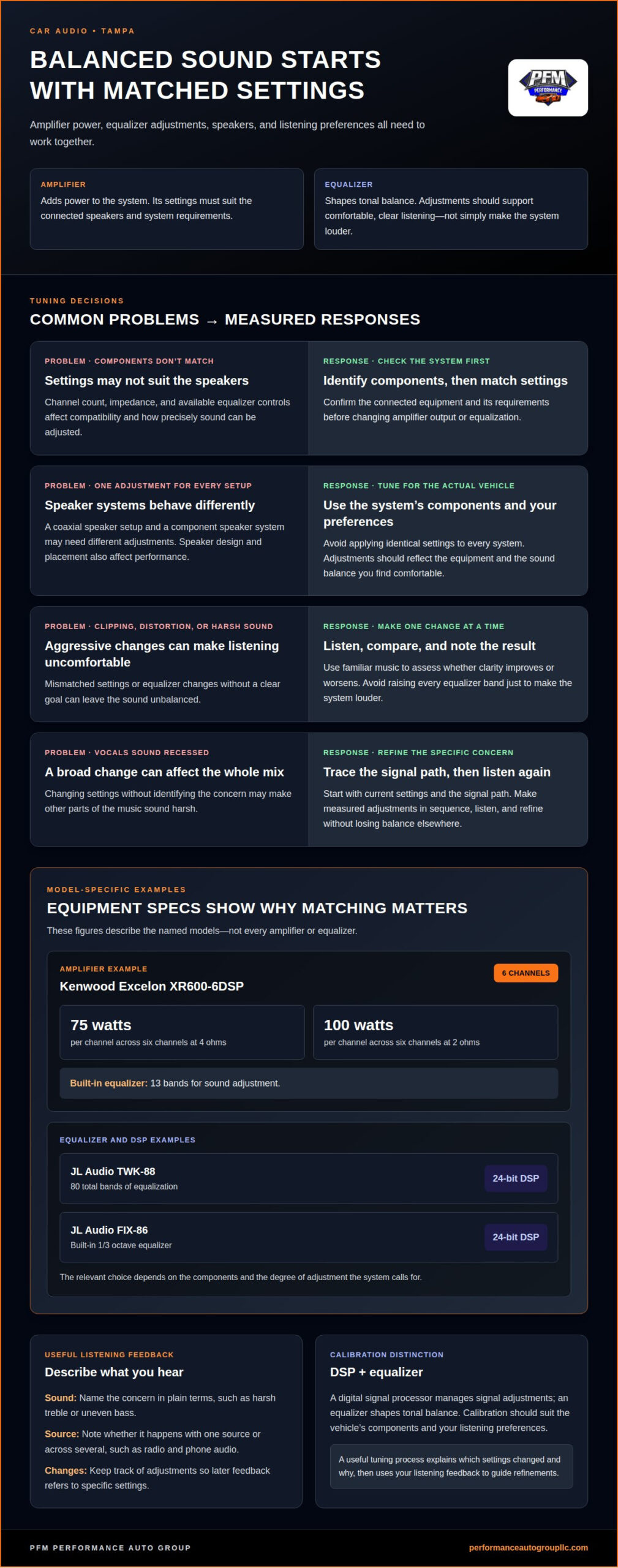
Amplifier specifications illustrate why matching matters. The Kenwood Excelon XR600-6DSP provides 75 watts per channel across six channels at 4 ohms, or 100 watts per channel across six channels at 2 ohms. Its built-in 13-band equalizer gives the system multiple points for adjusting sound. These figures describe that model, not every amplifier.
Equalizer designs also differ. The JL Audio TWK-88 provides 80 total bands of equalization. The JL Audio FIX-86 has a built-in 1/3 octave equalizer. Both the FIX-86 and TWK-88 use 24-bit DSP processors. The relevant choice depends on the system’s components and the degree of adjustment its setup calls for.
A deliberate setup starts by identifying the connected components, matching amplifier settings to their requirements, and then adjusting equalization while listening. A coaxial speaker setup and a component speaker system, for example, may need different adjustments. Speaker design and placement also affect how the full system performs.
Risks of Incorrect Tuning
DIY tuning can cause problems if amplifier settings don’t suit the connected speakers or equalizer changes are made without a clear goal. Aggressive adjustments can make listening uncomfortable, while mismatched settings may prevent components from working together as intended. Check compatibility first.
Clipping, distortion, or an imbalanced sound can signal that settings need attention. Change one setting at a time, listen to familiar music, and note whether clarity improves or worsens. Avoid raising every equalizer band to make the system louder. The goal is a balanced result, not simply more output.
In Tampa, a car audio system can benefit from careful amplifier and equalizer coordination. A measured adjustment process makes each change easier to assess and helps prevent one setting from masking another.
Car audio system tuning and support
Good tuning is a process, not a single adjustment. In Tampa, technician skill, calibration options, and follow-up terms all shape the experience.
Choosing a Qualified Technician
Choose an installer who can explain the tuning process clearly. Discuss the equipment already installed, the sound you want, and how changes will be assessed. For example, ask how they’ll tell whether an issue comes from a source setting, speaker, or amplifier. Clear explanations help you understand the work and its limits.
Customer reviews can provide useful context. Look for specific comments about communication, careful work, and how concerns were addressed rather than relying only on ratings. A detailed account of a system adjustment is more informative than a general compliment. Consider whether the experience matches the support you need.
DSP and Equalizer Calibration
DSP tuning and equalizer calibration involve different audio controls. A digital signal processor manages signal adjustments, while an equalizer shapes tonal balance. Calibration should suit the vehicle’s components and your listening preferences, rather than applying identical settings to every system.
A practical process starts by identifying the system’s signal path and current settings. The technician can then make measured changes, listen, and refine them in sequence. For example, if vocals sound recessed, the adjustment should target that concern without making the rest of the mix harsh. Tampa shops may differ in their equipment and tuning process, so understand what the service includes.
Warranties and Tuning Guarantees
A warranty and a tuning guarantee are separate commitments. A warranty describes coverage for particular work or equipment; a tuning guarantee describes any promise about sound or later adjustments. Read the written terms for scope, exclusions, and how to raise a concern. Don’t assume one covers both installation and tuning.
Ask for written terms before approving work. Clarify whether coverage applies to installed equipment, workmanship, or a follow-up adjustment. The exact wording matters more than a broad verbal assurance, particularly when several components are involved.
Yes, tuning can focus on equipment already in your vehicle; buying new components isn’t inherently necessary. The system’s condition and compatibility determine which adjustments are practical and whether equipment changes are relevant.
Mobile tuning means the technician works at the vehicle’s location rather than in a fixed shop. For Hillsborough County drivers, the key difference is where calibration takes place; the process still depends on access to the vehicle and its audio controls.
A useful appointment includes an explanation of the settings changed and why. Beforehand, note familiar tracks and specific concerns, such as harsh treble or uneven bass. After tuning, listen to the same examples and describe what changed. Focused feedback helps guide any refinements.
- Describe the sound issue in plain terms, such as thin vocals or bass that overwhelms dialogue.
- Share whether the issue occurs with one source or across several, such as radio and phone audio.
- Keep track of the adjustments made so later feedback refers to specific changes.
If you’re ready to discuss your current system and tuning needs, book a car audio appointment.
Customer reviews
Reviews can show what an audio appointment was like from a customer’s perspective. Look for details about the original concern, the work performed, and the reported result. A review describing clearer vocals after calibration says more about tuning than a general comment about a pleasant visit.
Match each review to the service you need. A speaker installation review may discuss fit and sound, while a tuning review should describe adjustments to an existing system. Feedback about correcting uneven bass, for example, is more relevant to calibration than praise for a new touchscreen. Separate installation experiences from tuning experiences before drawing conclusions.
Look for the sequence behind the result, not just the final description. A useful account might explain that the customer noticed harsh treble, the technician adjusted the system, and listening afterward felt more balanced. That provides context. “Sounds amazing” offers little detail about the starting point or the changes made.
- Identify the service: Check whether the review describes tuning, speakers, or another audio job.
- Find the original concern: Note a specific issue, such as weak vocals or uneven bass.
- Read the outcome: Look for what changed, rather than relying on broad praise.
Compare several accounts for recurring themes, remembering that each review reflects one person’s experience. If different customers describe the same concern and resolution, the pattern may help you understand the shop’s approach. A single complaint or glowing comment offers a narrower view. Consider the details and context, not just positive or negative wording.
Pay attention to how reviews describe complex setups. A vehicle may combine factory components, aftermarket speakers, and an amplifier. An account that explains the customer’s specific issue can help you assess whether the experience resembles yours, though it can’t predict how another system will sound after adjustment.
Reviews may also describe communication after an appointment, such as receiving an explanation of changes or returning with a specific listening concern. This can help you assess whether the process was understandable, but it doesn’t replace a conversation about what your system needs.
Use reviews alongside a clear discussion of your goals. Bring a concise description, such as “podcasts sound thin, but music has strong bass.” Specific language gives the technician a useful starting point and helps you compare their response with customer experiences. Focus on feedback relevant to your concern, not simply the most enthusiastic wording.
Do Tampa car audio shops offer DSP tuning and equalizer calibration?
A car audio shop serving Hillsborough County can tune a digital signal processor and calibrate an equalizer when the vehicle’s equipment supports those adjustments. The work depends on the available controls and the sound concerns you want to address.
A DSP manages audio processing before the signal reaches the speakers. Equalizer adjustments shape tonal balance, while other settings affect how connected components work together. If vocals are hard to hear over music, for example, the technician can use that concern to guide adjustments and listen again to assess the result.
The equipment model can clarify which controls are available. The Kenwood Excelon XR600-6DSP includes digital processing and equalization features, while JL Audio’s FIX-86 and TWK-88 are DSP products. These model names illustrate different system options, not a requirement to replace existing equipment. Calibration begins with understanding what the vehicle already contains.
A careful process follows a sequence. First, identify the source, amplifier, speakers, and any DSP in the signal path. Then review existing settings and isolate the concern. Make measured adjustments and listen to familiar audio. If the sound becomes harsh or less balanced, reconsider the latest change instead of making several adjustments at once.
- System inventory: Identify installed components and their connections.
- Listening goal: Define a specific concern, such as muddy vocals.
- Calibration: Adjust relevant controls and assess the result.
- Review: Listen to familiar material and refine settings as needed.
Equalizer calibration isn’t about raising every frequency band. If bass already dominates a track, increasing it further can make vocals less distinct. A measured adjustment addresses the stated issue while keeping the full mix in view. Familiar music can provide a consistent example during tuning.
DSP tuning also depends on how source settings interact with downstream components. A phone’s audio settings, for instance, can alter playback before the signal reaches the vehicle’s processor. Comparing the same track across sources can help show whether an issue is limited to one source or affects the entire system.
For drivers in Hillsborough County, clarify whether the requested work covers the DSP and equalizer controls in the vehicle. A precise description, such as uneven sound between sources, gives the session a useful starting point. Adjustments should address that concern and suit the system’s actual equipment.
How long does professional car audio tuning take?
Professional tuning doesn’t have one fixed duration. The time depends on system complexity, its current condition, and the adjustments needed. Reviewing a straightforward setup differs from tracing a sound issue across several sources, components, and settings.
The first step is understanding the vehicle’s audio system. A technician identifies its sources, speakers, amplifier, and signal processor, then notes how the components connect. A system with factory audio and added speakers, for example, needs a different review from one with several aftermarket components.
Next, the technician clarifies the listening concern. “The sound feels off” needs more investigation than “phone audio sounds harsh, but radio sounds balanced.” Comparing sources can help narrow down the issue before adjustments begin. Clear observations make the process more focused.
Calibration is iterative. The technician makes a controlled change, listens to familiar audio, and checks whether it addresses the concern. If vocals become clearer but another source sounds too bright, further refinement may be needed. Each listening and adjustment cycle can affect the appointment’s overall duration.
- System review: Identify installed components, sources, and existing settings.
- Issue assessment: Reproduce the concern using the relevant audio source.
- Adjustment: Change settings in a deliberate sequence.
- Listening review: Compare familiar tracks and refine the result.
Existing problems can add diagnostic work. A weak signal from one source, inconsistent playback, or a connection issue may need attention before tuning can proceed effectively. If a phone sounds distorted but radio does not, for instance, the technician needs to isolate the source path rather than adjust every system control.
The scope matters, too. A focused adjustment for one listening concern differs from reviewing a full system with multiple sources and processing controls. Refining one setting gives the technician a narrower target; a broader request for balanced sound may involve more listening and adjustment.
To make the appointment productive, describe the issue and when it happens. Name the source, such as radio or phone playback, and bring a familiar track that illustrates the concern. These details help the technician reproduce the problem, prioritize checks, and explain the work completed.
Plan around the system and scope of tuning rather than assuming a fixed appointment length. A clear starting concern, accessible vehicle controls, and consistent listening examples can support an efficient process. The technician can explain the expected work after assessing these factors.
PFM Performance Auto Group: Car Audio
PFM Performance Auto Group provides car audio services for drivers seeking a more considered sound system. Turn to the Hillsborough County shop when your setup sounds unbalanced, you’re planning an audio upgrade, or you want to understand which adjustments may suit your vehicle. Describe the issue, such as uneven sound between sources, to start a focused conversation.
Share what you hear, which components are installed, and what you’d like to improve. PFM Performance Auto Group can discuss car audio options in the context of your vehicle and listening goals, rather than treating every system as though it needs the same solution.
Make Your Next Listening Session Count
Choosing a car audio system tuning service in Tampa gives you the opportunity to shape how your everyday drive sounds. Before arranging an appointment, consider what you want to hear differently and which audio sources matter most. A clear goal gives the conversation a useful starting point, whether you’re refining an existing setup or considering an upgrade.
PFM Performance Auto Group can discuss your car audio needs and a suitable next step. The Hillsborough County business also offers auto window tinting, commercial window tinting, and home window tinting.
Bring your questions and listening goals. A thoughtful conversation can be the first step toward enjoying your drive even more.
Frequently Asked Questions
What does professional car audio system tuning include?
Professional tuning assesses how a vehicle’s audio components and playback sources work together, then adjusts relevant settings to address your listening goals. A technician may compare radio playback with phone audio to see whether a problem occurs across sources. Listening to familiar material also lets you describe whether vocals, music, or spoken directions sound as intended.
What equipment and settings are adjusted during car audio tuning?
Adjustments depend on the installed system and may involve the head unit, amplifier, equalizer, or digital signal processor. When those features are present, a technician can review source levels, amplifier gain, crossover settings, and equalizer controls. If phone audio sounds distorted but radio playback remains clear, for example, tuning should consider the phone’s signal path before changing settings across the entire system.
Car audio tuning shops near Tampa with reviews and ratings
Look for detailed customer reviews that describe tuning, the original sound concern, the adjustments made, and the result. Specific comments about communication and follow-up are more useful than a general rating.