
Professional Dash Cam Installation in Valrico: Cost and Time
A clean, hard-wired dash cam installation in Valrico depends on your vehicle, camera setup, power connection, and cable route, so the work involved varies by job. Professional dash cam installation in Valrico can keep wiring discreet and position the camera neatly. The right setup starts with your vehicle and the coverage you want.
A dash cam records what its cameras capture, which is why drivers consider one for added peace of mind on the road. Choosing a camera is only part of the decision: installation affects its appearance and power supply. A rushed fit can leave visible cables or position the camera poorly.
Learn what to ask before booking, what affects installation cost and duration, and how installers route hidden wiring. You’ll also find practical ways to assess an installer serving Valrico, so you can make an informed choice and protect your vehicle’s interior.
Key Takeaways
- Before booking, describe your vehicle and dash cam setup so the installer can confirm the work and plan for your needs.
- Installation cost and duration depend on factors such as the camera configuration, vehicle, power connection, and wiring route.
- Hidden wiring can keep the cabin looking tidy; understand how the installer plans to route and connect the cables.
- Ask how the technician handles installation and testing, and look for clear explanations of the work involved.
- Compare local options by whether they handle hard-wired dash cams and can explain the installation process clearly.
Calling ahead to confirm installation services
Call before driving to a shop in Valrico. A quick conversation helps establish whether the shop handles your dash cam setup. Car audio shops are a practical starting point because installation involves vehicle electronics and wiring. Describe your vehicle and camera, then ask what information is needed to assess the work.
Be specific about the equipment. A front camera has different routing needs from a front-and-rear system, while a hard-wired setup uses a different power connection from a plug-in camera. Share the camera’s brand and model, whether you have its power cable or hardwire kit, and whether you want parking-mode power. These details help the installer understand the job before you book.
- Does the shop install the camera model and configuration you have?
- Can the technician route cables discreetly through the vehicle cabin?
- Does the appointment include connecting power and testing the camera?
- Should you bring the camera, cables, memory card, or installation kit?
- What vehicle details would help the shop plan the work?
For example, explain if a rear camera cable needs to run from the windshield to the back window. Mention any existing electronics near the planned camera or power connection. If the camera is installed but not working, describe the symptoms rather than calling it a new installation. Clear information helps distinguish a straightforward fit from work that needs troubleshooting.
A professional installer’s title alone does not determine vehicle warranty or insurance coverage. Review your written warranty and insurance policy, and keep installation records if you need to discuss a claim related to the work.
Before ending the call, confirm the appointment’s scope and what to bring. Ask how the installer will test the camera’s view, power, and recording. For a two-camera system, confirm that both views will be checked. A clear explanation gives you a sound basis for comparing installation options around Valrico.
Calling ahead is especially useful if you want hidden wiring or hard-wired power. Describe your preferred camera position and ask how the shop routes cables in your vehicle. The installer can explain the planned connection and identify details that may affect the work. With those points settled, you’ll know what to expect from the appointment.
Dash cam installation pricing and duration
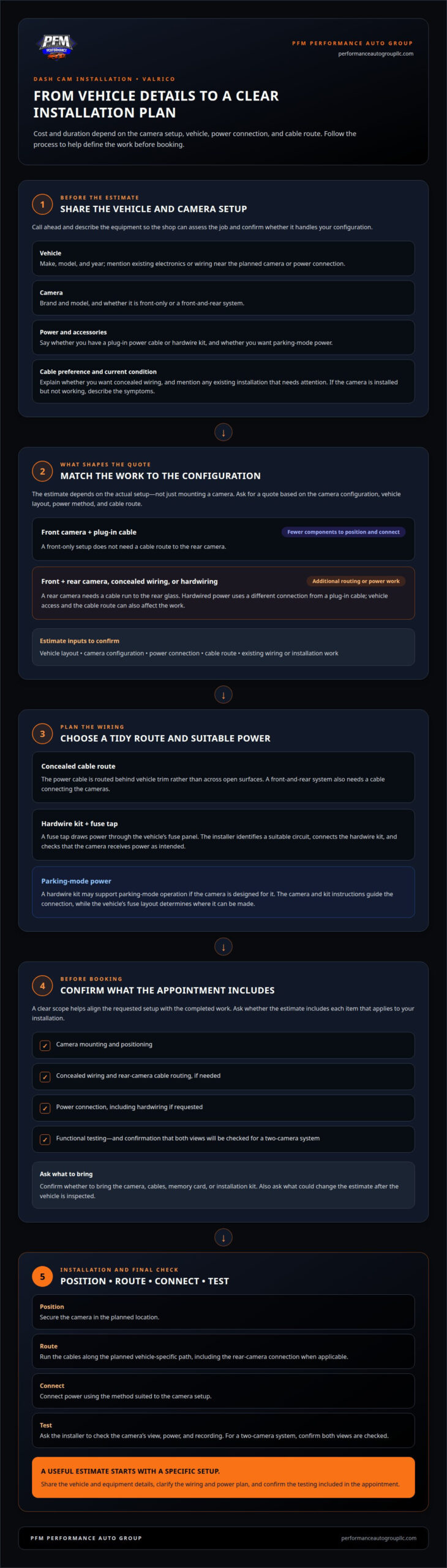
Installation cost depends on the camera setup and vehicle, not just the time needed to mount a unit. A front camera with a plug-in cable involves different work from a front-and-rear system with hard-wired power. The estimate depends on the camera configuration, vehicle layout, power method, and cable route. Ask for a quote based on those details.
Duration depends on similar practical factors. A straightforward front-camera fit has fewer components to position and connect than a system with a rear camera and concealed wiring. Access to the vehicle’s power connection and the route between the front and rear cabin can also affect the work. Ask what the appointment includes, such as setup and a functional test, so the scope is clear.
For a useful estimate, provide the installer with these details:
- Vehicle make, model, and year.
- Camera brand and model, plus front-only or front-and-rear configuration.
- Whether you have a hardwire kit, power cable, and memory card.
- Whether you want the cable concealed or can accept a visible route.
- Any existing camera wiring or installation that needs attention.
Those details matter. A rear-camera cable must reach the rear glass, while a front-only camera requires no rear route. A hardwire kit also needs a different power connection from a plug-in cable. Mention any existing accessories near the planned connection when requesting an estimate. A clear description helps the installer assess the work rather than guess based on the camera alone.
DIY installation can save the fitting charge, but mistakes may leave cables exposed, position the camera poorly, or create an unreliable power connection. A professional installer can plan the route, make the connection, and test the camera’s view and operation. The difference is not simply who attaches the camera, but whether the wiring and final setup are handled carefully.
Before booking, ask what could change the estimate after the vehicle is inspected. Clarify whether the quoted work includes rear-camera routing, hardwiring, and testing, or only mounting the camera. Ask what equipment to bring, too. These details help align the requested setup with the completed work.
If you’re ready to discuss your vehicle’s setup and request an appointment, use the dash cam installation booking page. Bring the camera details and vehicle information to make the conversation more precise.
Hidden wiring and fuse-tap installation
A hidden installation routes the dash cam’s power cable behind vehicle trim instead of across open surfaces. For a front camera, the cable runs toward a power source along a route chosen for that vehicle. A front-and-rear system also needs a cable connecting the cameras. The goal is a tidy cabin and a power connection suited to the camera setup.
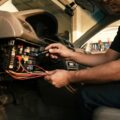
A fuse tap is an adapter that draws power through a vehicle’s fuse panel. The installer identifies a suitable circuit, connects the hardwire kit, and checks that the camera receives power as intended. A hardwire kit may support parking-mode operation if the camera is designed for it. The camera and kit instructions guide the connection, while the vehicle’s fuse layout determines where it can be made.
A typical dash cam installation includes positioning and securing the camera, routing its cables, connecting power, and testing operation. For a dual-camera system, the work also includes the rear camera and connecting cable. Ask whether the planned scope covers hardwiring, concealed cable routing, setup, and a final test.
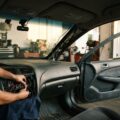
During installation, the technician plans the cable path before tucking wires behind trim. A front-and-rear camera, for example, needs a route from the windshield area to the rear glass. The vehicle’s interior layout determines the route’s length and direction. A fuse-tap setup also involves locating the fuse panel and selecting an appropriate power circuit.
Discuss these details before work begins:
- Whether you want a visible plug-in cable or concealed hardwiring.
- Whether the camera has a rear unit and needs a cable routed to it.
- Whether parking-mode recording is part of your intended setup.
- Whether you have the camera’s hardwire kit and installation instructions.
- Which functions the installer will test before returning the vehicle.
After routing, testing should confirm that the camera powers on, shows the intended view, and records as expected. For a dual-camera setup, check both front and rear views. If parking mode is included, ask the installer to explain its configuration and demonstrate how the camera behaves while parked.
Clean workmanship shows in the details: cables are tucked away, the camera sits in the agreed position, and the power connection suits the chosen setup. Before accepting the vehicle, check the view from the driver’s seat and ask for a brief walkthrough of the camera controls. These checks make the installation easier to use from your first drive.
Technician expertise and training
Dash cam installation combines camera placement, vehicle trim, wiring, and power connections. Experience with these tasks matters most when your setup includes a rear camera or hardwiring. Ask how the installer handles your vehicle type and camera configuration. A clear explanation can show whether they understand the work involved.
Training should lead to careful decisions, not just a credential on display. The technician should explain how the camera position preserves the driver’s view while capturing the intended area of the road. They should also know how to route wiring without leaving loose cables near controls. Ask for a straightforward walkthrough before work begins.
Use these questions to understand the installer’s approach:
- What steps do you take before choosing a camera position?
- How do you route cables through this vehicle’s cabin?
- How do you select and test a hardwire connection?
- What will you check before returning the vehicle?
- Can you demonstrate the camera’s view and basic operation?
Look for answers specific to your vehicle and equipment. A front-only camera requires a different approach from a front-and-rear system, whose rear unit needs a cable route to the back glass. The technician should explain that route and how the cable will be secured and kept out of the way.
Installation quality also depends on the final inspection. Ask the technician to show the camera image, confirm that the unit powers on, and explain how recording starts. For a two-camera setup, review both views. If you chose hardwiring, ask for a brief explanation of the power connection and camera settings you’ll use.
Relevant experience is specific. A technician who regularly works with vehicle electronics may be familiar with fitting accessories and routing wires, but discuss your particular dash cam, too. Share its manufacturer and model, then ask how its mounting position and cables affect the installation. This conversation helps distinguish general confidence from a plan tailored to your setup.
Look for a methodical process: inspect the vehicle, agree on camera placement, route and connect the wiring, then test the result. Each step should have a clear purpose. If the explanation omits a final test, ask how the installer will confirm that the camera and power connection work. The goal is an installation you can understand and use, not simply a camera attached to glass.
Before leaving, review the camera position from the driver’s seat and ask the technician to demonstrate the controls. A useful handoff covers how to check footage and identify basic status indicators on your camera. These final steps make it easier to use the equipment correctly after the appointment.
Finding dash cam installers near Valrico
Search for the installation you need, not just the nearest shop. A directory search for Valrico or your ZIP code can show nearby car audio installation shops on Google Maps. Car audio shops are a practical option because dash cam wiring is similar to other vehicle electronics work. Contact local installers directly with your specific needs.
Installers who support your camera configuration can fit front-and-rear or multi-channel systems. These setups require additional cameras and cable routing, so describe the exact system before booking. Ask whether the shop handles your camera model and how it plans to route connections between camera positions.
Use the first call to establish fit and scope. Share your vehicle’s make, model, and year, then name the dash cam and its number of cameras. Explain whether you want hard-wired power, concealed cables, or parking-mode operation. The installer can then discuss the work for your vehicle and equipment, not give a generic answer.
To compare options around Valrico, consider how clearly each shop answers practical questions. Look for a direct explanation of the installation steps, what equipment to bring, and what testing happens before pickup. A shop experienced with automotive electronics is a sensible candidate; confirm that its dash cam work covers your specific configuration.
Prepare by gathering the dash cam, power cable, hardwire kit, and memory card if your camera uses one. Remove loose items from the dashboard and areas where cables may be routed. Tell the installer about existing accessories or wiring near the planned camera and power connection. This helps make your vehicle accessible for the appointment.
Before handing over the keys, agree on the camera positions and cable route. For a rear unit, point out the rear glass and any interior features that could affect access. After installation, inspect the camera views from the driver’s seat and ask for a short demonstration of the controls. Confirm that every camera in a multi-channel setup appears and records as intended.
A useful local search pairs map results with a focused conversation. Search Valrico or a nearby ZIP code, identify car audio shops, then call with your vehicle and camera details. Choose an installer who can explain the system’s fit, wiring approach, and final test in terms you understand.
PFM Performance Auto Group: Auto Window Tinting
PFM Performance Auto Group offers auto window tinting for drivers considering another vehicle upgrade alongside a dash cam. The shop also offers Black Pearl Nano Ceramic Window Tint by Madico. Tinting and dash cam installation are separate services, so consider each based on your vehicle’s needs.
Auto window tinting may be a relevant next step when planning a broader cabin update. PFM Performance Auto Group also offers commercial and home window tinting for customers with needs beyond their vehicle. Choose the service that fits the property you want to update.
For details about Auto Window Tinting, contact PFM Performance Auto Group or visit the PFM Performance Auto Group website.
Choose a setup that fits your next drive
A dash cam is most useful when its placement, power connection, and recording setup suit your needs. Consider whether you want a front view or additional camera coverage, and how you plan to access recordings. A clear goal helps you choose equipment and installation details that fit your routine.
For professional dash cam installation in Valrico, bring your vehicle details and camera model to the conversation. PFM Performance Auto Group offers car dash cam installation for drivers in Hillsborough County, making the shop a natural place to discuss fitting your system. If you’re also considering tinting for your vehicle, home, or business, the shop offers options for those projects as well.
Take the next step with the setup you have in mind. A focused conversation can help turn your equipment choice into a considered plan for your vehicle.
With a clear plan from PFM Performance Auto Group, you can move forward prepared and confident about your next drive.
Frequently Asked Questions
Why Install a Dash Cam?
A dash cam records video from its camera, giving you footage to review after a road incident or unexpected event. A front camera captures the view ahead, while a rear camera adds another perspective. A camera with parking mode may also record while the vehicle is parked, depending on its features and power setup. Footage can provide useful context, but it does not guarantee that every event will be captured.
Which shops offer professional dash cam installation in Valrico, FL?
PFM Performance Auto Group offers car dash cam installation for drivers in Hillsborough County. For professional dash cam installation in Valrico, share your vehicle details and camera model when discussing an appointment. This helps define the requested setup, such as a front camera or a system with additional cameras. Before booking, make sure the planned work matches your equipment and desired result.
How much does professional dash cam installation cost in Valrico?
Installation cost depends on the vehicle and work involved, and is provided after a quote request. Factors include whether the setup has one camera or several, whether power is hardwired, and how much cable routing the vehicle requires. A rear camera, for example, adds a cable route through the cabin. Share the camera model and desired setup to get an estimate based on the actual job.
Do Valrico installers hardwire dash cams for parking mode?
Hardwiring can provide power for parking-mode recording if the camera and hardwire kit support that feature. Both the camera’s capabilities and the vehicle’s power connection matter. Review the camera instructions and discuss your intended use with the installer before choosing this setup. Ask how the system will behave while parked, and have the installer demonstrate the relevant settings after installation.
How long does dash cam installation usually take?
Installation time depends on the vehicle, camera count, power method, and cable route. A front-only unit has fewer components than a front-and-rear system, which needs a connection between camera positions. Hardwiring also involves power-connection work. When planning your appointment, provide the vehicle make and model and describe the full setup. This gives the installer useful context for estimating the work and scheduling your vehicle.
Which dash cam installation shops near Valrico have the best reviews?
Review counts alone don’t establish which installer is best for your vehicle. Look for customer feedback describing dash cam work, clear communication, and the finished installation. PFM Performance Auto Group’s homepage references 219 customer reviews, which provides review-count context but doesn’t by itself establish a comparative ranking. For a useful comparison in Hillsborough County, focus on reviews that discuss the specific installation you need.