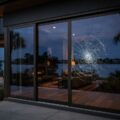

Security Window Film Installation in Apollo Beach Homes
Security film helps hold shattered glass fragments together after impact, reducing the chance that shards fly into a room. For security window film installation in Apollo Beach, film can be applied to the interior or exterior of glass, depending on the project. It adds a layer of protection, but does not make glass unbreakable.
It makes sense to want a clear picture of what the work can and can’t do before requesting a free quote. This guide explains how security film supports homes and commercial properties, what installation involves, and how film and glass-frame attachment details affect protection against intrusion and storm damage. You’ll also learn what to consider when planning a project in the Tampa Bay area, so you can decide whether window film fits your property and understand the next step.
Key Takeaways
- Understand how window film can help keep shattered glass fragments together after impact, while recognizing that it doesn’t make glass unbreakable.
- Compare considerations for residential and commercial installations before planning a project in the Tampa Bay area.
- Learn how film placement and attachment at the glass frame relate to protection against intrusion and storm damage.
- See which project details help shape a window film quote, and what to prepare when requesting one.
- Explore home and commercial window tinting as options for adding film to your property.
Service area including Apollo Beach
Before discussing security window film for an Apollo Beach property, identify the project as residential glass work. Note the windows involved, such as a front-entry sidelight, patio door, or bedroom window, and include the property’s location in Hillsborough County. These details clarify the project scope and distinguish home glazing from automotive tinting.
Which companies install security window film in Apollo Beach, Florida? Look for residential or commercial window-film installation serving Hillsborough County, and distinguish that work from vehicle window tinting. Match the installer’s project focus to the glass in your home or business rather than assuming an automotive tint shop also handles building windows.
Apollo Beach is in Hillsborough County, the relevant local area for this project. Tampa is another city in the county. Tampa Bay is a broader regional term, so a reference to the region alone does not establish that every nearby city is within a service area. When discussing a project, identify the property’s location clearly.
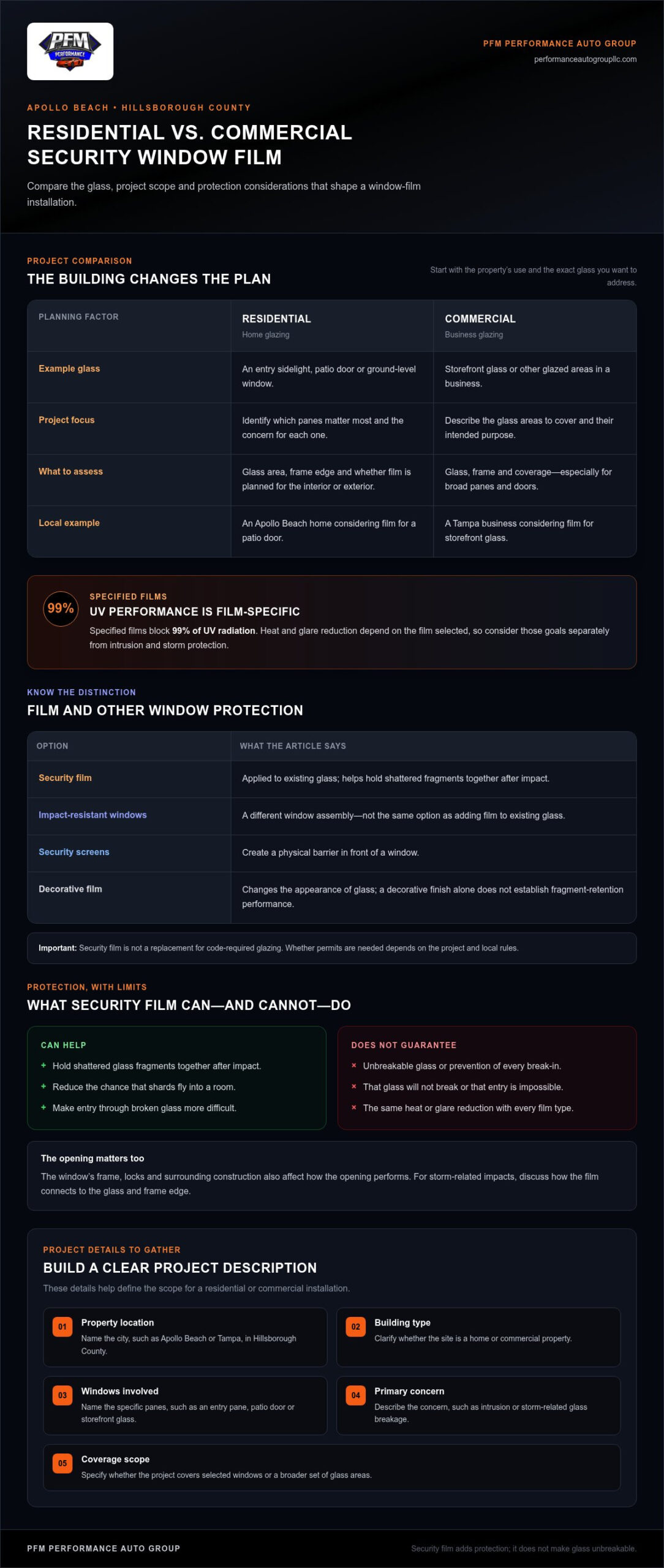
The project’s location and type shape the installation plan. A home in Apollo Beach may need film on a patio door, while a Tampa business may be considering film for several glazed areas. Identify the address, property type, and windows involved to create a clear starting point for discussing residential or commercial installation.
Prepare a short project description before requesting an estimate:
- Give the property city, such as Apollo Beach or Tampa.
- Identify whether the site is a home or commercial property.
- Name the windows under consideration, such as an entry pane or storefront glass.
- Describe the concern, such as intrusion or storm-related glass breakage.
- State whether the estimate should cover selected windows or a broader project.
These details make the project discussion more specific and help distinguish residential security film from automotive tint. An Apollo Beach homeowner can identify a patio door and explain the protection concern, while a Tampa business can describe its storefront glass. In Hillsborough County, start with the city, building type, and exact windows so the plan reflects the property.
Residential and commercial window film installation in Tampa Bay
Residential and commercial window-film projects in Tampa Bay start with the glass, the building’s use, and the concern being addressed. Security film can be applied to existing glass, while other window tint options may address exposure, appearance, or energy efficiency.
Residential Film Installation
For a home, identify which panes matter most: an entry sidelight, patio door, or ground-level window. Security film helps hold shattered glass fragments together after impact, reducing flying shards, but does not make the pane unbreakable. A residential installation plan should consider the glass area, frame edge, and whether the film will be installed inside or outside.
Film and Other Window Protection
Security film works with existing glass. Impact-resistant windows are a different window assembly, while security screens create a physical barrier in front of a window. Each option addresses protection differently, so compare the property’s existing windows with the concern you want to address. Film can be installed on the interior or exterior of glass. It is not a replacement for code-required glazing, and whether permits are needed depends on the project and local rules.
Break-In Protection and Glass Retention
Security film does not prevent every break-in or stop glass from breaking. It helps hold fragments together after impact, which can make entry through broken glass more difficult, but not impossible. For a residential or commercial project, distinguish glass retention from a guarantee against intrusion. The window’s frame, locks, and surrounding construction also affect how the opening performs.
Commercial and residential installations differ in how the glass is used. A storefront may have broad panes exposed to frequent public activity; a home may prioritize a patio door or selected ground-level windows. In both settings, note the glass, frame, and intended purpose before planning coverage. These details help clarify film placement and which edges need attention.
Window tint can serve goals beyond security. Decorative film changes the appearance of glass, while other window film options can address exposure and energy efficiency. These functions should not be confused with security performance. A decorative finish alone does not establish that glass will retain fragments after impact. Match the film type to the reason for treating each window.
For a practical first step, make a short list of the windows and their purpose: a bedroom window, office entrance, or storefront panel. Then describe the concern and ask for an estimate covering that scope. A window film appointment can help organize the conversation around the property and its glass.
Security film for intrusion and storm protection
In Florida, security film can help hold glass fragments together after impact, while film type determines added comfort benefits. Specified films block 99% of UV radiation. Heat and glare reduction depend on the film selected, so consider those goals separately from intrusion and storm protection. For security window film installation in Apollo Beach, start by identifying which windows need security, UV, or solar-control performance.
For storm-related impacts, consider how the film connects to the glass and frame. Pairing security film with an Impact Protection Adhesive helps attach the film firmly to the edge of the glass frame. This supports the film’s role in retaining fragments, rather than leaving it bonded only across the pane. Discuss the frame edge and glass condition when planning coverage, particularly for broad panes and doors.
Security film has limits. It does not make glass unbreakable or prevent someone from striking or breaking a window. Instead, it helps hold shattered pieces together, which can make quick access through broken glass more difficult, but not impossible. For a snatch-and-grab concern, consider a display window, entry sidelight, or other pane close to valuables. Security film is one layer of protection, not a replacement for locks or other security measures.
UV protection can support the care of furnishings near sunlit windows. Specified films block 99% of UV radiation, which helps reduce exposure to a contributing source of fading. A rug near a bright window or furniture beside a glass door illustrates why UV performance may matter alongside security. Film doesn’t reverse existing fading, so identify the items and windows you want to protect before selecting coverage.
Glare and heat are related concerns, but they require attention to film performance beyond glass retention. A room that feels uncomfortable in direct sunlight may need film selected for solar control, while a security-focused choice centers on retaining broken glass. Do not assume every security film offers the same heat or glare reduction. Describe the room’s exposure, when sunlight reaches it, and your priority for each pane.
A useful planning sequence keeps the goals distinct:
- Identify each pane and whether intrusion, storms, UV exposure, glare, or heat is the priority.
- Ask how the film attaches at the frame edge, including the role of an Impact Protection Adhesive.
- Match the film’s stated performance to the window’s purpose and the property’s needs.
A well-planned security window film installation in Apollo Beach starts with your priorities and the glass itself. Film can help retain glass and support UV protection, but it is not a substitute for a complete storm-protection strategy for the property.
LOOKING FOR A FREE WINDOW FILM QUOTE?
Use the quote process to clarify the film, installation scope, and written coverage. For an Apollo Beach home, note which panes need attention, such as a patio door or entry window, and ask for a clear description of the proposed work. A useful estimate distinguishes film selection from installation details and warranty terms.
Ask what the manufacturer’s warranty covers and what the installer’s workmanship coverage addresses. These are different protections: one concerns the film product, while the other concerns installation. A written document should explain how issues such as peeling, bubbling, or a changed finish are handled, if they fall within its terms.
Warranty length alone does not explain the full coverage. Read the exclusions, claim steps, and care conditions, then keep the paperwork with the project record. If the film has a scratch-resistant coating, check the product documentation for details and whether coating damage is treated separately from film failure.
Film lifespan and warranty duration are not interchangeable. A warranty describes specific coverage under stated conditions; it does not establish how long every installation will look or perform the same way. Interior exposure, cleaning methods, sunlight, and the glass surface all affect long-term upkeep. Follow the written care instructions for the installed film.
When comparing ratings, warranties, and certifications, look for product documentation that identifies the film’s stated performance, a written warranty with clear coverage and exclusions, and certification details tied to that specific film or installation. Avoid relying on a broad label alone; match each document to the exact product and work being quoted.
Read a ceramic-film warranty just as carefully. Do not assume its claims apply to a different installer or product. For any ceramic option, use the written warranty for the film and installation being proposed.
A satisfaction guarantee is separate from a manufacturer warranty. It describes a service provider’s stated approach to customer concerns, while the manufacturer’s document defines product coverage. Read the terms in writing rather than assuming the protections are identical. A clear finish, careful installation, and documented process make it easier to understand what the quote includes.
Before requesting a quote, prepare the property address, the windows involved, and the goal for each pane. Include whether you are prioritizing security, UV protection, or appearance. Request an estimate that identifies the film, installation scope, applicable warranty documents, and care instructions. This gives you a practical basis for reviewing the proposal without relying on a warranty label alone.
Safety and security window film
Safety and security window films serve a specific purpose: helping hold broken glass fragments together after impact. They do not make glass unbreakable or remove the need to consider the surrounding frame. For a home, compare an entry sidelight, patio door, and other exposed panes, then decide which openings need attention first.
Separate security performance from ordinary window tinting. A film chosen for appearance, glare, or heat rejection may have a different purpose from security film. Before selecting a product, note the main concern for each window, such as glass retention near a doorway or less glare in a sunlit room. This keeps the discussion focused on the performance the property needs.
Film labels and brand names can make comparisons seem simple, but a name alone does not explain how a film performs or attaches. Examine the product documentation for its stated use, installation guidance, and specific performance information. Ask how the proposed film will cover the glass and connect at the frame edge. Security film works with the glass and its surrounding frame, not in isolation.
A security installation may also involve an Impact Protection Adhesive. Paired with security film, this adhesive helps attach the film firmly to the edge of the glass frame. Include the frame and edge attachment in the project discussion, rather than focusing only on the visible pane. A broad window and a narrow sidelight may need different installation planning because their frames and edges differ.
Use these steps to compare safety and security window films:
- List the panes to be treated, such as a storefront panel or home patio door.
- State the primary goal for each pane: glass retention, reduced glare, or another film function.
- Review the film’s stated purpose and installation information.
- Ask how the installer will address the glass edge and surrounding frame.
- Keep product details and installation scope with the project documents.
These steps help distinguish a security-focused installation from other window film options. They also make proposals easier to compare based on the glass, frame, and intended use, rather than a product label alone. A home’s entry glass, for example, may call for a different priority than a bright office window where glare is the main concern.
Arrange a window film appointment to discuss your property’s glass and protection priorities.
PFM Performance Auto Group: Auto Window Tinting
PFM Performance Auto Group offers window tinting for vehicles, homes, and commercial properties. For vehicle comfort, its Auto Window Tinting addresses automotive glass; for a home or business, Home Window Tinting and Commercial Window Tinting serve those settings. Start with the type of glass and your goal, whether you are considering vehicle tint or window film for a building.
For property owners considering security film, intrusion concerns, or storm-related glass retention, describe the windows and protection priorities when discussing a project. This helps focus the conversation on an appropriate installation. PFM Performance Auto Group also offers Black Pearl Nano Ceramic Window Tint By Madico for window tinting needs.
Contact PFM Performance Auto Group to discuss your window film project or visit PFM Performance Auto Group online.
Choose a Clear Next Step for Your Property
Turn your priorities into a focused project plan. For security window film installation in Apollo Beach, consider which windows matter most and what you want the work to address. A clear starting point helps keep the conversation practical, whether you’re planning for a home, a commercial space, or a vehicle. Bring your questions about the glass and intended use, then decide which next step feels right for your property.
PFM Performance Auto Group offers Auto Window Tinting, Commercial Window Tinting, and Home Window Tinting. These services address window film needs across vehicles and buildings, with the property type guiding the discussion. Choose the setting and goal first, then move forward with the service that fits.
A considered decision starts with the details that matter to you. Contact PFM Performance Auto Group to discuss your window film needs and plan the next step for your property.
Frequently Asked Questions
What types and thicknesses of security window film are available in Apollo Beach?
Security film options are selected according to the glass, frame, and protection goal. Some installations pair the film with an Impact Protection Adhesive to secure it at the frame edge. Film thickness varies by product, so compare the exact film identified in the proposal rather than choosing by thickness alone. A patio door and a narrow entry sidelight, for example, may need different coverage and edge-attachment planning.
How much does security window film installation cost in Apollo Beach?
The project scope depends on the number and size of panes, the film selected, the glass and frame, and whether edge attachment is part of the installation. A project covering one entry sidelight differs from one covering several windows. Describe the property and the glass you want treated when requesting an estimate.
What is included in a professional security window film installation?
A professional installation typically involves assessing the glass and frame, preparing the pane, fitting film to the glass, and addressing edge attachment. Ask for the proposed scope to identify which windows are included and whether an Impact Protection Adhesive is part of the plan. For a patio door, the proposal should clarify whether it covers the full glass area and frame-edge attachment.
How long does security window film installation take, and how long does curing take?
Installation time depends on the number and size of panes, access, and frame details. Curing takes 3-5 days for window tint film installed in Apollo Beach. During planning, account for both the work itself and the time the film needs to cure. A project involving multiple windows or detailed edge attachment requires a different schedule from treating a single, easily accessed pane.
Which companies install security window film in Apollo Beach, Florida?
Look for residential or commercial window-film installers serving Hillsborough County, and confirm they handle building glass rather than only automotive tinting.