

Commercial Window Tinting in South Tampa: A Business Owner’s Buying Guide
The darkest film isn’t automatically the right choice for your business. With commercial window tinting South Tampa property owners need to balance sunlight and glare with natural light, privacy, and the building’s appearance. Start with how each space is used, not simply how dark the glass could look.
If sunlight makes staff or customers uncomfortable, commercial film may help address the issue. The options involve different trade-offs, and the right fit depends on your windows, your priorities, and the experience you want people to have inside.
This guide explains how to compare commercial film choices, including solar-control and privacy options, and how to prepare for a project. PFM Performance Auto Group is locally owned and based in Tampa, serving businesses in Hillsborough County with commercial window tinting. A practical plan starts with your building and the way your business works.
Key Takeaways
- Match film goals to how each area is used, whether it’s a customer-facing storefront, private office, or shared workspace.
- Understand visible light transmission (VLT) and consider how your glass, existing coatings, and sun exposure affect film selection.
- Compare solar-control and privacy options according to the concern each is meant to address. One choice may not suit every window.
- Prepare for commercial window tinting South Tampa by noting affected windows, operating hours, access needs, and the appearance you want.
- PFM Performance Auto Group provides commercial tinting and privacy film, with options to discuss in relation to your building and priorities.
Why South Tampa Businesses Consider Commercial Window Tinting
Direct sun through a storefront can put glare across a point-of-sale screen, warm a customer seating area, or make merchandise harder to see. In an office, the same exposure can create bright patches and hot spots near windows. Privacy can matter too, especially when passersby can see directly into a business.
Commercial window film is applied to glass to help manage concerns such as sunlight, glare, or visibility while preserving the building’s intended function and appearance. It can address specific glass-related issues, but it isn’t a universal fix for every comfort or property concern. This overview of window film introduces common types and applications. Choosing film for a commercial space still requires considering the building and how people use it.
Where sunlight and glare affect daily business
Pinpoint when and where the problem occurs. A street-facing storefront may receive direct sun during customer hours, while an office may have glare on monitors at particular desks. Shared work areas can have competing needs: some people may want less brightness, while others prefer an open, naturally lit space. Identify the affected windows and the activities taking place there before weighing film options.
Set a clear goal before comparing films
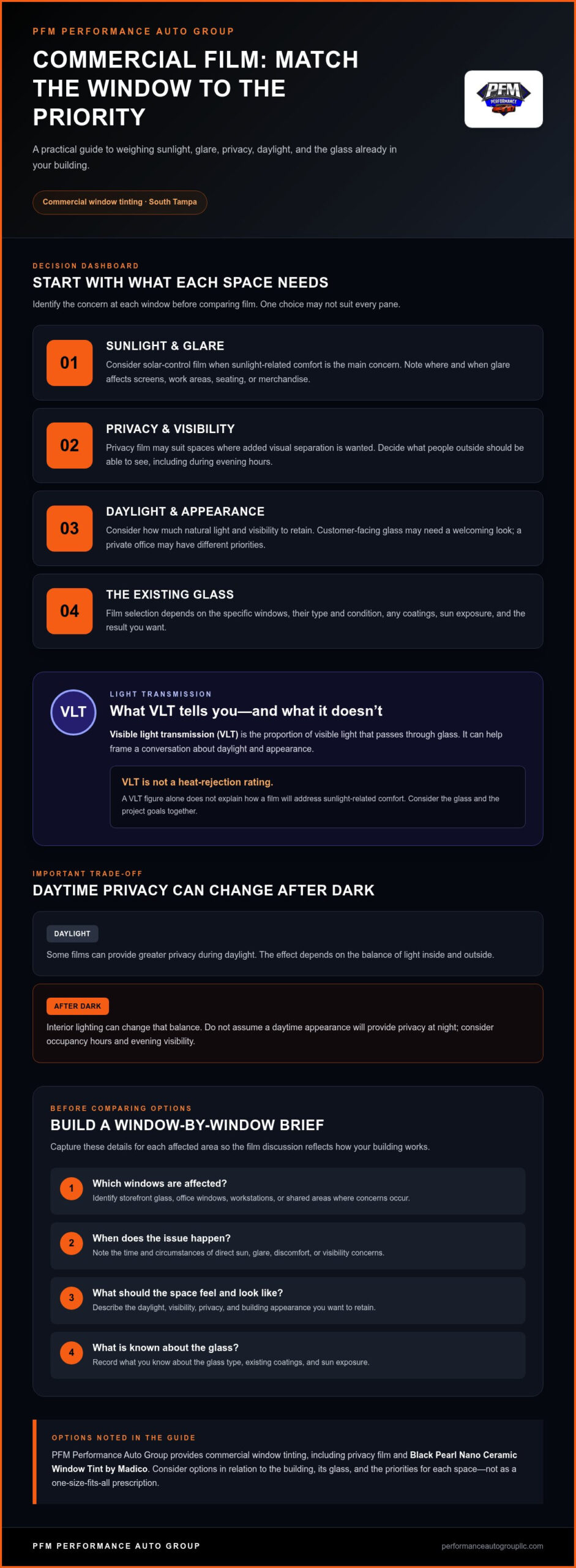
First identify the main concern: heat, glare, privacy, or a combination. Then consider each area separately. Customer-facing glass may need to remain visually welcoming, while a private office may have different needs. Decide how much natural light and visibility you want to retain. Those preferences make the trade-offs easier to compare.
Think carefully about privacy expectations. Some films can provide greater privacy during daylight, but the effect depends on the balance of light inside and outside. After dark, interior lighting can change that balance, so don’t assume a daytime appearance will provide privacy at night. Consider the hours the space is occupied and what people outside should be able to see in the evening.
Fading may also concern businesses protecting furnishings, displays, or finishes near windows. Sunlight exposure can contribute to fading over time, but film alone shouldn’t be treated as a guarantee that materials will remain unchanged. Consider the placement and sensitivity of items you want to protect as part of your overall property care.
For commercial window tinting South Tampa businesses can make the choice window by window rather than applying one goal to every pane. Note which areas create discomfort or visibility concerns, when those issues occur, and what appearance you want to preserve. These details create a useful starting point for a project discussion about your building and the experience you want staff and customers to have.
How Commercial Window Film Works with Your Building’s Glass
Window film doesn’t work in isolation. The building’s existing glass, any coatings, sun exposure, and your desired result all affect which options make sense. A film that suits one office may not fit another, even if both have similar sunlight concerns.
Commercial window film and existing glazing should be considered together, because the glass and its condition help determine which film is appropriate for the building. A needs-first discussion is more useful than choosing by appearance alone. For commercial window tinting South Tampa businesses should weigh how the space looks and feels alongside the characteristics of its windows.
What VLT means for a commercial space
Visible light transmission, or VLT, is the proportion of visible light that passes through glass. It describes how much visible light comes through, but it isn’t a heat-rejection rating. A VLT figure can help frame a conversation about daylight and appearance. By itself, it doesn’t explain how a film will address sunlight-related comfort concerns.
Consider the people who use the room. A reception area may benefit from a bright, open feel, while a private office may have different priorities. Don’t select a VLT level without considering the glass and the project’s goals.
Match film type to the building’s requirements
Solar-control film is an option to discuss when sunlight-related comfort is the priority. Privacy film may suit spaces where added visual separation is desired. These options address different goals, and neither should be assumed to solve every concern. Be specific about the result you want, including how much daylight and visibility you hope to retain.
Existing glass matters. Its type, any coatings, and its exposure can affect film selection, so the right choice depends on the specific windows rather than a broad promise about a film category. A storefront and an interior office window, for example, may need different considerations even within the same property.
PFM Performance Auto Group provides commercial window tinting, including privacy film and Black Pearl Nano Ceramic Window Tint by Madico. These options can be considered in relation to your building and priorities, rather than treated as a one-size-fits-all prescription. A project discussion can connect the film choice to the glass, the space’s use, and the appearance you want to maintain.
Before planning, note which windows are affected, what you know about the glass, and what matters most in each area. Book a commercial tinting appointment to discuss your property and project goals.
Compare Commercial Tint Options by Business Priority
Choose according to what each window needs to do. A street-facing storefront may need to manage sun while staying inviting. An office may prioritize glare at workstations, while an interior customer-facing area may call for more visual separation. Comparing windows by use makes trade-offs clearer than treating every pane as the same project.
| Business priority | Film purpose | Questions to resolve |
|---|---|---|
| Storefront sunlight and glare | Consider solar-control film for sunlight-related comfort concerns while weighing the desired street-facing appearance. | Which windows receive direct sun during business hours? How much natural light and visibility should the storefront retain? |
| Office work areas | Solar-control film may be worth considering where glare or sun exposure affects particular desks or rooms. | Does the concern affect specific windows or a larger area? How should the glass look from inside and outside? |
| Interior customer-facing privacy | Privacy film may support visual separation where customers or staff need a greater sense of privacy. | Who needs privacy from whom, and at what times? What degree of openness should the space maintain? |
Use the table as a starting point, not a guarantee of a particular result. Glazing, film choice, sun exposure, and installation all influence how a project performs. Commercial window tinting South Tampa businesses plan around these factors can be tailored to the building instead of relying on one film for every need.
When solar-control priorities lead the decision
If direct sunlight creates glare or uncomfortable areas, solar-control film is one option to discuss for the affected windows. Consider when the sun reaches the glass, how the space is used at that time, and whether the concern is concentrated or widespread. The existing glazing, film, exposure, and installation all affect the result, so don’t assume one selection will perform the same way throughout a building.
When privacy and appearance matter most
Privacy film can suit a room where visual separation matters more than an open view, but expectations should account for changing light. Daytime privacy shouldn’t be treated as guaranteed nighttime privacy, particularly when interior lights are on. Balance the desired separation with the daylight you want inside and the professional appearance your business presents from the street.
One property may have several priorities, such as solar-control needs at exterior windows and privacy needs in selected interior-facing areas. Define the purpose for each group of windows, then compare the options against the space’s use and appearance. PFM Performance Auto Group provides commercial window tinting, including privacy film and Black Pearl Nano Ceramic Window Tint by Madico, so you can discuss options in relation to your building’s priorities.
Plan a Commercial Window Tinting Project in South Tampa
A clear plan makes it easier to discuss commercial tinting options for your property. Before an appointment, gather practical details about the windows, how the business operates, and how you want the finished space to look and feel. This keeps the conversation focused on your building rather than on film in general.
- Identify the main concern. Decide whether sunlight, glare, privacy, or a combination is driving the project. Rank the priorities if they differ by area. A front office, for example, may need a different approach from a customer-facing lobby.
- Map the affected windows. Make a simple floor plan or list the windows you want to address. Note where direct sun reaches, where glare is most distracting, and where added visual separation would help. Photos can help you describe specific conditions.
- Record operating details. Note business hours, customer access patterns, and operational needs that could affect work in the space. Consider whether particular rooms need to remain available to staff or visitors.
- Describe the appearance you want. Think about how much natural light you’d like to retain and how the glass should look from inside and outside. This matters especially for storefronts, where windows contribute to the business’s street-facing presentation.
Prepare the building and project priorities
Specific observations are more useful than a general request for darker windows. Note when a concern appears, which windows are involved, and how the issue affects the space. If privacy matters, describe the areas and viewpoints that concern you. These details help define what success means for your business before you compare film options.
Review glass, scope, and next steps
The existing glass and its condition matter because film selection should account for the glazing it will be applied to. Share what you know about the windows, including any existing coatings, and identify whether the project covers a few panes, one room, or several parts of the building. PFM Performance Auto Group can discuss commercial tinting options, including privacy film and Black Pearl Nano Ceramic Window Tint by Madico, in relation to your property’s priorities.
Window locations, access, and the needs of the business help define the installation plan. Bring your notes and questions so the discussion can connect the film choice to your glass, operations, and desired appearance.
For commercial window tinting South Tampa businesses can plan around their building and daily needs, start with a clear list of priorities and affected windows.
Choose PFM for Commercial Window Tinting Near South Tampa
Your building has its own combination of glass, exposure, daily activity, and appearance goals. A thoughtful commercial tinting project starts with those details and focuses on what matters most for the property. For South Tampa business owners, PFM Performance Auto Group provides a local starting point for discussing commercial window tinting in Hillsborough County.
A local team for commercial tinting
PFM Performance Auto Group is locally owned and was founded in 2004. The business provides commercial window tinting, including privacy film, and offers Black Pearl Nano Ceramic Window Tint by Madico. These options let business owners discuss different priorities without assuming one film is right for every window.
The project should reflect your building, not a generic recommendation. A storefront, office, and shared work area can each have different requirements for comfort, privacy, light, and appearance. Explain how the spaces are used so the project scope reflects your business’s needs.
Book a project conversation
Gather a few details before booking. You don’t need a technical report; clear observations can make the first discussion more focused:
- Building area: Identify the rooms or windows you’re considering, such as the storefront, a particular office, or interior glass.
- Main concern: Describe whether sunlight, glare, privacy, or another glass-related issue prompted your interest.
- Desired result: Consider the appearance you want to maintain, how much daylight matters, and how the space should feel to staff and customers.
If the concern varies by time or location, mention that too. A note about which areas are affected and when keeps the conversation grounded in the conditions of your business. You can also outline whether you’re considering selected windows or several areas of the property.
Commercial window tinting South Tampa businesses plan with PFM starts with a discussion of the building and your priorities. Bring what you’ve observed, talk through the project scope, and consider the commercial tinting options in relation to your goals. You don’t need to arrive with every technical decision made. Start with what you want to improve and the appearance you want to preserve.
Make the Next Step Fit Your Building
A window project doesn’t have to begin with a final film choice. Start with the outcome you want your space to support, then use a project conversation to turn that priority into a practical plan. For commercial window tinting South Tampa business owners can take the next step with a clear sense of the areas they want to address and the experience they want to create for staff and customers.
PFM Performance Auto Group is locally owned and operated, was founded in 2004, and provides commercial window tinting. Bring your questions about the building, the glass, and the project scope. A focused discussion can help you consider options that suit your priorities and the appearance you want to maintain.
Your windows are part of how people experience your business. Give the project a thoughtful start.
Frequently Asked Questions
Can commercial window tint help reduce glare in a South Tampa storefront?
Commercial window film may help manage glare, depending on the glass, sun exposure, and film selected. For commercial window tinting South Tampa storefront owners can consider where reflections interfere with checkout screens, product displays, or views through the glass. Note when glare is strongest and which windows are involved. This helps clarify the goal without assuming film will eliminate every reflection or brightness issue.
Is commercial window film suitable for low-E or double-pane glass?
It may be suitable, but compatibility depends on the specific glazing and film. Low-E coatings can be located in different places within a window assembly, and double-pane glass has its own construction. Gather any available window documentation or manufacturer information before planning. The project discussion should account for the glass type and existing coatings rather than treating every pane as interchangeable.
Does commercial window tint provide privacy after dark?
Not necessarily. Privacy depends on the relative lighting on each side of the glass, so a film that limits views during daylight may not obscure an illuminated interior after dark. For example, a lit reception area can be easier to see from outside when the surrounding street is darker. Consider evening visibility separately from daytime privacy, especially for customer areas or offices used after business hours.
Can existing commercial window film be removed or replaced?
Existing film can sometimes be removed or replaced, but the approach depends on the film’s condition, how it was applied, and the glass beneath it. Peeling edges, bubbles, or discoloration are useful details to record before planning a replacement. Note whether the film covers all panes or only selected areas. This helps define the scope and avoids assuming a new layer can simply be applied over the old one.
How should a business clean windows after commercial tint installation?
Follow the care instructions provided for the installed film, particularly during its initial setting period. For routine cleaning, use a soft cloth or squeegee and a gentle cleaning solution. Avoid abrasive pads, blades, and harsh scrubbing that could mark the film. Check the cleaner’s label against the film care guidance before using it on treated glass.
What happens if commercial glass already has scratches or seal problems?
Film won’t repair scratches or correct a problem with a window seal. Document visible marks, fogging between panes, or other signs of a seal issue before planning the tinting work. These conditions are separate from film selection and may affect the project’s scope. Clear photos and notes about which windows are affected help set realistic expectations for the finished appearance.