Custom Interior Car Lighting Installation in Tampa: A Buyer’s Guide
A thoughtful custom interior car lighting installation can bring out your vehicle’s character without making the cabin feel cluttered. The difference often comes down to where the lights go, how many areas they highlight, and whether the finished look works with the interior’s existing lines and materials.
Before choosing a layout, decide what you want the lighting to do. You might want a subtle accent near the floor, a visible feature along the dashboard, or a more expressive treatment across several areas. The right plan depends on your vehicle, your preferred atmosphere, and how you use the cabin, especially at night.
This guide compares common lighting placements, explains how to choose a cohesive setup, and outlines what to prepare before booking. PFM Performance Auto Group is a locally owned automotive enhancement shop serving Hillsborough County. We install custom interior car lighting and can help shape the project around your vehicle and preferred look.
Key Takeaways
- Compare footwell, dashboard, and door lighting to find placements that suit your vehicle and the cabin atmosphere you want.
- A thoughtful custom interior car lighting installation starts with a clear purpose and priority areas, not lights added everywhere.
- Your vehicle’s interior and your everyday driving habits can help guide a cohesive, usable lighting plan.
- Bring reference images or describe the effect you want to make the installation discussion more focused.
- PFM Performance Auto Group serves Hillsborough County and installs custom interior lighting, car electronics, and HID and LED lighting.
Why consider custom interior car lighting installation for your Tampa vehicle?
A distinctive cabin does not have to feel busy. Custom interior car lighting is planned illumination inside the vehicle, arranged to suit the cabin and the atmosphere you want. One driver may prefer a subtle visual accent, while another may want selected areas to be easier to see after dark. Those goals can overlap, but they call for different choices in placement and brightness.
Start by identifying the purpose. Ambient accents can highlight interior lines, trim, or textures. Practical illumination can make selected areas easier to see when entering or using the vehicle at night. Interior accents are not a substitute for primary vehicle lights. Automotive lighting encompasses various types of lights, including interior illumination. They also serve a different purpose from headlights and other exterior lighting upgrades.
More lighting is not automatically better. Placement, brightness, and the relationship between illuminated areas all affect the result. A restrained layout can draw attention to a few cabin details while keeping the rest of the interior visually calm. Lighting every available surface can compete with the vehicle’s existing design. Decide what you want people to notice, and what should stay in the background.
What does custom interior car lighting include?
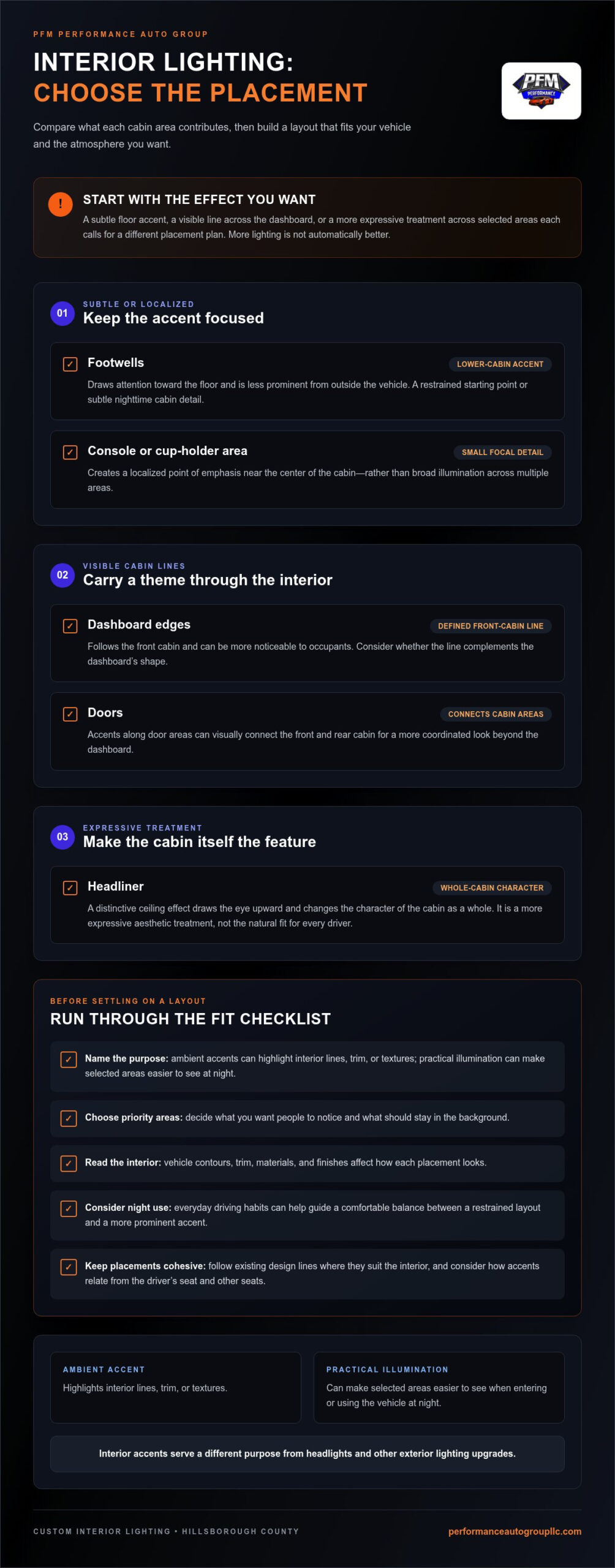
Custom interior lighting can include ambient accents in areas such as the footwells, dashboard edges, doors, console, or headliner. The best location depends on the vehicle’s interior shape and finishes. For example, a narrow accent may follow an existing design line, while a localized light can emphasize a specific area. A considered layout brings those details together instead of making the lights look like unrelated additions.
Who may benefit from a custom cabin lighting upgrade?
A cabin lighting upgrade may suit drivers who want their vehicle to reflect their personal style. Consider when you drive and which areas matter most. If you often use the vehicle at night, a restrained layout may be more comfortable than a highly prominent one. If appearance is the main priority, you may prefer a more expressive accent. The right choice depends on your preferences and the vehicle’s interior.
Placement and restraint help cabin lighting feel like part of the vehicle, rather than an accessory competing with it. That principle applies whether you are considering a subtle footwell accent or a more expressive treatment across selected areas. PFM Performance Auto Group serves Hillsborough County and installs custom interior car lighting, along with HID and LED lighting. Start with a clear idea of the look you want, then shape the installation around your cabin.
Interior car lighting options: compare placements and visual effects
Compare what each location contributes before deciding how much of the cabin to illuminate. You might want a low glow near the floor, a visible line across the front cabin, or a single focused detail. The vehicle’s contours, trim, and materials affect how each placement looks. A layout that suits one interior may feel out of place in another.
| Placement | Visual effect | May suit drivers who want |
|---|---|---|
| Footwells | A lower-cabin accent that draws attention toward the floor and is less prominent from outside the vehicle. | A restrained starting point or a subtle nighttime cabin detail. |
| Dashboard edges | A defined line that follows the front cabin and can make the lighting more noticeable to occupants. | A visual feature that complements the dashboard’s shape. |
| Doors | Accents along door areas that can visually connect the front and rear cabin. | A coordinated look that carries beyond the dashboard. |
| Console or cup-holder area | A small, localized point of emphasis around the center of the cabin. | A focused detail rather than broad illumination across multiple areas. |
| Headliner | A distinctive ceiling effect that can change the character of the cabin as a whole. | A more expressive aesthetic treatment, rather than a subtle accent. |
Footwell, dashboard, and door lighting
Footwell accents keep attention low in the cabin. Dashboard and door placements tend to create a more visible theme across the interior. Consider whether you want light concentrated in one area or carried along existing design lines. Then compare the possible placements with the vehicle’s materials and trim. A defined line may complement one interior but compete with another.
For a custom interior car lighting installation, let the vehicle guide the plan. A compact cabin with prominent trim may call for a different balance than a larger interior with broad door panels. Start by looking at the areas you see most from the driver’s seat. Then consider how the accents will relate to one another from the other seats.
Console accents and starlight-style ceilings
Console or cup-holder illumination can create a small visual detail without becoming the main feature. A starlight-style headliner is a different choice: it draws the eye upward and gives the cabin a more distinctive overall character. It is not the natural fit for every driver, especially if you want an understated look.
Localized accents highlight selected cabin details, while a ceiling treatment changes the visual character of the whole interior. Use that distinction to decide whether you want one focal point or a broader design statement. To discuss a layout shaped around your vehicle and preferred look, book a custom interior lighting installation.
How to choose a custom interior lighting setup that feels right
Start with your priorities, not a checklist of every place a light could go. A custom interior car lighting installation can be subtle or expressive. The result depends on mood, placement, visual balance, and how the design fits your vehicle. Decide how you want the cabin to feel, then build the plan around that goal.
Match the lighting plan to your vehicle and style
Before choosing placements, identify which part of the cabin you want to emphasize. Look at the interior’s colors, trim, upholstery, and design lines. Lighting should complement those details rather than compete with them. A restrained approach might focus on one or two areas. A more dramatic concept could carry a theme across several parts of the cabin.
- Choose a mood: Decide whether you want a calm accent, a refined atmosphere, or a more expressive visual statement.
- Set a priority placement: Pick the cabin area you most want to highlight, such as the footwells, dashboard, or doors.
- Practice visual restraint: Decide which areas should draw attention and which should stay quiet. A few coordinated accents can feel more deliberate than lighting every available surface.
- Consider vehicle fit: Look at how the lighting would relate to the cabin’s trim, materials, and proportions. The same layout can look different in a compact interior than in a larger one.
You do not have to choose between a bare interior and an elaborate design. A carefully placed accent can feel personal without overwhelming the cabin. A multi-area concept can also feel cohesive when its elements work together. The goal is a layout that looks at home in your vehicle.
Balance appearance with everyday usability
Think about how the lighting will look from the driver’s seat, especially if you regularly drive at night. Placement and brightness affect whether an accent stays in the background or draws your attention. Keep illuminated details from competing with essential displays or distracting you from the road. The plan should support the cabin’s atmosphere without making everyday driving less comfortable.
Picture the cabin in ordinary use, not only while parked. Consider what falls in your direct line of sight, which areas you use regularly, and whether a prominent accent might become distracting over time. Include those preferences in the design discussion so the layout reflects both your style and how you use the vehicle.
Interior lighting is part of a vehicle’s broader electronics environment. If you are considering other cabin upgrades, PFM’s car audio installation experience is relevant to that wider electronics context. Start with your preferred mood and one priority area. Those decisions give the lighting plan direction without committing to an all-over look.
What to plan before interior car lighting installation in Hillsborough County
A little preparation can turn a general idea into a focused project discussion. For custom interior car lighting installation, consider the look you want, the areas you would like to emphasize, and the vehicle the plan needs to suit. The cabin and selected layout shape the project, so clear priorities make it easier to discuss a considered approach.
Prepare your ideas and vehicle details
Use this sequence to organize your thoughts before booking. You do not need technical knowledge. A clear preference and a few practical notes are a useful starting point.
- Define the look. Decide whether you prefer a subtle accent or a more expressive cabin effect. Save clear reference images that show the mood or visual treatment you have in mind, even if they feature a different vehicle.
- Identify priority areas. Note the cabin locations you want to discuss, such as the footwells, dashboard, doors, console, or headliner. Separate must-have areas from optional ideas to keep the scope focused.
- Note your vehicle details. Write down the year, make, and model, along with relevant interior details such as trim, materials, or existing features near the areas you are considering.
- Book the appointment. Bring your notes and reference images so the discussion can start with your intended look and specific vehicle.
Before bringing the vehicle in, remove personal items from the areas being considered for work. This makes it easier to view the cabin and discuss the locations you have identified.
Understand the professional installation discussion
The desired layout and the vehicle’s interior guide the project discussion. Reference images can communicate the overall feeling, while your notes clarify which details matter most and where you want the effect concentrated. PFM plans custom interior lighting installations around the cabin and the selected design, with careful integration and a tidy finish as part of the work. The project scope also shapes the installation, so avoid assuming that every vehicle or layout follows the same process or timing.
That attention to integration also matters across automotive electronics work. PFM’s Tampa car audio installation services reflect the shop’s work with vehicle electronics, while each lighting project is planned around its own interior and visual goals. Bring your preferences and discuss the proposed layout so the agreed scope reflects the effect you want.
Book custom interior car lighting installation with PFM in Tampa
A cabin lighting upgrade deserves more than a one-size-fits-all layout. PFM Performance Auto Group serves Hillsborough County and installs custom interior car lighting planned around your vehicle, preferred look, and selected scope. The aim is to make the lighting feel considered within the cabin and suited to the vehicle you drive.
A local shop for automotive lighting and electronics
PFM was founded in 2004 and brings automotive electronics experience to vehicle enhancement projects. The shop installs custom interior lighting and provides car electronics installation as well as HID and LED lighting installation at its workshop. That work calls for considering the intended appearance alongside the vehicle and its cabin. Your goals help shape the installation plan and the areas selected for the upgrade.
Interior lighting can also be part of a broader interest in the cabin’s look and feel. If you are considering multiple electronics upgrades, PFM’s car audio installation services are another example of the shop’s work with in-vehicle electronics. Share your preferences and agree on the project scope before the installation moves forward.
Take the next step toward your cabin upgrade
Bring the basics to your appointment: your vehicle’s year, make, and model; the cabin areas you want to discuss; and a description or reference image of the effect you have in mind. You do not need a technical plan. Even a simple preference, such as a subtle footwell accent or a more expressive cabin treatment, gives the discussion a useful starting point.
The vehicle and selected scope shape the installation, so the plan should suit your car rather than follow a generic layout. Share how you want the cabin to feel and which areas matter most. PFM can discuss the project in relation to those priorities and the vehicle’s interior. The result should reflect your style while respecting the character of the cabin.
Choose a look that feels right for you. PFM is a locally owned shop serving Hillsborough County. Bring your vehicle details and preferred look to the appointment process to start planning your cabin upgrade.
Make your cabin upgrade your own
Your vehicle’s interior is part of the time you spend on the road, so a lighting upgrade should feel personal in everyday use, not just striking at first glance. Let your preferred atmosphere guide the choices, and give the custom interior car lighting installation a clear purpose. A focused idea is enough to begin. The details can take shape through a discussion about your vehicle and the effect you want.
PFM Performance Auto Group approaches automotive enhancements with care for the vehicle and attention to your goals. Turn your idea into a project discussion and choose a direction that feels right for your cabin.
Your cabin can reflect your style while remaining comfortable and cohesive. Start with the look you love, and make the upgrade a considered part of your time behind the wheel.
Frequently Asked Questions
Is custom interior car lighting installation worth it?
It can be worthwhile if you will enjoy a more personal cabin and the layout feels cohesive with your vehicle. Consider how often you drive at night and whether you want the lighting to create atmosphere or highlight a specific interior detail. A planned arrangement can feel more intentional than adding lights without a clear concept. The value is personal enjoyment and a professionally finished result, not a promised resale benefit.
What types of interior lights can be installed in a car?
Common ambient lighting placements include footwells, dashboard and door accents, consoles, and headliner effects. A console accent, for example, draws attention to one central area, while a headliner treatment creates a more noticeable ceiling effect. These are design options, not a guarantee that each suits every vehicle. Choose based on your cabin’s layout, the visual effect you prefer, and how the lighting will fit everyday use.
Can interior car lights be installed in any vehicle?
Not every vehicle suits the same lighting layout. Cabin shapes, trim, and available installation areas differ, so a design that works in one car may not translate directly to another. Share your vehicle’s year, make, and model when booking, along with any interior details relevant to your plans. That gives the project discussion a useful starting point for considering a design suited to your vehicle.
Are interior LED lights legal in Florida?
Do not assume every interior lighting setup is permitted for use on public roads. Relevant considerations may include color, placement, visibility from outside, and how the lights are used. Cabin accents and exterior road lighting are distinct, but their legal treatment can depend on the specific setup. Consult current official Florida guidance before driving with customized lighting. Verify any interpretation of a particular statute or configuration against authoritative state sources.
How long does custom interior car lighting installation take?
Installation time depends on the vehicle, the placements selected, and the project’s overall scope. A focused accent plan and a broader multi-area design may involve different considerations, so one timing estimate will not apply to every vehicle. Share your intended layout during the booking process and discuss scheduling in relation to the project. It is more useful to base timing on the work involved than to assume every job follows the same timetable.
How much does custom interior car lighting installation cost?
Cost depends on your vehicle and the lighting layout or installation scope you choose. A plan focused on one cabin area may differ from a design involving several locations, so one fixed estimate will not fit every project. When booking, describe your vehicle and the look you want, including the areas you are considering. Those details help make the appointment discussion specific to your project rather than based on a standard package.