
Brighter Headlights for Night Driving: How to Choose the Right Upgrade
The brightest bulb on the box isn’t always the upgrade that helps you see better. Choosing brighter headlights for night driving means looking beyond bulb output: the headlight housing, lens condition, fit, and aim all affect where the light goes and whether it creates glare for other drivers.
If dim or aging headlights make night trips tiring, it’s natural to look for a more powerful bulb. But the right choice needs to suit your vehicle, not just promise more brightness. LED, HID, and halogen options each have practical trade-offs, and an incompatible bulb or poorly aimed beam can leave visibility disappointing even after an upgrade.
This guide explains which parts of the headlight system influence nighttime visibility, compares the three bulb types, and outlines what to consider before an upgrade. PFM Performance Auto Group installs HID and LED lighting at its Tampa workshop for drivers in Hillsborough County. Start with the factors that matter most, including visibility, compatibility, and consideration for everyone sharing the road.
Key Takeaways
- Brighter headlights for night driving depend on more than bulb output: lens condition, beam pattern, and aim all shape what you can see.
- Halogen, LED, and HID upgrades differ in compatibility and installation needs, and results depend on your vehicle’s headlamp design.
- Compare useful road illumination, beam cutoff, and glare control rather than choosing the brightest-looking option.
- Use a practical checklist: inspect the lenses, compare the beams, confirm fitment, and assess alignment, especially for wet-road driving.
- Professional HID or LED installation can help address fitment and connections. PFM Performance Auto Group installs vehicle lighting at its Tampa workshop.
Brighter Headlights for Night Driving: Identify What Is Limiting Visibility
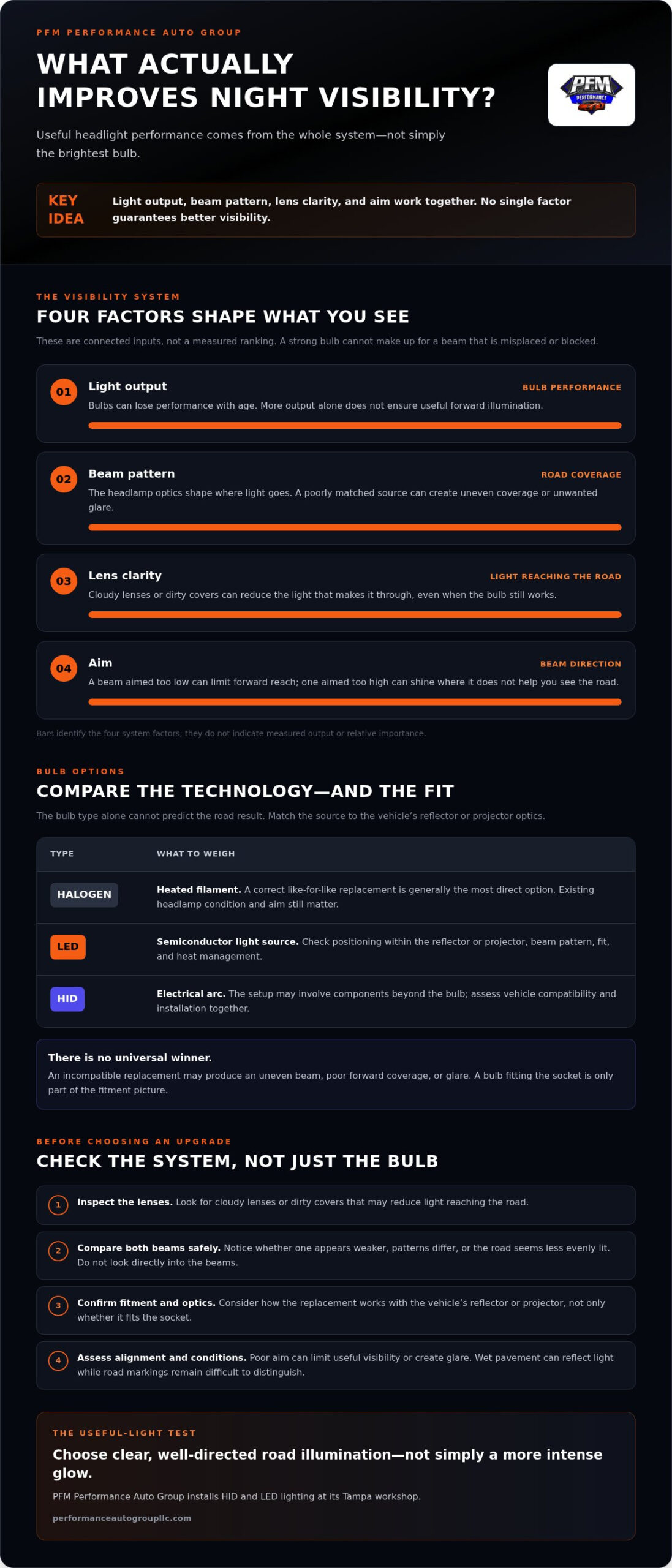
Headlight visibility isn’t determined by bulb brightness alone. It’s the combined result of light output, the beam pattern shaped by the headlamp optics, clear lenses, and accurate aim. A strong bulb can still leave dark areas if the beam is poorly directed, while a clean, correctly aimed system may make better use of its existing light.
That distinction matters on Tampa-area roads, where rain and wet pavement can lower contrast and reflect light back toward the driver. A beam that looks intensely bright up close doesn’t necessarily illuminate the road farther ahead. For background on how headlamp technologies and designs have developed, see this overview of headlamp technology and types.
Useful headlight visibility depends on light output, beam pattern, lens clarity, and aim working together, not on brightness alone.
Why headlights can seem dim even when they still work
A working headlight may provide less useful illumination than it once did. Bulbs can lose performance as they age, while cloudy lenses or dirty covers can reduce the light reaching the road. Misaligned beams may point too low, limiting forward reach, or too high, sending light where it doesn’t help you see the roadway.
Compare both headlights from a safe position, without looking directly into the beams. Notice whether one appears weaker, whether the light patterns differ, and whether the road ahead seems less evenly lit than before. Headlights and the vehicle’s electrical condition can both affect performance, so note what you observe before choosing an upgrade.
When brighter headlights may not solve the problem
If a beam is aimed poorly, installing a brighter bulb won’t correct its direction. Light may miss the part of the road you need to see or shine into the eyes of oncoming drivers. More glare can make driving less comfortable for others without improving your useful forward visibility.
Consider the whole system if one new bulb seems unlikely to address the change you’ve noticed. Uneven beams, hazy lenses, or a pattern that seems misplaced point to issues beyond bulb output. A careful assessment can help identify whether the limiting factor is the bulb, lens, aim, or another part of the lighting setup.
Before selecting brighter headlights for night driving, describe the problem clearly. Is one side dimmer? Does the road look dark despite a bright-looking beam? Did visibility change gradually, or after work on the vehicle? These observations help distinguish a tired bulb from a broader system concern.
Wet roads can make the assessment less straightforward. Reflections may make the light appear brighter while road markings or nearby objects remain difficult to distinguish. Compare the beams and road illumination in a safe, dry setting when possible, then consider how the pattern performs in your typical driving conditions. The goal is clear, well-directed light, not simply a more intense glow.
LED, HID, and Halogen Headlights: Understand the Upgrade Differences
Choosing among halogen, LED, and HID headlights starts with understanding how each produces light, but the bulb type alone can’t predict what you’ll see on the road. The original headlamp’s reflector or projector optics are designed around a particular light source. A replacement that doesn’t work well with those optics may create an uneven beam, poor forward coverage, or unwanted glare.
The right headlight upgrade pairs a suitable light source with the vehicle’s optics, correct fitment, and controlled beam direction. For safety-related guidance, consult NHTSA regulations on headlight safety as you consider your options.
LED headlights: strengths and fitment considerations
LEDs produce light using semiconductor components and appeal to drivers looking for a modern lighting option. An LED replacement still needs to position its light source appropriately within the existing reflector or projector. If the light doesn’t line up with the optical design, the beam may not illuminate the road as intended. Fit, beam pattern, and heat management all deserve attention during installation.
A bulb fitting into the socket isn’t the whole story. Consider the installed setup as a system, including how the light is shaped and aimed.
HID and halogen headlights: what drivers should weigh
Halogen bulbs use a heated filament and are common as original equipment. Replacing a worn halogen bulb with the correct type may be a straightforward route, while changing to another technology raises additional fitment and optical questions. HID systems create light through an electrical arc and can involve components beyond the bulb, so compatibility and installation needs depend on the vehicle and the particular setup.
Here’s a practical comparison. It’s a starting point, not a universal ranking of brightness or lifespan:
- Halogen: Filament-based light source. A like-for-like replacement is generally the most direct option, but the existing headlamp condition and aim still matter.
- LED: Semiconductor light source. Consider how the replacement fits the reflector or projector, how it manages heat, and whether its beam pattern suits the housing.
- HID: Arc-based light source. The setup may require additional system components, so vehicle compatibility and installation should be assessed together.
None of these technologies guarantees better visibility in every vehicle. An LED bulb designed for one optical layout may perform differently in another, and an HID conversion may not suit a headlamp designed for halogen. Compare intended fit, beam control, and installation requirements alongside the light source. That’s a more reliable way to assess brighter headlights for night driving than assuming a higher-output-sounding option is automatically the right choice.
PFM Performance Auto Group installs HID and LED lighting at its Tampa workshop. If you’re considering an installation, you can book an appointment to discuss your lighting upgrade.
How to Compare Headlight Upgrades Without Creating Glare
Maximum brightness isn’t the same as better night driving. A beam can look intense yet leave useful parts of the road poorly lit, or send excess light toward other drivers. Compare upgrades by what matters on the road: illumination where you need it, a defined beam cutoff, glare control, vehicle compatibility, and the work needed to install and aim the system correctly.
Your best option depends on the vehicle’s headlamp design, the condition of its existing lighting, and the roads and conditions you regularly drive in. Independent headlight assessments also consider both visibility and glare; the IIHS headlight ratings and research offer useful context for understanding those priorities.
How beam pattern and headlight aim affect visibility
A controlled beam directs light across the road while limiting unnecessary light above its intended zone. The cutoff, where the brighter portion of the beam transitions to less intense light, helps shape that distribution. If the beam is poorly focused, uneven, or aimed too high or low, the result may be less useful road illumination or more glare.
After lighting work, alignment should be assessed when appropriate. If the road looks patchily lit, one side appears markedly different, or other drivers signal that your lights are distracting, have the setup reassessed rather than assuming a brighter bulb is the answer.
How to judge upgrade claims and compatibility
Look past dramatic brightness language. Prioritize a replacement intended to fit the vehicle’s headlamp design, then consider the beam pattern and installation needs. Color temperature describes the appearance of light, not by itself how far or effectively the road will be illuminated. A cooler-looking beam isn’t automatically more useful in real driving.
Use this comparison as a decision aid, not a universal ranking. Each option has trade-offs, and the existing headlamp condition can affect the result.
- Like-for-like replacement: Benefit: it preserves the original lighting approach. Trade-off: it may not address worn optics, poor aim, or another system issue. Fitment: match the vehicle’s specified bulb type.
- LED upgrade: Benefit: offers a different lighting technology. Trade-off: beam quality depends on how the light source works with the headlamp optics. Fitment: assess the reflector or projector, heat management, and beam pattern.
- HID upgrade: Benefit: provides another alternative to halogen lighting. Trade-off: the system may involve additional components and compatibility considerations. Fitment: evaluate the complete setup, not just the bulb.
For a fair comparison, consider how the beam illuminates the road, whether its cutoff is controlled, and whether the installed system suits your vehicle and driving needs. PFM Performance Auto Group installs HID and LED lighting at its Tampa workshop. If you’re weighing options, you can book an appointment to discuss headlight installation.
A Practical Night-Driving Headlight Checklist for Tampa-Area Drivers
Before investing in brighter headlights for night driving, work through a few checks in order. This helps separate a maintenance issue from an upgrade need, so the next step addresses what’s actually affecting visibility.
What to inspect before choosing a brighter headlight
- Inspect the lenses and housings. Look for cloudy or dirty outer surfaces, cracks, damage, or signs that a housing may not be secure. Clean the exterior before judging light output; a film of dirt can make a working headlight seem less effective.
- Compare the beams. With the vehicle safely parked, observe whether both headlights appear similar and illuminate the area evenly. Note a noticeably weaker side, an unusual dark patch, or a beam that seems to point too high or low. Avoid looking directly into the lights.
- Record the vehicle and existing setup. Write down the vehicle’s year, make, and model, along with the current headlight type if known. This information helps make fitment discussions more precise, particularly if considering a change in lighting technology.
- Assess alignment and your actual goal. If the beams look uneven or poorly directed, an upgrade alone may not address the issue. Decide whether you’re seeking to restore performance, improve road coverage, or change the lighting setup. Keeping maintenance needs separate from upgrade goals helps guide a suitable recommendation.
What matters for nighttime driving around Hillsborough County
Rain can reduce contrast, while wet pavement may reflect light and make road markings or objects harder to distinguish. Changing street lighting also affects what stands out as you move between well-lit and darker stretches. These conditions don’t mean every driver needs a new bulb; they make it useful to judge lighting by how clearly the road is illuminated, not just by how bright the lamps appear.
In familiar, safe driving conditions, notice whether the beams reach far enough to give you a comfortable view and whether light covers the road evenly. Don’t test an unfamiliar setup by driving fast or staring at oncoming headlights. If rain reflections make it difficult to judge, compare again on a dry road before deciding what needs attention.
Check current requirements before changing your lighting. Florida requires headlights from sunset to sunrise and during rain, smoke, or fog, and requires two functioning white-light headlamps. Equipment rules can change, so verify current state and applicable federal requirements through official sources before selecting or modifying a setup.
For HID or LED installation in Tampa, PFM Performance Auto Group installs vehicle lighting at its workshop. If you’re ready to discuss an upgrade, use the headlight installation appointment page.
Professional HID and LED Headlight Installation in Tampa
A lighting upgrade is more than choosing a bulb. It needs to suit the vehicle, connect correctly, and direct light where it can help the driver without creating unnecessary glare. For drivers comparing brighter headlights for night driving, professional installation brings fitment and connections into the process instead of treating them as afterthoughts.
What a professional lighting installation can address
Vehicle-specific fit matters because headlamp housings and optical designs vary. The intended fit and connections should be considered during installation, rather than assuming a bulb that fits physically will produce a suitable beam. After lighting work, beam setup and alignment also deserve attention when appropriate. A poorly directed beam can compromise road coverage or contribute to glare.
Appearance is part of a well-finished upgrade, too. A tidy installation should suit the vehicle, while the lighting itself should be considered in relation to how and where the vehicle is driven. If you’re unsure whether the problem calls for an upgrade or another adjustment, a careful assessment can help make the decision more informed.
HID and LED installation in Tampa
PFM Performance Auto Group installs HID and LED lighting at its workshop in Tampa, serving drivers in Hillsborough County. The locally owned and operated automotive customization shop was founded in 2004 and has a dedicated workshop for lighting installations. The installation should suit the vehicle and take into account the details that influence how the finished setup works.
Come prepared to describe what you’ve noticed: perhaps the road seems dim despite functioning lights, the beams appear uneven, or you’re considering a change from your current lighting type. Vehicle year, make, model, and the existing headlight type can help guide a fitment discussion. Clear observations make it easier to focus on the actual concern instead of choosing an upgrade based on appearance or a headline brightness claim alone.
Plan your next step
Start by identifying what limits visibility, then compare options that suit the vehicle’s headlamp design and your driving needs. Installation is the next part of that decision, not a substitute for making it carefully. A properly considered setup takes fit, connections, beam direction, and finished appearance into account, while avoiding assumptions that one technology is right for every vehicle.
PFM’s Tampa workshop provides HID and LED installation for drivers in Hillsborough County. If you’re ready to discuss your vehicle and plan an upgrade, book an appointment using the link below.
Make Your Next Night Drive More Comfortable
The right lighting choice should feel considered, not rushed. Before committing to an upgrade, think about the night drives that matter most to you: familiar streets, darker roads, or changing weather. Let those real conditions guide the decision rather than a bold brightness claim or a quick visual impression.
Brighter headlights for night driving are most worthwhile when the setup suits your vehicle and supports clear, comfortable visibility without creating unnecessary glare. PFM Performance Auto Group installs HID and LED lighting at its Tampa workshop for Hillsborough County drivers. Bring your questions and what you’ve noticed on the road to help focus the discussion on your vehicle and lighting needs.
Take the next step by booking a headlight installation appointment with PFM Performance Auto Group.
Frequently Asked Questions
Can brighter headlights improve night driving?
Yes, if your current lighting is the reason the road is hard to see. Replacing a worn bulb or addressing a cloudy lens may help, but a brighter-looking beam won’t necessarily improve what you can see ahead. Notice whether the issue occurs on both sides, only in rain, or on darker roads. That distinction helps determine whether brighter headlights for night driving are likely to address your concern.
Are LED headlights better than HID headlights for night driving?
Neither technology is automatically better for every vehicle. An LED or HID setup needs to work with the headlamp design and the vehicle’s electrical and fitment requirements. A well-suited installation may provide useful illumination, while an incompatible setup can produce an unsatisfactory beam. Consider the complete installation, not just the technology name. PFM Performance Auto Group installs HID and LED lighting at its Tampa workshop for Hillsborough County drivers.
Can I put LED bulbs in my halogen headlights?
Not simply because the bulb fits. Halogen reflectors and projectors are designed to shape light from a particular source, and an LED replacement may not create the intended beam in that housing. Before changing types, identify your vehicle’s headlamp design and confirm the specific setup’s compatibility and applicable requirements. If the beam becomes scattered or produces excess glare after a change, don’t treat brightness as the only measure. Have the installation assessed.
Why do my headlights seem dim even after I replaced the bulbs?
A new bulb won’t fix every cause of dim lighting. Check whether the lens has clouded, the outer cover is dirty, or the beam points away from the road. If one side is still weaker, possible issues may involve a connection or the vehicle’s electrical condition rather than the bulb itself. Note whether both lights behave the same way, and have the full lighting setup assessed if replacing bulbs hasn’t resolved the change.
Can brighter headlights cause glare for other drivers?
Yes. Glare can result when a beam is poorly aimed, uneven, or not controlled by the headlamp optics, even if the light source itself is an upgrade. A bright appearance doesn’t guarantee useful road coverage. Pay attention to whether the beam seems scattered or unusually high after installation. If other drivers frequently flash their lights at you, treat that as a reason to have the beam setup checked rather than adding more output.
Are aftermarket LED or HID headlights legal in Florida?
Aftermarket status alone doesn’t determine whether a headlight setup is lawful. Florida requirements include two functioning white-light headlamps and use from sunset to sunrise, as well as during rain, smoke, or fog. The equipment and installation also need to meet applicable requirements. Because rules and vehicle-specific details matter, review current Florida and federal guidance before modifying lighting; don’t assume an advertised product or conversion is automatically compliant.
Should headlights be aligned after an LED or HID upgrade?
Yes, alignment should be assessed after an upgrade, especially if the installation changes the light source or affects the headlamp assembly. Even a compatible setup can cause poor road coverage if it points too high or low. A controlled beam helps illuminate the intended area while limiting stray light. If the road looks unevenly lit or the beam appears scattered after installation, have the setup and aim reassessed before relying on it for regular night driving.