
How to Clean Tinted Car Windows: The Safe, Streak-Free Step-by-Step Guide
That standard blue glass cleaner sitting under your kitchen sink might be the fastest way to ruin your vehicle’s window film. Mastering how to clean tinted car windows requires a specialized approach, because conventional household cleaners and coarse paper towels can quickly dissolve sensitive adhesives, turn film purple, or leave behind a web of permanent micro-scratches.
You invested in quality window tint for superior heat rejection, privacy, and UV defense. It’s completely natural to feel hesitant about cleaning it, especially when stubborn interior haze, oily fingerprints, and lint residue start clouding your view. You shouldn’t have to guess whether a simple wipe-down will compromise your film’s optical clarity. In this guide, you’ll discover the safe ammonia-free formulas, critical post-installation cure windows, and the professional two-towel technique master detailers use to achieve crystal-clear, streak-free glass without friction damage. Here is how you can protect your automotive investment and maintain spotless visibility for years to come.
Key Takeaways
- Discover why harsh household formulas degrade delicate polyester film and learn the safe, ammonia-free chemistry behind how to clean tinted car windows properly.
- Master the professional two-towel method using dedicated waffle-weave microfiber to lift stubborn interior haze without leaving streaks or lint.
- Learn why misting your cleaning towel rather than the glass protects edge seals and prevents liquid from seeping into sensitive door panels.
- Understand essential post-installation waiting periods so you avoid washing fresh film before the adhesive layer fully cures.
- Distinguish between washable interior film residue and structural film wear so you know when routine care suffices or professional attention is required.
Why Tinted Windows Demand Specialized Cleaning Methods
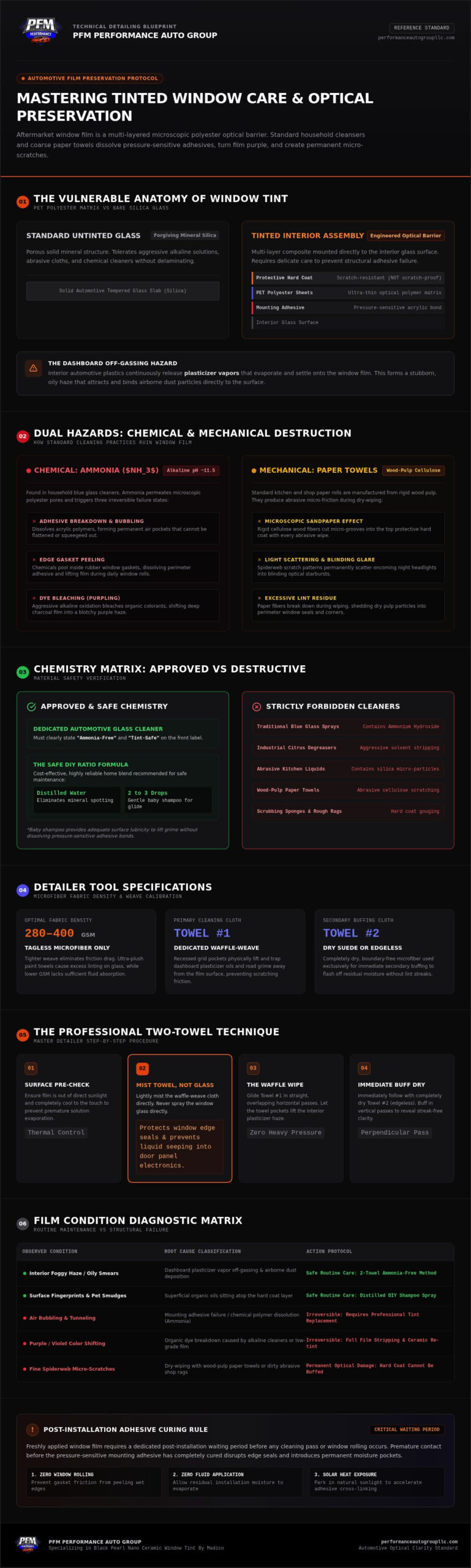
Bare automotive glass is remarkably forgiving. Tinted glass is not. When you apply aftermarket film to your vehicle, you are no longer cleaning silica; you are maintaining a microscopic, multi-layered optical barrier mounted directly to the interior glass. Mastering how to clean tinted car windows demands respect for this delicate material. Treating it like an ordinary bathroom mirror will destroy it.
Most vehicle owners treat interior glass cleaning as an afterthought. They grab whatever blue aerosol cleaner sits in the garage alongside a handful of rough paper towels. Unfortunately, standard paper towels are manufactured from wood pulp, meaning their rigid cellulose fibers act like microscopic sandpaper against smooth plastic. Over several months, dry-wiping with paper products creates fine spiderweb scratches that permanently scatter oncoming headlight beams and cause hazy daytime glare.
The Vulnerable Anatomy of Automotive Window Film
Window tint is constructed from ultra-thin polyethylene terephthalate (PET) polyester sheets bonded together by mounting adhesives. While premium options like Black Pearl Nano Ceramic Window Tint By Madico incorporate protective hard coats to resist everyday contact, these surface layers are scratch-resistant, not scratch-proof armor. Interior glass also faces relentless exposure to plasticizer vapors that evaporate from your dashboard, creating an oily haze that traps airborne dust against the film.
The Chemical Threat: Why Ammonia Destroys Tint
Chemical incompatibility is the fastest route to film failure. Household formulas rely heavily on ammonia ($NH_3$), an aggressive chemical solvent with an alkaline pH near 11.5. When applied to aftermarket tint, ammonia migrates into the microscopic pores of the polyester, directly attacking the pressure-sensitive acrylic adhesives underneath.
- Adhesive Breakdown: Ammonia breaks down polyester polymers, leading to permanent bubbling. Once the bond between the glass and the PET film dissolves, air pockets form that no squeegee can repair.
- Edge Peeling: Harsh chemicals pool around window gaskets, softening the perimeter borders and causing the film to lift during daily rolling.
- Dye Bleaching: Alkaline chemicals bleach organic colorants, turning once-rich charcoal tint into a blotchy, purplish mess.
Knowing how to clean tinted car windows begins with eliminating these chemical and mechanical hazards before they permanently damage your glass.
Essential Tools and Safe Cleaning Solutions to Assemble
Preparation defines your finished result. Rushing into the job with random rags or harsh degreasers guarantees scratched surfaces and cloudy residue. To learn how to clean tinted car windows like a seasoned professional, you must assemble dedicated tools designed specifically to safeguard sensitive polyester film.
Choosing the Right Ammonia-Free Glass Cleaner
Look for dedicated automotive glass cleaners that clearly state “ammonia-free” and “tint-safe” directly on the front label. Avoid traditional blue household sprays containing ammonium hydroxide, industrial citrus degreasers, or abrasive kitchen liquids.
You don’t need expensive detailing chemical kits to achieve immaculate glass. A simple, reliable DIY alternative involves filling a clean spray bottle with distilled water and adding two to three drops of gentle baby shampoo. Distilled water prevents mineral spotting, while baby shampoo provides enough lubricity to glide across the film without dissolving its mounting adhesive. For vehicle owners seeking specialized maintenance advice or precision automotive upgrades, consulting seasoned craftsmen like PFM Performance Auto Group ensures your protective film remains in pristine condition.
Microfiber Towels and Equipment You Need
Never let wood-pulp paper towels, coarse shop rags, or scrubbing sponges touch your film. Instead, assemble two dedicated microfiber towels for each glass panel:
- Towels: Select clean, tagless microfiber cloths rated between 280 and 400 GSM. Tighter weaves eliminate the dragging friction and excessive linting common with ultra-plush paint towels.
- Waffle-Weave Microfiber: Choose a dedicated waffle-weave pattern for your initial wipe. The recessed pockets trap oils and road grime away from the film surface, preventing scratch-inducing friction.
- Suede or Edgeless Buffing Cloth: Keep a completely dry, edgeless microfiber on hand to buff the glass immediately after your initial pass.
- Spray Bottle: Use a fine-mist spray bottle to avoid over-saturating your work area.
Having the right tools ready makes streak-free glass straightforward. If your current film shows signs of age or wear that cleaning cannot fix, you can always schedule an appointment with experienced technicians to restore your cabin’s shade and solar defense.
How to Clean Tinted Car Windows: The Step-by-Step Method
Method matters just as much as your chosen chemicals. When tackling the glass inside your vehicle, following a precise mechanical sequence guarantees perfect optical clarity while preserving the film’s delicate edges. Here is the exact system detailers rely on for how to clean tinted car windows safely.
Step 1 and 2: Surface Preparation and Climate Setup
Never clean automotive film in direct sunlight. Park your vehicle under shade or inside a garage until the glass feels cool to the touch. Intense heat flash-dries cleaning agents upon contact, leaving behind evaporated surfactant spots that are frustratingly difficult to buff away.
Before introducing liquid, dry-dust your door sills and rubber seals with a clean cloth. Clearing loose grit around the perimeter ensures you don’t drag sharp road particles directly across the film face during your wet passes.
Step 3 and 4: The Two-Towel Wipe and Buff Technique
Professional detailers avoid spraying cleaner directly onto automotive glass. Aerosol overspray rolls down into lower door cavities, soaking window gaskets and threatening internal window regulators or speaker wiring. Instead, adopt this disciplined routine:
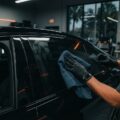
- Fold and Mist: Fold your waffle-weave towel into quarters. Lightly mist two to three sprays of ammonia-free cleaner directly onto the towel fabric rather than the glass.
- The Cleaning Pass: Wipe the window systematically using light, uniform horizontal sweeps from top to bottom. Follow with vertical strokes across the perimeter. Let the surfactant lift surface grime; never press your hand into the glass with forceful friction.
- The Buffing Pass: Immediately take your second dry, edgeless microfiber towel to buff the pane before the thin liquid film evaporates naturally. This rapid pickup is what guarantees zero streaks.
- Rotate Surfaces: Flip both towels to clean, dry quarters before moving to the next window to avoid transferring trapped body oils and dashboard grime.
Step 5: Edge Care and Defroster Line Protocol
Pay close attention to vulnerable transition zones. Roll side windows down about two inches to access the top exposed edge of the film. Gently wipe horizontally along the glass crest, taking care not to catch or peel the film border with your cloth.
Rear windshields require a specialized touch. The raised, printed ceramic-metallic defroster grid lines create tiny ridges across the film surface. Always guide your towel horizontally, moving strictly parallel to the copper heating elements. Rubbing vertically snags the cloth on those raised edges, which can pull the polyester away from the glass or break defroster electrical continuity.
Critical Mistakes That Ruin Window Tint and How to Avoid Them
Even seasoned automotive enthusiasts occasionally make avoidable mistakes that permanently ruin their window film. Because manufacturers consider physical scratches and chemical etching as consumer neglect rather than material defects, cleaning blunders immediately void most film warranties. Protecting your investment requires dodging several common traps.
Cleaning Freshly Installed Tint Too Soon
Patience during post-installation is mandatory. Newly applied automotive tint requires a curing period where residual mounting moisture gradually evaporates through the polyester membrane. Rolling down your windows must be avoided for at least three to five days to prevent mechanical edge lifting, and wet cleaning should wait a full seven to fourteen days. Wiping the inside glass during this window presses on settling moisture pockets, breaking adhesive tension and leaving permanent milky distortions.
You can learn more about cure rates, installation processes, and climate factors through PFM Performance Auto Group, where dedicated workshop standards protect your vehicle glass from day one.
Scrubbing Tools and Abrasive Materials to Avoid
Reaching for high-friction cleaning tools will instantly ruin an otherwise flawless pane. Avoid these hazardous items entirely:
- Abrasive Pads and Steel Wool: Never touch tint with green kitchen scouring pads, stiff utility brushes, or ultra-fine steel wool. While bare exterior glass tolerates mechanical scrubbing, polyester tint will be gouged beyond repair.
- Metallic Razor Blades: If you need to remove inspection decals or parking stickers, never scrape them with metal blades. Instead, soften the adhesive with warm water and lift it gently with a dedicated plastic scraper.
- Rings and Metal Jewelry: Take off rings, bracelets, and watches before reaching into tight window corners. A single accidental slip of a diamond or metal band can slice deeply through the polyester barrier.
- Laundered Towels with Softeners: Wash your microfiber towels separately using liquid detergent only. Fabric softeners and dryer sheets coat fibers with silicone oils, spreading stubborn streaks across clean tint.
- Excessive Liquid Flooding: Misting heavy streams of liquid directly near window seams allows moisture to seep beneath lower weatherstripping. This puddles near delicate power switches and audio components inside door panels.
Understanding the common hazards around how to clean tinted car windows keeps your glass clear and prevents costly replacements.
Long-Term Maintenance and When to Seek Professional Tint Service
Maintaining clear visibility requires continuous vigilance, particularly in regions known for oppressive heat and year-round sun. Learning how to clean tinted car windows preserves film health, but daily climate stress continually tests that surface. A dedicated care routine helps you distinguish between normal cabin contamination and terminal film failure.
Routine Care Schedules for High-Heat Environments
Intense solar loads accelerate the off-gassing of interior cabin materials. Modern dashboards and vinyl trims release plasticizers that condense against the cooler glass surface, creating an oily film that blinds drivers during sunrise or sunset. Wipe your interior windows every two weeks using your two-towel setup to prevent this greasy film from baking into the polyester coating.
Pair routine wiping with passive cabin protection. Using a reflective front sunshade shields your dashboard and lowers peak greenhouse temperatures inside Hillsborough County vehicles. When upgrading older glass, choosing durable materials like auto window tinting engineered for intense southern climates ensures your film stands up to punishing UV levels without deteriorating prematurely.
Diagnosing Permanent Film Degradation vs. Surface Grime
Cleaning products cannot correct structural film breakdown. Many car owners mistakenly scrub cloudy glass harder, thinking stubborn hazing is just embedded road dirt. Recognizing the distinct indicators of irreversible material failure saves you time and protects your defroster lines:
- Adhesive Delamination (Bubbling): If pockets of trapped gas ripple across your glass, the underlying acrylic bond has separated. No cleaning technique can re-adhere loose polyester once delamination begins.
- Perimeter Peeling: When edges snag and curl away from window gaskets, wiping beneath the fold merely pushes airborne lint into the adhesive backing, accelerating tearing.
- Dye Degradation (Purpling): Standard dyed films fade over two to five years under direct solar exposure. When your shade shifts from deep charcoal to opaque purple, the chemical dyes have oxidized completely.
- Optical Distortion: Wavy vision or blurred light refraction through clean glass points to thermal breakdown within the core polyester sheet.
When routine maintenance no longer restores optical clarity, forcing abrasive scrubbing will only damage underlying glass heating elements. If your film shows persistent bubbling or peeling, schedule a consultation with our workshop technicians to safely strip failed layers and install resilient nano-ceramic film designed to perform for years.
Preserve Your Clarity and Protect Your Film Investment
Maintaining crystal-clear visibility doesn’t require complex detailing rituals. Protecting your glass simply comes down to understanding how to clean tinted car windows with chemical respect, utilizing dedicated ammonia-free solutions, and executing the two-towel technique in the shade. When you avoid abrasive paper products and mist your cloths instead of your window seals, your tint retains its optical perfection for years.
Serving Hillsborough County drivers with meticulous craftsmanship since 2004, our workshop specializes in high-performance installations, including Black Pearl Nano Ceramic Window Tint By Madico. If your existing film is showing its age with stubborn bubbles, peeling corners, or oxidized purple discoloration, routine wiping won’t solve the problem. Upgrading to advanced ceramic materials restores superior heat rejection, privacy, and true optical clarity across every journey.
Treat your glass with precision, enjoy the drive, and travel with lasting confidence.
Frequently Asked Questions
Can I use standard Windex to clean my tinted car windows?
No, you should never use classic blue Windex on automotive window tint. Traditional household glass formulas contain ammonium hydroxide, which chemically dissolves the acrylic adhesive holding the film to the glass. Repeated exposure causes the polyester to blister, detach at the edges, and discolor into an unsightly shade of purple. Always select dedicated automotive glass cleaners explicitly labeled ammonia-free.
How long after window tinting can I clean my car windows?
Wait a minimum of seven to fourteen days before cleaning the inside surface of freshly tinted windows. While you must keep your side glass rolled up for three to five days to prevent edge snagging, the internal moisture pockets require up to two full weeks to evaporate completely. Wiping down the glass prematurely shifts the tacky adhesive and introduces permanent optical distortion across your glass.
What is the best homemade cleaner for tinted car windows?
The safest homemade solution consists of pure distilled water blended with two or three drops of mild baby shampoo in a clean spray bottle. Tap water contains dissolved minerals like calcium that dry into abrasive chalky spots, while baby shampoo offers gentle lubrication without breaking down polyester resins. This simple blend lets your microfiber cloth glide effortlessly while you master how to clean tinted car windows safely at home.
Why did my tinted windows turn purple or start bubbling?
Purple hue shifts and bubbling are physical signs of degraded, low-grade dyed films or chemical corrosion caused by ammonia cleaners. Florida’s intense ultraviolet exposure oxidizes low-tier dyes, while trapped solar heat expands pockets where adhesive bonds have severed. Once delamination occurs, cleaning cannot repair the damage. Vehicle owners across Hillsborough County will need a professional shop to strip the failed tint and apply durable nano-ceramic film.
Can I use paper towels to dry tinted windows?
No, you should keep paper towels completely away from your vehicle’s interior tinted panes. Paper towels are manufactured from pulped wood cellulose, which acts like ultra-fine sandpaper across smooth polyester coatings. Over time, drying your glass with paper creates thousands of hairline swirl marks that scatter night-time light and ruin your clarity. Rely exclusively on clean, tagless microfiber towels rated between 280 and 400 GSM.
How do I remove sticky sticker residue from tinted windows safely?
Never scrape stickers or parking permits off tinted glass with metal razor blades, utility knives, or harsh citrus degreasers. Soak a soft microfiber cloth in warm, soapy distilled water and press it flat against the adhesive for several minutes to soften the bond. Once loosened, gently roll the adhesive residue away with your thumb or a rounded plastic scraper, wiping clean with an ammonia-free spray.
How do I safely clean rear windows with defroster lines?
Always wipe rear glass horizontally, moving your hand strictly parallel to the raised copper heating elements. Guiding your cloth vertically catches the seams of the defroster lines, which can tear the polyester film away from the glass or sever the thin electrical traces entirely. Apply light pressure with a well-lubricated microfiber towel to clean the glass without disrupting defroster continuity.