
2026 Tampa Guide: Window Tint for Lower AC Bills
What if the most effective way to lower your home’s temperature didn’t involve touching the thermostat at all? In Tampa, we’ve all felt that mid-afternoon spike where the AC struggles to keep up and the living room becomes a literal hot zone. You’ve likely considered heavy curtains or even window replacements, but high-performance window tint for home heat reduction offers a more sophisticated solution. It’s about creating a thermal barrier that protects your interior without sacrificing the beautiful Florida views you love.
We understand that your home is your most significant investment. Watching the sun fade your designer furniture while your energy bills climb is simply frustrating. This guide details how professional-grade window films can slash your cooling costs and transform your residence into a year-round sanctuary of comfort. We’ll walk you through the science of heat rejection, the distinct benefits of nano-ceramic technology, and the meticulous standards required for a lasting, premium installation that stands up to the Florida sun.
Key Takeaways
- Learn how infrared heat drives up your cooling costs and why standard glass doesn’t stop the thermal transfer into your living spaces.
- Discover why modern nano-ceramic window tint for home heat reduction outperforms traditional metallic films without creating a mirrored or dark appearance.
- Master key performance metrics like TSER and VLT to select a film that maximizes comfort while preserving your natural Tampa views.
- Understand the technical risks of thermal stress and why professional application is essential to protect your home’s glass and your long-term warranty.
- See how the meticulous application of premium Black Pearl Nano Ceramic by Madico creates a durable thermal barrier for your property.
How Window Tint for Home Heat Reduction Works in Florida
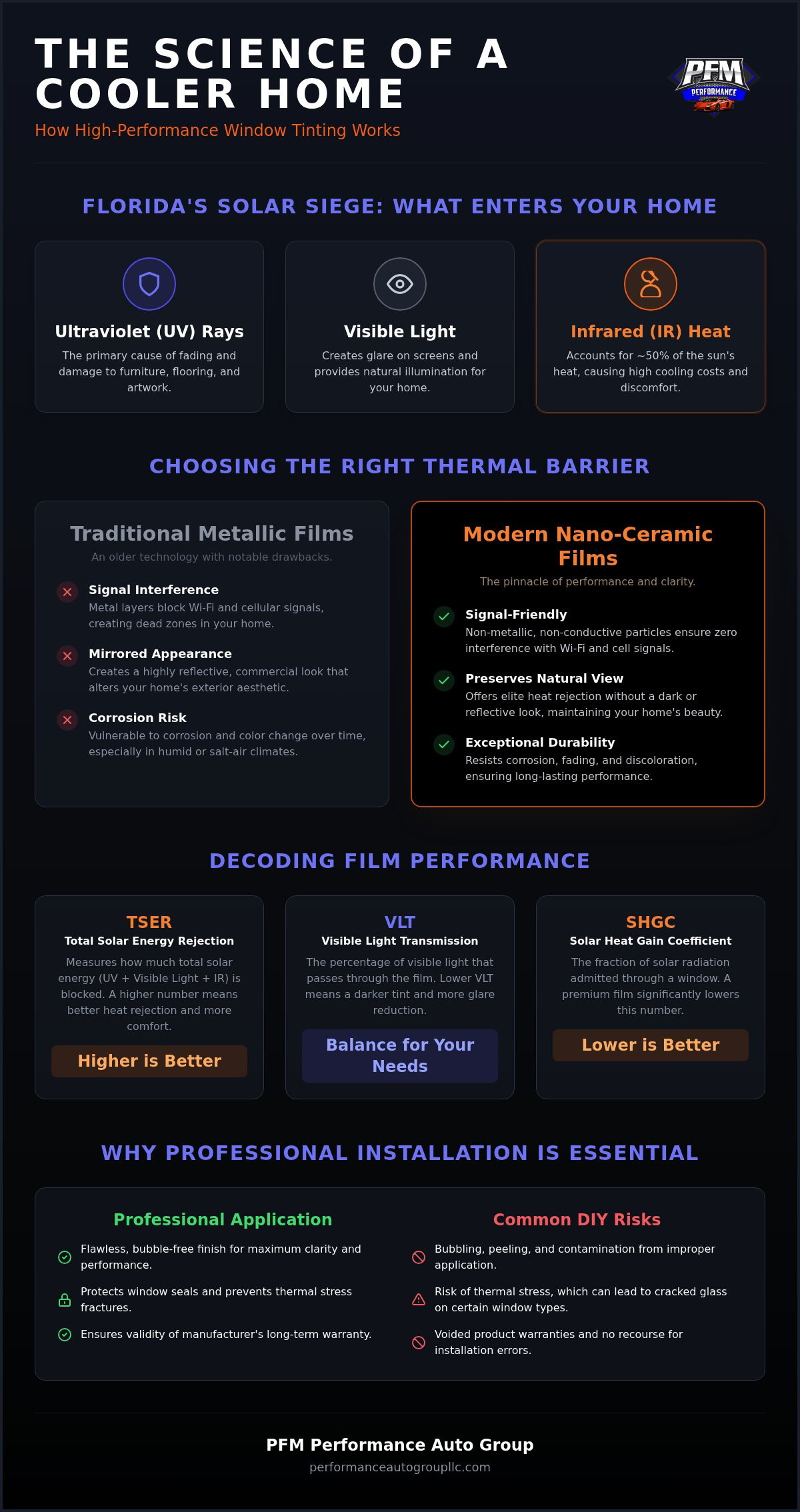
In Tampa, our homes often feel like they are under siege from the relentless afternoon sun. Standard window glass, while providing a beautiful view, is unfortunately a highly efficient conductor of thermal energy. This leads to a phenomenon known as solar heat gain, where your living spaces absorb more energy than your air conditioning can reasonably displace. To understand How Window Tint Works, you must first look at the sun’s output as three distinct parts: ultraviolet (UV) rays, visible light, and infrared heat. While UV rays cause the most damage to your flooring and furniture, it’s the infrared spectrum that accounts for roughly half of the heat you feel on your skin.
Modern window tint for home heat reduction works by selectively filtering these specific wavelengths. High-performance films are engineered to reflect infrared heat back toward the outdoors while allowing a curated percentage of visible light to pass through. This is particularly vital in sunrooms or west-facing living areas where the greenhouse effect occurs. In these spaces, heat enters through the glass and becomes trapped inside, causing temperatures to skyrocket far beyond the outdoor ambient air. Professional-grade films break this cycle at the glass level, preventing the energy from ever entering your home sanctuary.
The Science of Solar Heat Gain Coefficient (SHGC)
The Solar Heat Gain Coefficient (SHGC) measures the fraction of solar radiation admitted through a window, and for Florida homeowners, a lower number is always superior because it indicates less heat transfer. Applying a premium film can significantly lower the SHGC of your existing single or double-pane windows without the massive expense of a full glass replacement. It’s a precision-engineered upgrade that also manages solar absorption, which keeps your window frames from reaching the extreme temperatures that can degrade seals over time.
Why Curtains and Blinds Aren’t Enough
Many homeowners assume that heavy curtains or blinds are the answer to a hot room. While these treatments block visible light, they often fail to reject the actual heat energy. Heat passes through the glass and becomes trapped between the window and the fabric, creating a pocket of superheated air that eventually enters your room via convection. Professional window tint for home heat reduction solves this by stopping the heat at the exterior surface. You get to keep your natural light and your view while losing the unbearable temperature spikes that drive up your monthly energy costs.
Comparing Home Tint Technologies: Nano-Ceramic vs. Traditional Films
Choosing the right window tint for home heat reduction requires an understanding of the fundamental shift in film technology over the last few decades. Early dyed films were primarily aesthetic; they darkened the glass but offered little in the way of actual thermal protection. Eventually, industry standards moved toward metallic films, which used microscopic metal layers to reflect solar energy. While effective at heat rejection, these films introduced a heavy, mirrored look that many homeowners find intrusive, and they frequently interfere with modern home connectivity. Digital signals for Wi-Fi and cellular devices often struggle to penetrate the metal barrier, leading to frustrating dead zones inside your own residence.
The introduction of Black Pearl Nano Ceramic by Madico changed the landscape for discerning property owners. This technology provides non-reflective heat rejection, meaning your home retains its architectural integrity without looking like a commercial office building. It’s a sophisticated approach that prioritizes both performance and aesthetic refinement, ensuring that your view remains the focal point of every room.
The Rise of Nano-Ceramic Technology
Nano-ceramic technology represents the current pinnacle of window film engineering. Unlike metallic options, ceramic films utilize non-conductive, non-metallic particles that are small enough to be invisible to the naked eye. These particles are specifically tuned to block the infrared spectrum, which means you get elite heat rejection without needing a dark or reflective tint. This technology is particularly resilient against the harsh environmental factors common in Hillsborough County. Ceramic films don’t corrode or change color when exposed to salt air and high humidity, ensuring your investment remains clear and effective for years. You can explore these advanced options through PFM’s window tinting solutions to find the perfect fit for your property’s specific orientation.
Traditional Reflective and Dual-Reflective Films
There are still scenarios where traditional reflective films serve a purpose, particularly for homeowners prioritizing maximum daytime privacy. These films create a “one-way mirror” effect that prevents passersby from seeing into your living areas during the day. However, standard reflective films often create a frustrating “internal mirror” at night, where the interior lights reflect off the glass and block your view of the outdoors. Dual-reflective films solve this by using a different coating on the inside, maintaining your nighttime visibility. While silver-based films offer high heat rejection, they cannot match the sophisticated, neutral clarity of ceramic alternatives.
Selecting the right technology is about balancing your need for privacy with your desire for a natural, high-clarity view. If you are ready to upgrade your home’s efficiency and comfort, you can schedule a professional consultation to see how these advanced films look on your own windows.
Decoding Performance Metrics: TSER, VLT, and ROI
When you begin researching window tint for home heat reduction, you’ll likely encounter a confusing array of acronyms and percentages. Many homeowners mistakenly believe that a darker film automatically provides better thermal protection. In reality, the darkness of a tint is often unrelated to its ability to reject heat. Understanding the technical specifications behind the film is the only way to ensure you are making a sound investment for your property’s long-term comfort and efficiency.
TSER: The Only Number That Truly Cools Your Home
Total Solar Energy Rejected (TSER) is the gold standard metric for evaluating any window film. While many retail products only highlight UV rejection, TSER measures the film’s ability to block the entire solar spectrum, including ultraviolet rays, visible light, and near-infrared energy. It is the most accurate predictor of how much cooler your rooms will actually feel during a Tampa summer. High-performance ceramic films often achieve impressive TSER ratings without being excessively dark.
- UV Rejection: High-end films block up to 99% of harmful UV rays, protecting your skin and preventing your interior fabrics from fading.
- Infrared Rejection: Ceramic window films can block 65% or more of infrared heat, which is the primary source of the “burning” sensation you feel near a sunny window.
- Visible Light: Managing the heat from visible light allows for a significant temperature drop without needing a “blacked-out” look.
A high TSER rating directly reduces your AC compressor cycling. When your windows effectively block thermal energy, your cooling system doesn’t have to work as hard to maintain your desired temperature, which extends the life of your HVAC unit and lowers your monthly energy costs.
Visual Clarity and Aesthetic Impact
Visible Light Transmission (VLT) refers to the percentage of light that passes through the glass. Choosing the right VLT is a balancing act between your privacy needs and your desire for a bright, airy home. For most Tampa residences, a neutral VLT provides a natural look that complements local architecture while still offering significant heat rejection. It’s also important to consider compatibility with your existing glass; for instance, modern films are designed to work seamlessly with Low-E coatings, enhancing their performance rather than hindering it.
Investing in professional-grade film provides a measurable return on investment through energy savings and the preservation of your home’s interior. By selecting a film with the right balance of TSER and VLT, you create a sanctuary that remains comfortable even when the Florida sun is at its peak. It’s a meticulous upgrade that pays dividends in both financial savings and daily quality of life.
Professional Installation vs. DIY: Protecting Your Investment
It’s tempting to view window tinting as a simple weekend project. Retailers often market DIY kits as a cost-effective shortcut, yet these products rarely provide the longevity or performance required for the Florida climate. A common sight in Tampa neighborhoods is window film that has begun to purple, bubble, or peel at the corners within just a few seasons. These failures usually stem from improper surface preparation or low-grade adhesives that simply can’t withstand our intense UV exposure. When you choose professional window tint for home heat reduction, you aren’t just paying for the material. You’re investing in a precision application that secures your property’s value for the long term.
The Danger of Incorrect Film Selection
The most significant risk of DIY installation isn’t aesthetic; it’s structural. Modern homes often feature double-pane, insulated glass units (IGUs) that are sensitive to thermal expansion. If you apply a film with high solar absorption to the wrong type of glass, the heat trapped between the panes can cause the glass to shatter. Professionals mitigate this risk by using specialized glass-to-film compatibility charts to ensure the selected window tint for home heat reduction is safe for your specific window construction. In our high-moisture environment, we also utilize specific edge-sealing techniques to prevent “fingering” or moisture intrusion that can ruin the film’s clarity. Most manufacturer warranties are also strictly limited to professional installs, leaving DIYers with no recourse if the product fails.
The PFM Meticulous Installation Standard
Our approach is rooted in the philosophy of the Master Craftsman. We don’t just “stick” film to glass; we perform a full restoration of the surface. We begin with a multi-stage glass decontamination process that goes far beyond a standard window cleaning. Every square inch of the glass and the surrounding frame is meticulously scrubbed to remove microscopic dust, paint overspray, and pollutants that cause bubbling. We then utilize precision cutting techniques to ensure a seamless, factory-look finish that covers the glass perfectly from edge to edge. This level of detail is what separates a temporary fix from a permanent home improvement. For those seeking the best House Window Tinting Near Me, our process ensures that your view remains crystal clear while your home stays cool. We take pride in earning your business through a dedication to excellence that you can see in every window we touch.
Premium Residential Tinting in Tampa: The PFM Difference
PFM Performance Auto Group operates as more than a service provider. We are your trusted advisors in the pursuit of a more efficient and comfortable home. With over 20 years of experience serving the Hillsborough County community, we’ve seen how the Florida sun can compromise even the most beautiful properties. Our team doesn’t believe in “good enough” solutions. We exclusively utilize premium Black Pearl Nano Ceramic by Madico for our residential clients because it offers the elite performance your investment deserves. This isn’t just about utility. It’s about a meticulous commitment to craftsmanship that preserves the character of your home while delivering modern thermal protection.
Protecting Your Tampa Home’s Interior
The damage caused by the sun extends far beyond high temperatures. High-end window tint for home heat reduction is your primary defense against the silent degradation of your interior. Professional-grade films block up to 99% of harmful UV rays. This level of protection is essential for stopping the premature fading of hardwood floors, custom cabinetry, and expensive artwork. Beyond property preservation, there is a significant health benefit to consider. Reducing skin exposure to UV rays while you are indoors is a vital part of a wellness-focused home environment. While you explore your options, it’s helpful to understand the Florida Window Tint Law to see how local standards prioritize both safety and performance in our unique climate.
Schedule Your Professional Consultation
Living in a home that feels like a greenhouse is a daily frustration that you don’t have to endure. Beyond the heat, the intense glare from the sun can cause significant eye strain during your morning coffee or while working in a home office. Our goal is to move you from being hot and frustrated to feeling cool and protected. We treat every residence with the same “high-end boutique” care that has defined our business for two decades. We take pride in our history and the relationships we’ve built with Tampa homeowners. Every project is an opportunity for us to earn your business through precision and exceeding your expectations. Transform your living spaces into the sanctuary they were meant to be. Secure your comfort. Protect your legacy.
Elevate Your Home Comfort with Precision Thermal Protection
Reclaiming your Tampa home from the intense sun is about more than just lowering the thermostat. It’s a calculated investment in the longevity of your interior and the daily well-being of your family. By choosing high-performance window tint for home heat reduction, you transition from merely managing discomfort to enjoying a sanctuary of consistent, cool clarity. We’ve detailed how technical metrics like TSER provide the real relief you need, far outpacing the simple darkness of retail alternatives.
As an authorized installer of Black Pearl Nano Ceramic by Madico, PFM Performance Auto Group brings a specialized understanding of heat rejection specifically tuned for our local climate. Our meticulous “Master Craftsman” installation process ensures that every edge is perfect and every pane is protected against thermal stress. You don’t have to settle for sky-high energy bills or faded furnishings. Trusting a seasoned advisor ensures your property receives the elite care it deserves.
Take the first step toward a cooler, more efficient residence. We look forward to earning your business and helping you transform your home into a masterpiece of modern comfort.
Frequently Asked Questions
Does window tint for home heat reduction really work?
Yes, professional window tint for home heat reduction is highly effective at creating a thermal barrier that blocks solar energy before it enters your living space. High-performance films, like the Black Pearl Nano Ceramic we utilize in Hillsborough County, can block approximately 65% or more of infrared heat. This leads to a measurable drop in indoor temperatures. Your air conditioning unit cycles less frequently, which directly translates to lower monthly energy consumption and increased comfort.
Will home window tinting make my house too dark inside?
Not necessarily. Modern ceramic technology allows you to choose a Visible Light Transmission (VLT) that feels completely natural. While traditional dyed films required a dark shade to block heat, nano-ceramic particles filter infrared rays without needing a heavy tint. Many of our clients select neutral films that maintain a bright, airy atmosphere while still providing elite heat rejection. You can preserve your natural light and your views without the oppressive glare of the sun.
Can window film cause my double-pane windows to crack?
Thermal stress breakage is a risk only when an incompatible film is applied to specific glass types like double-pane units. We prevent this by strictly following manufacturer glass-to-film compatibility charts. These professional guides ensure the film doesn’t cause excessive heat absorption within the sealed glass unit. Our 20 years of experience in the Tampa market allows us to identify your glass type and select a safe, high-performance product that protects your home’s structural integrity.
How much can I actually save on my Tampa electric bill with window tint?
While individual savings depend on your home’s orientation and current insulation, reducing solar heat gain significantly lowers the load on your HVAC system. By blocking up to 75% of total solar energy, window film prevents the greenhouse effect that forces your AC to run constantly. Many homeowners in the Hillsborough County area report a noticeable reduction in their cooling costs, particularly during the grueling summer months. It’s one of the most cost-effective ways to improve home efficiency.
How long does professional residential window tinting last?
Professional-grade residential films are engineered to last for decades. Unlike DIY kits that may bubble or purple after a few seasons in the Florida humidity, our premium Black Pearl Nano Ceramic by Madico is designed for long-term durability. The meticulous cleaning and preparation process we employ ensures a permanent bond between the film and the glass. When installed by a master craftsman, your window tint for home heat reduction remains clear and effective, backed by comprehensive manufacturer warranties.
Can I see out of my windows at night if they are tinted for privacy?
Yes, you can still see outside at night. Standard privacy films can sometimes create a mirrored effect when your interior lights are on, but dual-reflective and ceramic technologies minimize this internal reflection. These advanced films are designed to maintain your visual clarity during the evening hours. While privacy films prevent outsiders from seeing in during the day, they don’t turn your windows into mirrors at night, allowing you to enjoy your evening landscape without obstruction.
Does home window tinting require special cleaning or maintenance?
Maintenance is remarkably simple, though you should avoid certain chemicals. You don’t need expensive specialized products; a soft cloth or squeegee with a mild, ammonia-free soap solution is sufficient. Ammonia can eventually degrade the film’s scratch-resistant coating and adhesives, so it’s best to stick to gentle cleaners. Once the film has fully cured after installation, it requires no more effort to maintain than standard glass, though it provides a much higher level of protection for your property.
What is the difference between car tint and home window tint?
The primary difference lies in the chemical construction and how the films handle heat. Automotive films are designed to be heat-shrunk to fit curved glass, while residential films are engineered for flat glass and must manage different thermal expansion rates. Using car tint on a home window can lead to seal failure or glass breakage because it doesn’t account for the specific thermal stress of building glass. We use dedicated residential products that are specifically optimized for architectural needs.