
Ceramic Tint vs Regular Tint: The 2026 Florida Driver’s Comparison Guide
Did you know that the right window film can drop your car’s internal temperature by up to 25°F during a sweltering Tampa afternoon? We all understand that the Florida sun is more than just bright. It’s a relentless force that turns leather seats into furnaces and slowly degrades your dashboard until it cracks. You want relief. However, the technical jargon surrounding ceramic tint vs regular tint often makes a simple upgrade feel like a complex engineering project. It’s easy to feel overwhelmed by specs like TSER and IR rejection when you just want a cooler, safer ride.
This guide will clarify the debate to show you why the right choice is the difference between simple privacy and total climate control. We believe in treating your vehicle with the meticulous care of a master craftsman; we ensure every detail protects your investment. You’ll learn how modern nano-ceramic technology outperforms traditional dyed films, especially under the 2026 Florida sun. We’ll break down the latest light transmission laws, compare heat rejection capabilities, and explain how to achieve crystal clear night visibility without compromising your electronic signal strength.
Key Takeaways
- Learn the core structural differences in the ceramic tint vs regular tint debate to identify which film truly guards your vehicle’s interior.
- Explore the science of heat rejection and how premium nano-ceramic particles block the infrared rays that traditional dyed tints simply cannot stop.
- Understand the “signal clarity” factor to ensure your GPS and smartphone remain fully functional without interference from outdated metallic film layers.
- Calculate the long-term value of your investment by seeing how high-end protection prevents the costly “Tampa heat tax” on your leather and dashboard.
- Discover why professional handling of Black Pearl Nano Ceramic film is vital for achieving a flawless, durable finish that exceeds standard shop expectations.
Understanding the Basics: Ceramic vs. Regular Window Tint
Choosing the right film for your vehicle is no longer just about picking a shade of charcoal. It’s a significant investment in your property. For decades, the industry relied on simple materials to provide basic privacy. Today, the choice between ceramic tint vs regular tint represents a fundamental shift in how we protect our interiors from the Florida elements. We’ve moved beyond merely blocking visible light to specifically targeting the invisible rays that cause damage and discomfort. Understanding these differences is the first step in ensuring your car remains a sanctuary rather than a heat trap.
What is Regular Tint (Dyed Film)?
Regular tint is typically composed of layers of polyester infused with organic dyes. This manufacturing process creates the dark, sleek look many drivers desire for privacy or aesthetics. While it’s a budget-friendly way to change your car’s appearance, its functional performance is often limited. These films act like a dark shirt on a summer day; they absorb heat rather than reflecting it. Over time, the intense UV exposure in Hillsborough County causes the chemical bonds in the dye to break down. This degradation results in that unsightly purple hue and bubbling often seen on older vehicles. Window film technology has evolved significantly, yet many entry-level shops still rely on these basic dyed products that offer little more than a temporary cosmetic fix.
What is Ceramic Window Tint?
Ceramic tint represents the pinnacle of automotive protection and comfort. Instead of dyes or metallic particles that can interfere with your electronics, these films use microscopic, non-conductive ceramic particles. These nano-particles are small enough to maintain perfect visibility but dense enough to block the sun’s most harmful rays. Premium options, such as Black Pearl Nano Ceramic Window Tint By Madico, are meticulously engineered to reject infrared light. This is the specific part of the solar spectrum responsible for the “burning” sensation on your skin during a Tampa commute. By utilizing advanced nano-technology, these films provide a level of durability and heat management that regular films simply cannot match.
The most critical realization for any discerning driver is that darkness does not equal cooling power. A regular dyed film can be nearly opaque and still allow significant heat to enter your cabin. In contrast, a high-quality ceramic film can be virtually clear yet reject more solar energy than the darkest cheap tint. We focus on this distinction because it allows us to prioritize your comfort without compromising your ability to see clearly at night. It’s about precision. It’s about choosing a solution that lasts the lifetime of your vehicle while providing the elite level of service your investment deserves. For a comprehensive look at whether this upgrade makes sense for your specific situation, our detailed breakdown of is ceramic tint worth it in Florida covers everything you need to make an informed decision.
The Science of Protection: How Nano-Ceramic Technology Outperforms Dyed Films
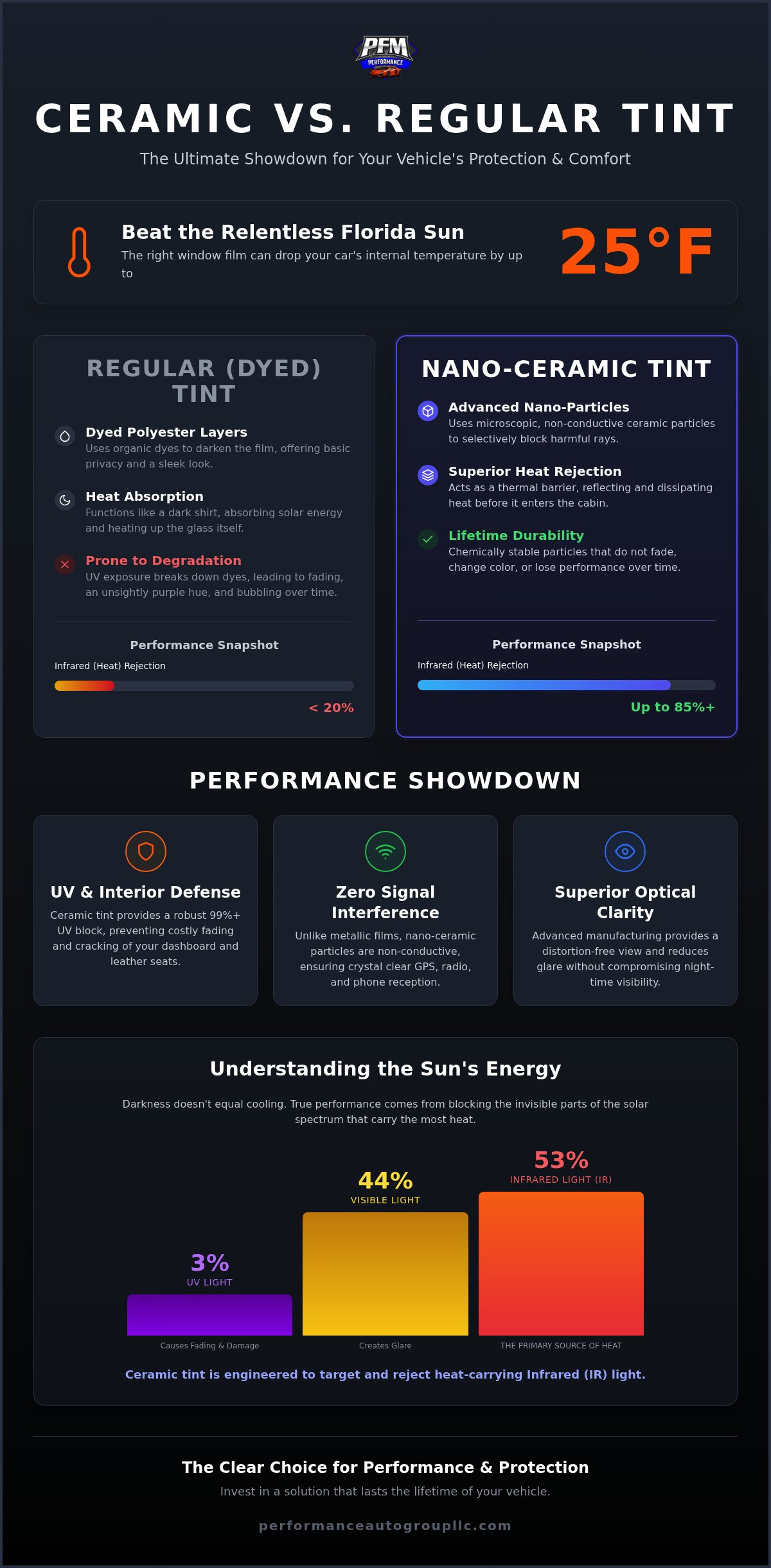
Sunlight is a complex mixture of energy. When we look at the ceramic tint vs regular tint comparison, we’re really looking at how a film manages the solar spectrum. Regular dyed films are designed to filter visible light. They make the glass look darker. However, visible light only represents about 44% of the sun’s energy. The rest is comprised of Ultraviolet (UV) rays and Infrared (IR) radiation. While dyed films might offer a slight reduction in glare, they struggle to address the heat-carrying infrared spectrum. Nano-ceramic technology changes this dynamic by targeting the energy you can’t see.
Ceramic films act as a high-tech thermal barrier. Instead of absorbing heat into the glass, the ceramic particles reflect and dissipate energy before it enters your vehicle. This insulation effect keeps the glass itself cooler to the touch. Total Solar Energy Rejection (TSER) serves as the ultimate performance metric by quantifying the total amount of solar energy a film blocks across the entire spectrum.
Infrared Rejection: The Secret to a Cool Cabin
Have you ever felt your skin “burning” even with the AC on full blast? That sensation is caused by infrared radiation. It’s the primary source of solar heat. Comparing the IR rejection of ceramic tint vs regular tint highlights a staggering difference in efficiency. Regular dyed films often reject less than 20% of these rays; they simply aren’t built for thermal management. High-end ceramic films can reject 50-70% of infrared heat, with premium nano-ceramic options pushing those numbers up to 90% or more. By blocking this energy, your air conditioning system doesn’t have to work nearly as hard. This efficiency preserves your fuel or battery range. It’s a meticulous approach to comfort. If you’re ready to experience this level of protection, you can schedule a consultation with our master installers to find the perfect fit for your car.
UV Protection and Interior Longevity
Protection isn’t just about temperature. It’s about the longevity of your investment. Florida’s intense UV exposure is notorious for causing leather to crack and dashboards to warp. Most quality ceramic films provide 99% UV rejection. This creates a shield for your electronics and upholstery. It also protects your skin from long-term sun damage during those grueling Tampa commutes. While you consider these benefits, it’s vital to stay within the legal limits. You can review Florida’s official window tinting laws to ensure your new high-performance film meets state standards for light transmission. We treat every installation as a form of care for your property, ensuring your vehicle remains in showroom condition for years to come.
Performance Showdown: Heat Rejection, UV Defense, and Signal Clarity
The real test of any automotive film happens at high noon on a July afternoon in Tampa. When comparing ceramic tint vs regular tint, the performance gap becomes a matter of daily survival for your vehicle’s interior. Total Solar Energy Rejection (TSER) is the gold standard for measuring this effectiveness. While basic dyed films might offer a TSER of roughly 20% to 35%, premium nano-ceramic options frequently exceed 50% to 60%. This isn’t just a number on a spec sheet. It’s the tangible difference between a cabin that feels like an oven and one that stays comfortably cool. Durability is another major factor. The 2026 Florida sun is unforgiving to organic dyes. They tend to fade and bubble within a few years, whereas ceramic films are structurally stable and designed to maintain their integrity for the long haul.
Electronic Signal Interference Explained
Many drivers don’t realize that older “regular” tints often rely on microscopic metallic layers to reflect heat. While effective at blocking some solar energy, these metal particles act as a barrier to radio frequencies. This leads to dropped calls, sluggish GPS updates, and frustrating issues with keyless entry systems. Modern vehicles are essentially rolling computers. They require clear paths for data. Because ceramic particles are non-conductive, they allow signals to pass through the glass without any degradation. This ensures your CarPlay, Android Auto, and satellite navigation systems remain perfectly functional. If you’ve recently upgraded your vehicle’s technology, our team at PFM Car Audio can help ensure your window film and electronics work in perfect harmony.
Visual Clarity and Glare Reduction
Safety behind the wheel depends on your ability to process visual information quickly. Regular tints can sometimes suffer from a “hazy” appearance or distorted optical quality, especially when driving at night or in low-light conditions. Premium ceramic films, particularly the Black Pearl line, are engineered for maximum clarity. They reduce the blinding glare from the sun and oncoming headlights without making the world look muddy. This high-definition view significantly reduces eye strain during long Florida commutes. Beyond visibility, the 99% UV rejection offered by these films is actually recommended by the Skin Cancer Foundation as part of a comprehensive sun protection regimen. We take pride in providing a product that doesn’t just look good; it actively protects your health and your safety on the road. It’s a level of meticulous care that turns a standard car into a high-performance environment.
Is Ceramic Tint Worth the Investment for Tampa Drivers?
Evaluating the upfront cost often leads drivers to a crossroads. Does one choose a simple cosmetic upgrade or a permanent solution? The ceramic tint vs regular tint debate is often settled when you realize the hidden “Tampa Heat Tax.” This is the cost you pay every day through increased fuel consumption as your AC works overtime and the eventual replacement of a film that has bubbled or turned purple. We advocate for a “one-time” philosophy. Investing in high-caliber materials from the start avoids the frustration of doing the job twice. You can plan your budget more effectively by reviewing our How Much to Tint a Car in 2026 guide.
The Florida Climate Factor
Hillsborough County presents a unique challenge for automotive films. The combination of high UV indices and relentless humidity creates an environment that rapidly degrades cheap adhesives. While a regular film might survive elsewhere, the Florida sun acts as a catalyst for failure. Ceramic tint serves as a structural shield for your car’s cooling system. During a 45-minute traffic jam on I-4, the difference is transformative. Your cabin reaches a comfortable temperature faster and stays there without the AC fan constantly running at maximum speed. It’s an elite level of protection that preserves your dashboard and upholstery from the state’s extreme conditions. Drivers who have made the switch consistently report that ceramic tint is worth it in Florida’s demanding climate, particularly when factoring in the long-term savings on interior repairs and fuel costs.
Warranty and Peace of Mind
A warranty is only as strong as the shop that stands behind it. Entry-level dyed films usually offer limited warranties because manufacturers know organic dyes will eventually fail. Premium ceramic films typically come with a lifetime warranty against fading, peeling, and bubbling. Since 2004, PFM Performance Auto Group has seen hundreds of budget tint jobs fail within just a few years. Choosing an established, local authorized dealer ensures that the promise of quality is honored for as long as you own your vehicle. This long-term security is a hallmark of our meticulous approach to vehicle care and our dedication to the community we serve.
Meticulous Application: Why Professional Installation at PFM Performance Auto Group Matters
The most advanced technology in the world is only as good as the hands that apply it. In the ceramic tint vs regular tint comparison, the installation process for ceramic film is significantly more demanding and requires a higher degree of technical skill. While regular dyed films are thin and more forgiving, premium nano-ceramic films are thicker and require sophisticated heat-shrinking expertise to contour perfectly to the complex curves of modern automotive glass. At PFM Performance Auto Group, we don’t just apply film; we execute a meticulous protection plan for your property. A hasty installation at a high-volume shop can lead to light gaps, dust contamination, or premature peeling, which is why choosing a master craftsman is essential for a high-end result.
The PFM Precision Process
Our commitment to precision begins with a controlled, dust-minimized environment. We utilize advanced custom-cut plotter technology to ensure every edge is exact, preventing the unsightly gaps and jagged borders common in hand-cut applications. Modern vehicles are essentially rolling computers, featuring sensitive sensors, delicate door-panel leather, and complex car audio electronics that can be damaged by excess moisture. During our wet-apply process, we take the extra steps to shield these vital components, treating your vehicle with the same care we would our own. Every project undergoes a rigorous final inspection to ensure the finish is flawless, the clarity is absolute, and the installation meets our high boutique standards.
Ready to Shield Your Vehicle?
The choice is clear for any driver who values total climate control and the long-term preservation of their investment. While regular films offer a temporary cosmetic change, ceramic technology provides a permanent shield against the relentless Florida sun. You deserve the premium reassurance that comes with elite craftsmanship and high-end protection. We invite you to experience the difference that twenty years of local expertise can make for your vehicle’s comfort and resale value. We have earned our reputation in Hillsborough County through hard work and an uncompromising drive for perfection.
If you’re ready to transform your driving experience and protect your interior from the Tampa heat, book your Black Pearl Nano Ceramic installation at PFM Performance Auto Group today. For a deeper look at achieving the perfect finish and navigating the technical specs of modern film, explore our comprehensive guide on the Best Car Window Tinting in Tampa.
Elevate Your Driving Standard with High-End Protection
Choosing the right window film is an investment in your daily comfort and the long-term health of your vehicle. We’ve seen that the choice between ceramic tint vs regular tint is a decision between a temporary cosmetic upgrade and a permanent climate control solution. By prioritizing nano-ceramic technology, you ensure your car remains a sanctuary against the intense Florida sun while preserving the integrity of your leather and dashboard. Quality protection eliminates the hidden costs of interior fading and air conditioning strain.
Since 2004, we’ve served the Tampa community as a trusted advisor for vehicle preservation. As an authorized Madico dealer, we bring over two decades of local expertise to every project. We understand the specific challenges of the Hillsborough County climate and apply a master craftsman’s touch to every installation. Our commitment to precision ensures your investment is guarded by the highest standards of durability and clarity.
Your vehicle deserves a guardian that values meticulous care and elite performance. We look forward to earning your business and helping you enjoy a cooler, safer, and more refined driving experience for years to come.
Frequently Asked Questions
Is ceramic tint really that much better than regular tint?
Yes, ceramic tint is significantly better for heat management and durability. While regular tint relies on dark dyes to block light, ceramic films use nano-particles to reflect infrared rays. This technology allows for superior thermal protection without compromising visibility. It’s the difference between a cosmetic film and a functional shield for your car’s interior, providing a level of care that regular films simply cannot match.
Does ceramic window tint look darker than regular tint?
No, ceramic film does not have to look darker to provide better protection. In the ceramic tint vs regular tint comparison, ceramic wins because it can be nearly clear while still rejecting more heat than the darkest dyed films. This allows you to stay within legal limits while enjoying maximum comfort and visibility without the “blacked out” look if you prefer a lighter aesthetic.
Can I use ceramic tint on my windshield legally in Florida?
In Florida, you may only apply non-reflective tint above the manufacturer’s AS-1 line on your windshield. However, we specialize in applying high-clarity ceramic films that provide massive heat rejection while remaining virtually invisible to the naked eye. This meticulous approach ensures you stay compliant with state regulations while significantly reducing the solar energy entering through the largest piece of glass on your vehicle.
Will regular tint interfere with my car’s GPS or radio?
Regular tint that contains metallic particles will often interfere with GPS, cellular, and radio signals. These metallized layers act as a barrier to electronic frequencies, leading to dropped calls or navigation lag. Ceramic films are entirely non-conductive. They ensure that your keyless entry, smartphone integration, and satellite systems function with perfect clarity, which is essential for modern vehicles packed with advanced technology.
How long does ceramic tint last compared to dyed film?
Ceramic tint typically lasts the entire lifespan of your vehicle, whereas dyed film often fails within two to four years in the Florida sun. The intense UV exposure in Tampa causes organic dyes to break down, leading to fading or a purple tint. Because ceramic particles are inorganic and stable, they don’t lose their color or protective properties over time, making them a one-time investment.
Does ceramic tint help with night driving glare?
Yes, high-quality ceramic films significantly reduce glare from the sun and oncoming headlights. Premium options like Black Pearl Nano Ceramic are engineered for superior optical clarity, which reduces eye strain during night driving. Unlike some regular films that can appear hazy or distorted, ceramic technology maintains a sharp, high-definition view of the road in all lighting conditions, improving overall safety for the driver.
How much cooler will my car be with ceramic tint?
You can expect your car’s cabin to be up to 25°F cooler when using premium ceramic film compared to regular dyed tint. This massive reduction in temperature happens because the film blocks the majority of infrared heat before it even enters the glass. It allows your air conditioning system to reach a comfortable temperature much faster, even after your car has been sitting in a sunny Florida parking lot.
Is ceramic tint worth it if I only drive short distances in Tampa?
Investing in the ceramic tint vs regular tint debate is absolutely worth it for short Tampa commutes. Even during a ten-minute drive, the UV protection is working to prevent your dashboard from cracking and your leather from drying out. Also, the immediate heat rejection means you aren’t sweating through your clothes before you reach your destination. It’s about protecting your investment and your comfort every time you turn the key.