
A Comprehensive Guide to Tinting House Windows: Boosting Comfort and Efficiency in 2026
Did you know that your home’s glass is often the weakest link in your climate control, allowing up to 85% of solar heat to bypass your insulation entirely? It’s a common frustration to watch expensive interior furnishings fade under the sun or feel like you’re losing your privacy to every neighbor who walks by. You’ve worked hard to build a beautiful home, and you deserve a sanctuary that feels both secluded and cool. When you choose to tint house windows, you’re not just adding a decorative layer; you’re investing in a professional-grade shield that protects your property and your peace of mind. Creating a true sanctuary also means looking after your family’s emotional health; for those seeking support for children or teens, Balanced Minds Psychology & Wellness provides specialized mental health services in Florida.
This guide will show you how to transform your home’s climate and efficiency through the latest window film technology. We’ll explore the most effective 2026 solutions, from advanced ceramic films to the updated reality of energy incentives and rebates. You’ll learn how a meticulous, expert approach to installation ensures your home remains a refined haven of comfort for years to come.
Key Takeaways
- Learn why Black Pearl Nano Ceramic film is the gold standard for achieving maximum heat rejection without compromising your home’s aesthetic.
- Identify the most effective way to tint house windows by mapping sun exposure to eliminate uncomfortable hot spots in your living spaces.
- Discover the critical differences between temporary DIY fixes and professional adhesive systems that ensure long-term durability and clarity.
- Evaluate the financial benefits of window film, including reduced monthly energy bills and a significantly lighter workload for your HVAC unit.
- Master the planning process to ensure your chosen film aligns perfectly with your specific needs for privacy, glare reduction, and interior protection.
Understanding Why Homeowners are Tinting House Windows in 2026
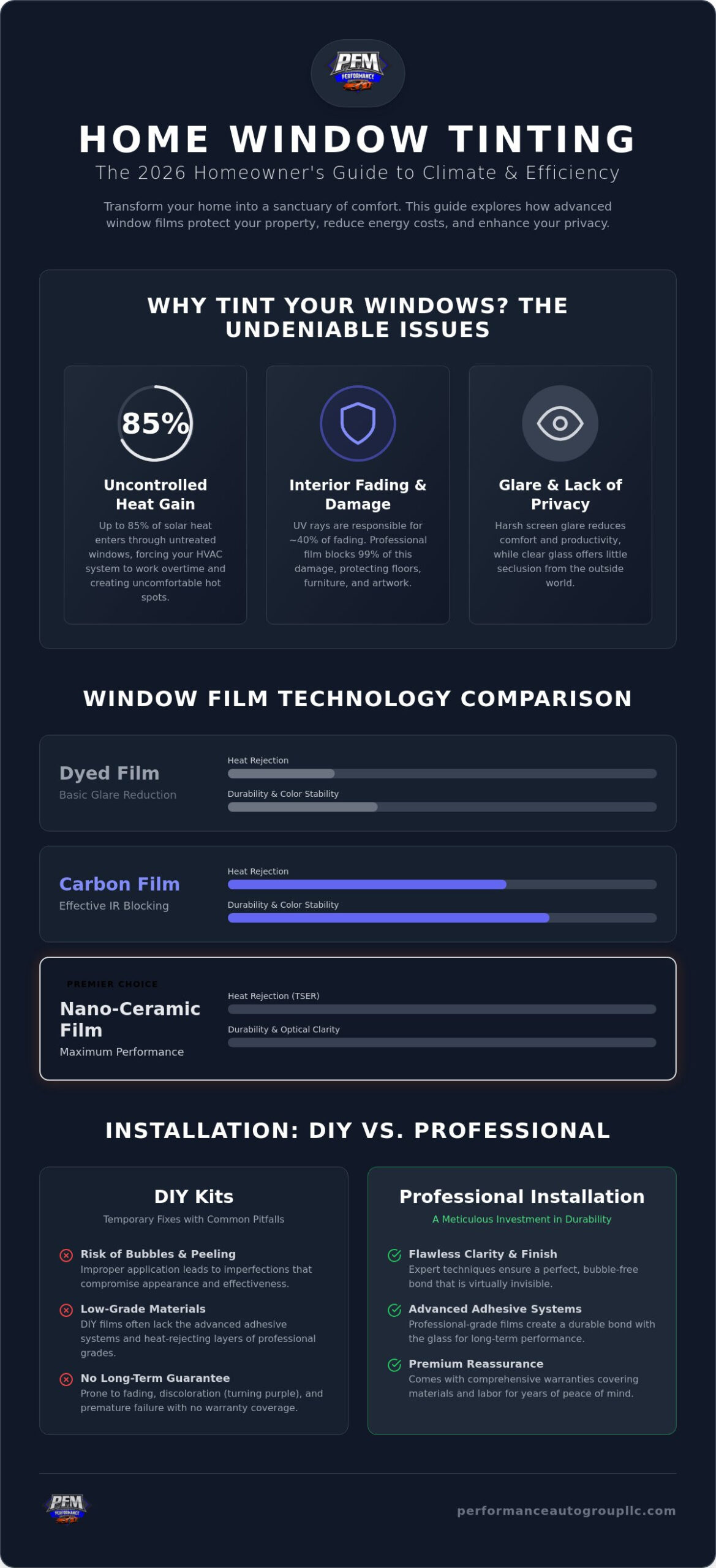
Your home’s windows are more than just a portal to the outdoors. They’re the primary entry point for solar energy that can quickly turn a comfortable living room into an unusable “hot spot.” In 2026, many discerning homeowners choose to tint house windows not for aesthetics alone, but as a critical upgrade to their property’s envelope. Standard residential glass is designed for clarity; however, it often fails to provide a meaningful defense against the intense Florida sun. By applying a professional-grade solar barrier, you’re essentially installing a high-tech filter that manages how energy enters your private sanctuary. It’s a meticulous approach to home maintenance that treats your windows as a precision-engineered component of your climate control system.
For those seeking a comprehensive overview of window film, it’s clear that the technology has moved far beyond the simple dyed plastics of the past. Today’s films are sophisticated multi-layered systems designed to tackle the specific challenges of Hillsborough County’s climate. Without this protection, your HVAC system is forced into a constant battle against radiant heat, leading to higher monthly costs and unnecessary wear on your equipment. Professional window tinting provides the “premium reassurance” that your home remains cool, private, and protected without sacrificing the natural light you love.
The Science of Solar Heat Gain
Glass is naturally conductive. It absorbs thermal energy and radiates it directly into your living space, which is why you might feel a 10-degree difference between your kitchen and a hallway. Professional films work by rejecting infrared light before it ever passes through the pane. This isn’t just about shade; it’s about energy management. Total Solar Energy Rejected (TSER) is the gold standard for film performance because it measures the combined percentage of infrared, visible light, and UV energy that the film prevents from entering the home. By focusing on TSER, you ensure that your investment provides maximum thermal comfort rather than just a darker room.
Protecting Your Interior Investment
The sun brings more than just heat; it brings silent destruction to your interior finishes. UV rays account for roughly 40% of the fading process that ruins expensive hardwood floors, custom upholstery, and irreplaceable artwork. When you tint house windows with high-performance films, you block up to 99% of these harmful rays, effectively extending the life of your furnishings for decades. Just as you shield your home, you can learn more about professional aesthetic treatments that help protect and rejuvenate your skin from the cumulative effects of UV exposure.
Beyond material protection, these films solve the daily annoyance of screen glare. You shouldn’t have to draw the curtains and sit in a dark room just to watch TV or work on a laptop. Modern ceramic technology allows you to maintain your view while softening the harsh, direct light that causes eye strain. It creates a consistent temperature and visual environment across every room, ensuring your home feels as good as it looks.
While protecting your interior is a priority, maintaining your home’s exterior surfaces is just as essential for long-term value; you can learn more about specialized roof and paver cleaning to keep your property looking its best.
Types of Window Film: From Decorative to Nano Ceramic
Selecting the right material is the most critical decision in your journey to tint house windows. It’s easy to be misled by temporary solutions that prioritize low cost over long-term performance. We believe in providing a solution that stands the test of time, reflecting the industry-recognized benefits of protection, clarity, and structural integrity. In 2026, the spectrum of residential film has expanded, but three primary categories define the market:
- Dyed Films: These are primarily used for basic glare reduction and aesthetics. While affordable, they lack the high-level heat-rejection power required for intense climates and can fade over time.
- Carbon Films: This is a significant step up, offering a sophisticated matte finish. They utilize carbon particles to block infrared light effectively without the risk of the film turning purple.
- Ceramic Films: These represent the pinnacle of window technology. These films use nano-ceramic particles to provide maximum heat rejection while maintaining incredible optical clarity.
For those living in Hillsborough County, Black Pearl Nano Ceramic by Madico is the premier choice. It’s engineered to withstand the relentless Florida sun, offering a meticulous balance of aesthetic refinement and technical power. Beyond heat control, we also offer safety and security films. These are designed to strengthen the glass itself, holding shards together during impacts or severe storms. This provides an essential layer of security for your family and property. For a deeper dive into how to evaluate and select the best window tinting film for home in Florida’s demanding climate, our 2026 guide covers everything from UV protection to cooling cost reductions in detail.
The Nano Ceramic Advantage
Nano-ceramic technology is a game-changer for the modern home. Because these films use non-conductive particles instead of metal, they won’t interfere with your Wi-Fi, cell signals, or smart home devices. This is a common failure point in older, metallic films. Ceramic’s durability is equally impressive. It’s a permanent upgrade that won’t bubble or peel when applied by a master craftsman. You get a crystal-clear view that feels natural, avoiding the dark, closed-in atmosphere created by lower-quality tints.
Privacy and Aesthetic Options
Privacy doesn’t have to mean living in the dark. Daytime privacy films utilize reflective technology to create a one-way mirror effect, allowing you to enjoy your view while prying eyes see only a sleek, polished surface. For internal glass partitions or bathrooms, decorative frosted and etched films offer a permanent privacy solution that still allows soft, diffused light to fill the room. A discerning homeowner will carefully balance Visible Light Transmission (VLT) with their home’s architecture. If you’re unsure which VLT or style suits your space, it’s best to consult with a specialist who understands the nuanced relationship between glass, light, and privacy.
Professional Installation vs. DIY Kits: Making the Right Choice
The temptation to save a few dollars by attempting a weekend project is understandable. However, when you decide to tint house windows, you’re modifying one of the most visible and expensive components of your home’s architecture. DIY kits frequently result in a finish that is less than professional. Small bubbles, trapped dust particles, and jagged, uneven edges can turn a premium property into a source of frustration. These imperfections aren’t just aesthetic issues; they represent points where the film is likely to peel or fail prematurely. Dust is the enemy. Without a controlled environment and specialized tools, it’s nearly impossible to prevent microscopic debris from ruining the bond between the film and the glass.
Professional-grade films utilize advanced chemical adhesive systems rather than simple static electricity. These adhesives create a permanent, crystal-clear bond that ensures the film remains optically clear and physically secure for decades. According to the International Window Film Association, the proper application of these materials is crucial for achieving the full spectrum of energy savings and safety benefits. A master craftsman doesn’t just “stick” the film on; they manage the chemical interaction between the adhesive and the glass surface to ensure long-term stability.
Warranty protection is perhaps the most significant reason to avoid the DIY route. Most premium manufacturers only honor their long-term warranties if the product is installed by a certified professional. If a DIY film bubbles or discolors after six months, you’re left with the difficult task of removal and the full cost of replacement. Beyond the warranty, there’s the risk of structural damage. Using the wrong type of film on certain dual-pane windows can cause thermal stress, leading to seal failure or even glass breakage. We act as your trusted advisor, ensuring the film selected is technically compatible with your specific window types.
The DIY “Static Cling” Reality
Many retail kits rely on static cling technology. While this makes them easy to remove, it also means they lack the technical layers required for high-level heat rejection. You’ll often notice a visual “haze” or “orange peel” texture in lower-quality products that disrupts your view. DIY makes sense for a temporary rental where you need a quick, removable fix. For a permanent home in Hillsborough County, it simply doesn’t provide the performance or the aesthetic refinement your property deserves.
The PFM Performance Standard
We approach every project with a perfectionist’s eye. Our process begins with a surgical-level cleaning of the glass to ensure no contaminants are trapped behind the film. We don’t settle for “good enough” cuts. Every piece is precision-trimmed to fit the unique shapes and sizes of your windows, resulting in a seamless finish that looks like the glass was tinted at the factory. You can learn more about our specific Residential Window Tinting in Tampa process and how we earn our clients’ business through meticulous craftsmanship.
How to Plan Your Home Window Tinting Project
Planning a project of this scale requires more than just an interest in aesthetics. It is a strategic audit of your home’s environmental performance. When you decide to tint house windows, you are making a long-term investment in your property’s value and your daily comfort. A haphazard approach leads to mediocre results, but a methodical plan ensures that every pane of glass works in your favor. We recommend a five-step process to ensure your project meets the high standards your home deserves.
- Identify your primary goal: Are you fighting unbearable afternoon heat, seeking total daytime privacy, or simply trying to stop the glare on your home office monitors?
- Assess sun exposure: Walk through your home at 3:00 PM. Identify which rooms feel like “hot spots” and which windows are the primary culprits.
- Choose your VLT: Visible Light Transmission (VLT) determines how much natural light enters the room. A lower percentage means a darker tint.
- Audit your glass type: This is a critical safety step. Dual-pane windows require specific film types to prevent thermal stress and seal failure.
- Schedule a consultation: Precise measurements and a professional assessment are the only ways to guarantee a seamless, long-lasting finish.
Assessing Your Home’s “Solar Load”
In Florida, west-facing windows are the primary drivers of high energy bills. These windows catch the punishing afternoon sun when temperatures are at their peak, forcing your HVAC system to work overtime. You can perform a simple diagnostic check yourself. During a sunny afternoon, place your hand flat against the interior glass; if the pane feels uncomfortably hot to the palm, it is a prime candidate for high-performance film. Managing this “solar load” in key areas like kitchens and master bedrooms will provide the most immediate relief to your monthly cooling costs.
While window film targets heat transfer through glass, a high-performance roof is your home’s primary shield against overhead solar radiation; for homeowners in the Tampa area, Rainier Roofing LLC provides the expert craftsmanship needed to ensure your roof is contributing to a cooler, more efficient home.
Choosing the Right “Look”
The “look” of your home is a reflection of your personal style. For a discerning homeowner, coordinating the film’s appearance with the home’s architecture is essential. VLT percentages range from nearly clear films that prioritize heat rejection to darker, high-privacy options. If you’ve already invested in Professional Car Window Tinting, you likely already appreciate the refined, polished look that high-quality film provides. We can help you select a residential film that complements your existing aesthetic while providing elite-level protection. To ensure your home receives this level of meticulous care, schedule your professional consultation with our team today.
Maximising Your ROI: Energy Savings and Longevity
Investing in your property requires a long-view perspective. When you choose to tint house windows, you’re making a calculated decision to reduce overhead costs while enhancing the structural integrity of your home’s climate control. Quality pays for itself. While the initial installation represents a commitment to excellence, the “payback period” is often shorter than homeowners expect. By significantly lowering the thermal load your air conditioning system must combat every afternoon, professional film provides a measurable reduction in monthly utility expenses. It’s a rare home improvement that offers both immediate lifestyle benefits and long-term financial recovery.
Beyond the monthly bills, the value-add to your home’s resale appeal is substantial. In the 2026 real estate market, energy efficiency is no longer a luxury; it is a baseline expectation for discerning buyers. A home equipped with professional-grade Nano Ceramic film signals that the property has been maintained with a meticulous eye for detail. This upgrade protects the interior investment you’ve already made in flooring and furniture, ensuring that the home looks as pristine during a showing as it did the day you moved in. You aren’t just buying film; you’re securing the future value of your largest asset. Homeowners who want to understand the full spectrum of options available should explore our comprehensive resource on window tinting film for home, which details how the right product selection can slash cooling costs and protect your interior for decades.
A meticulously maintained exterior is just as important as the protection inside; to keep your surroundings looking as sharp as your new tinted windows, check out Warrens Power Washing for professional concrete and exterior surface cleaning.
Long-term HVAC Health
The true “hidden” ROI of window film lies within your mechanical closet. In the relentless heat of Hillsborough County, your air conditioner often operates at its absolute limit. When you tint house windows, you directly reduce the “cycle rate” of your HVAC system. Instead of the unit constantly kicking on to fight rising temperatures, it maintains a steady, even climate with far less effort. This reduction in strain extends the operational lifespan of your expensive AC equipment, potentially delaying a full system replacement by several years. It also ends the “thermostat wars” by creating a balanced environment where every room remains comfortable, regardless of where the sun is hitting the house.
Care and Maintenance
Protecting your investment requires a simple but specific approach to maintenance. Professional-grade films are incredibly durable, yet they require the right touch to remain crystal clear for their 10 plus year lifespan. The most important rule is the “No Ammonia” rule. Ammonia-based cleaners can eventually degrade the high-performance topcoats of the film, leading to cloudiness or a loss of luster. Use a soft microfiber cloth and a mild, non-abrasive soap solution to keep your glass looking flawless.
Immediately after installation, you may notice a slight “haze” or tiny moisture pockets. This is a natural part of the curing phase as the specialized adhesive system bonds to the glass. These artifacts will vanish as the film fully sets, usually within a few weeks depending on the sun exposure. Once cured, your windows will offer a level of clarity and protection that standard glass simply cannot match. Ready to cool down? Book your home consultation today and let us earn your business through precision and care.
Securing a Cooler, More Efficient Future for Your Home
Transitioning from a house that fights the sun to a home that manages it is a profound shift in daily comfort. We’ve explored how advanced technology like Black Pearl Nano Ceramic by Madico offers a permanent solution to the heat and glare that often compromise your living spaces. When you choose to tint house windows, you’re investing in a sophisticated solar barrier that protects your interior finishes and lightens the load on your HVAC system. It’s a meticulous upgrade that pays dividends in both monthly energy savings and the long-term preservation of your property. To further enhance your home’s curb appeal and atmosphere after the sun goes down, you can discover LED Artistry for bespoke architectural lighting solutions.
As Hillsborough County’s trusted home and auto experts for over 20 years, we bring a master craftsman’s precision to every project. We understand the financial value of your home and are dedicated to exceeding expectations with every pane of glass we treat. Our team is ready to serve as your trusted advisor to ensure your sanctuary remains cool and private. Take the first step toward a more comfortable environment and request your free residential tinting quote today. We look forward to helping you create the refined, protected retreat you deserve.
Frequently Asked Questions
Can I tint my house windows myself with an Amazon kit?
While DIY kits are readily available, they rarely provide the technical performance or optical clarity found in professional-grade systems. These retail products often utilize lower-quality adhesives that are prone to bubbling and “orange peel” textures over time. Without a master craftsman’s precision and a controlled environment, it’s nearly impossible to avoid trapping dust and hair beneath the film, which compromises both the look and the longevity of the installation.
How much does it cost to tint windows in a house?
The total investment depends on the square footage of the glass, the complexity of the window shapes, and the specific film technology you choose. High-performance ceramic films represent a more significant initial commitment than basic dyed options, but they offer far superior heat rejection and durability. We believe in providing “premium reassurance” through custom consultations that align the project with your home’s specific environmental needs and your long-term budget.
Will tinting my windows make my house too dark inside?
Modern window films allow you to maintain a bright, natural interior while still blocking significant solar heat. You can choose from a wide range of Visible Light Transmission (VLT) levels, including nearly clear options that are virtually undetectable once cured. Advanced nano-ceramic technology is specifically engineered to filter out infrared heat and UV rays without the need for the heavy, dark tinting that was common in decades past.
Does window film actually reduce energy bills in Florida?
Yes, choosing to tint house windows is one of the most effective ways to lower monthly cooling costs in the punishing Florida climate. By rejecting up to 85% of solar heat before it enters your home, the film significantly reduces the “cycle rate” of your HVAC system. This lower workload doesn’t just save you money on utilities; it also extends the operational lifespan of your expensive air conditioning equipment.
Is it better to tint from the inside or the outside?
Professional residential film is typically applied to the interior surface of the glass to protect it from the elements. This interior application ensures the film is not exposed to windblown debris, rain, or extreme temperature fluctuations that could degrade the adhesive system prematurely. While specialized exterior films do exist for very specific architectural glass types, the interior method is the industry standard for maximum longevity and ease of maintenance.
How long does professional house window tinting last?
A professional installation using premium materials like Madico Black Pearl Nano Ceramic is designed to last for well over a decade. When you trust a seasoned expert with the application, the film won’t bubble, peel, or turn purple as lower-quality alternatives often do. It is a permanent home improvement that provides a consistent return on investment through energy savings and interior protection for many years to come.
Will window tinting void my window manufacturer’s warranty?
Applying aftermarket film can sometimes impact a window manufacturer’s original warranty, particularly regarding seal failure. To provide total peace of mind, many premium film manufacturers offer their own “matching” warranties that cover the glass and seals if the original coverage is affected. We act as your trusted advisor, auditing your specific glass type to ensure we use film that is technically compatible and safe for your windows.
Can you see through window tint at night?
You can see through the tint at night, but the privacy effect is largely dependent on light balance. During the day, the film provides excellent privacy because it’s brighter outside than it is inside. At night, if your interior lights are on and it’s dark outdoors, the privacy effect reverses. For total evening seclusion, it’s best to use your tint house windows in conjunction with traditional blinds or drapery.